Last updated on September 27, 2026
The best soil for pothos is a chunky, well-draining aroid mix that holds a little moisture without staying wet, using indoor potting soil amended with perlite and orchid bark. A slightly acidic to near-neutral pH is a practical target. When the soil is wrong, you’ll see it in the leaves before you see it in the roots: yellowing, drooping, or stalled growth despite otherwise reasonable light and watering.
That resilience is exactly why Pothos is such a forgiving indoor plant. Put it in a dense, slow-draining mix, though, and even a normally forgiving plant starts struggling. This guide covers what pothos soil needs to do, how to build or buy a mix that does it, and how to recognize when soil is the actual problem behind a plant that isn’t thriving.
What Is the Best Soil for Pothos?
The best soil drains excess water quickly, stays loose after watering, and doesn’t turn to mud in your hands. No specific brand does this automatically. What matters is how the mix behaves once it’s wet.
Why doesn’t garden soil work well for pothos? Garden soil fails this test in containers. It’s dense, compacts under its own weight, and can hold water far longer than a container mix should. That reduces oxygen around the roots and increases the risk of root problems.
What kind of soil does a pothos naturally prefer? In the wild, pothos roots grow through loose, organic material on tropical forest floors rather than packed earth. That’s why pothos is often grown in the same general type of chunky, airy medium used for other aroids such as monstera and philodendron, rather than a dense, uniform mix.
How can you tell if your pothos soil is well-draining? Water it and watch how it behaves. If excess water drains readily and the mix remains loose rather than turning dense or muddy, it’s behaving the way you want.
What Makes the Ideal Pothos Soil?
So, what should good pothos soil actually do? Good pothos soil isn’t one property. Several characteristics need to work together. Most advice reduces them to “well-draining,” which isn’t wrong, but that alone doesn’t explain how the mix should behave around the roots.
Drainage
Why does well-draining soil matter for pothos? Well-draining soil lets excess water leave the root zone quickly without making the mix dry out immediately. Standing moisture reduces oxygen around the roots, increasing the risk of root rot. Poor drainage can show up as mushy stems or yellowing lower leaves before obvious root decay becomes visible.
Moisture Retention
The counterweight to drainage. A mix that drains too aggressively, like straight cactus soil, dries out before roots get a real drink. You want some water held in reserve after the excess runs off, not a mix that swings from soaked to bone-dry.
Aeration
Oxygen access at the root zone. Roots need air pockets as much as they need water, and when soil compacts, those pockets collapse. Root respiration slows even if drainage still looks fine on the surface.
Chunky Texture
The physical reason aeration holds up over time. Fine, powdery soil packs down with repeated watering; bark or coarse particles resist that packing, so drainage and airflow keep working months in, not just on day one.
Organic Nutrients
Pothos grows quickly under good conditions, and that growth draws on a steady, modest nutrient supply. Compost or worm castings can provide a slower nutrient source than concentrated fertilizer.
Soil pH
Aim for roughly 6.0 to 6.8, slightly acidic to near-neutral. Pothos tolerates a fairly wide band within that range, so exact precision matters less than avoiding the extremes. Very acidic or alkaline conditions can interfere with nutrient availability.
| Characteristic | Why It Matters |
|---|---|
| Drainage | Prevents standing water and root rot |
| Aeration | Keeps roots oxygenated and actively growing |
| Moisture retention | Prevents swings between soggy and bone-dry |
| Organic matter | Can provide a slower nutrient source |
| Chunky texture | Resists long-term compaction |
How can you tell if your pothos soil has the right texture? A suitable pothos mix feels fluffy and slightly springy, not sticky. If a handful clumps into a solid, wet ball and stays that way, the mix is too dense, no matter what the packaging claims.
Best DIY Soil Mix for Pothos
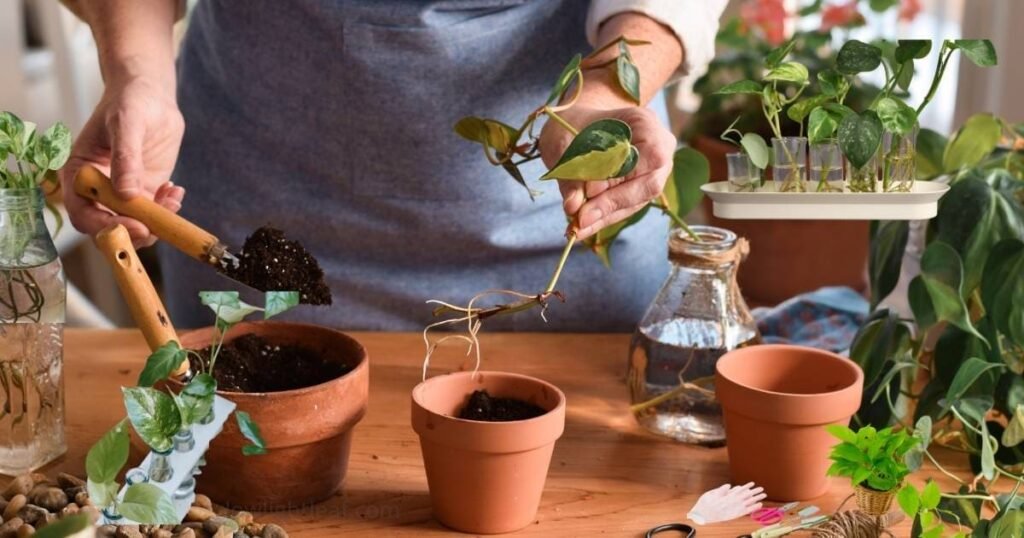
Mixing your own soil gives you control over drainage and texture, and you don’t need special equipment to make a suitable Pothos mix.
Beginner Pothos Soil Recipe
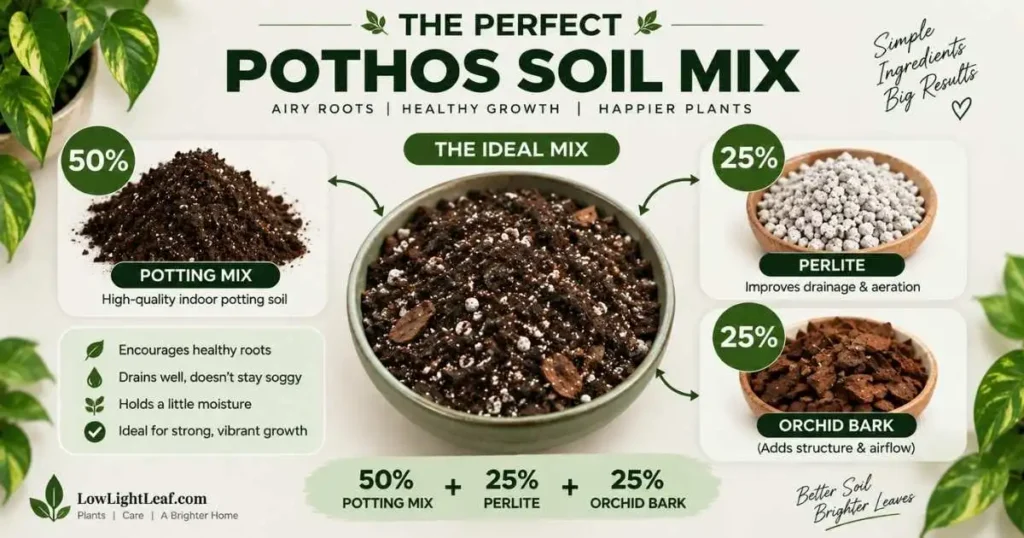
Use 2 parts indoor potting soil, 1 part perlite, and 1 part orchid bark, then mix everything evenly. This 2:1:1 ratio creates a loose, chunky mix that retains some moisture without becoming dense.
The ratio is a starting point rather than a fixed rule. If your base potting soil is unusually dense, the finished mix should still feel loose and airy rather than heavy or muddy. For a nutrient boost, mix in a small amount of worm castings, keeping them to about 10% of the total mix.
The goal is a mix that drains excess water while still holding enough moisture for the roots. Getting the watering balance right for Pothos is just as important, because even a well-draining mix can cause problems if the plant is watered too frequently.
What Each Ingredient Does
Indoor potting soil: Provides the base structure and helps retain moderate moisture.
Perlite: Improves drainage and keeps the mix lightweight and airy.Orchid bark: Adds chunky structure and creates larger air spaces around the roots.Worm castings: Provide a modest nutrient contribution when used as an optional amendment.
Simple Substitutions
No perlite? Use pumice instead. It provides aeration and drainage without being as prone to floating toward the surface.No orchid bark? Coconut husk chips can provide similar chunky structure and air pockets.
Should Pothos soil stay moist or dry between waterings? It should stay slightly moist, never soggy. If the mix dries completely throughout the pot, it may need more moisture-retaining material, especially when starting Pothos cuttings in soil.
Best Store-Bought Potting Soil for Pothos
A good commercial mix can work just as well as a DIY mix if it provides the same drainage, aeration, moisture retention, and chunky structure. Penn State Extension’s guidance on potting media also emphasizes the importance of balancing drainage and air space with the medium’s ability to hold moisture.
What to Look for in a Good Commercial Mix
How do you know if a store-bought soil is suitable for pothos? Check the texture and ingredients rather than relying on the label alone. Look for an indoor potting mix or aroid mix that contains materials such as perlite or bark and feels loose rather than dense.
Choosing Between Common Potting Mix Types
Standard indoor mixes such as Miracle-Gro Houseplant Potting Mix can work as a base for Pothos, but check the texture and add perlite or bark if the mix feels dense.
FoxFarm Ocean Forest is a richer commercial option with ingredients such as peat moss, perlite, and worm castings. Use the same test: judge the finished mix by its drainage, texture, and moisture retention.
Purpose-built aroid or Pothos mixes can be convenient because they may already contain chunky, aerating materials, reducing the need for amendments.
How to Improve an Existing Potting Mix
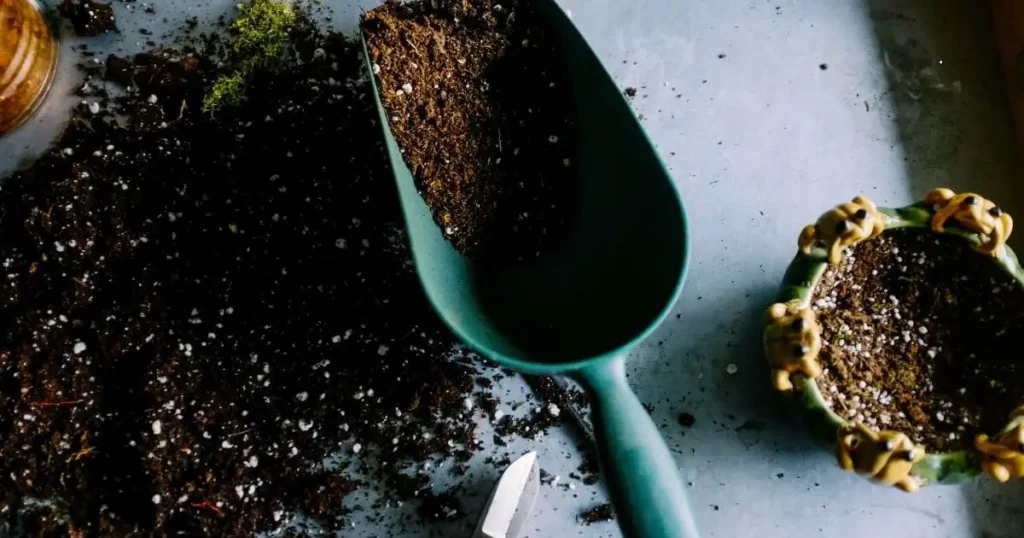
What if the potting soil you already have isn’t working well for your pothos? You may not need to replace it. Adjust the mix based on what it’s doing:
Too dense: Add perlite or pumice.
Holding water too long: Add orchid bark or more perlite or pumice.Drying too quickly: Add a modest amount of coco coir.Low in organic nutrition: Add a small amount of worm castings or compost.
Can You Use Other Types of Soil for Pothos?
Yes, some alternative soil mixes can work for pothos, but the right choice depends on how well the mix balances moisture retention, drainage, and aeration.
Can You Use Cactus or Succulent Soil for Pothos?
Yes, but don’t use it unamended if it dries out too quickly. Cactus and succulent mixes are designed to drain quickly, while pothos benefits from moderate moisture retention. Adding regular potting soil or coco coir can help bring the mix closer to the moisture balance pothos needs.
Can you use orchid soil for pothos? Yes, but bark-only orchid mix works better as a component than as the entire growing medium. Orchid bark adds chunky structure and air space, while a moisture-retaining base provides the balance pothos needs.
What about garden soil for pothos? Avoid using garden soil as the main growing medium for an indoor pothos. It can become compacted inside a container, reducing drainage and air space around the roots.
Does Soil Change for Different Pothos Varieties?
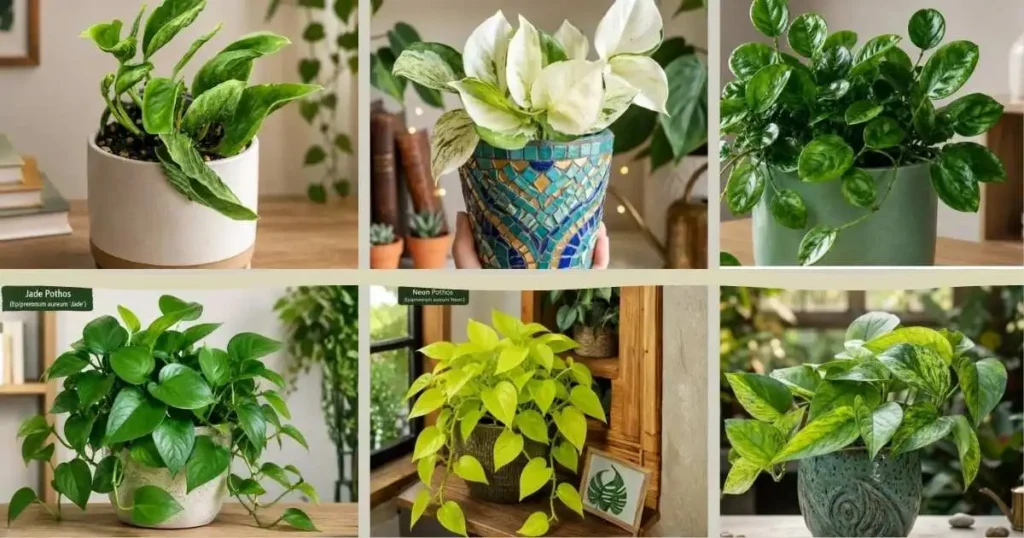
Do different Pothos varieties need different soil? In most cases, no. A well-draining, airy Pothos mix works for most pothos varieties, with only minor adjustments when a particular plant or environment stays too wet or dries too quickly.
Do variegated Pothos need special soil? Not necessarily. Highly variegated forms such as Marble Queen, N’Joy, Pearls & Jade, and Albo can generally use the same well-draining mix. Adjust the soil based on how quickly it dries and how well it maintains airflow around the roots, rather than changing the recipe solely because of variegation.
If you grow trailing Pothos in a raised planter or basket, hanging indoor plant setups can also affect how you position and maintain the container.
Common Soil Problems in Pothos
How can you tell if your Pothos soil is actually causing the problem? Look for a pattern in the soil as well as the plant. Soil is more likely to be contributing when it stays wet for too long, feels compacted, or repeatedly dries out too quickly.
Pothos soil problems are often easier to diagnose when you consider the pothos plant’s overall growing conditions. Before changing your Pothos soil, check its moisture two to three inches below the surface. If the soil is still damp, the mix may be holding too much water. If it is bone-dry, the problem may be related to insufficient moisture instead. Don’t add more perlite simply because the leaves are yellow; first determine whether the soil is actually staying too wet.
Yellow leaves:
Check the soil moisture first. Persistently wet soil and poor drainage can contribute to yellowing, but completely dry soil can point toward a watering problem instead. If yellowing continues even after you address the soil and drainage, diagnosing yellow leaves on Pothos can help you identify other possible causes.
Wilting or drooping vines:
Check whether the soil is soggy or dry. Compacted, saturated soil can contribute to wilting and may require better aeration. If the soil stays wet and the plant continues to decline, check the roots for signs of rot.
Slow or stalled growth:
Check the soil texture and nutrient supply. Dense, low-aeration soil can restrict healthy root growth, while depleted soil may provide less ongoing nutrition. Adjust the mix only when one of these conditions is actually present. If the soil appears suitable but your Pothos is still not producing new growth, troubleshooting a Pothos that has stopped growing can help you check other possible causes.
Musty or sour-smelling soil:
Treat the smell as a warning sign of prolonged saturation. Check the roots and repot into fresh, well-draining mix if you find clear signs of root damage.
White growth on the soil surface:
Surface mold can develop when the upper soil stays consistently moist and contains organic material. Improve airflow and allow the top layer to dry. Surface mold by itself does not mean the roots have root rot.
Fungus gnats:
Persistent fungus gnats can be associated with consistently moist, organic-rich soil. Let the upper layer dry between waterings and address the moisture conditions supporting them.
Long-Term Pothos Soil Maintenance
Pothos soil gradually changes as organic materials break down and repeated watering alters its texture. Instead of replacing the mix on a fixed schedule alone, watch how the soil behaves.
When Should You Replace Potting Soil for Pothos?
Refresh the soil when it becomes compacted, drains poorly, or the plant’s growth stalls despite appropriate light and watering. Consistent soil care is one part of maintaining healthy Pothos growth indoors. As organic ingredients such as peat and bark break down, the mix can gradually lose the structure that keeps the root zone airy.
A one- to two-year interval can serve as a general guide, but the condition of the soil matters more than the calendar.
How Can You Tell Your Pothos Soil Needs Replacing?
Look at the soil’s behavior rather than relying on age alone:
Compaction: The mix feels dense and stays compressed after watering.
Poor drainage: Water pools on the surface instead of soaking through at a steady rate.
Persistent foul smell: An unpleasant smell can indicate prolonged moisture around the root zone.
White mineral buildup: A crusty surface can result from fertilizer salts or minerals left by tap water.
Soil pulling away from the pot: A visible gap between the soil and container can indicate that the mix has become extremely dry and difficult to re-wet evenly.
If these signs keep appearing, the soil is giving you a stronger reason to refresh it than its age alone.
Common Pothos Soil Mistakes to Avoid
FAQ: Pothos soil Requirements
How Much Soil Does a Pothos Need, and Should the Pot Be Deep?
A Pothos needs enough soil to cover its root ball without leaving a large amount of unused soil around the roots. A pot that is proportional to the root ball is usually better than an oversized or very deep container because excess soil can stay wet longer.
Can I Use Regular Potting Soil for Pothos?
Yes. Regular indoor potting soil can work well for Pothos when it drains freely and does not become compacted. If the mix feels heavy or stays wet for too long, add perlite or orchid bark to improve its structure.
Can Pothos Grow in Soil That Stays Slightly Moist?
Yes. Pothos can grow in soil that retains some moisture, but the mix should still drain excess water and maintain air space around the roots. Soil that remains saturated for long periods can create problems for the root system.
How Do I Know if My Pothos Soil Is Too Dense?
Water that pools on the surface, soil that stays wet for too long, and a mix that feels tightly compacted are signs that Pothos soil may be too dense. Adding perlite, pumice, or orchid bark can improve drainage and aeration.
Explore more:

Muddsir Munir
Houseplant enthusiast researching and writing about indoor plants, helping beginners grow spider plants, snake plants, and more with confidence.