No. The ASPCA lists true roses, every species of Rosa, as non-toxic to cats, dogs and horses, so a nibbled petal or leaf won’t poison your cat. The trouble comes from what travels with roses: thorns, rose-care insecticides, flower food, toxic flowers mixed into the same bouquet, and other plants that only share the word “rose.”
So are roses toxic to cats in any situation at all? Not the plant itself. Everything around it is worth a second look.
Are roses toxic to cats at all?
Roses are not toxic to cats. The ASPCA plant entry for rose files the whole genus under non-toxic, with no toxic principle listed, and that covers petals, leaves and stems alike.
Color makes no difference. Red, white, pink and yellow roses are all Rosa, so a white rose is as safe as a red one. Garden roses and the long-stemmed kind from a florist fall under the same entry.
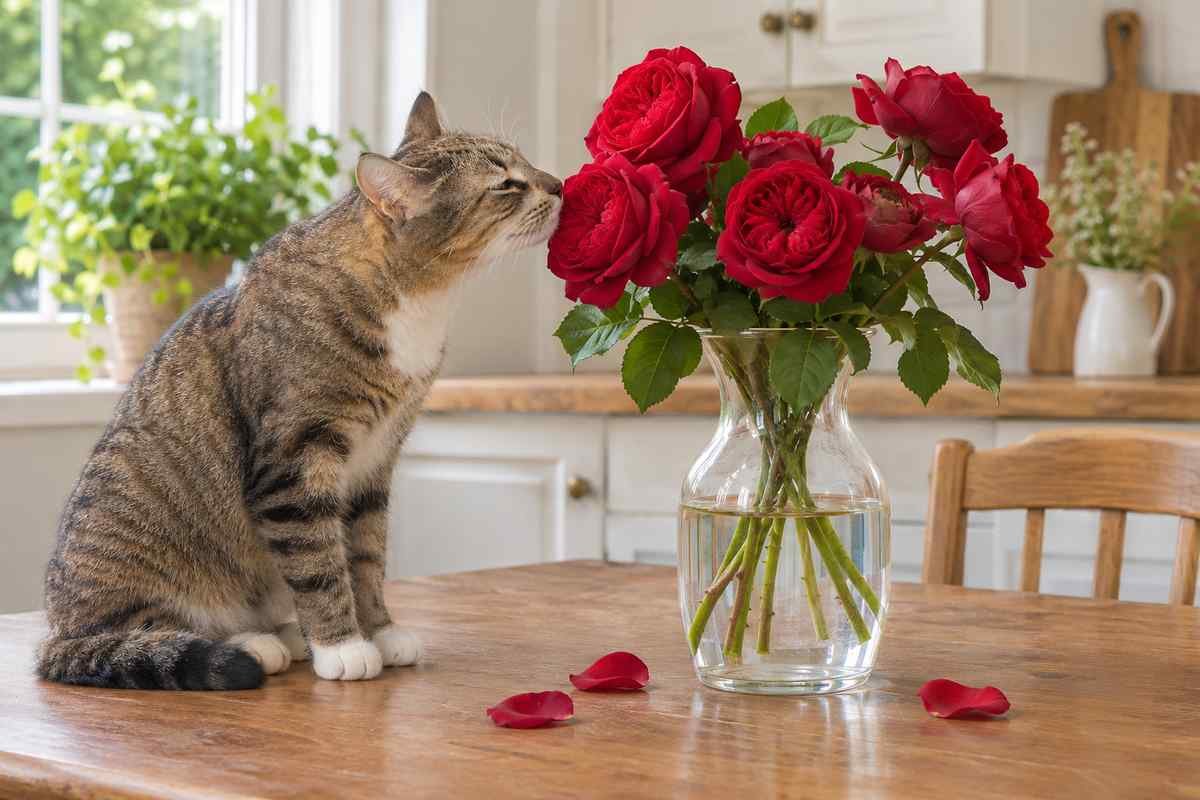
That doesn’t mean a cat can eat a whole stem without consequence. PetMD notes that plant material alone may still cause a mild stomach upset, the way plenty of greenery does.
Thorns, rose food and insecticides
The physical and chemical extras carry more risk than the rose. Here are the three that come up in veterinary sources.
Thorns. PetMD’s veterinarian-reviewed article warns that thorns can injure a cat’s mouth or digestive tract if licked, chewed or swallowed, and that small cuts from brushing past them can turn into abscesses. Stripping thorns before the stems go in a vase takes that risk away.
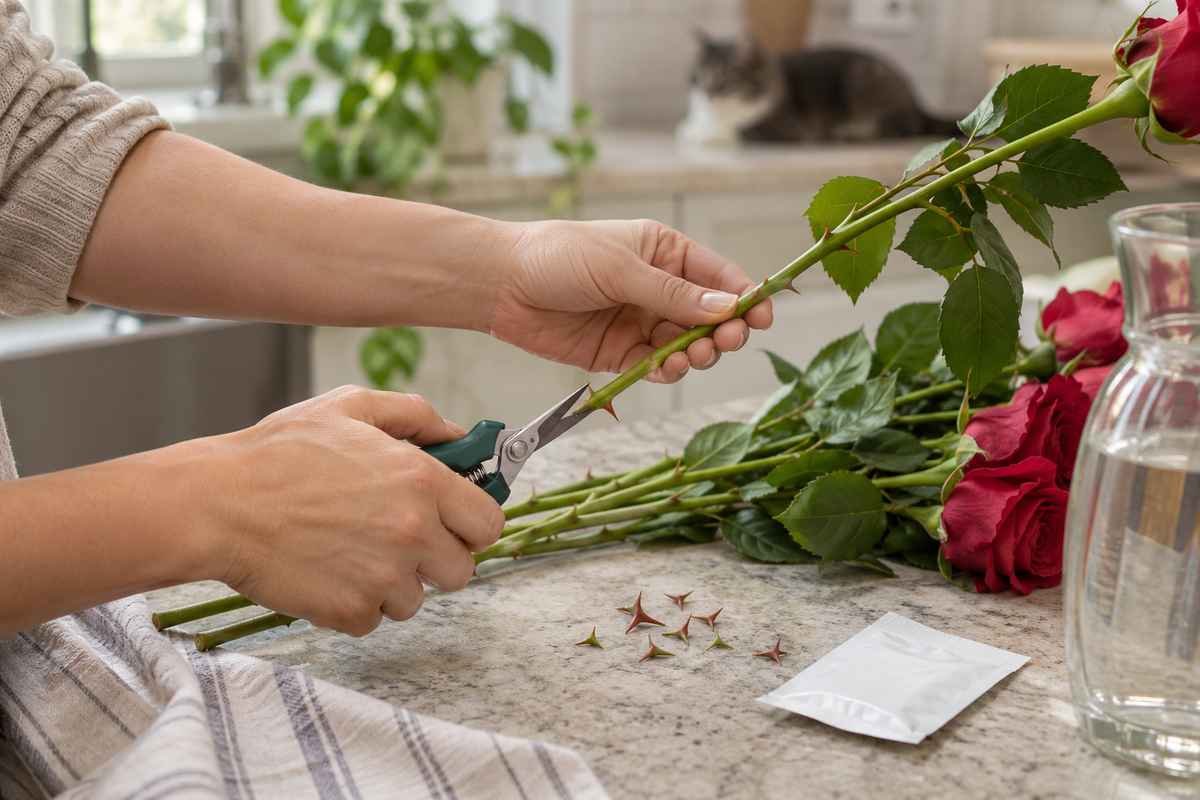
Flower food and vase water. The small packet that ships with a bouquet is a preservative, not cat food, and PetMD advises keeping cats from drinking the vase water. Toss the empty packet and keep the vase where your cat doesn’t drink.
Systemic rose-care insecticides. This is the one most rose pages skip. An ASPCA Animal Poison Control Center toxicology brief from 2003 describes disulfoton, an organophosphate insecticide that roots absorb into the whole plant. It says pets were most often exposed by eating granular rose-care products spread on the soil, sometimes mixed with fertilizer, and that it may be applied to potted roses before you buy them. The brief’s cases were dogs, but the poison works on the nervous system of any mammal.
Pet Poison Helpline now says disulfoton has no active EPA registrations, yet some older products are still in circulation, and that even a small amount can be life-threatening. Its listed signs include drooling, tearing, vomiting, rapid breathing, tremors, a racing heart and seizures. If you have a bag of “systemic rose and flower care” in the garage, look for the active ingredient on the label and store it where no pet can dig into it.
Plants called “rose” that are toxic to cats
Several plants carry “rose” in their common name without being roses, and the ASPCA lists them as toxic. If the tag says rose but the plant looks nothing like a florist’s rose, look up the scientific name before it comes home.
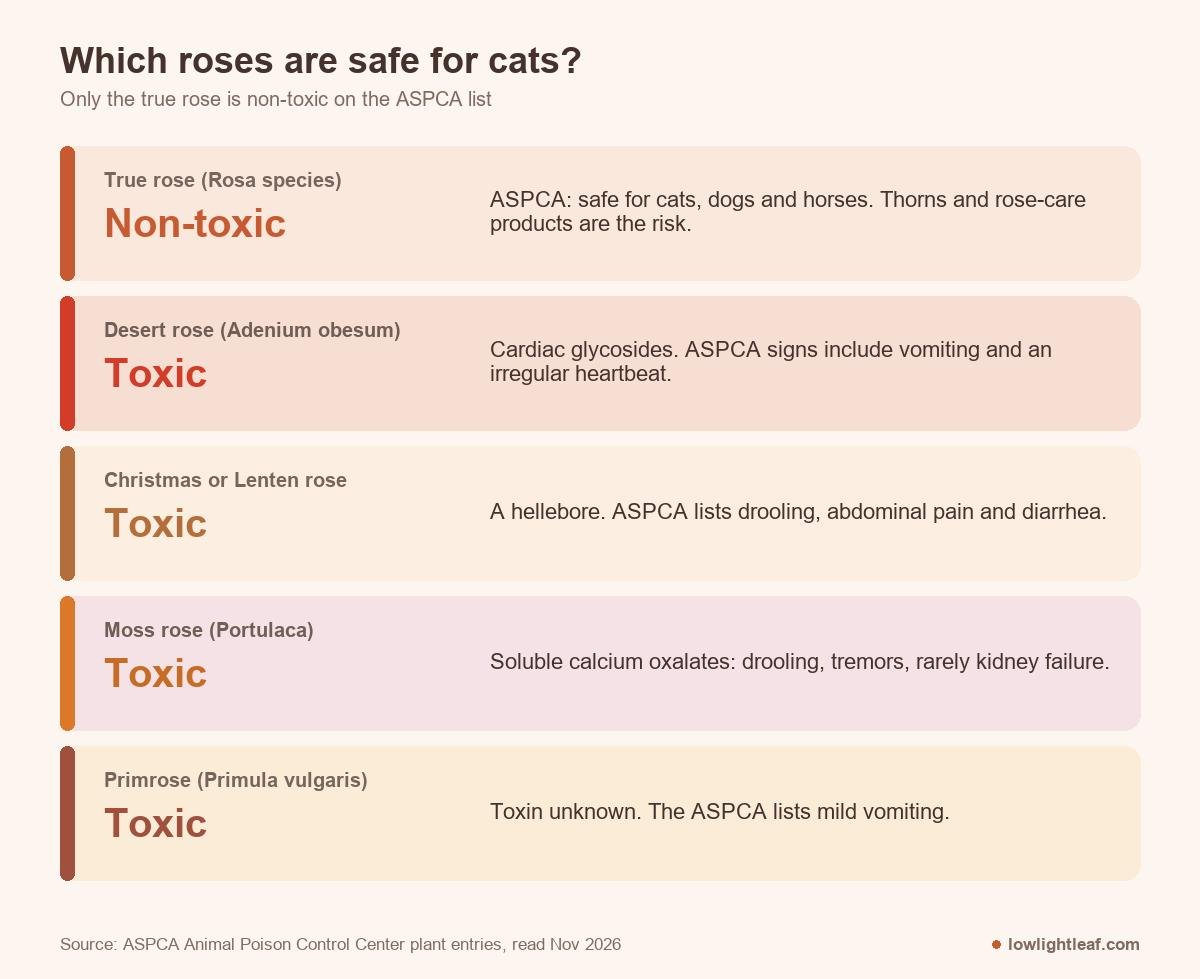
- Desert rose (Adenium obesum): Toxic. The ASPCA names cardiac glycosides and lists vomiting, diarrhea, depression and an irregular heartbeat, with death as a possible outcome.
- Christmas rose (Helleborus niger), also sold as Lenten rose or Easter rose: Toxic. It’s a hellebore, and the ASPCA lists drooling, abdominal pain, diarrhea and depression.
- Moss rose (Portulaca oleracea), also called purslane: Toxic, from soluble calcium oxalates. The ASPCA lists tremors and drooling, and kidney failure as rare in dogs and cats.
- Primrose (Primula vulgaris): Toxic, with no named toxin; the ASPCA lists mild vomiting.
All five are now in the plant toxicity checker, so typing “rose” brings up the true rose first and the look-alikes right under it, each with its ASPCA verdict for cats and dogs.
Are rose bouquets safe for cats?
A bouquet of only roses is safe for cats once the thorns are off and the flower food is gone. Mixed bouquets are where cat owners get caught, because the filler flowers often aren’t safe.
Lilies are the emergency. The U.S. FDA warns that every part of a true lily or daylily is toxic to cats, including the pollen and the water in the vase, and that kidney failure can follow within 24 to 72 hours of a small exposure. Treatment delayed by 18 hours or more usually can’t reverse the damage.

Other common fillers on the ASPCA list:
- Chrysanthemums (mums and daisies): Toxic, with vomiting, diarrhea, drooling and incoordination.
- Carnations: Toxic, though the ASPCA lists only mild stomach and skin signs.
- Hydrangea: Toxic, mostly causing vomiting and diarrhea.
- Baby’s breath: Non-toxic, despite its reputation, though the ASPCA notes eating it can cause mild vomiting or diarrhea.
Plenty of cat owners land on the same rule. In an r/cats thread about a funeral arrangement, one reply put it simply:
“When I got flowers last, the only thing safe at the grocery store were roses.”
– r/cats (302 upvotes)
Another reply in that thread spotted the hydrangea in the arrangement:
“Isn’t that hydrangea in there? Also not safe for kitties. I just don’t have flowers in the house now.”
– r/cats (1,165 upvotes)
Dried and preserved roses come up often too. I couldn’t find a veterinary source on what preservation treatments do to a cat, so the honest answer is unknown: the rose itself is still non-toxic, but I’d keep preserved arrangements out of reach until you know what they were treated with.
My cat, Miso, is the reason I look up every flower on the ASPCA list before it comes inside. If you’d rather keep greenery around than cut flowers, the pet friendly indoor plants list sticks to plants the ASPCA rates as non-toxic.
What to do if your cat ate part of a rose
If your cat ate part of a rose, what to do depends on what came with it: petals alone usually need watching, while thorns, rose-care products and lilies need a call to your vet or a poison hotline.
- A few petals or leaves: watch for vomiting. PetMD suggests a vet visit if vomiting keeps going.
- A thorn swallowed, or a cut in the mouth: call your vet, since PetMD flags swallowed thorns as a reason to be seen.
- Granular rose care, insecticide or fertilizer: call your vet, the ASPCA Animal Poison Control Center at (888) 426-4435 or Pet Poison Helpline at (855) 764-7661 right away, with the product label in hand.
- Any part of a lily, its pollen or its vase water: treat it as an emergency and go now, before signs appear, per the FDA’s timeline.
A true rose is fine to keep with a cat. The bag of rose food and any lily tucked in beside it are what deserve your attention.

Ellie Marsh
Houseplant grower who spent years in a north-facing apartment. Writes practical care guides for low light homes, checked against extension and botanical garden sources.