Last updated on November 10, 2026
Elephant ear plant care comes down to warmth, steady moisture and the right amount of shade. Outdoors, many types grow in partial shade in rich, moist soil; indoors they need a warm, bright spot. University of Wisconsin-Madison Extension says most are hardy only to zone 8a, so colder gardens bring them in or store the corms.
That makes November the month that decides whether you see the same plant next summer. The good news for shady gardens is that elephant ears like shade outside. The catch is that a dim house is harder on them than a dim yard.
Which elephant ear do you have?
Most elephant ears sold in the US are Colocasia or Alocasia. Wisconsin Extension tells them apart by leaf angle: Colocasia leaves attach near their center and face upward or outward, while Alocasia leaves are held more upright. Alocasia is the one usually sold as a houseplant.
The difference matters beyond the label, because Colocasia esculenta, the common green taro, is considered invasive along the Gulf Coast according to Wisconsin, and UF/IFAS Gardening Solutions says it should not be planted in Florida at all. UF suggests sticking with Alocasia there and never planting any elephant ear near a natural waterway.
Elephant ears in a shady yard
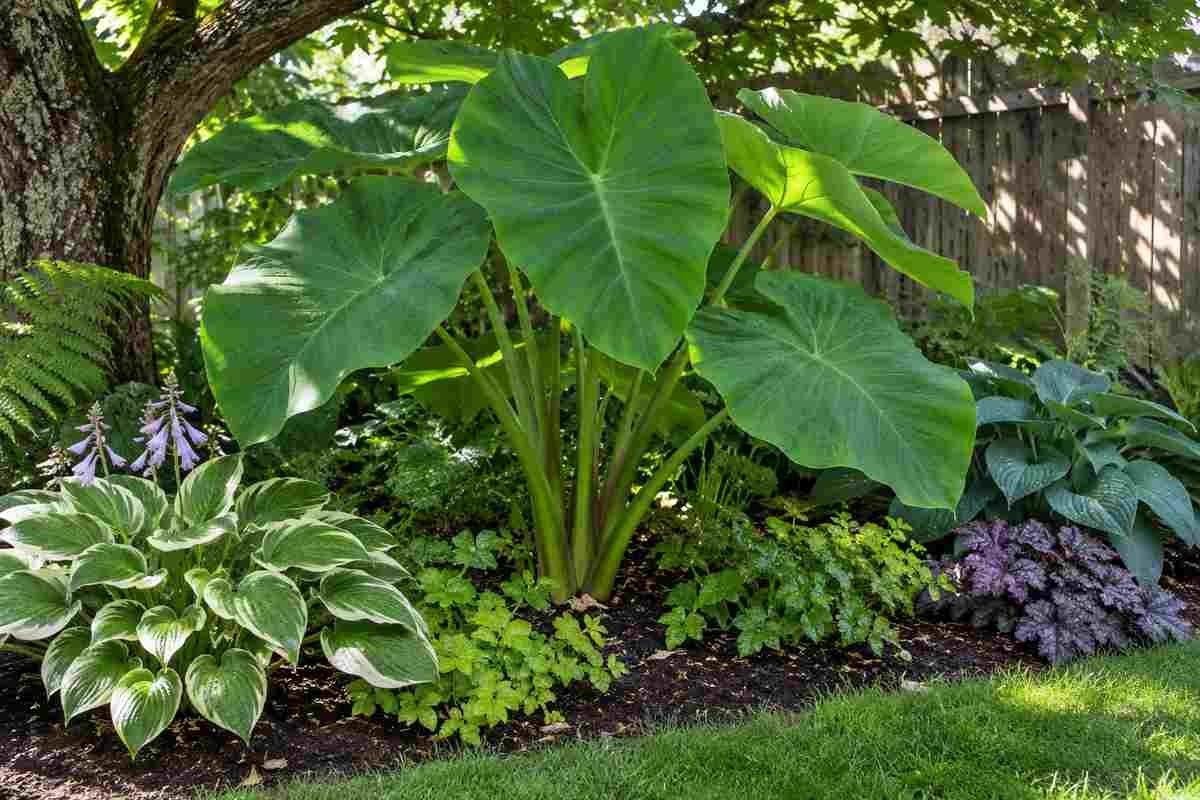
Green-leaved elephant ears do well in part shade, and the dark-leaved ones want more sun. NC State Extension says Colocasia grows best in part shade or filtered sun, and Wisconsin adds that darker varieties such as ‘Black Magic’ color up best in full sun.
My own backyard is mostly shade, which is exactly where a green elephant ear makes sense, and NC State says Alocasia also prefers a shaded site, so you can plan either one into the shady side of your garden. Put either one in filtered or dappled light, out of strong wind, which NC State says the big leaves need protection from.
Water and food are the other half. NC State says the soil should not be allowed to dry out, and Wisconsin calls elephant ears heavy feeders that need copious water and fertilizer, especially in containers. Most can even grow in a few inches of standing water, Wisconsin says, which is why this trick works for some growers:
“I love elephant ears, but they can be high maintenance, thirsty divas in pots. This technique of putting the elephant ear’s pot in a larger basin of water (making a small water garden essentially) works so well I have to share”
– r/gardening (285 upvotes)
If you’re planning the rest of a shady bed around them, the hostas for shade and shade ground cover pages cover plants that share the same conditions.
Elephant ear plant care indoors over winter
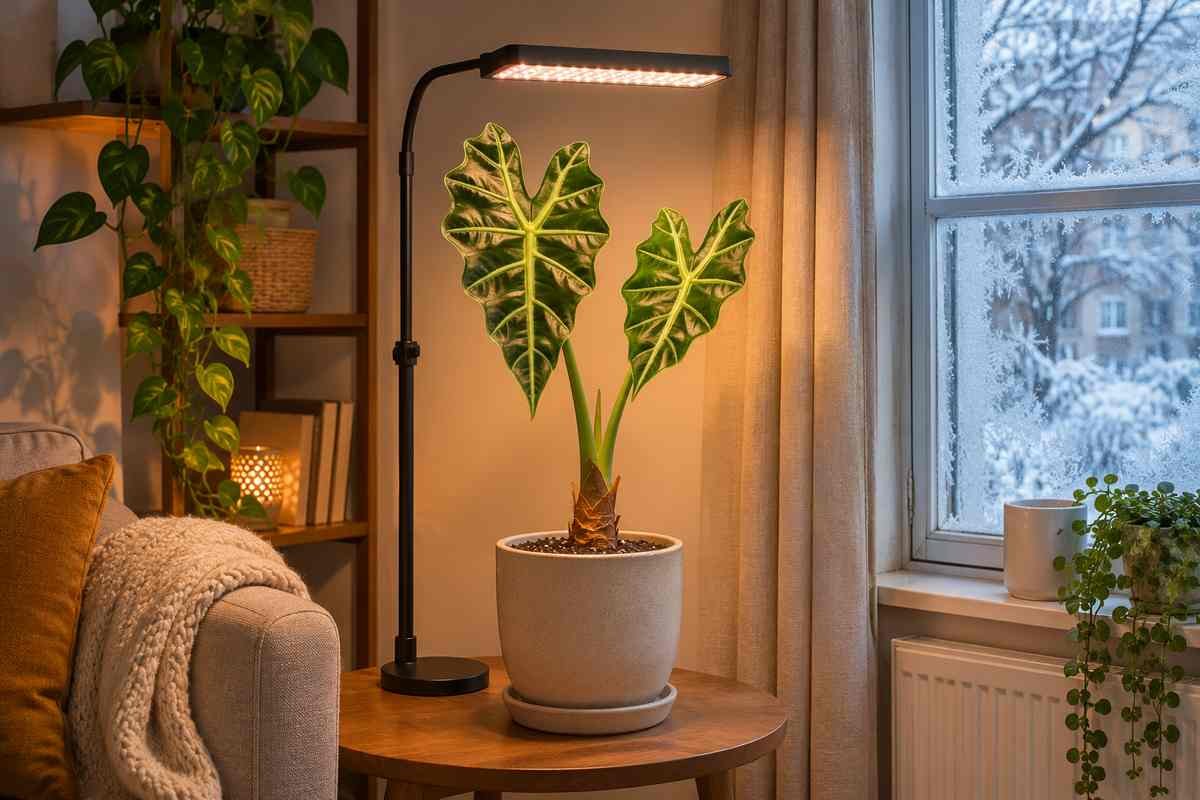
An elephant ear can live indoors over winter only in a warm, bright spot. Wisconsin says to bring plants in before temperatures reach the 30s °F, cut back all but the top two leaves, and keep them at room temperature in bright light, on the drier side while they’re semi-dormant.
Warmth is the part a drafty room fails. NC State says Alocasia grows best with daytime temperatures of 68 to 77°F, and Wisconsin says elephant ears falter when temperatures stay below 50°F for long. A cold window in a dim room is the worst combination, and expect smaller leaves even when it goes well. As one grower put it when someone asked about bringing a big one inside:
“Just pot them up and give them as much light as possible. They will probably put out smaller leaves indoors unless you give them a ton of light.”
– r/houseplants, September 2024 (4 upvotes)
In a north-facing apartment, that “ton of light” has to come from a grow light. Wisconsin also says elephant ears grow best in high humidity, and a heated room in January is anything but, so the humidity page is worth a look before the plant comes in. NC State says to reduce watering in winter, and Wisconsin says to start regular watering and feeding again once growth resumes in spring.
Is your home dim and cool? Then you’re better off storing the corms. The same trade-off comes up with coleus, which the coleus care page works through for a tender plant that comes in each fall.
Storing elephant ear bulbs until spring
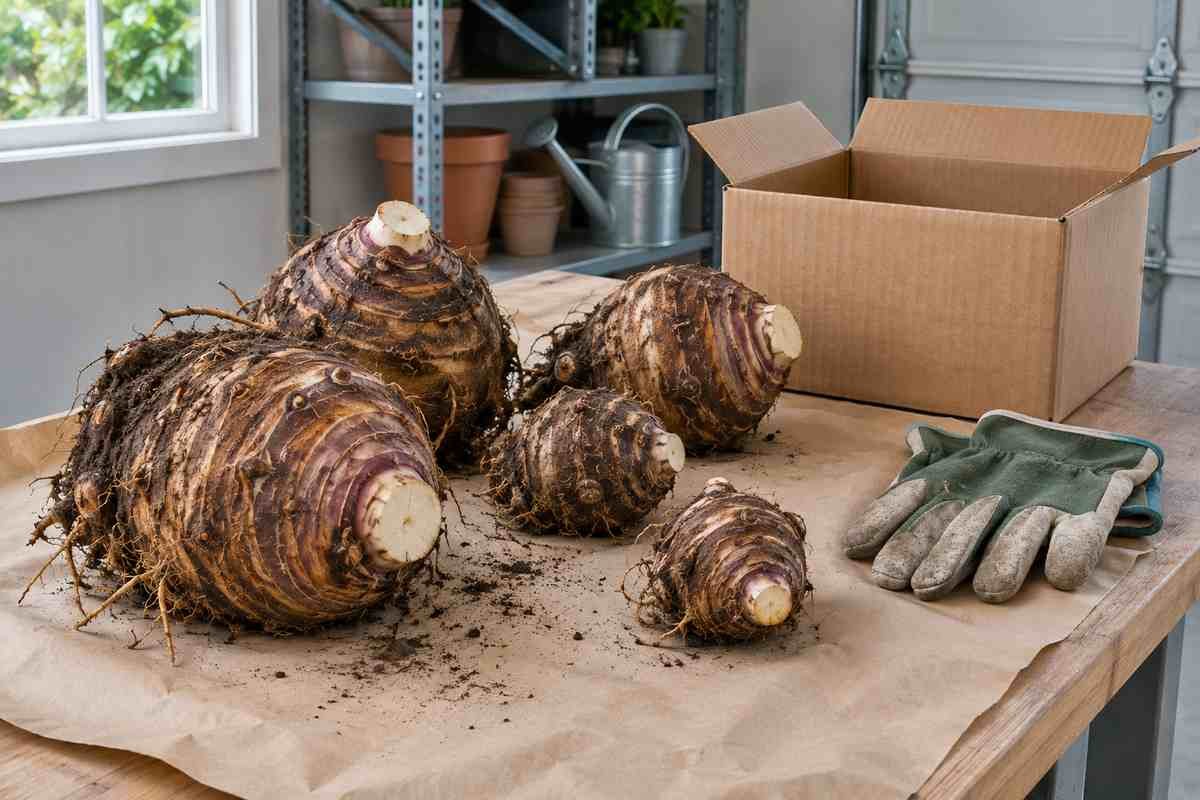
Elephant ears that have formed bulbs (botanically corms) can be dug and stored dry over winter. Wisconsin says to dig, dry and store them the way you would cannas or dahlias, after frost has killed the foliage, and NC State says Alocasia tubers can be kept in a cool, dry place.
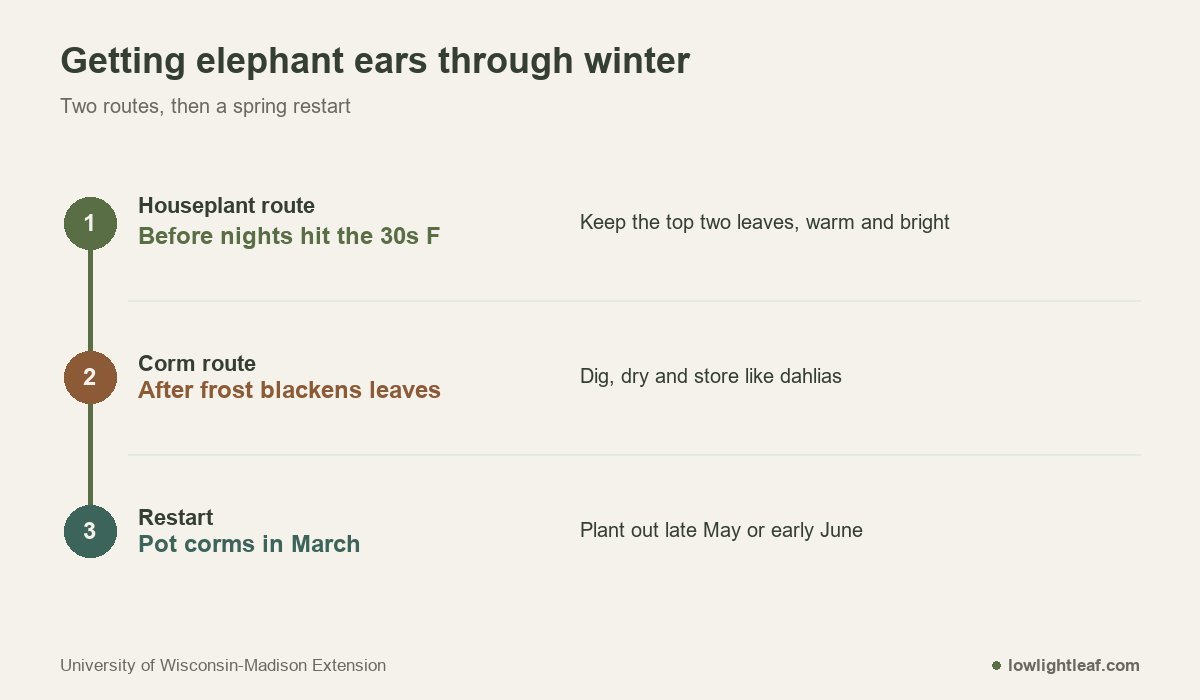
- Wait until frost has blackened the leaves, then cut the stems down.
- Dig the corms out carefully, wearing gloves.
- Let the corms dry, then store them somewhere cool and dry, as NC State and Wisconsin both describe.
- In March, pot each corm indoors with its top close to the soil surface and keep it warm; Wisconsin says the first leaves take a few weeks.
- Plant out once the weather warms, usually late May or early June in Wisconsin’s climate.
Gardeners in zone 8 and warmer may not need to dig at all, since NC State lists Colocasia as hardy in zones 8a through 11b. Wisconsin mentions ‘Pink China’ as one of the hardiest, with reports of it surviving in zone 6b.
Are elephant ears toxic to pets?
Yes. The ASPCA lists Alocasia (elephant’s ear) as toxic to dogs, cats and horses because of insoluble calcium oxalates. Signs include mouth pain and swelling, heavy drooling, vomiting and trouble swallowing. Its separate “elephant ears” entry, which covers caladium and taro, is also toxic to dogs and cats.
People should take some care too. Wisconsin says every part of the plant carries needle-like calcium oxalate crystals that irritate skin, and NC State lists dermatitis and eye injury, so wear gloves when you dig and divide corms. With Miso at home, anything this size and this toxic stays outside or in a room the cat can’t reach. The plant toxicity checker has the rest of the aroid family in one place.
Elephant ear plant care questions
Should I cut the brown leaves off?
Yes. Wisconsin says the plants keep producing new leaves through the season while older ones gradually die off, and those can be removed to keep the plant tidy. You’ll want gloves for it.
Do elephant ears do better in pots or the ground?
Both work. Pots are easier to move indoors and safer where taro is invasive, such as Florida. Wisconsin notes that potted plants need even more water and fertilizer than ones in the ground, so good elephant ear plant care in containers means watering and feeding more often than you would in a bed.
In a dim home, keep the corm safe over winter and give the leaves back to summer shade.

Ellie Marsh
Houseplant grower who spent years in a north-facing apartment. Writes practical care guides for low light homes, checked against extension and botanical garden sources.