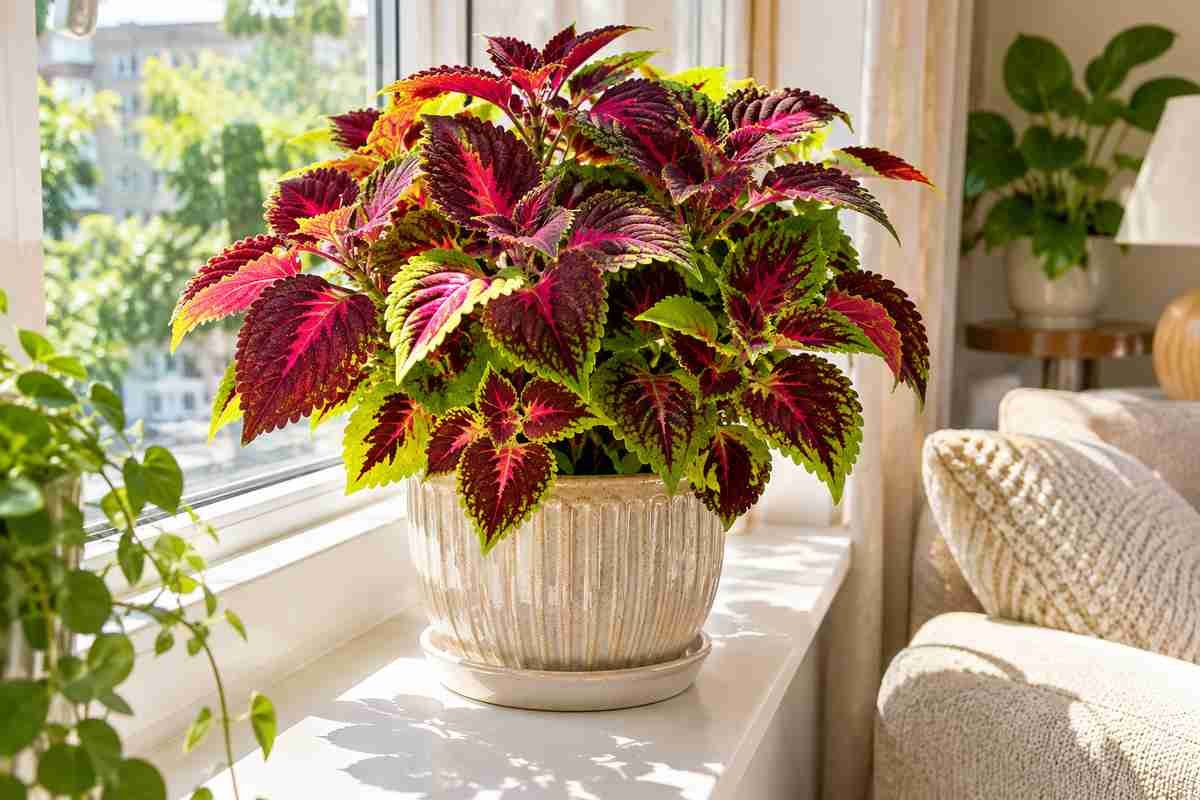
Coleus is grown for its leaves, and it needs part shade outdoors, bright light indoors, soil that stays lightly moist, and regular pinching to stay bushy. It is a tender perennial hardy only in USDA zones 10 and 11, according to University of Vermont Extension, so in colder areas you bring it in before the first frost or root a few cuttings to carry through winter.
For a home without much sun, cuttings on your sunniest windowsill are the easier route to coleus care in winter. Coleus is also toxic to cats, dogs and horses, per the ASPCA.
Coleus care: light outdoors and indoors
Outdoors, most coleus grow best in part shade, but some newer varieties take full sun. UF/IFAS Gardening Solutions says coleus traditionally did best in partial shade, while many newer cultivars, some bred by the University of Florida, thrive in full hot sun, so check the tag for your variety. NC State Extension adds that older types may wilt in full sun.
Indoors the rule flips toward more light, not less. NC State says a coleus grown as a houseplant requires bright light, and that full shade leads to leggy growth. A coleus that’s stretched, with long bare stems between leaf pairs and duller color, is short on light.
When a Reddit owner asked for coleus tips, one reply kept it short:
“Lots of sunlight so that it doesn’t lose colors, regular water (preferably after soil dries but before it starts to wilt), moderate fertilizing, some pinching of tops of stems to stimulate it to branch out”
– r/houseplants, May 2026 (4 upvotes)
Coleus wants the brightest sill you have, not the far corner. If the windows are weak, a grow light over the pot fills the gap. If you’d rather not fight for light, the low-light houseplants list has colorful-leaved options that ask for less.
Watering, soil and feeding
Keep coleus soil lightly moist at all times, UF/IFAS says, in a well-drained mix with plenty of organic matter. The Reddit advice above lands in the same place: water after the surface dries and before the plant wilts.
Indoors, use a pot with drainage holes so the bottom doesn’t stay soggy. UF/IFAS says any balanced fertilizer for bedding plants works.
Pinching and flowers
Pinch the growing tips off young coleus to keep it full. NC State and UF/IFAS both say pinching makes the plant bushier, and UF/IFAS recommends removing the flower spikes too, because it keeps the plant from going to seed and declining.
UF/IFAS notes that some newer varieties were bred to branch heavily and flower late, so they need less of this.
Bringing coleus indoors for winter
Bring coleus in before the first frost, either as the whole plant or as cuttings. Cuttings are easier in a home with limited light or space. UVM Extension warns that indoor light will be less intense than outdoors even with grow lights, and the air may be dry, which is hard on a big plant used to a summer bed.
The whole plant. UVM’s steps: hose it off and look under the leaves for pests before it comes in; if it grew in the ground, dig it up, shake off the garden soil and repot in fresh potting mix; and cut back up to a third of the foliage. Move it to a porch or other sheltered spot for several days first so the change isn’t sudden.
Cuttings. The Chicago Botanic Garden calls cuttings the easiest method. Take 3- to 4-inch tip cuttings in late fall, remove the bottom set of leaves, and set them in a pot of soilless mix (a 6-inch pot holds about 12), covered with a clear plastic bag, somewhere warm and shaded. They root in seven to 10 days. Then pot each one on its own, put them in a sunny window, water regularly and keep pinching the tips all winter.
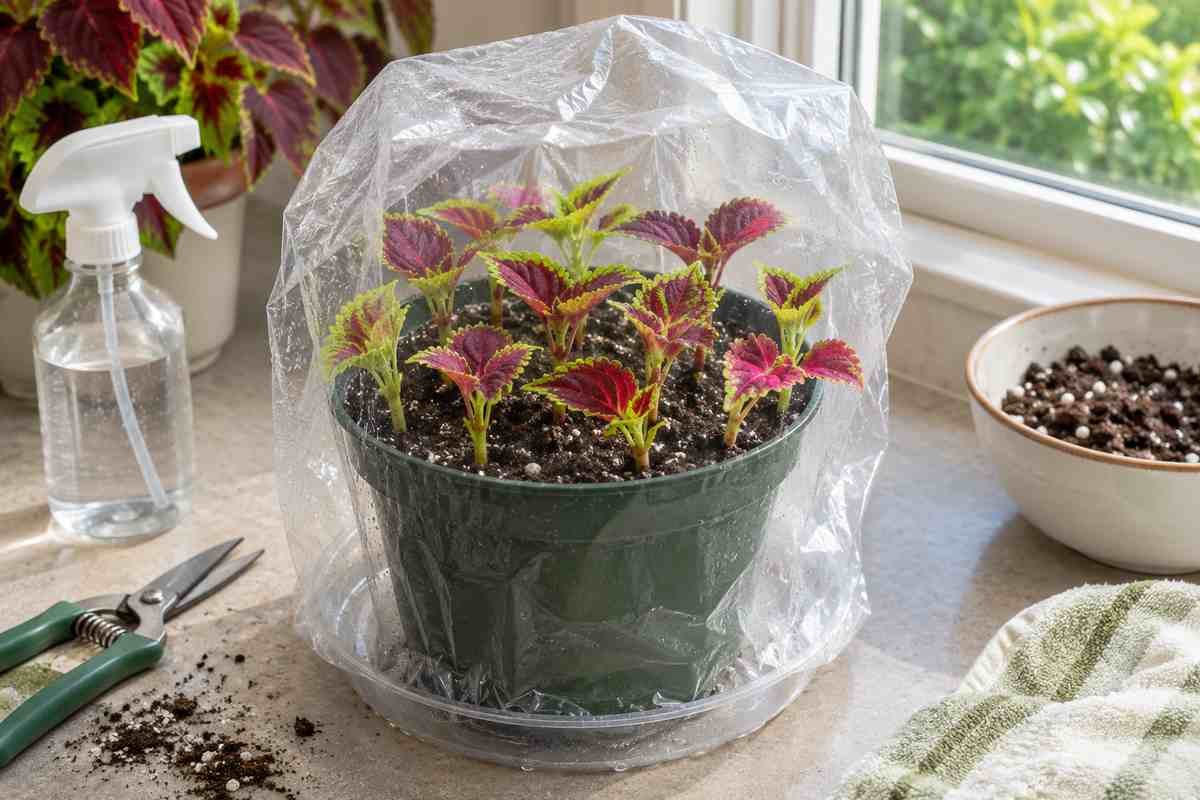
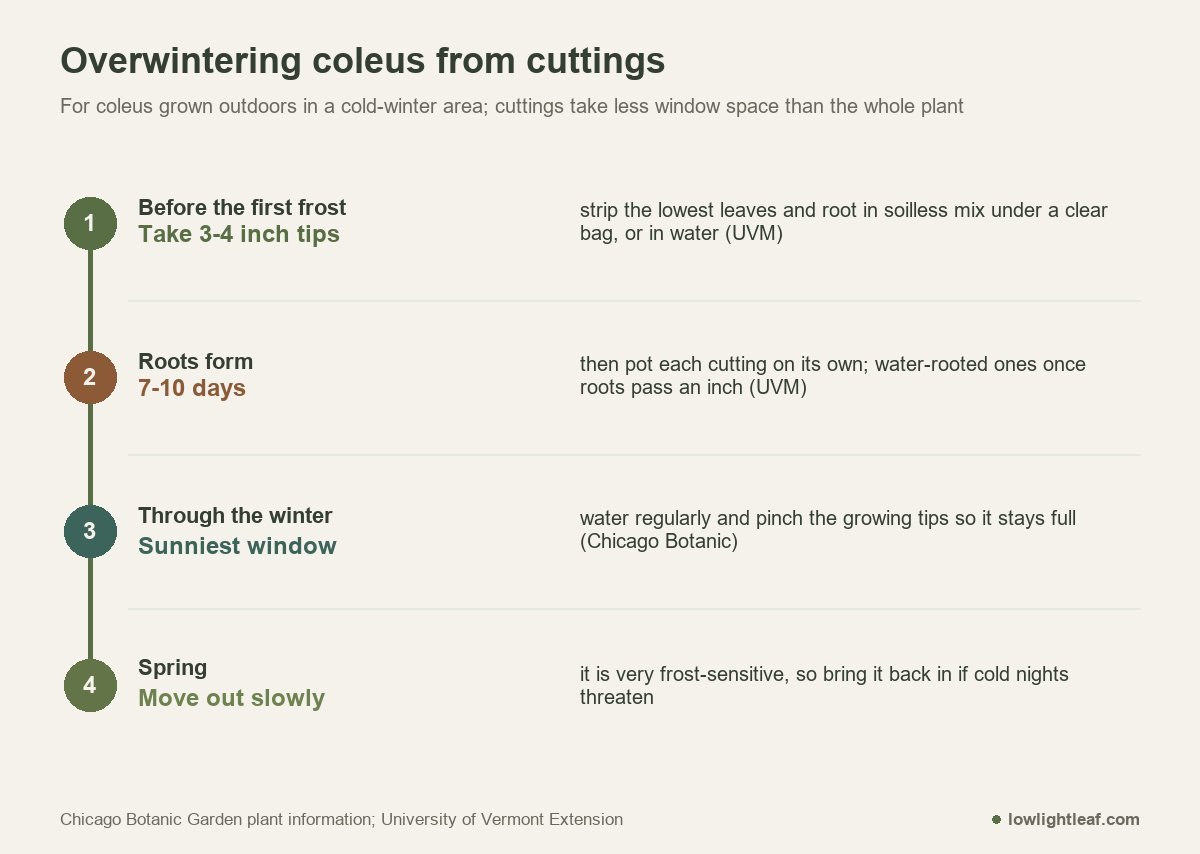
The rooted cuttings become next year’s plants. In spring, Chicago Botanic says to introduce them to outdoor conditions gradually and to bring them back in if cold nights threaten, because coleus is very frost-sensitive.
Rooting coleus cuttings in water or soil
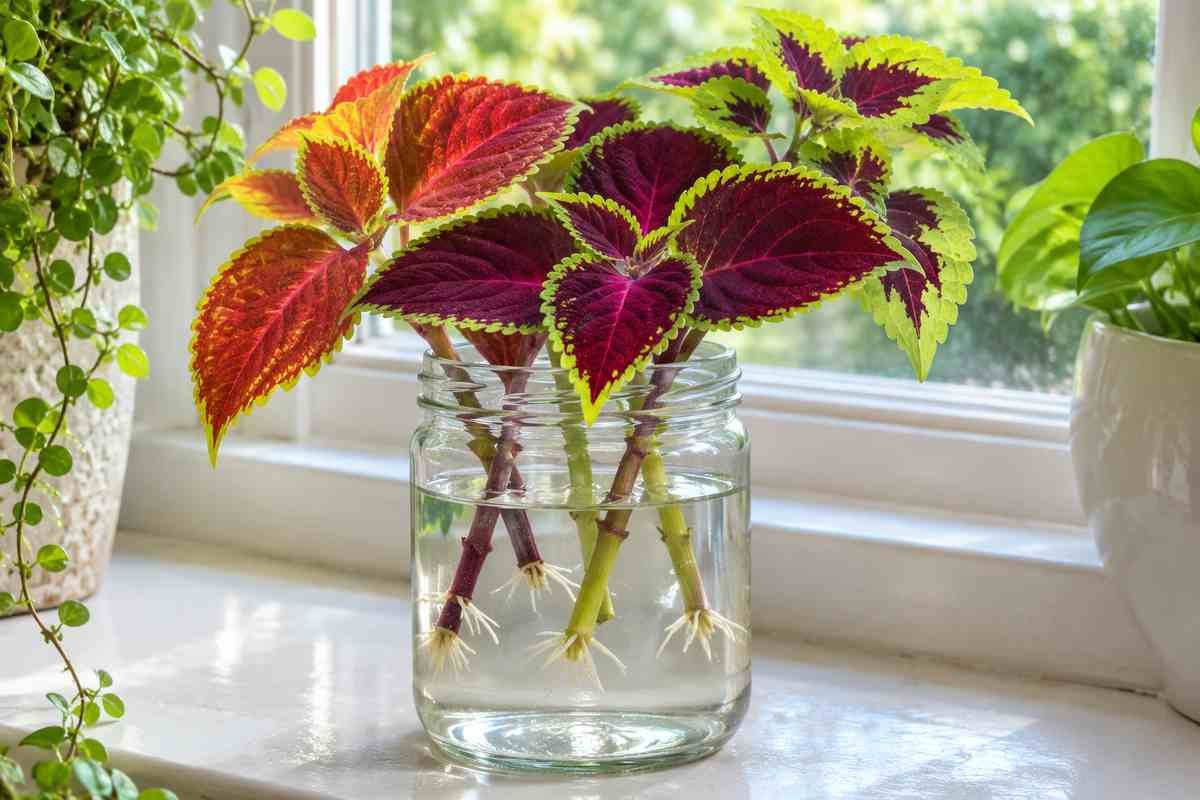
Coleus cuttings root in water or in moist potting mix, and both work. For water, UVM suggests 4- to 6-inch tips with several nodes, the lower leaves trimmed off, in room-temperature water with no leaves below the surface and indirect light. Pot them up once the roots are over an inch long.
For soil, UF/IFAS trims the stem half an inch below the lowest leaves, removes those leaves, and sets the cutting in moist potting soil or vermiculite in a shady spot for a couple of weeks. A leggy plant is a good candidate; UVM notes that cuttings are a way to save plants that have grown leggy over the season.
Pests and pets
NC State lists aphids, whiteflies and spider mites as coleus pests, especially on indoor plants, which is why UVM’s hose-down before bringing a plant in is worth the five minutes.
The ASPCA lists coleus as toxic to dogs, cats and horses. Its essential oils can cause vomiting, diarrhea, depression and loss of appetite, occasionally with blood in the vomit or diarrhea. With a cat like my Miso in the house, a coleus belongs out of reach, and the plant toxicity table shows which colorful plants are pet-safe instead.

Ellie Marsh
Houseplant grower who spent years in a north-facing apartment. Writes practical care guides for low light homes, checked against extension and botanical garden sources.