English ivy care indoors comes down to a spot near an east, west or north window out of direct sun, soil kept evenly moist but never waterlogged, and a room on the cool side. The Royal Horticultural Society says ivy copes with low light, and warns that red spider mites thrive in warm, dry conditions.
That second part is where most indoor ivy goes wrong. A dim window is survivable. A warm, dry living room in January is the harder test, and English ivy (Hedera helix) is toxic to cats, dogs and horses, so it needs a spot pets can’t reach.
Where English ivy grows best indoors
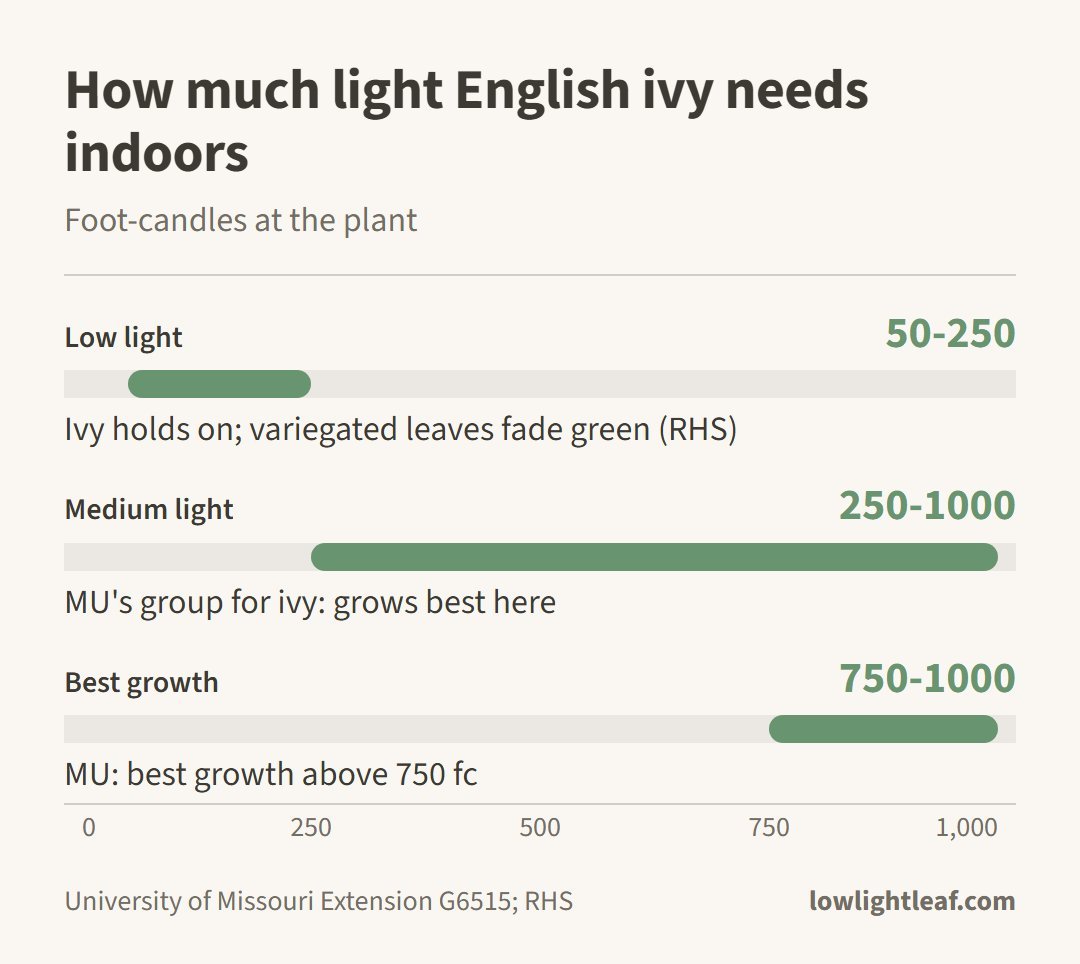
English ivy grows best in medium to bright indirect light, and it can hold on beside a north window. University of Missouri Extension places ivy in its medium-light group, 250 to 1,000 foot-candles with the best growth above 750, while the RHS says an east-, west- or north-facing window all work.
Those two statements fit together once you separate surviving from growing. In low light (Missouri’s low band is 50 to 250 foot-candles), ivy can be held, but Missouri says plants in its group grow best with more light, so expect slow growth. In a south-facing room, the RHS says to keep it out of direct sun, which can scorch the leaves.
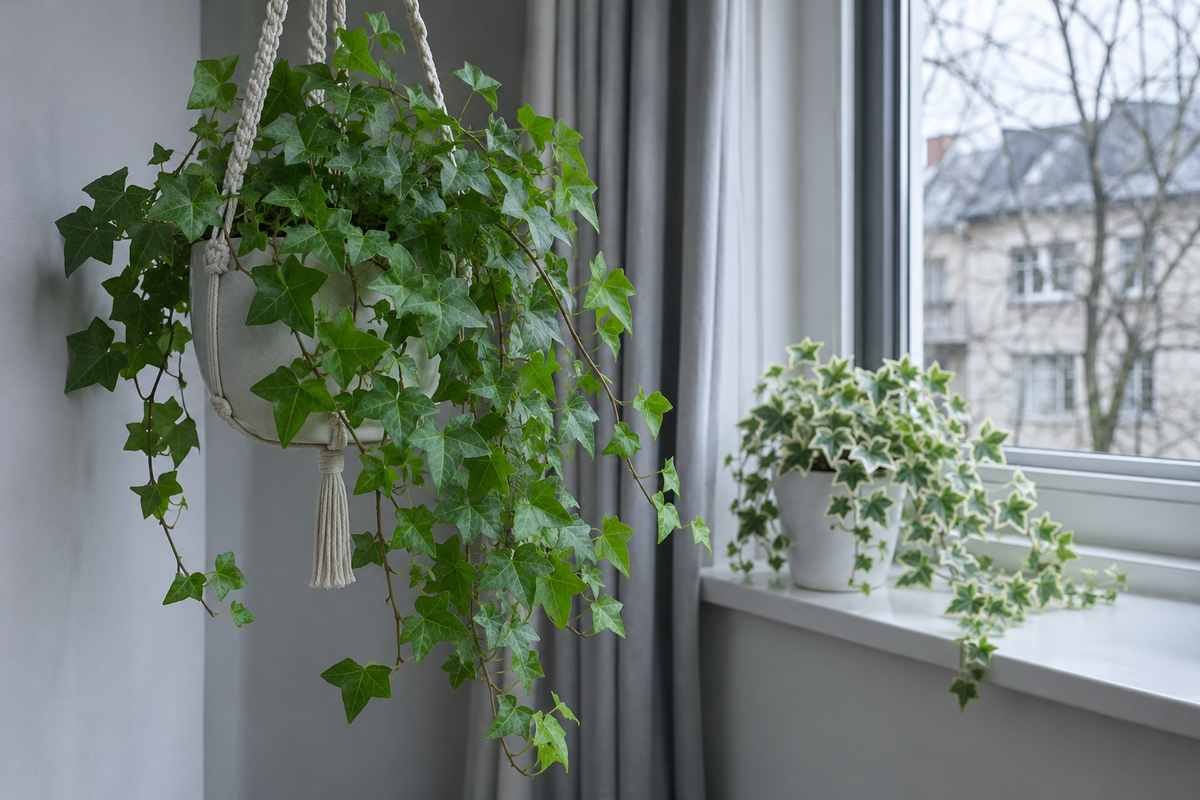
Variety matters more in a dim room than you’d expect. The RHS says variegated ivies turn greener when they’re short on light, so a white-edged ‘Glacier’ in a dark hallway slowly loses the look you bought it for. For the dimmest spot, pick an all-green, small-leaved cultivar such as ‘Ovata’ or ‘Pedata’, both listed by the RHS, and save the variegated ones for a brighter sill.
I spent years with nothing but north light, and the darkest corners only worked once I added grow lights. If your best window is still too dark, a small grow light moves a struggling ivy into the medium band without moving the plant, and the north-facing window plant list has other plants that cope with that light.
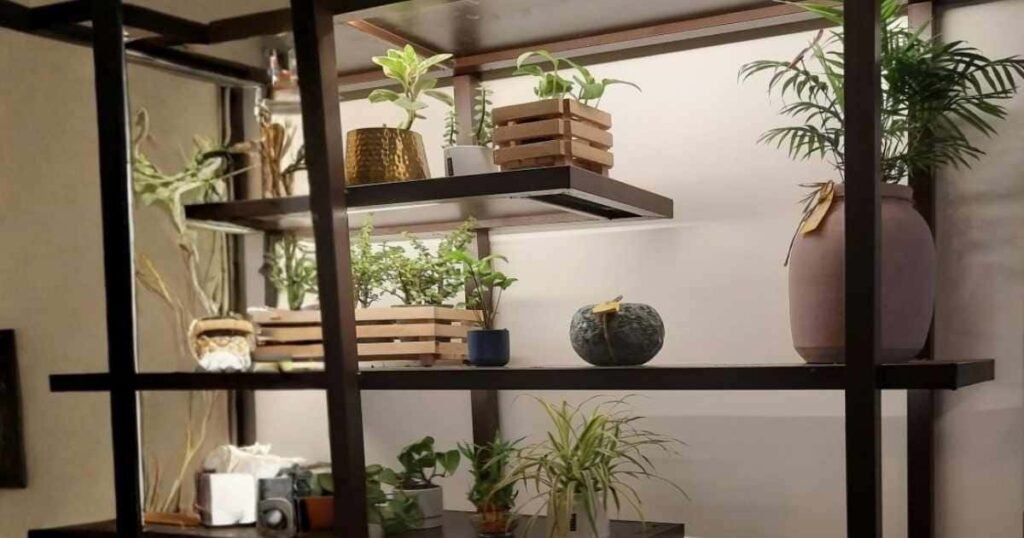
Ivy trails, so height helps. A hanging pot or a high shelf gives the stems room to fall, and it keeps the leaves out of reach of pets. Our hanging plants page lists other trailers that suit the same spot.
Watering, pots and a cooler room
Water English ivy when the top inch or so of soil has dried, and don’t let the pot dry out completely. Water left standing in the saucer is likely to rot the roots, the RHS adds. Missouri Extension is blunter about the dry side: ivy needs constant moisture to prevent leaf drop.
Missouri’s entry also says ivy tends to grow better when kept slightly cool indoors. That’s the detail most care cards skip, and it explains a lot of crispy plants. A pot beside a heating vent or on a sunny radiator shelf dries out faster than your watering schedule expects, and the leaves pay for it.
A few habits that follow from those two sources:
- Feel the soil before you water instead of watering on a fixed day. Warm rooms dry the pot faster, as the RHS points out.
- Keep the plant in its nursery pot for a year or two. When the roots fill it, move up to a pot only slightly larger; the RHS warns against overpotting.
- Skip routine feeding. Ivy is a light feeder, per the RHS, so use a general liquid fertilizer only if the leaves yellow between the veins.
- Choose a cooler room over a sunnier one when you have to pick, and keep it off heaters and away from warm-air vents.
Why does indoor ivy get spider mites?
Indoor English ivy gets spider mites because heated rooms are warm and dry, the conditions the RHS says red spider mites thrive in. NC State Extension lists twospotted spider mites among ivy’s common pests, along with aphids, mealybugs and scale, so the problem is well known.
Growers say the same thing with less restraint. When someone found mites all over an ivy and asked whether to throw it out, the top-voted reply was:
“Yes, throw it out. Ivy is a spider mite magnet, if you grow ivy they will come.”
– r/houseplants, October 2020 (6 upvotes)
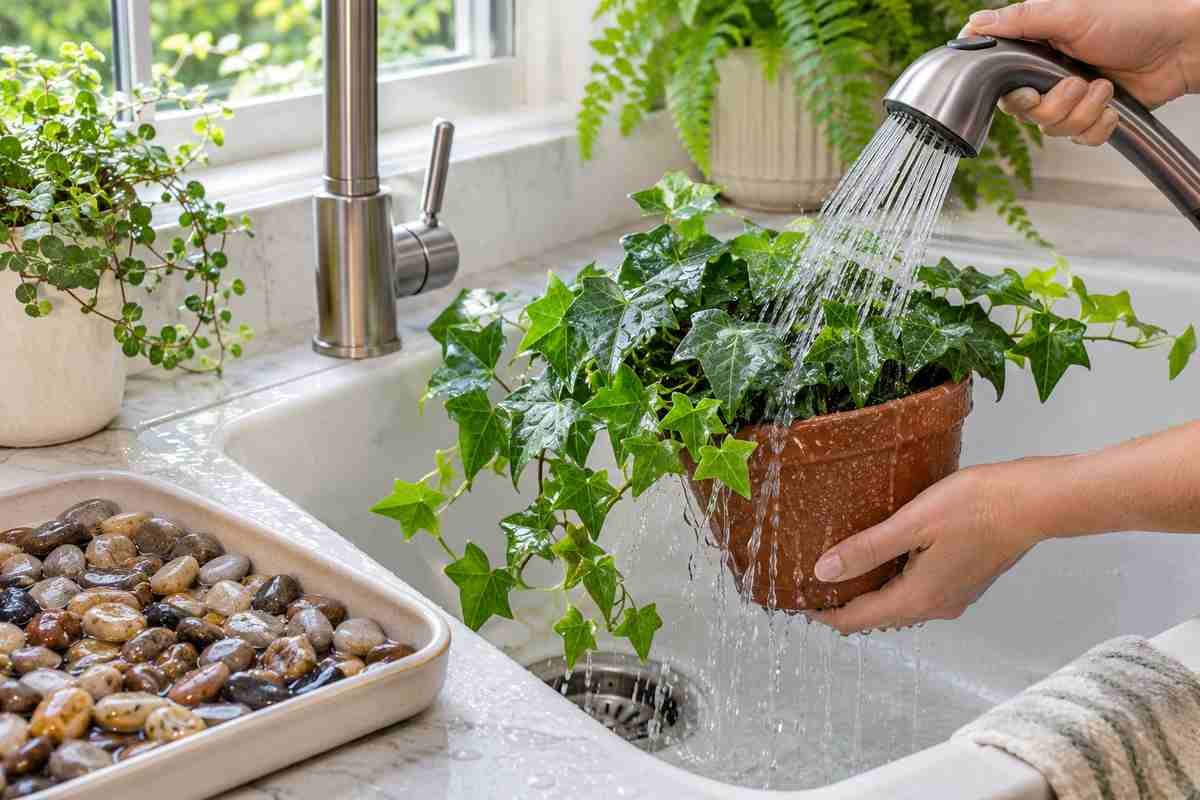
You don’t have to give up on the plant that fast. Fixing it is simple, by the RHS account: spray the plant regularly with water to disperse and discourage the mites, or raise the humidity by standing the pot on a shallow tray filled with gravel. A routine that puts that into practice:
- Turn over a few leaves each time you water. Growers in these Reddit discussions say fine webbing is usually what they spot first.
- Rinse the whole plant, tops and undersides of the leaves, in the sink or shower.
- Stand the pot on a shallow tray filled with gravel to raise the humidity around it.
- Move the plant away from heaters and warm vents if it sits near one.
- Keep spraying it with water regularly, which is the RHS advice for discouraging mites.
If a gravel tray isn’t enough on its own, our humidity page goes through other ways to raise moisture in a dry apartment.
Trimming and starting new plants
Trim English ivy whenever it gets straggly. The RHS says to cut back overly long shoots to encourage bushier growth and to snip off brown or withered leaves as they appear. Wear gloves for a big trim: Clemson Extension says the sap may cause dermatitis in sensitive people.
Watch variegated plants for reversion. Clemson explains that variegated and small-leaved ivies can throw out large, all-green shoots that grow faster than the rest, because the extra chlorophyll fuels them. Remove those shoots at the base before they take over, the RHS advises.
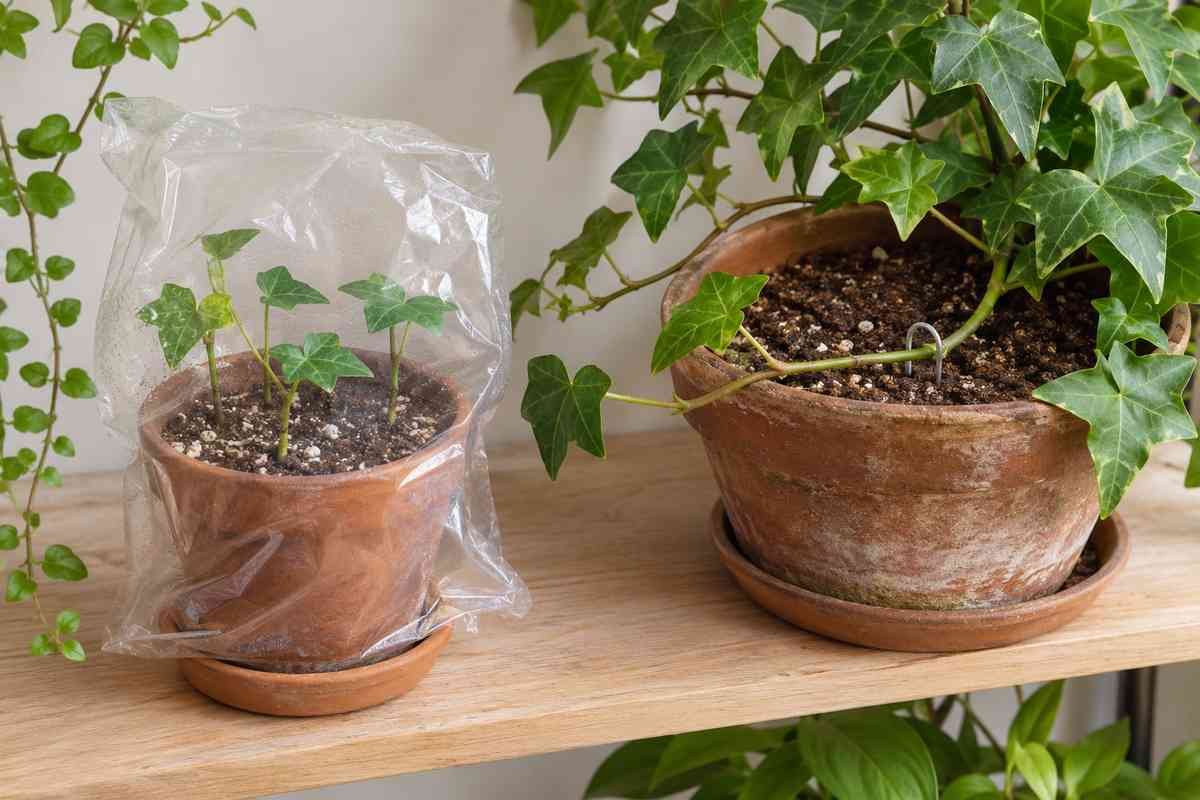
Keep the trimmings. Here is the RHS method for semi-ripe cuttings, normally taken in late summer:
- Cut a section of stem with at least two leaves.
- Push it into a pot of free-draining potting mix and water it well.
- Cover the pot with a clear plastic bag to hold in moisture.
- Keep it bright but out of direct sun, and take the bag off once new growth shows.
Layering is even easier: pin a trailing stem onto the surface of a pot of moist mix and cut it from the parent once it has rooted, according to the RHS.
Taking English ivy outdoors in the US
In much of the US, English ivy belongs in a pot, not in the ground. NC State Extension lists it as invasive in North Carolina, says it is safer to grow there as a houseplant, and suggests a patio container if it goes outside. Clemson says it should not be planted outdoors in South Carolina.
This is where UK and US advice part ways. NC State says the plant was introduced from Europe, where it is native, and the RHS in Britain suggests moving an oversized houseplant into the garden. NC State describes a vine that climbs 20 to 80 feet, smothers tree seedlings and is nearly impossible to remove once established, so that tip doesn’t travel well.
Even a pot on the porch needs watching. Clemson’s control factsheet describes potted ivy set outside that grows beyond its container and roots into the soil, with variegated types reverting to the fast, all-green form. Keep containers on a hard surface and trim any stems that reach the ground. A grower answering someone who planned to root a wild cutting put it plainly:
“I encourage you to enjoy that in a pot, but discourage you from putting it in the ground. It is invasive in many areas and difficult to get rid of.”
– r/propagation, July 2026 (104 upvotes)
If you want evergreen cover for a shady bed, the shade ground cover options include native alternatives that don’t climb the nearest tree.
Is English ivy toxic to cats, dogs and people?
Yes. The ASPCA lists English ivy as toxic to dogs, cats and horses because of triterpenoid saponins, with vomiting, abdominal pain, drooling and diarrhea as the signs. Foliage is more toxic than the berries. For people, NC State says contact with the sap can cause redness, itching and blisters.
The ASPCA entry also covers the names ivy is often sold under: branching, glacier, needlepoint, sweetheart and California ivy. Swedish ivy is a different plant and is non-toxic on the ASPCA list, which is easy to mix up at the garden center.
With Miso at home, anything on the toxic list goes up high, out of reach of a curious cat. The plant toxicity checker lets you look up any other plant in the room the same way. If a pet does chew ivy, call your vet or the ASPCA Animal Poison Control Center at (888) 426-4435; the ASPCA says a consultation fee may apply.
English ivy care questions
Does English ivy clean the air?
The RHS says ivy can help improve air quality by removing volatile organic compounds, but gives no figure for how much a single pot does. Grow it because you like it in the room, not as an air purifier.
Can English ivy live in a room with no windows?
Not on room lighting alone. Missouri puts ivy in the medium-light group, which needs 250 foot-candles or more, so a windowless room needs a dedicated grow light over the plant. Good English ivy care in that setup starts with the light, then the watering.
Ivy that sulks indoors is usually asking for a cooler, more humid spot more than a sunnier one.

Ellie Marsh
Houseplant grower who spent years in a north-facing apartment. Writes practical care guides for low light homes, checked against extension and botanical garden sources.