Last updated on November 9, 2026
Bird’s nest fern care comes down to indirect light, soil that stays lightly moist, water poured at the edge of the pot instead of into the center, humid air, and temperatures around 60 to 70°F. NC State Extension says a north-facing window is suitable for it and that it won’t survive below 40°F, which makes it one of the easier ferns for a dim home.
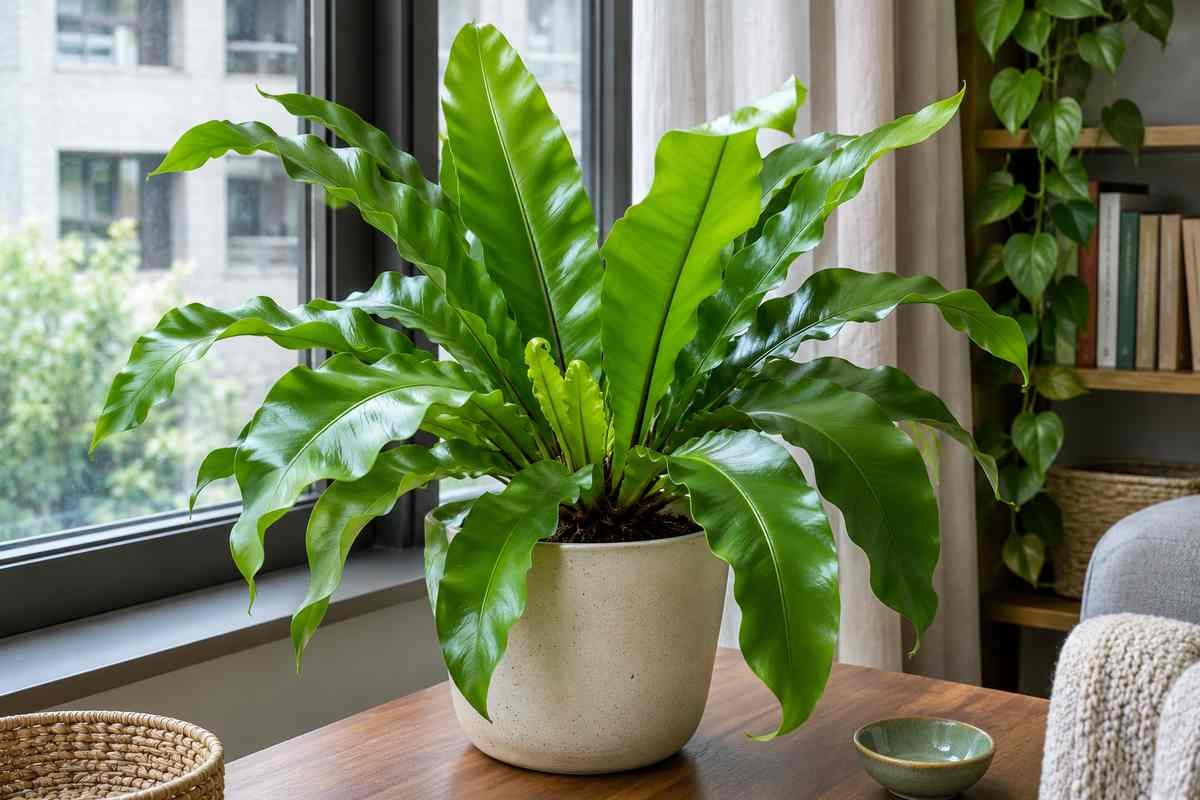
The bird’s nest fern (Asplenium nidus) is an epiphyte: in the wild it grows perched on tree trunks and branches rather than in the ground. Its wide, strap-shaped fronds unfurl from a central rosette, and indoors they typically reach 18 to 24 inches long, according to Clemson Extension.
How much light does a bird’s nest fern need?
A bird’s nest fern needs indirect light, anywhere from bright to fairly shady. Clemson Extension recommends a room with bright, indirect light, such as one facing east or north. NC State calls bright light or light shade suitable, and UF/IFAS Gardening Solutions says it handles partial to full shade outdoors.
Too much sun is the bigger risk. NC State and UF/IFAS both say that with too much sun the fronds turn yellow and the plant stops growing. If the fronds yellow near a sunny window, move the pot back or filter the light with a sheer curtain.
If you want a number rather than a window direction, the DLI calculator has a preset for ferns. The list of plants for a north-facing window has other options for the same spot.
Where to put a bird’s nest fern in a dim home
Put it in the brightest spot that gets no direct sun, and bring humidity to it there. The bathroom is the usual suggestion for a humidity-loving fern, but a bathroom with little natural light is a poor trade.
The care rules explain why. Clemson says to keep water out of the center of the plant and not to let the pot sit in a saucer of water, because that leads to root rot. NC State says to keep it away from drafts and direct heat. A dark, cool bathroom works against that: wet soil and water caught in the rosette stay wet longer when the room is dim and cool.
When an owner on r/plantclinic described a bird’s nest fern dropping discolored fronds in a basement bathroom with little natural light, one reply was blunt:
“Take it out of your bathroom. Ferns like airflow and it probably needs more light too”
– r/plantclinic (2 upvotes)
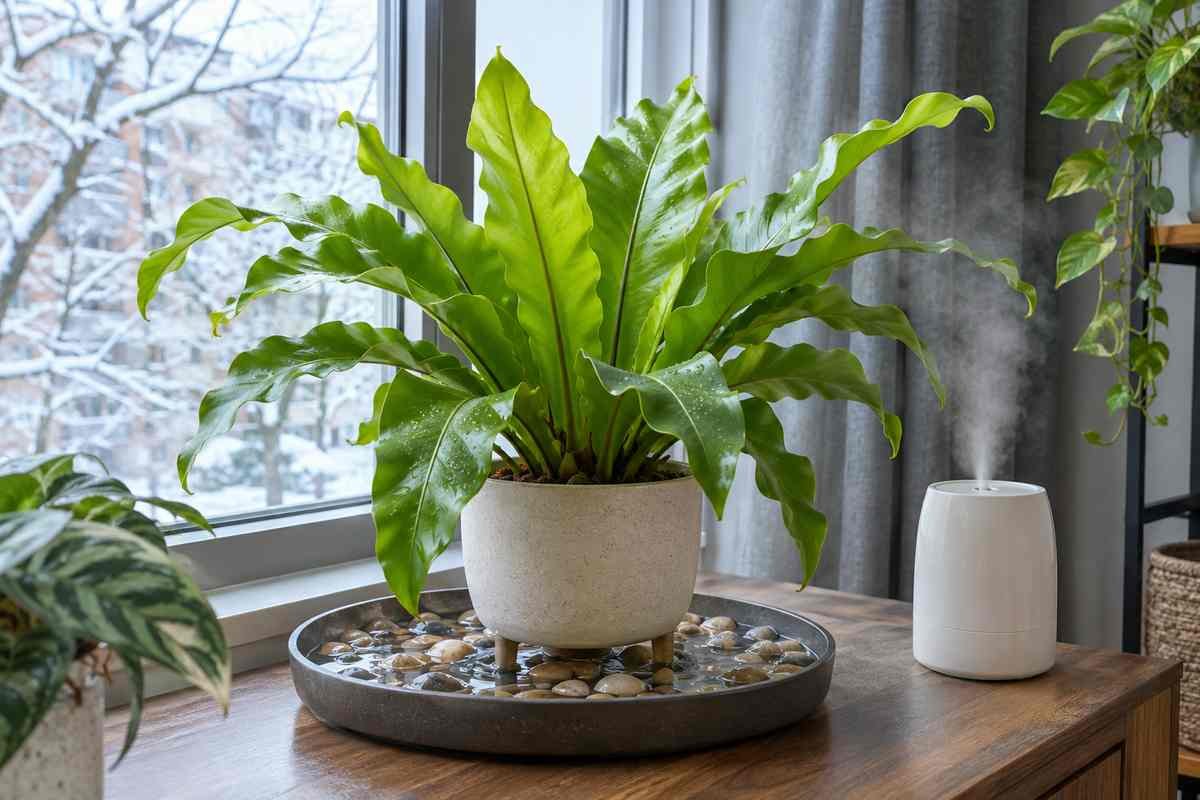
A bright bathroom with a window is a different case and can suit it well. In a north-facing apartment like the one I lived in for years, the better spot is close to the north window, with a humidifier nearby in winter.
Water at the edge, not the center
Water when the top inch of soil feels dry, and pour around the outer edge of the pot, not into the center. That is Clemson’s routine, and it adds two more rules: don’t let the soil dry out completely, and don’t leave the pot standing in water.
- Push a finger into the soil. If the top inch is dry, it’s time.
- Water slowly around the rim until water runs from the drainage holes, keeping the stream away from the rosette.
- Let it drain, then empty the saucer.
UF/IFAS notes that the bird’s nest fern is not drought-tolerant, so the opposite mistake matters too. In a dim room, check before you water rather than following a fixed day, because soil out of the sun dries more slowly.
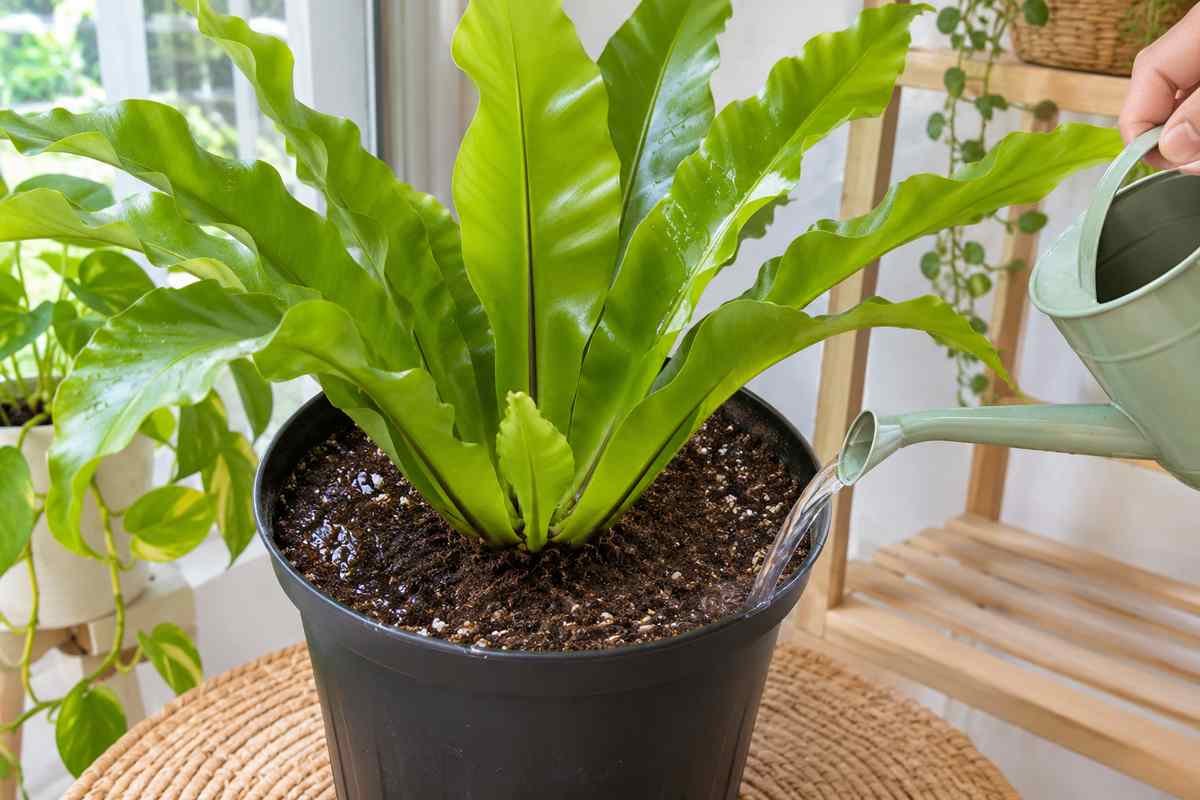
Dim light it can live with. A wet center is what it can’t take.
Bird’s nest fern care: humidity, temperature and soil
Humidity. Clemson suggests a humidifier nearby in winter, or a tray of pebbles and water with the pot sitting above the waterline. NC State also says a pebble tray may be needed. How much a pebble tray actually changes the air is covered in the guide to raising humidity in the house.
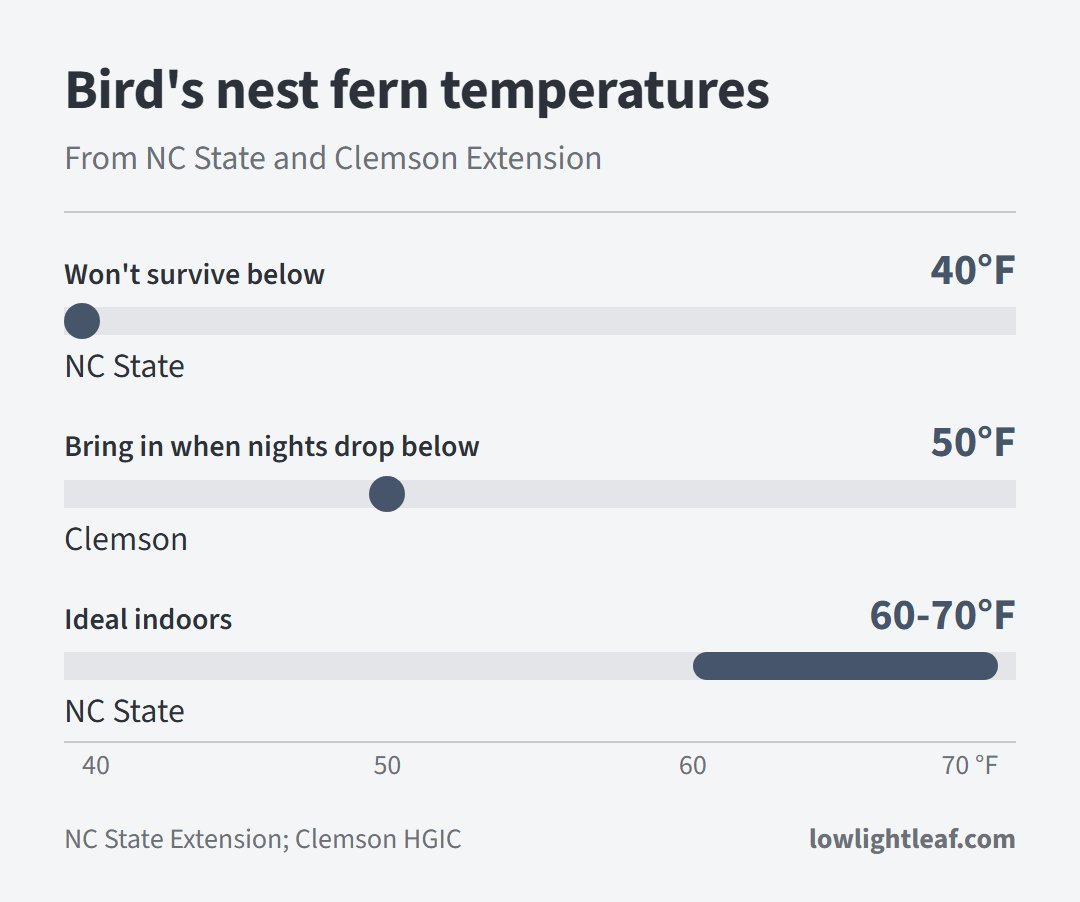
Temperature. NC State gives 60 to 70°F as ideal and says the plant won’t survive below 40°F. If yours spends summer outdoors in the shade, Clemson says to bring it back in before nights drop below 50°F.
Soil. Use a rich, well-drained mix high in organic matter. Clemson suggests potting soil labeled for indoor or tropical plants, and NC State a porous fern mix.
Feeding, repotting and pests
Feed once a month from late spring through summer with a houseplant fertilizer at half the label rate, per Clemson. The plant grows slowly, so it only needs repotting every few years, in spring when new growth appears. Pests are few: NC State lists slugs, snails, scale, mealybugs and leaf nematodes, plus bacterial leaf diseases. Go easy on sprays. UF/IFAS warns that insecticides are typically damaging to ferns, the bird’s nest fern included, and NC State lists chemical insecticides among the things it is susceptible to. UF/IFAS also suggests grooming off old brown or yellow fronds now and then.
Is a bird’s nest fern safe for cats and dogs?
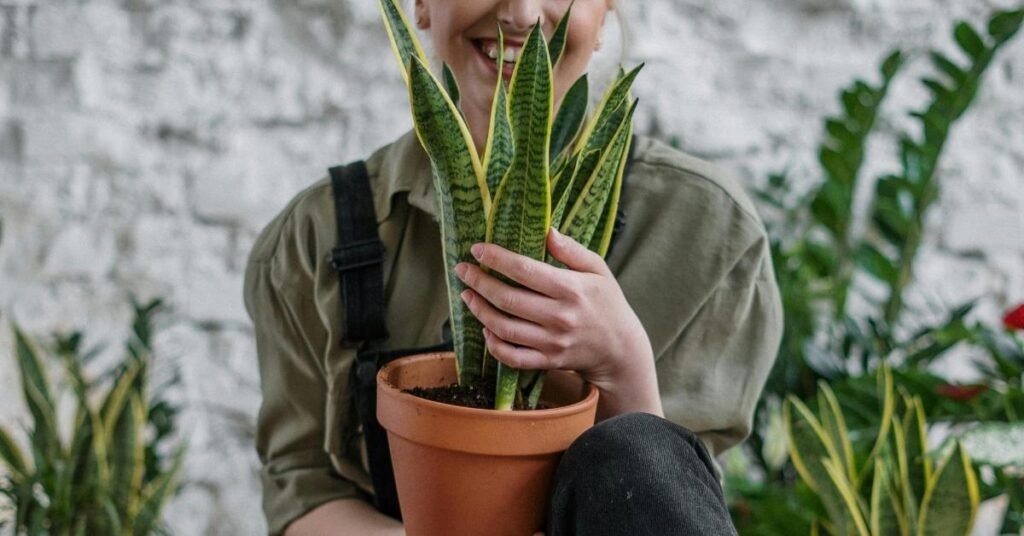
The ASPCA has no entry for Asplenium nidus, so there is no ASPCA verdict either way; Clemson’s fact sheet says ferns are considered non-toxic to pets. Check the botanical name on the tag, though. The only “bird’s nest” on the ASPCA list is Golden Bird’s Nest, which is a snake plant (Sansevieria trifasciata) and toxic to dogs.
With Miso in the house, I check every plant tag against the ASPCA list. The plant toxicity table has the full list, and are ferns toxic to dogs covers which ferns the ASPCA has actually rated.

Ellie Marsh
Houseplant grower who spent years in a north-facing apartment. Writes practical care guides for low light homes, checked against extension and botanical garden sources.