Last updated on November 7, 2026
For aloe vera plant care, South Dakota State University Extension asks for bright light, a gritty mix that dries out completely between waterings, a pot with drainage holes, and temperatures of 55 to 85°F. It usually needs no fertilizer and no extra humidity. What it does need is more light than most rooms give, and the ASPCA lists the plant as toxic to cats and dogs.
That makes aloe an odd fit for a site about dim rooms, and it’s worth saying plainly: this is a sun plant that tolerates a house, not a shade plant. Get the light right first and most of the usual problems never start.
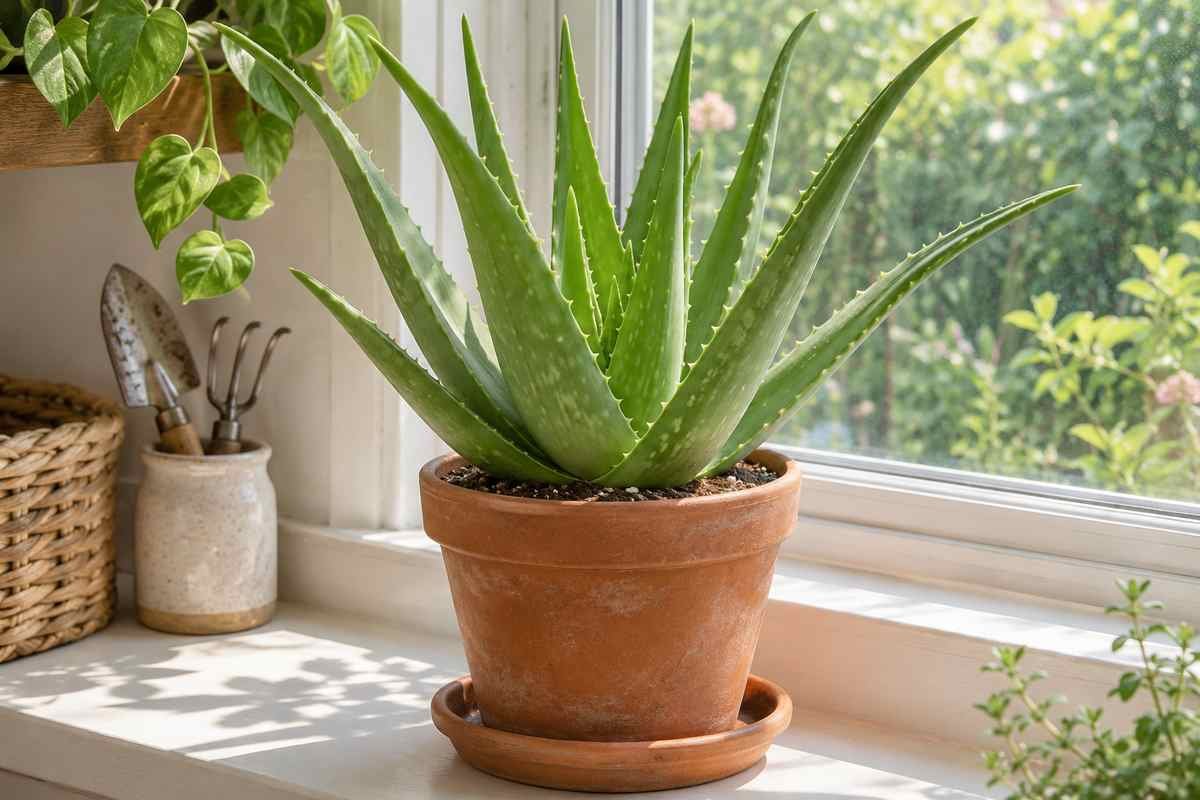
Where should you keep an aloe vera plant?
Keep an aloe vera plant in the brightest window you have, and NC State Extension rates it for full sun to partial shade. The three extension services I read don’t agree on direct sun, though, so here’s how they line up:
- NC State Extension grows it in full sun to partial shade.
- SDSU Extension asks for bright, indirect sunlight and warns that direct sun can burn the leaves.
- UF/IFAS Gardening Solutions says an aloe can sunburn when it’s moved from low to bright light too quickly.
Read together, the rule is about change, not about sun itself. An aloe that has lived in strong light handles it; one that has been sitting in a dim corner needs to be moved toward brighter light in steps. UF also notes the reverse stress, from a warm sunny spot to a dimmer indoor one, which is what happens when a plant comes back inside after summer.
The signs that light is too low are specific. SDSU’s aloe vera houseplant sheet says a lack of light makes the plant leggy with weak leaves, and too little light makes the leaves droop. In the north-facing apartment I had for years, an aloe would have needed a grow light right above it, and the DLI calculator is the way to tell whether a window is anywhere close. If the answer is no and a light isn’t in the plan, a different succulent is the kinder choice; low-light succulents and haworthia care are where I’d look.
Aloe vera plant care: watering
Water thoroughly, then wait until the mix is dry. NC State’s aloe vera profile says to let the soil dry completely between waterings and to water less in winter. SDSU agrees, adding that the plant goes dormant in winter. UF/IFAS gives a slightly looser test: water when the top inch of soil is dry to the touch.
A routine that fits all three:
- Push a finger into the mix. If the top inch is still damp, stop there.
- When it’s dry, water slowly until water runs out of the drainage holes.
- Empty the saucer. UF says never to let the plant sit in water, and SDSU ties standing water to root rot.
- In winter, stretch the gap. Dry mix for a while is safer than wet mix.
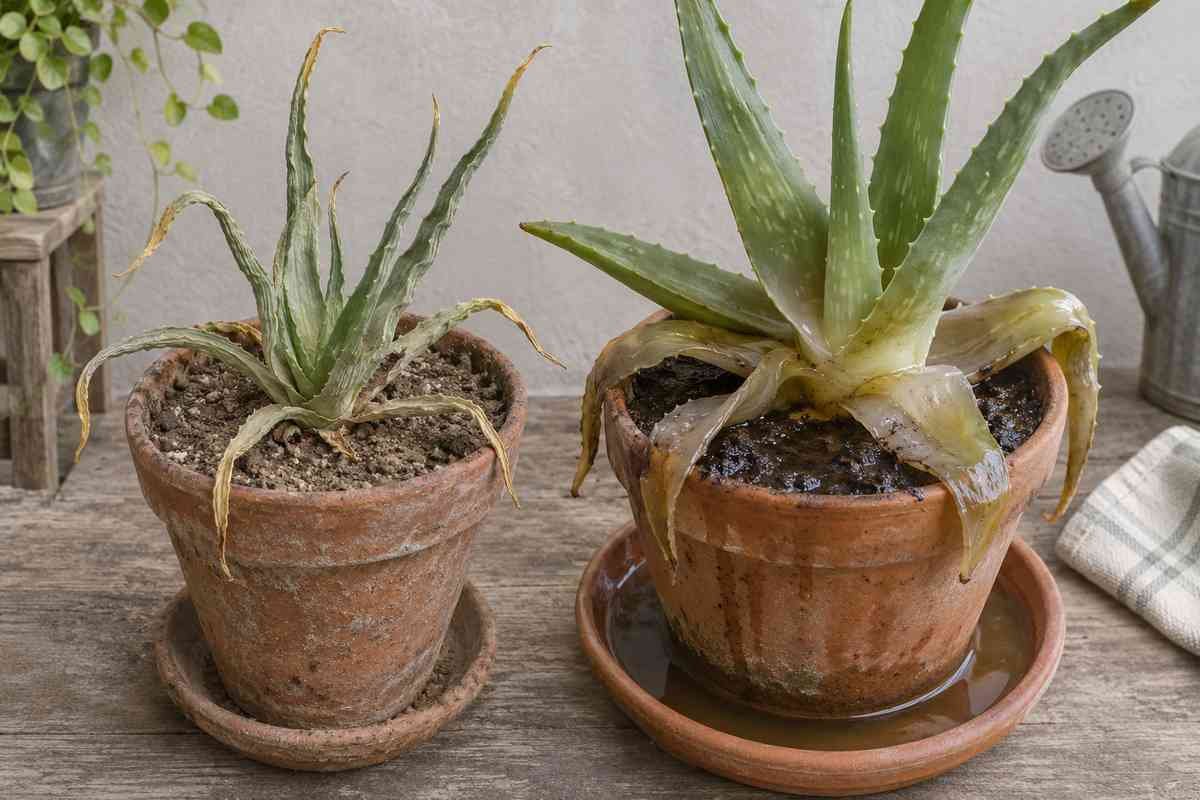
Underwatering shows up differently from overwatering. SDSU describes a thirsty aloe as having yellow, shriveled, puckered leaves that recover once it’s watered. Root rot from overwatering is the one it says has no treatment and can be fatal if it isn’t caught early.
Soil, pots and repotting
SDSU says aloe grows naturally in nutrient-poor soil and does best in sandy soil or a premixed cactus potting mix. NC State wants very well-drained soil suited to succulents and a pot with several drainage holes, and it names clay as the best pot material.
Pot size is the part people get wrong. UF/IFAS says the size of the pot controls the size of the plant: a small pot keeps an aloe small, a bigger pot lets it grow. Its limit is firm, though. Don’t go up more than two pot sizes at once, because a container that’s too large holds too much moisture and can lead to root rot.
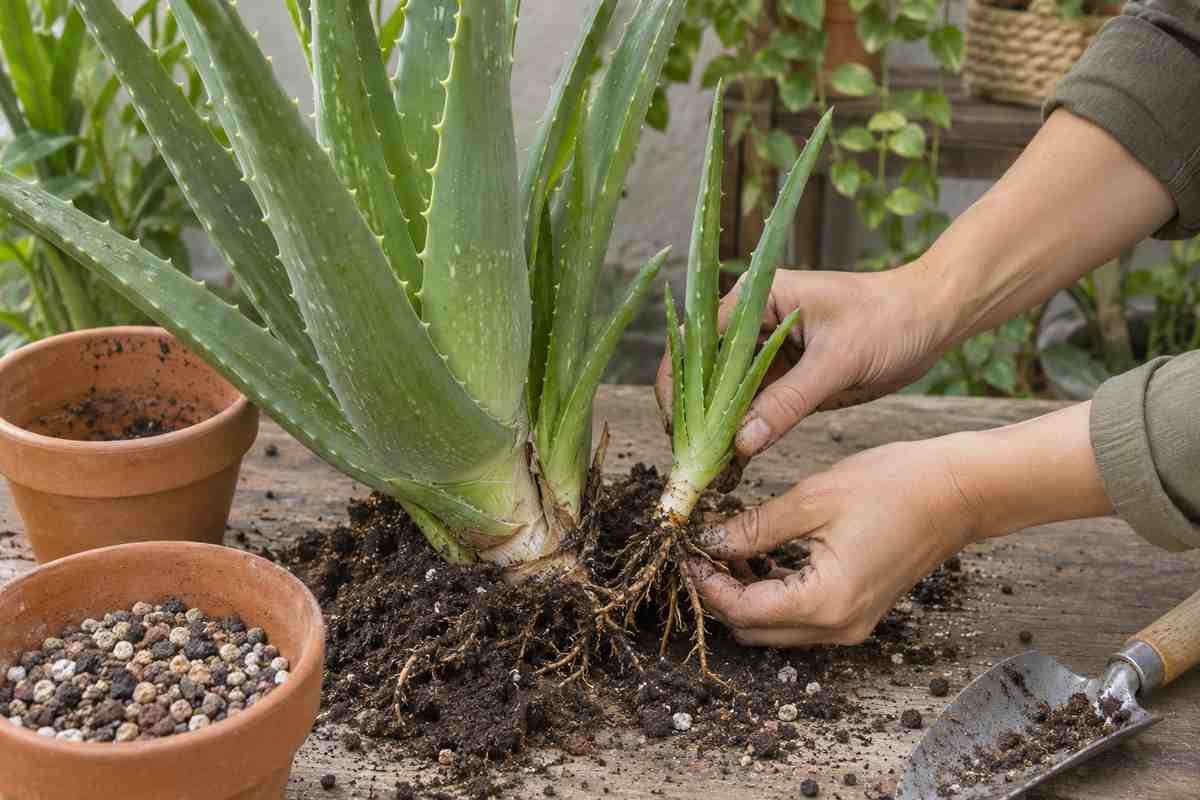
Aloes spread by offsets, the small plants that come up around the base, and NC State lists division as the way to propagate them. Repotting is the natural time to separate the pups into their own small pots.
Temperature, humidity and feeding
SDSU puts aloe’s comfortable range at 55 to 85°F and points out that most homes already sit inside it. The plant can’t take frost, so a pot that spends summer outside comes back in before the cold does.
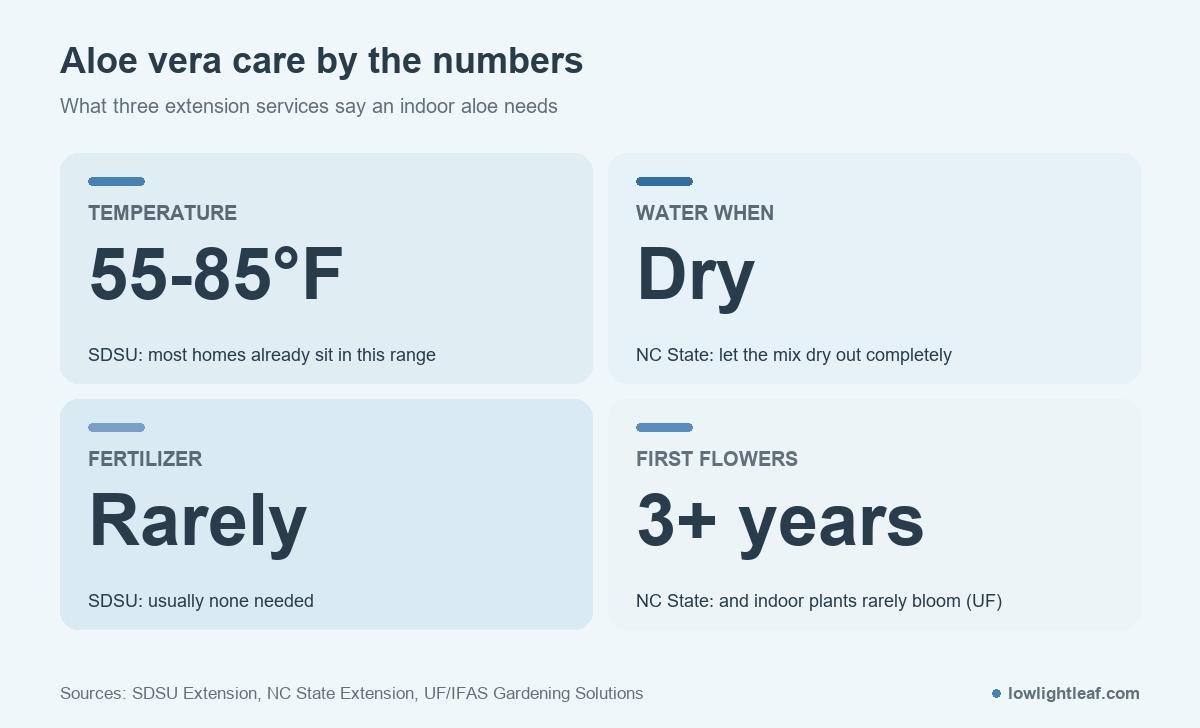
Skip the humidifier. SDSU says aloe doesn’t need any extra and that dry winter air in a heated home suits it. Feeding is similar: SDSU says no fertilizer is usually required to keep the plant healthy.
What are common aloe vera problems?
The common aloe vera problems are too little light, too much water and a pot that’s too big, and they often arrive together. When an r/houseplants member asked why their aloe kept declining, the top reply listed exactly that:
“pot too big too much water not enough light ETA: not enough chunk (perlite, bark) in soil”
– r/houseplants, May 2026 (279 upvotes)
Every item on that list matches an extension warning above, and on a different aloe post asking what had gone wrong, the most upvoted answer was even shorter:
“It lacks light.”
– r/houseplants, October 2026 (29 upvotes)
Matched to a cause, SDSU and NC State give you this:
- Leggy, stretched growth or drooping leaves: not enough light (SDSU).
- Yellow, shriveled, puckered leaves in dry mix: thirst; it should recover after a thorough watering (SDSU).
- Soft, collapsing base in wet mix: root rot from overwatering (SDSU, NC State).
- Yellow spots turning brown: aloe rust, which SDSU says usually needs no treatment; it links rust and fungal disease to cool temperatures with high humidity.
- White fluff and sticky residue at the base: mealybugs, which SDSU says gather there and can be treated with insecticidal soap used as the label directs. Getting rid of mealybugs has the full routine.
SDSU also names aloe scale and aloe mite, and NC State adds aphids, leaf spot and sooty mold.
Will an indoor aloe vera flower?
An indoor aloe vera probably won’t flower, and that isn’t a sign anything’s wrong: UF/IFAS says plants grown indoors rarely bloom.
NC State adds that an aloe has to be at least three years old before it sends up a stem of tubular orange to yellowish flowers. Outdoors, UF says the flower stalks come in late winter or spring. If yours never flowers, the leaves are doing their job.
Is aloe vera safe for pets?
Aloe vera isn’t safe for pets: the ASPCA lists it as toxic to cats, dogs and horses because of the saponins and anthraquinones in the leaf, while noting that the gel inside is considered edible.
SDSU’s own sheet says neither people nor pets should eat the plant. I look up every plant on the ASPCA list before it comes home, and aloe is one I’d keep on a shelf a cat can’t reach. Is aloe vera toxic to cats goes through the symptoms, and the plant toxicity checker has the entry alongside safer succulents.
If you remember one thing, make it the order: light first, water second. An aloe in a bright window that’s allowed to dry out asks for almost nothing else.

Ellie Marsh
Houseplant grower who spent years in a north-facing apartment. Writes practical care guides for low light homes, checked against extension and botanical garden sources.