Last updated on November 7, 2026
Springtails in soil are tiny, wingless, jumping creatures about 1/16 inch long that feed on fungi and decaying organic matter in damp potting mix. The University of Minnesota Extension says they’re harmless to people and pets and rarely damage plants. A crowd of them in a pot means the soil is staying too wet, and letting it dry out between waterings is the fix.
If you’ve just watered a plant and seen a scatter of white or gray specks hop across the surface, that’s the classic sighting. Here’s how to confirm it, what it says about your watering, and why a spray isn’t the answer.
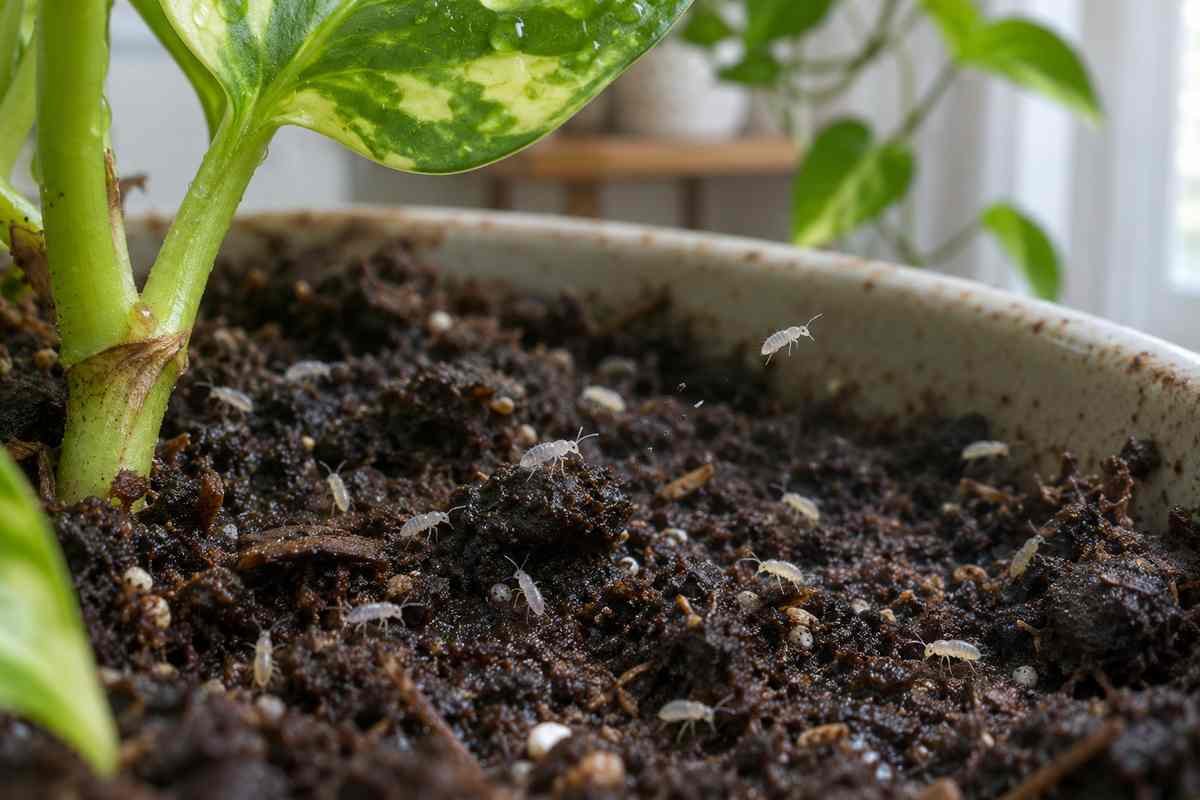
What do springtails in soil look like?
Springtails look like specks of dust that jump. The UC IPM pest note on springtails puts them at about 1/16 inch, with young ones whitish and adults whitish, bluish, or dark gray to black. Their name comes from a tail-like spring, the furcula, folded under the abdomen; when disturbed, it flicks them up to several inches into the air.
Minnesota adds that most springtails are dark, though some species are white, and that they have soft bodies that crush easily. They have no wings and can’t fly. Colorado State University Extension, which notes they aren’t classed as insects anymore, gives the most useful clue for houseplant owners: springtails are most often noticed just after watering, when they move up out of the saturated soil to the surface.
That makes for a simple check you can do at the next watering:
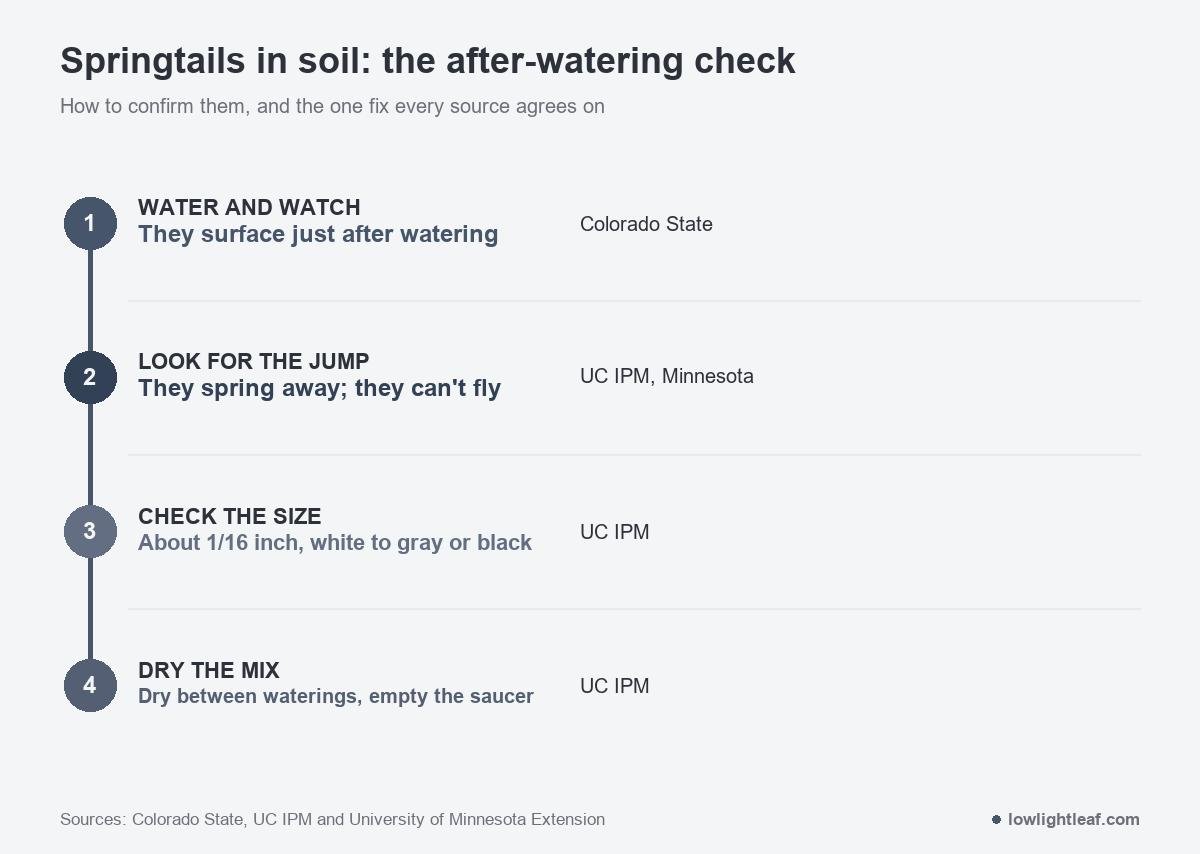
- Water the plant as usual and watch the soil surface for a minute.
- Touch the surface lightly. Springtails jump away; they don’t fly up.
- Look at the size and color: about 1/16 inch, whitish to gray or black.
- If that’s what you see, the fix is in the watering, covered below.
Are springtails harmful to plants?
Springtails aren’t harmful to established houseplants. Iowa State University Extension says they can be abundant in overwatered potted plants but don’t harm established ones, and Wisconsin’s horticulture team says plainly that they will not harm houseplants. Colorado State describes the damage as minimal.
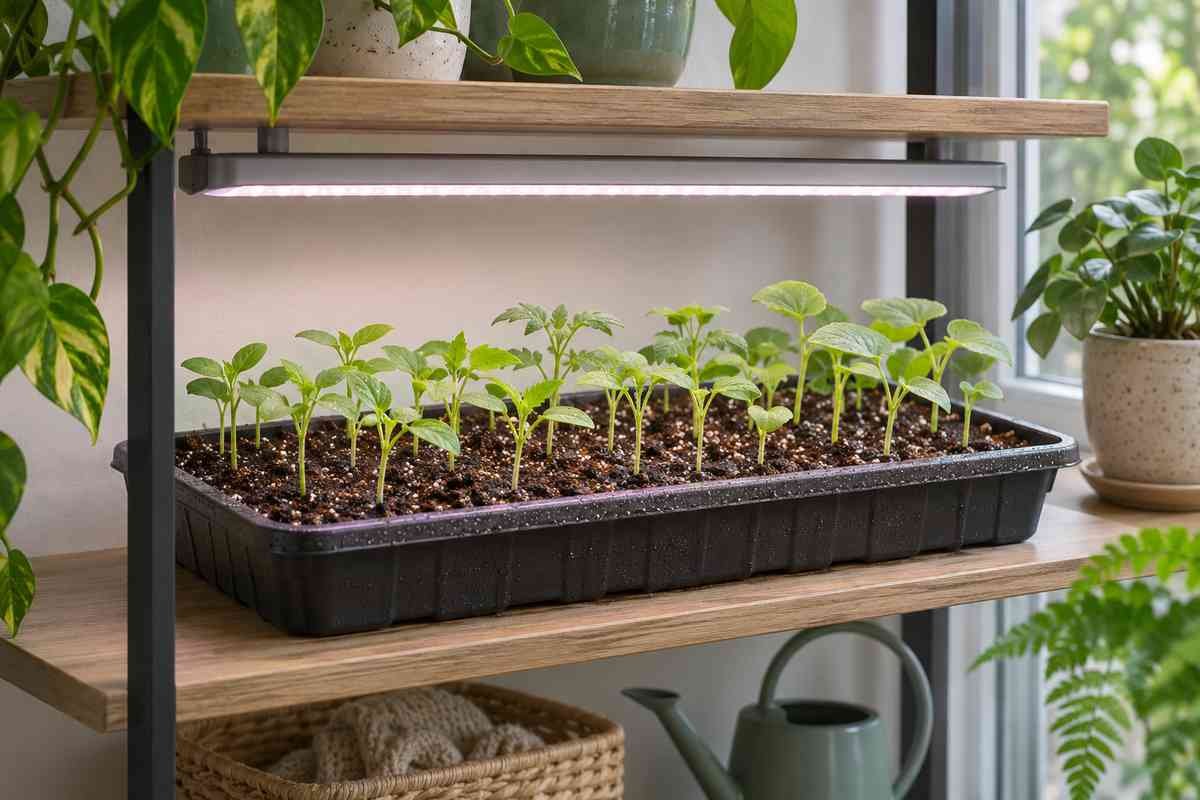
There’s one exception worth knowing. UC IPM says some species can chew the roots and leaves of seedlings, leaving tiny rounded pits or irregular holes, and that young seedlings damaged this way may wilt and die. Mature plants, it adds, aren’t significantly injured. So a tray of seedlings under a grow light deserves more attention than a pothos that’s been in its pot for two years.
For the rest of the house, they’re a nuisance, not a danger. Minnesota says springtails don’t bite or sting and are harmless to people and animals, and UC IPM says they don’t spread disease or damage furnishings.
Why are springtails in your houseplant soil?
Springtails are in houseplant soil because it’s wet and full of food: Minnesota says they’re common in the soil of overwatered houseplants and prefer excessively damp soil or a mix that’s high in peat.
UC IPM lists soil amended with compost among their favorite places, and says they feed on decaying plant material, fungi, molds and algae.
UC IPM also calls their continued presence indoors an indicator of moisture, which is the useful way to read them. A pot full of springtails is a pot that isn’t drying out. In a houseplant, that usually means watering again before the mix has dried, or a saucer that holds water after every drink, which UC IPM warns against by name. If there’s a fuzzy white layer on the surface too, mold in plant soil has the same cause and a similar fix.
Drying out springtails in soil
To get rid of springtails in houseplant soil, let the mix dry out. Every extension source here leads with that, and Wisconsin says allowing the soil to dry will usually eliminate them. In practice:
- Water less often. Iowa State says to let potted plant soil nearly dry out between waterings. Minnesota’s springtails page says to water less frequently but more deeply.
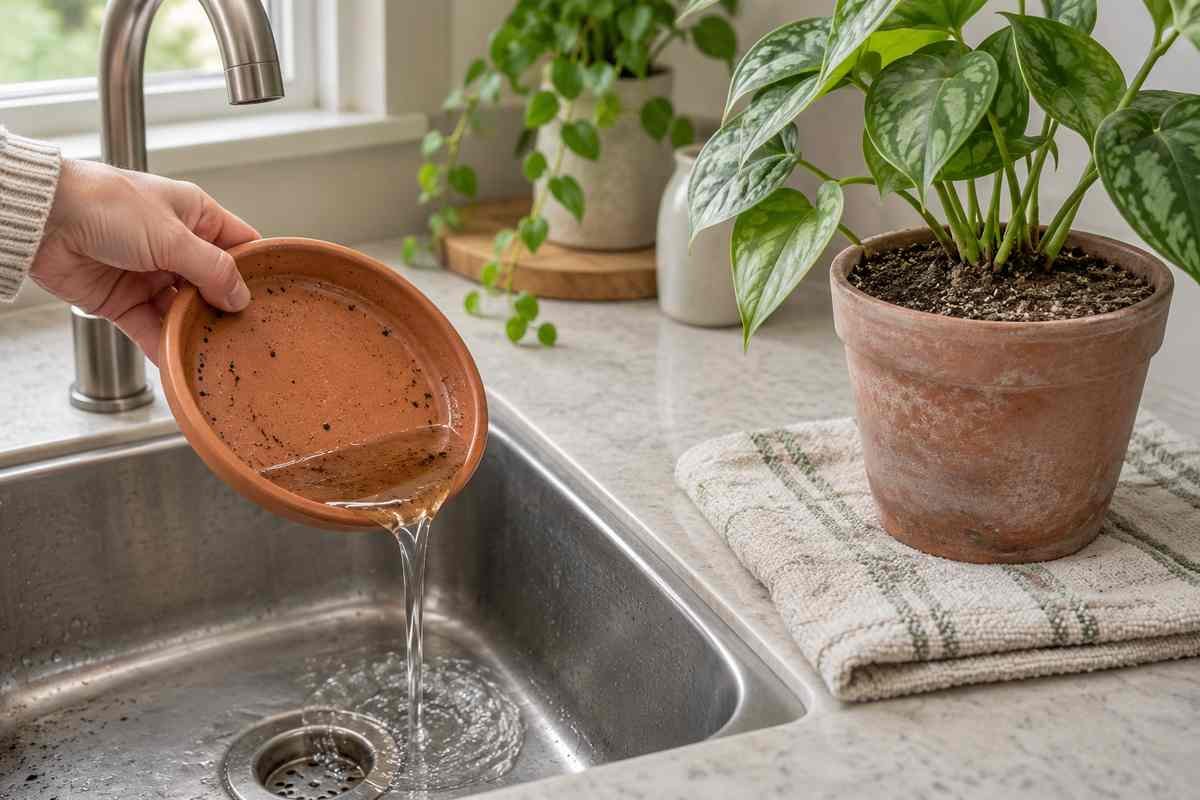
- Empty the saucer. UC IPM says not to let drain water stand in saucers between waterings.
- Dry the air around them. UC IPM and Iowa State both suggest airing out damp areas, and a fan speeds it up.
- Remove the ones you see. Minnesota says small numbers can simply be ignored or removed by hand or with a vacuum.
Should you spray for springtails?
Mostly no, though the sources don’t fully agree. Minnesota is the firmest: it says pesticides aren’t effective against springtails and shouldn’t be used inside the home for them. UC IPM says insecticide sprays are generally not recommended and are often no more effective than vacuuming. Colorado State says pesticides shouldn’t be necessary, while noting that soap or detergent sprays kill them on contact.
Iowa State is the outlier. It says houseplant insecticide sprays, the ready-to-use products labeled for houseplants, can be applied to the soil surface and around the pot. Even so, it lists avoiding overwatering first. My take: a spray buys what UC IPM calls temporary relief at best, while dry soil removes the reason they came, so I’d skip it for a houseplant.
Springtails vs fungus gnats and soil mites
Two look-alikes are worth ruling out before you change anything.
Fungus gnats fly. Springtails have no wings, so small dark insects lifting off the pot when you water are a different problem, though it comes from the same wet soil. Getting rid of fungus gnats is the page for that one.
Mites are harder. None of the extension pages I used compares springtails with soil mites directly, and people who keep terrariums get them wrong too. On an r/terrariums post titled as a springtail infestation, the top reply disagreed:
“Those are not springtails. Those are food mites, so you might want to start wiping them away.”
– r/terrariums, April 2026 (308 upvotes)
The jump is the most reliable test available without a microscope, since every extension source here describes springtails by it. If the specks only crawl, treat the springtail label as unconfirmed and look closer with a hand lens.
When springtails are welcome
Terrarium keepers often add springtails on purpose, because they eat mold and fungi, which is the same diet UC IPM describes. One r/houseplants member tried the idea in ordinary pots:
“I decided to put some of them in my houseplants because I’ve been having issues with fungus gnats and fungal growth on the surface of the soil in my pots. After a few weeks, I have noticed a significant decrease in fungus and I don’t get the strong mold smell that I used to get after watering my plants.”
– r/houseplants, June 2026 (51 upvotes)
That’s one grower’s result, not a tested method, and it doesn’t change the main point. In a closed terrarium, constant moisture is the design. In a houseplant pot, a thriving springtail population means the mix is wetter than the plant wants, and I’d fix the watering before I’d celebrate the cleanup crew.
Read springtails as a moisture gauge. When they show up, the soil is telling you to water less, and when the mix dries properly, most of them go with it.

Ellie Marsh
Houseplant grower who spent years in a north-facing apartment. Writes practical care guides for low light homes, checked against extension and botanical garden sources.