Last updated on October 31, 2026
How to keep Christmas tree alive through the holidays comes down to three things: give it a fresh straight cut, set it in a stand that holds at least a quart of water per inch of trunk diameter, and top up the water every day so it never drops below the base. University of Illinois Extension says plain water is all it needs, and a cut tree kept this way lasts three to four weeks.
The usual way to lose a tree early is a cut that dried out. Illinois says that if the base dries, resin forms over the cut end and the tree can’t absorb water. Each step below is about keeping water moving into the trunk.
The first day: from the lot to the stand
Here is the order Illinois and Washington State University Extension give for getting a tree from the lot into the stand:
- Test the tree before you pay. WSU’s Christmas tree specialist Gary Chastagner suggests tapping the trunk on the ground a couple of times. A few brown needles from inside the tree are normal. If it sheds more than a few green ones, it’s already drying out.
- Park it in a bucket if it isn’t going up today. Illinois says to keep it in an unheated garage out of wind and freezing temperatures, with a fresh 1/2-inch cut and its base in a bucket of water.
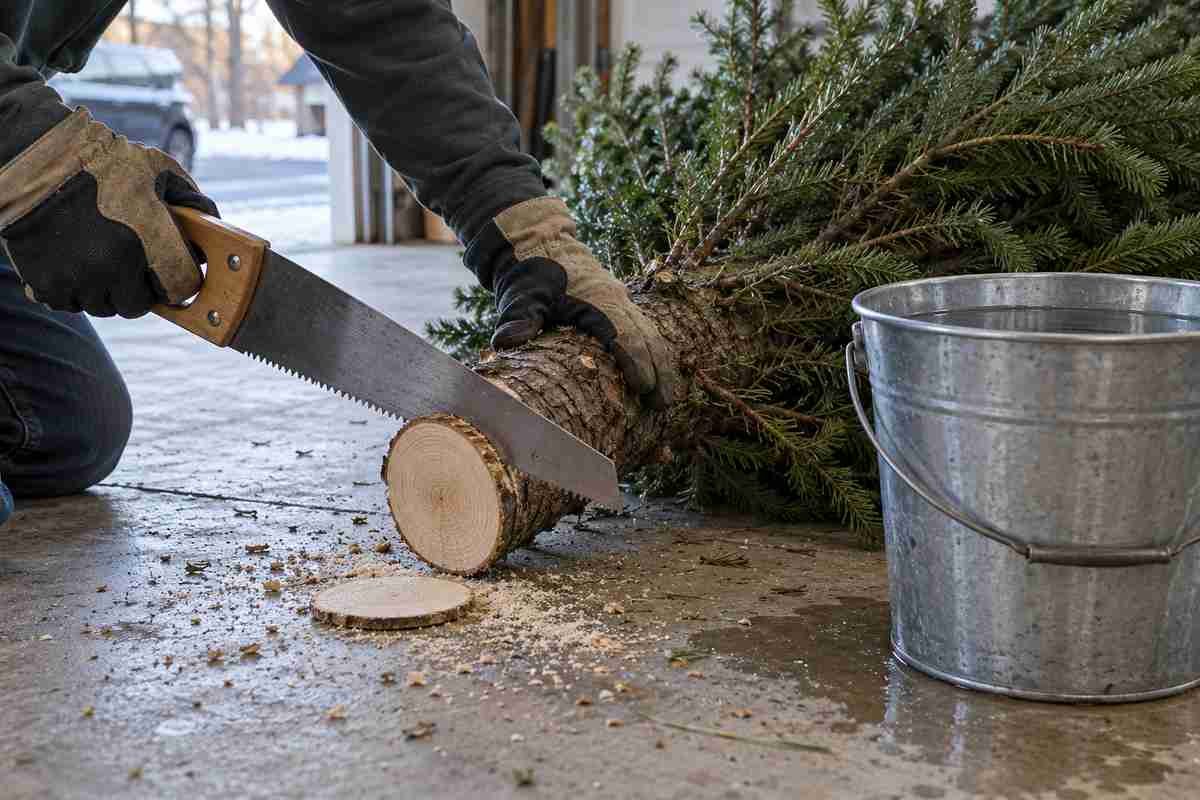
- Cut again right before it goes in the stand. Illinois recommends another fresh 1/2-inch cut; WSU says about a quarter inch is enough. Either way, the cut has to be fresh, because a dried base seals itself with resin.
- Cut straight across. Both sources say no angles and no V-shapes. An angled cut makes the tree wobble in the stand, and part of it ends up above the waterline as the level drops.
- Don’t whittle the trunk to fit. If you have to shave the sides to get it into the stand, the stand is too small. Illinois Extension explains that the outer layers of wood take up most of the water, so trimming them cuts off the tree’s main supply.
- Fill the stand immediately. WSU says to put the tree in water right after the cut and keep the reservoir topped off with fresh cold water.
Don’t skip that last step. A cut tree drinks a surprising amount in the first week, Illinois notes, and once the base dries out the resin seal stops it drinking.
How much water does a Christmas tree need?
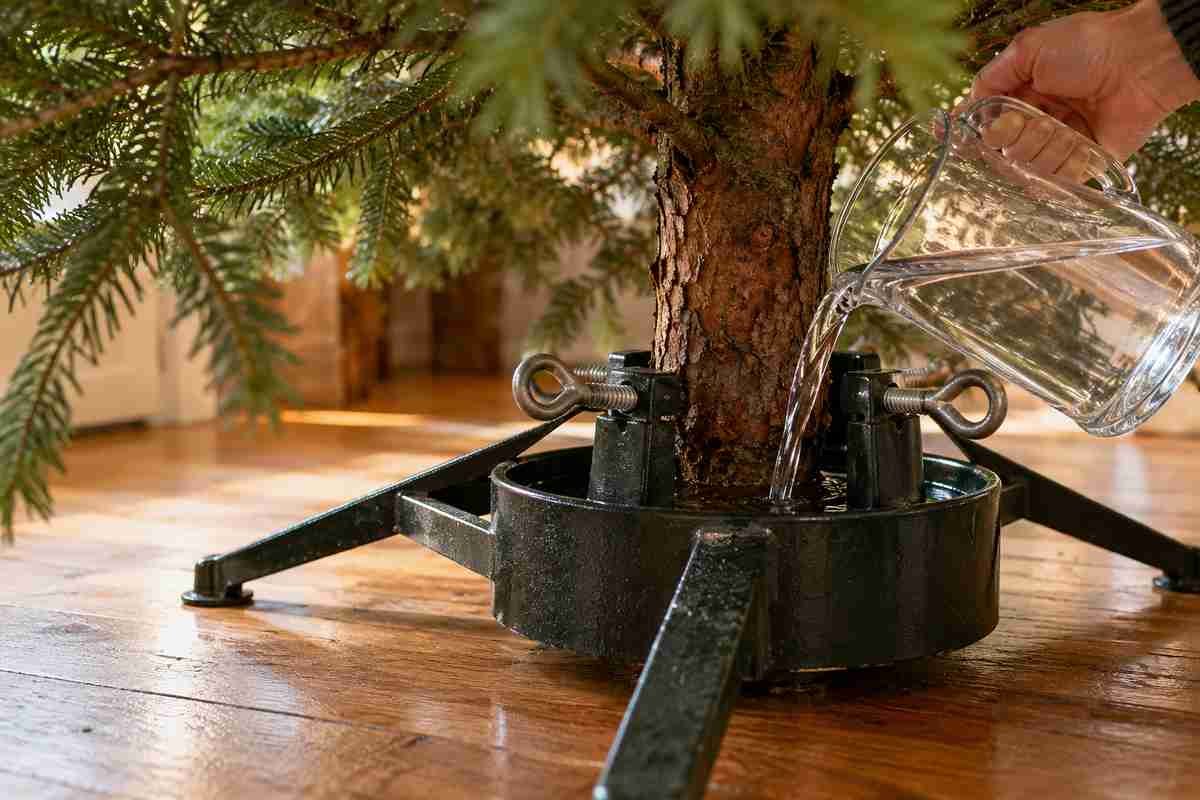
A cut Christmas tree needs about one quart of water per day for each inch of trunk diameter. That’s the rule. WSU Extension’s Gary Chastagner puts the average 4-inch tree at a gallon a day or more, and Illinois sizes the stand by the same ratio, asking for at least a quart of capacity per inch of stem diameter.

The box can mislead you. Chastagner says the capacity printed on a stand’s box can be misleading, because it’s the volume of the empty reservoir. Once the trunk is in, it displaces part of that water. So a stand sold as holding a gallon holds less than a gallon of usable water with a tree in it.
The practical fix is to measure the trunk across the cut end before you buy the stand, then pick one with room to spare. For the first week, WSU suggests checking the level a couple of times a day. After that, Illinois says to check it daily and keep it above the base.
Skip the sugar, aspirin and bleach
Plain water keeps a cut tree fresh, and additives don’t help. Chastagner says research found that commercial additives, sugar, 7-Up, bleach and other home remedies provide no benefit whatsoever. Illinois adds molasses, soft drinks, aspirin and tree preservatives to the list of things that aren’t necessary.
One product can make things worse. Illinois says water-holding gels are not beneficial and can actually reduce the amount of water available to the tree. If a lot sells you a preservative or a gel with the tree, you can skip both and spend the money on a bigger stand.
Where to put the tree
Keep the tree as far as you can from heaters, vents, radiators, fireplaces and direct sunlight. Both Illinois and WSU say heat sources speed up drying, and WSU adds that a cooler room slows drying and reduces how much water the tree uses.
If you have a cat, placement has a second job. The stand water and tinsel are bigger risks than the needles; are Christmas trees toxic to cats covers covering the stand and what to leave off.
How long does a cut Christmas tree last?
A well-watered cut tree lasts about three to four weeks before drying out, according to Illinois Extension. Count those weeks from when it goes into water at home, and plan the purchase date around when you want it at its best.
Plenty of people want more. A January post in r/ChristmasTrees with 254 upvotes put it plainly:
“if I could I would 100% keep my tree up all January, and it makes me sad to have to get rid of it before I’m ready because it’s old :’) I’m thinking today might have to be the day, as it hasn’t been drinking much since Christmas”
– r/ChristmasTrees, January 2026 (254 upvotes)
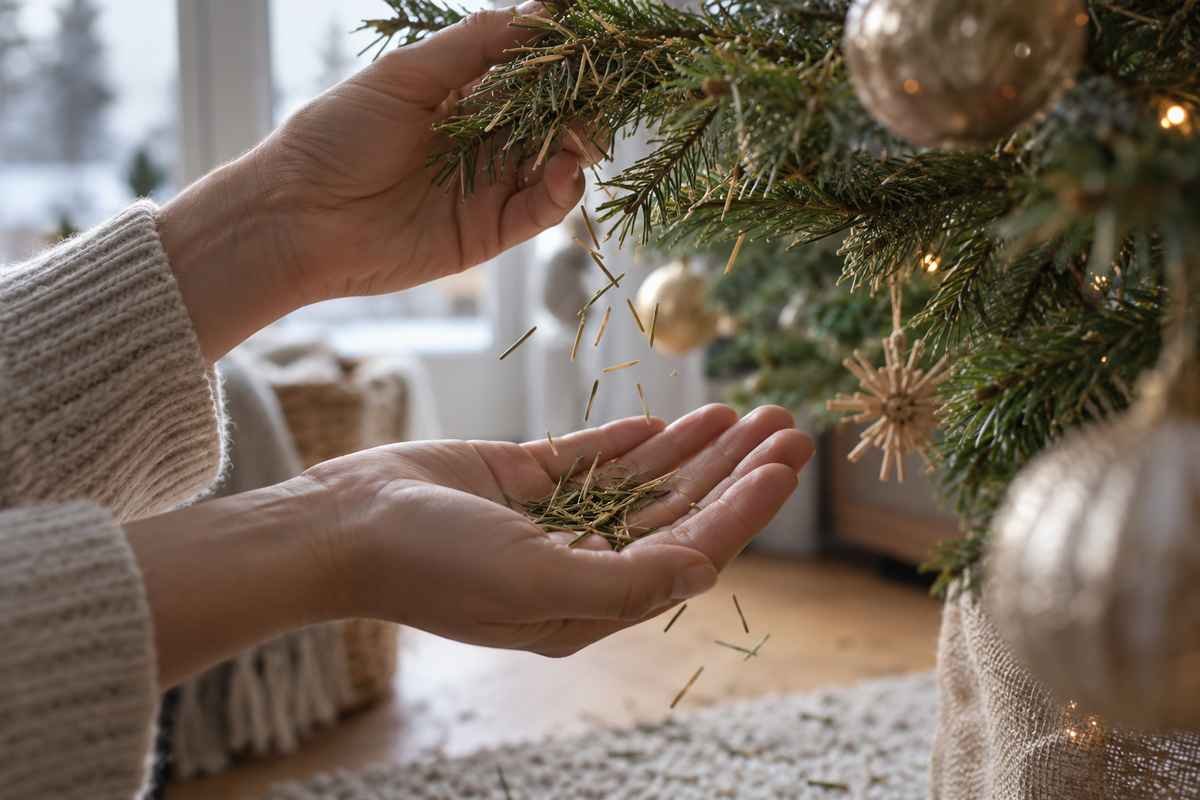
A tree that stops drinking is the signal to watch. Illinois gives a simple test: run your hand along a branch. If the needles break easily or come off in your hand, the tree is dry and should come out of the house. WSU notes that keeping the tree hydrated is also what keeps it from becoming a fire hazard, so a dry tree is a safety call, not just a looks call.
Keeping a living Christmas tree alive indoors
A living tree, sold in a pot or with its roots balled in burlap, can stay indoors for only 7 to 10 days at most. Iowa State University Extension gives that ceiling because a longer stay can wake the buds from dormancy, and that soft new growth is killed by cold once the tree goes back outside.
Penn State Extension splits living trees into two kinds, and they’re handled differently:
- Container trees are usually small tabletop trees. Their light potting mix dries quickly indoors, so check them daily and keep the soil moist without letting the pot sit in standing water. Some aren’t winter hardy and have to stay potted for good, so read the tag.
- Balled-and-burlapped trees have to be planted outdoors. Penn State suggests letting one adjust in a garage or shed for one to two weeks before it comes inside, setting it in a watertight tub with stones in the bottom, and digging the planting hole before the ground freezes.
After Christmas, Iowa State says to move the tree to a cool garage or porch for several days before planting, never straight from the living room into the cold. One r/ChristmasTrees reply pointed a reluctant tree-tosser toward a living tree instead:
“Buy a rooted small tree, if you truly love the smell? Your local nursery can find you a tabletop one (soil and roots gets heavy, fast, smaller is better).”
– r/ChristmasTrees, January 2026 (10 upvotes)
If you’d rather have a tree that lives indoors all winter, a Norfolk Island pine is a houseplant, not a dormant conifer, so the 7-to-10-day limit doesn’t apply to it. A small rosemary tree is another living option for a tabletop; is rosemary safe for cats covers that one.
How to keep Christmas tree alive: stands, watering and revival
My tree stopped drinking. Can I revive it?
Sometimes. Illinois says a tree that isn’t taking up water needs a fresh cut, because resin has likely sealed the base. Take it down, cut about half an inch off and set it straight back in water. That only helps while the needles still bend; if they snap or rain off, the tree is past saving.
What do you put a real Christmas tree in?
A cut tree goes in a sturdy stand with a water reservoir that holds at least a quart per inch of trunk diameter, which Illinois says comes to at least a gallon for most trees. A living tree goes in a watertight tub or large saucer instead, per Penn State and Iowa State.
How to keep Christmas tree alive indoors, day to day?
Pour plain cold water into the stand until the reservoir is full, and refill it before the level reaches the bottom of the trunk. In the first week WSU suggests checking a couple of times a day. Keep the room cool and the tree away from vents and fireplaces, which both Illinois and WSU say speed up drying.
If it has stopped drinking and the needles come away in your hand, it’s done. A fresh cut buys time only while the wood above the seal is still alive, so the habit that matters is the one from day one: never let the stand run dry.

Ellie Marsh
Houseplant grower who spent years in a north-facing apartment. Writes practical care guides for low light homes, checked against extension and botanical garden sources.