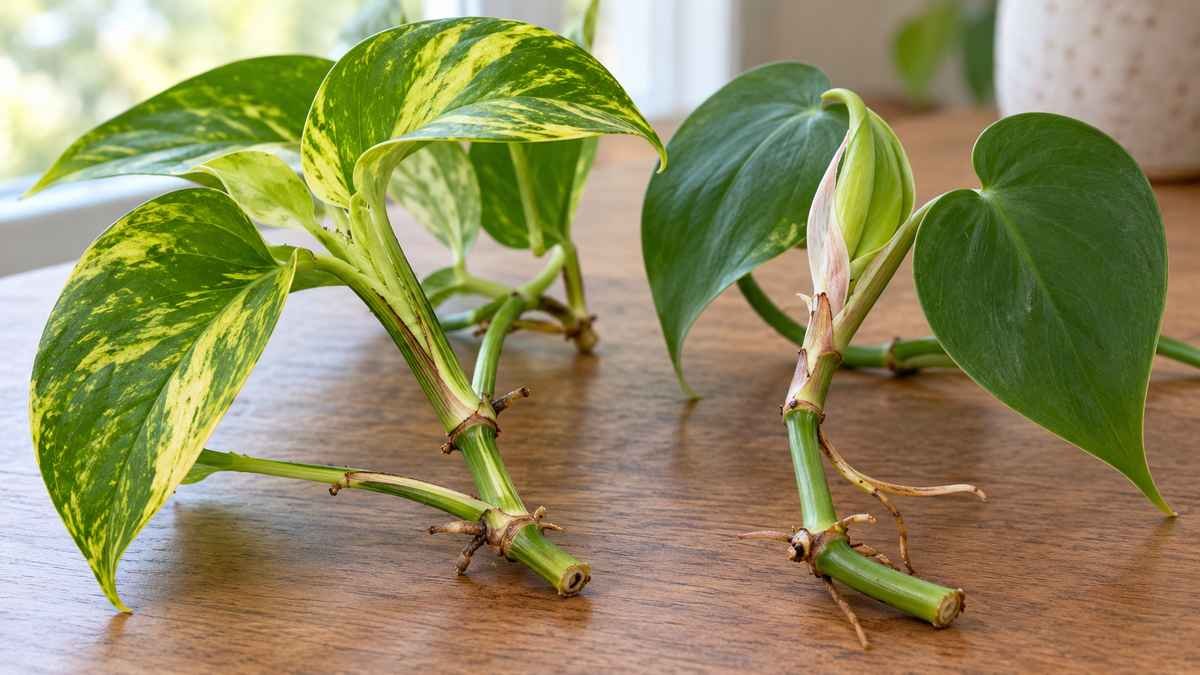
Two quick checks separate them: a pothos has a grooved leaf stalk and no sheath around its new leaves, and a heartleaf philodendron has the opposite, a stalk with no groove and a sheath. The extension pages say their care differs mainly in light and warmth, and for a dim room they lean toward philodendron. With a cat in the house, neither is a safe pick.
Pothos is Epipremnum aureum and heartleaf philodendron is Philodendron hederaceum. I read nine pages for this pothos vs philodendron comparison: Clemson, NC State, four from the University of Florida and the ASPCA entries for both plants, plus two Reddit threads. No page I found compares the two side by side, so the table below is my own lining-up of what each one says, with the disagreements left in.
How can you tell pothos from philodendron?
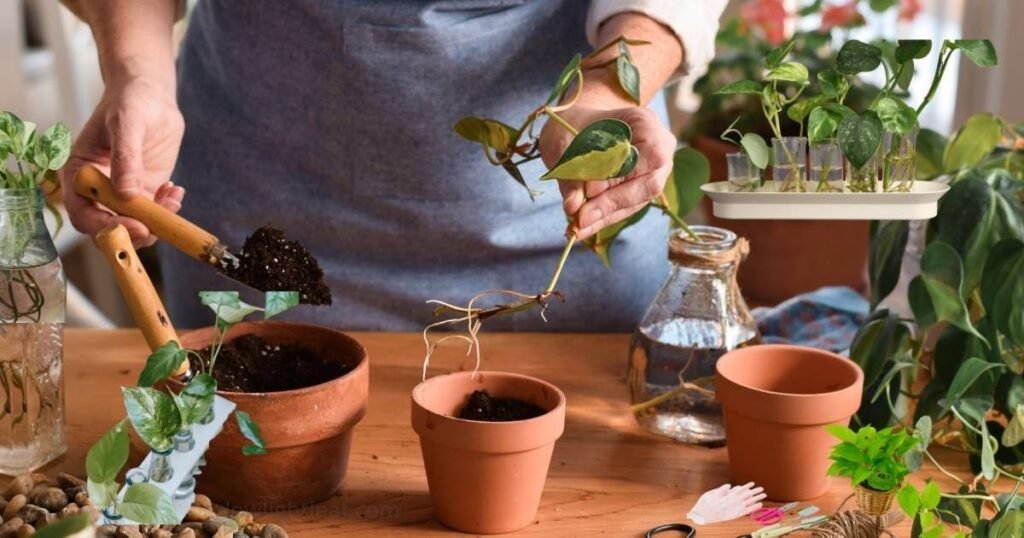
Look at the leaf stalk and at a new leaf. Clemson Extension says pothos leaf stalks are grooved and philodendron stalks are not, and that each new philodendron leaf comes out of a sheath that dries up and falls off, which pothos doesn’t have.
| Check | Pothos | Heartleaf philodendron |
|---|---|---|
| Leaf stalk | Grooved (Clemson, NC State) | Not grooved (Clemson, NC State) |
| New leaf | No leaf sheath (Clemson); no conspicuous free stipules on new growth (NC State) | Emerges from a sheath that dries and falls off (Clemson); large, free stipules on new growth (NC State) |
| Leaf surface | Glossy, folded along the midrib, with fine dots or streaks of gold, white or yellow (Clemson) | Glossy; new leaves emerge bronze and turn green (NC State) |
One wrinkle comes from NC State’s pothos entry, which describes a stipule fused to the leaf stalk whose edges turn whitish, then brown, and drop. So a dry scrap near the base of a pothos leaf isn’t proof of philodendron. My reading is that the test is a free, conspicuous sheath wrapping the new leaf, but NC State doesn’t put it that way.
The label on a nursery pot doesn’t settle it either. A buyer in r/pothos asked about exactly that:
“I purchased these last week. They been labelled as Epipremnum pinnatum but now I’m more knowing, they look more like Heartleaf philodendrons! Can someone confirm??”
– r/pothos, June 2026 (62 upvotes)
NC State says plants once sold as Epipremnum pinnatum ‘Aureum’ are now correctly called E. aureum, which is pothos, so an old name on a tag isn’t unusual. Whether that buyer’s plant is pothos or philodendron comes down to the stalk and the sheath, not the tag. A commenter on a different thread put the sheath check this way:
“Neon Pothos. Philodendrons have a cataphyll (protective sheath) from where the leaves emerge that eventually falls off. Pothos don’t as seen in your pictures.”
– r/houseplants, July 2026 (21 upvotes)
Neon pothos and Lemon Lime philodendron, the chartreuse look-alikes, are compared in pothos plant varieties, and the philodendron side, including Brasil and micans, is in the heartleaf philodendron care guide.
Pothos vs philodendron care: where the sources differ
They overlap more than they differ. Both are called easy, and the sources disagree about how dry to let the soil get more than about anything else.
| What you’re deciding | Pothos | Heartleaf philodendron |
|---|---|---|
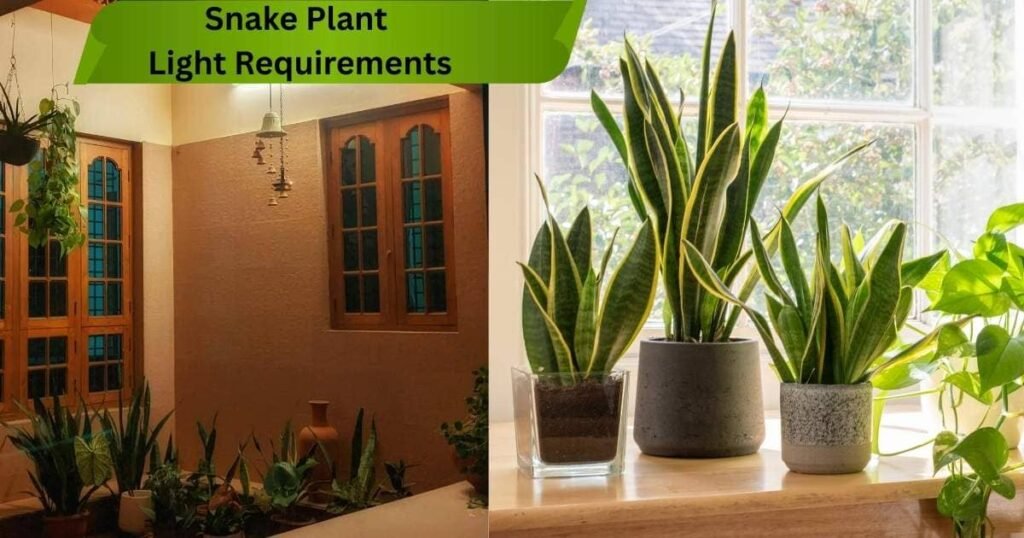
| Light | Bright, indirect (NC State). Needs brighter light than philodendron (Clemson) | Near a north, east or west window or under room light (Clemson). Bright diffuse light to shade, no direct sun (UF) |
| In low light | Survives long periods (NC State). UF commercial guide: tolerates as little as 50 foot-candles, but new leaves come in small and variegation fades; 150 or more keeps color and size | Prefers medium light and survives long periods in extremely low light (NC State) |
| Water | Let the mix dry out between waterings (NC State). Moist but “a little on the dry side” (UF commercial guide) | Top inch dry (UF). Evenly moist but not soggy (Clemson, genus-wide). Slightly moist, less in winter (NC State) |
| Temperature | 70 to 80°F (UF commercial guide) | 70 to 85°F by day, 65 to 75°F at night (Clemson). Below 50°F too cool (UF) |
| Humidity | NC State suggests a humidifier or a tray of wet pebbles | Tolerates dry air, prefers medium humidity (NC State); tolerates the low humidity of most homes (Clemson, UF) |
| Feeding | Every other month except in winter dormancy (NC State) | Every 3 to 4 months (UF); regularly, with dilute fertilizer (Clemson) |
| Growth | Medium rate; vines to 40 feet (NC State) | Rapid rate; up to 13 feet (NC State) |
| Toxic to cats | Yes (ASPCA) | Yes (ASPCA) |
The UF pothos figures come from a guide for commercial interior growers, not home care, so they show the limits more than a routine. The feeding rows differ by source as much as by plant, so I wouldn’t read them as a pothos-versus-philodendron rule. Clemson’s line that pothos need brighter light and warmer temperatures than philodendrons is the one place a source says outright that the plants differ.
On water, the ranges overlap at “let the top inch or so dry”, so one routine would likely suit both. That’s my reading, not a source’s. If you want the pothos detail, how often to water a pothos goes through it.
Which is better in low light, pothos or philodendron?
The sources lean toward heartleaf philodendron. Clemson says pothos need brighter light than philodendrons, and NC State says philodendron survives long periods in extremely low light, though it says pothos also survives long periods in low light.
Variegation matters here. NC State says low light can cost a pothos its variegation, and the UF guide says the same for variegated cultivars under 150 foot-candles. A solid green type avoids the problem: NC State lists ‘Jade’ pothos as solid dark green and great in low light. In a dim room I’d pick a green one of either plant and skip the marbled ones, which is my choice, not a source’s.
I lived in a north-facing apartment for years, and for the darkest corners I used a grow light. No source I read gives a window-by-window verdict for these two. If the room is dimmer than a north window, I’d add a light before choosing either, and the pothos light requirements page covers the numbers.
Do pothos or philodendron grow faster?
NC State rates heartleaf philodendron as a rapid grower and pothos as medium. No page I read compares the two directly, so treat it as one database’s rating, not a race result.
The same entries give size. NC State says pothos vines can reach 40 feet and philodendron up to 13 feet, which is a ceiling for a mature plant, not a pace. Neither number tells you how fast a cutting fills a pot.
Are any pothos illegal to propagate?
Some are protected. The University of Florida says pothos ‘Pearls and Jade’ is protected by US Plant Patent 21,217, and its stock plants went to licensed Florida growers for propagation and distribution. That’s the only patented pothos I could confirm.
I couldn’t find a list of others, so I’d read the tag. If a plant’s tag says propagation is prohibited, I’d skip taking cuttings. Unpatented pothos is a different case, and how to propagate pothos covers it.
Pothos vs philodendron: which should you buy?
For a dim room, buy a plain green heartleaf philodendron or a solid green pothos; for a bright window where you want variegation, buy pothos; with a cat, buy neither. Going by the sources, this is how I’d choose:
- A dim room: a plain green heartleaf philodendron, or a solid green pothos such as ‘Jade’, since Clemson and NC State lean toward philodendron in dim light and NC State calls ‘Jade’ pothos great in low light.
- A bright window and you want variegation: pothos. Clemson describes its streaks and dots of gold, white or yellow, and NC State says low light fades them, so this is where the brighter spot pays off.
- Dry indoor air: heartleaf philodendron, which Clemson and UF say tolerates it, while NC State suggests extra humidity for pothos.
- A cat in the house: neither, as the next section explains.
Are pothos and philodendron toxic to cats?
Yes, both. The ASPCA lists pothos and heartleaf philodendron as toxic to cats and dogs, with insoluble calcium oxalates as the toxic principle and mouth irritation, drooling, vomiting and difficulty swallowing as the signs.
NC State rates pothos medium and philodendron low for poison severity, but I wouldn’t choose between them on that, since the ASPCA treats them alike and Clemson says all parts of both contain calcium oxalate crystals. I check every plant against the ASPCA before it comes home with Miso in the house. The pothos answer in full is in Is pothos toxic to cats?, and a plant that is safe is easier to find in pet-friendly indoor plants.

Ellie Marsh
Houseplant grower who spent years in a north-facing apartment. Writes practical care guides for low light homes, checked against extension and botanical garden sources.