Last updated on October 15, 2026
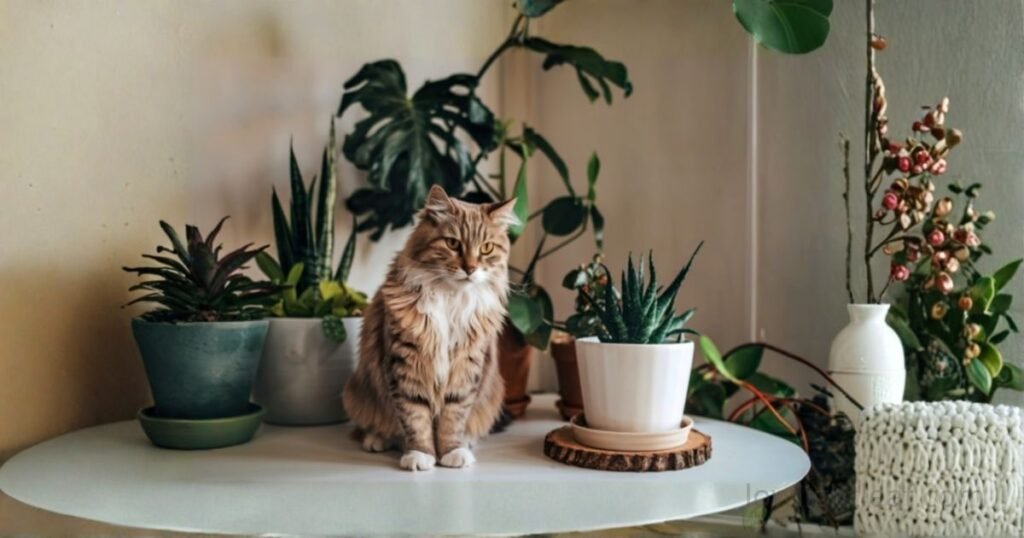
Yes, snake plant is toxic to cats, but the effects are usually mild. The ASPCA lists snake plant (Sansevieria trifasciata) as toxic to cats and dogs because of saponins, which cause nausea, vomiting and diarrhea.

So is snake plant toxic to cats enough to give yours away? I check every plant against the ASPCA list, and I don’t think so. Snake plant upsets the stomach; it doesn’t cause the kidney failure that makes lilies an emergency. It does belong somewhere a curious cat can’t chew it.
What happens if a cat eats a snake plant?
A cat that chews a snake plant may drool, vomit or get diarrhea, and the signs come from the stomach rather than the mouth. The ASPCA’s article on pet-safe succulents lists vomiting, diarrhea, drooling and lethargy, and the Merck Veterinary Manual describes vomiting, salivation and diarrhea treated according to the symptoms, with fluids if needed.
Vomit on the rug next to a leaf with tooth marks in it is the usual way owners find out.
Call your veterinarian or ASPCA Animal Poison Control at (888) 426-4435 if the vomiting or diarrhea keeps going, your cat seems lethargic or stops eating, or you aren’t sure which plant it chewed, and the ASPCA says a consultation fee applies.
Keep the plant tag, or note the plant’s scientific name, before you call. The ASPCA recommends keeping a list of the scientific names of your plants, because common names overlap and toxicity can differ between species.
Snake plant compared with other low-light plants
Plants that do well in dim rooms fall into four groups for cats, and the first sign you see often tells you which group your cat got into, since mouth pain points to oxalate crystals and stomach upset to saponins.
| Plant | ASPCA verdict for cats | What’s in it | First sign you’d notice |
|---|---|---|---|
| Snake plant | Toxic | Saponins | Nausea, vomiting, diarrhea |
| Dracaena (corn plant, dragon tree) | Toxic | Saponins | Vomiting, drooling; dilated pupils in cats |
| Pothos | Toxic | Insoluble calcium oxalates | Mouth pain and drooling right away |
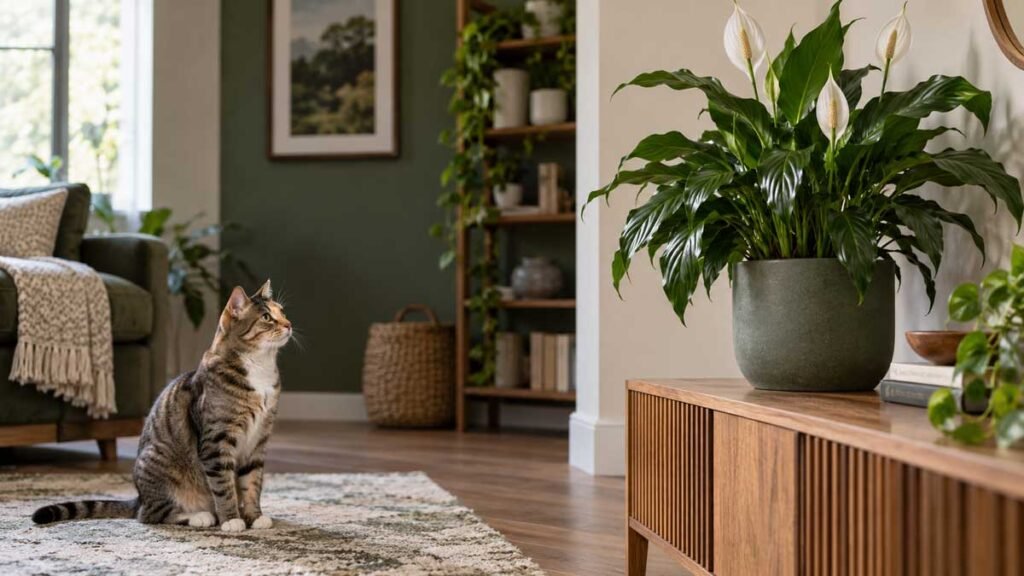
| Peace lily | Toxic | Insoluble calcium oxalate | Mouth irritation, drooling, vomiting |
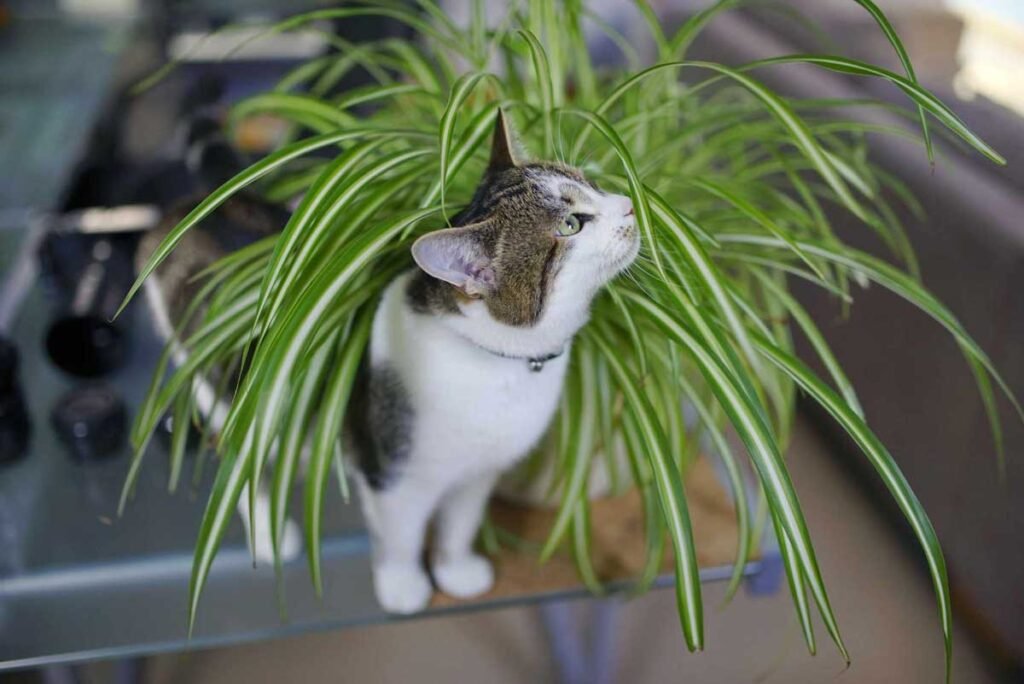
| Spider plant, cast iron plant, prayer plant | Non-toxic | — | Mild stomach upset at most |
| True lilies (Easter lily and others) | Toxic to cats | Unknown | Vomiting and lethargy, then kidney failure; an emergency |
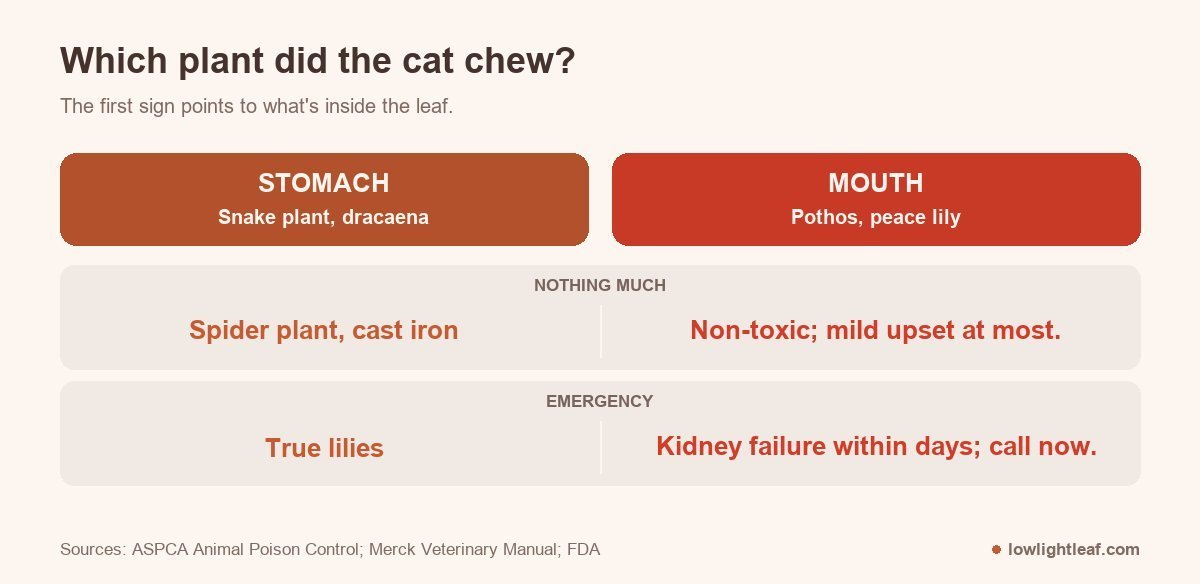
Lilies, in the last row, change everything. A small piece of a true lily, a lick of pollen or a drink of vase water can cause fatal kidney failure in a cat in less than three days, the FDA says. Experienced growers rank the risks the same way:
“The single most important plant to not ever have around cats AT ALL are Easter Lilies (or any true lilies really). Everything else is a lesser concern.”
– r/houseplants, February 2026 (398 upvotes)
Peace lilies aren’t true lilies, which is why they sit in the oxalate group; the difference is explained in are peace lilies toxic to cats.
Why snake plants and dracaenas act alike
Snake plants and dracaenas act alike because the snake plant is now filed in the same genus. The Missouri Botanical Garden lists the snake plant as Dracaena trifasciata, alongside the dracaenas sold as corn plants and dragon trees, and the ASPCA lists saponins as the toxic principle for both.
Labels haven’t all caught up, so you’ll still see Sansevieria on plant tags and on the ASPCA’s own entry, but the cat risk is the same under either name.
Where to keep a snake plant in a home with cats
Keep a snake plant up high or in a room your cat doesn’t use. The ASPCA’s succulents article points out that it tolerates low or high light, so it can go on a top shelf or a high plant stand without suffering for it.
I spent years in a north-facing apartment, and University of Maryland Extension rates snake plant among the low-light plants for north windows, so moving it up out of reach costs it little.
- Use a stand or a high shelf. The ASPCA suggests keeping it high up, which is easy for a plant this tolerant of light.
- Watch for chewing, not just eating. Saponins act on the stomach, so leaf tips with tooth marks are your early warning.
- Skip the low windowsill. It’s the spot cats sit in most.
Some cats never take a bite at all. One owner’s cat made a habit of pretending:
“She is doing this with all kinds of plants. Getting really close and chewing the air but never the plant. Anyone else experienced this?”
– r/WhatsWrongWithYourCat, September 2026 (8,055 upvotes)
Don’t count on that; move the pot before chewing becomes a habit.
Is snake plant toxic to cats FAQ
Is snake plant toxic to dogs?
Yes. The ASPCA lists snake plant as toxic to dogs as well as cats, with nausea, vomiting and diarrhea from its saponins.
Are snake plants toxic to humans?
Human toxicity is a separate question with its own sources, covered in snake plant disadvantages.
Are all snake plant varieties toxic to cats?
Treat them all as toxic. The ASPCA’s entry covers Sansevieria trifasciata, the common snake plant, and the named varieties sold under the snake plant label aren’t listed separately, so there’s no ASPCA rating that clears any of them.
What happens if a cat just licks a snake plant?
The ASPCA and Merck describe signs from eating the plant, not from licking it, and neither gives a figure for how much it takes. If your cat only licked a leaf and seems normal, watch it for vomiting or diarrhea and call your vet if either starts.
If you’re keeping your snake plant, the different types and how big each gets are in snake plant varieties. For low-light plants that are safe with cats, see pet friendly indoor plants.

Ellie Marsh
Houseplant grower who spent years in a north-facing apartment. Writes practical care guides for low light homes, checked against extension and botanical garden sources.