Last updated on August 21, 2026
Water your spider plant when the top 1–2 inches of soil feel dry, typically every 1–2 weeks, though your exact interval depends on light, pot size, humidity, and season. Spider plants store water in thick, fleshy roots, which helps them tolerate an occasional missed watering. When you do water, saturate the soil until water runs from the drainage holes. If your tap water is high in fluoride or minerals, switching to distilled or rainwater may help reduce water-related brown tips. The Key step is knowing when your plant actually needs water.
How Often Should You Water a Spider Plant?
Two spider plants in the same room can still need water on different days. One near a window dries out fast. One in a darker corner might still be damp a week later.
For many indoor spider plants, watering falls somewhere around every 1–2 weeks, but use that range only as a reference. When you check the plant, feel the soil first: water if the upper layer has dried; wait if it still feels damp. If you also grow snake plants, their watering routine follows a different pattern, so learning how to water a snake plant can help you avoid applying the same schedule to every houseplant.
Do spider plants need water every day? No. Daily watering can keep the potting mix continuously wet and increase the risk of root problems.
How quickly the pot dries depends on a few things:
Suddenly watering twice as often as before? Check whether your spider plant has become root-bound; a crowded pot can start drying noticeably faster, making repotting a root-bound spider plant worth considering when the roots have outgrown their available space.
How Often to Water a Spider Plant Indoors
Indoor conditions are usually more stable than outdoor ones, but window exposure, room temperature, pot material, and the potting mix still change how quickly the soil dries. Check your spider plant lighting when evaluating window exposure, since a plant receiving brighter light may dry out faster than one growing in a cooler, lower-light spot.
How Often to Water Spider Plants in Summer vs Winter
Spring and summer usually mean faster drying, so check your spider plant every 7–10 days. Fall and winter slow growth and water use, stretching the interval to around 12–18 days. Halving your watering frequency in winter is a reasonable starting point, but confirm it by checking the soil. Spider plants kept outdoors in summer dry out faster from heat and airflow, so check them more frequently in hot or windy conditions.
When to Water a Spider Plant: Check the Soil, Not the Calendar
Before watering, check the soil with these three quick tests.
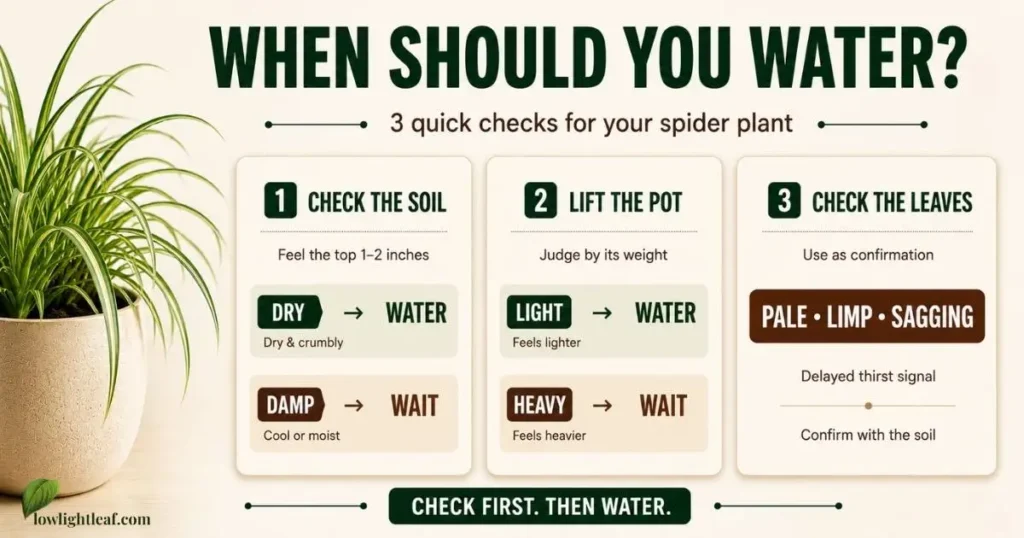
- Feel the top 1–2 inches. Push your finger in to the first knuckle. Dry and crumbly means water now. Cool, damp, or clinging to your finger means wait.
- Lift the pot. A recently watered pot feels noticeably heavier than one that has dried enough for watering. This gives you a quick idea of how much moisture remains in the pot.
- Use the leaves to confirm, not to decide. Pale, limp, or slightly sagging foliage is a delayed thirst signal.
Should You Use a Moisture Meter for a Spider Plant?
Cheap probes can read “moist” when the mix is genuinely dry, especially if the probe only reaches one spot. Cross-check meter readings with soil feel and pot weight before trusting them.
| Meter Situation | What to Do |
|---|---|
| Reading matches how the soil feels | Use it as supporting evidence |
| Meter says moist but soil feels very dry | Check another spot or depth |
| Readings vary across the pot | Check multiple points |
| Still unsure | Finger test + pot weight together |
How Much Water Does a Spider Plant Need?
Pot size, root mass, potting mix, and current dryness all affect how much water your spider plant needs at one time. A young plant in a small pot needs far less than a root-bound one in a large pot. These factors are also important when considering spider plant care and maintenance.
Focus on evenly moistening the mix rather than measuring a fixed number of cups or ounces. Water until the potting mix is evenly moist and excess water drains from the bottom. Then allow it to dry appropriately before watering again instead of giving frequent small sips.
Adjust the amount to the condition of the pot:
- Small pot: Less water may fully saturate the soil mix.
- Large pot: More water needed for full saturation.
- Very dry mix: Apply water slowly so the mix has time to absorb it.
- Root-bound plant: Water thoroughly; expect faster drying afterward
- Still moist soil: Wait rather than adding a small top-up.
Do spider plants need a lot of water? Their thick, fleshy roots store moisture, so the potting mix doesn’t need to stay constantly wet. Spider plants still need thorough watering, but persistently soggy soil reduces oxygen around the roots and increases the risk of root rot. Persistently soggy soil can also leave a spider plant with no new growth, even when the foliage still looks relatively healthy.
How to Water a Spider Plant Properly
Once your spider plant is ready for water, use these six steps to wet the potting mix evenly and let excess water drain away.
- Check first: Confirm your spider plant is ready for water using the soil check above.
- Choose a spot: Move hanging plants to a sink, tub, or shower if practical.
- Use room-temperature water: Avoid very cold water when watering.
- Pour slowly: Pour slowly, moving around the full soil surface rather than watering only one spot.
- Watch for drainage: Continue until water exits the drainage holes.
- Drain fully: Let the pot drain fully, then empty any water left in the saucer or cachepot.
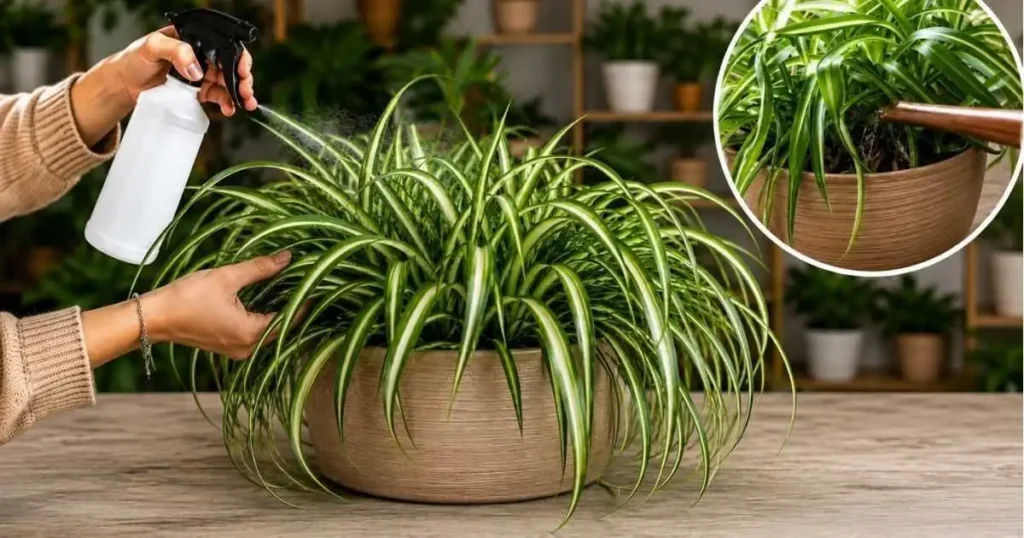
Spider plant leaves arch outward from a central base, so it’s easy to water the center and miss the soil beneath the outer leaves. Move around the pot as you pour so the entire surface gets watered.
Top or Bottom Watering: Which Is Better for a Spider Plant?
Top watering is the practical default for routine watering because it lets you wet the full soil surface and helps flush accumulated salts from the pot.
How long should you bottom water a spider plant? A moderately dry mix often rehydrates in 15–20 minutes. A severely dried-out or water-repellent mix may need longer. Check whether moisture has reached the upper soil and the pot feels evenly rehydrated. Use that as your stopping point. Once it has, remove the pot and let it drain completely.
What If Water Runs Straight Through the Pot?
Is water rushing straight through the pot? Peat-based mixes can turn hydrophobic once they dry out too much, so water channels around the dry soil instead of soaking in. A severely root-bound pot can also let water pass through before the potting mix absorbs much of it.
Fix it with several slow top waterings in a row, or a temporary bottom soak. Check the potting mix afterward to make sure it actually absorbed moisture.
What Is the Best Water for Spider Plants?
Distilled water for spider plants is a reliable choice when your tap water is high in fluoride or dissolved minerals. Rainwater is another good low-mineral option. Your spider plant may also do well with tap water if the local supply isn’t contributing to recurring tip damage.
| Water Type | Practical Use | Main Consideration |
|---|---|---|
| Rainwater | Good low-mineral option | Availability and storage |
| Distilled | Reliable low-mineral option | Ongoing cost |
| Filtered | Can work well | Not every filter removes the same substances |
| Tap | Often fine | Local mineral/fluoride levels vary |
| Bottled | Workable alternative | Mineral content varies by brand |
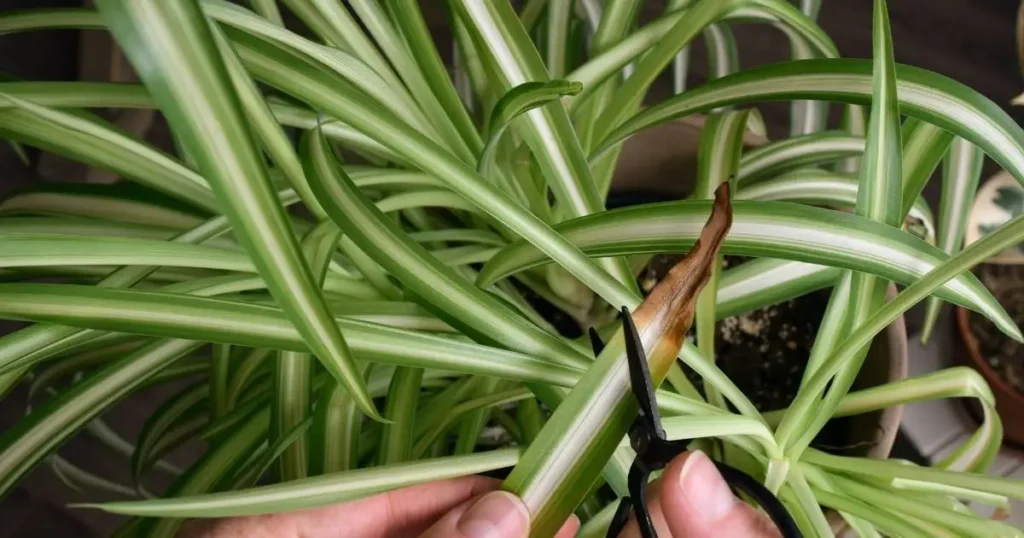
Fluoride is commonly linked to leaf-tip injury in spider plants, and high dissolved mineral or salt levels can contribute to buildup and spider plant leaf tip problems over time. Tap-water chemistry varies by location, so not every spider plant will develop water-quality problems. Brown tips alone can’t identify the water source as the cause. Too much direct sun, prolonged dryness, and fertilizer salt buildup can also cause brown leaf tips.
Does Leaving Tap Water Out Overnight Make It Better?
Leaving tap water uncovered overnight can allow some free chlorine to dissipate. Fluoride doesn’t evaporate the same way, so this step won’t remove it. Some municipal water supplies use chloramine instead of free chlorine, and chloramine doesn’t readily dissipate by sitting out. If water quality still appears to be contributing to tip damage, try distilled water, rainwater, or a filter designed for the substances present in your supply.
Does Water pH Matter for Spider Plants? Water pH can matter, but it is separate from mineral content and hardness. Water can be low in minerals while still being unusually acidic or alkaline, or the reverse. If you suspect a pH issue, test your irrigation water directly rather than judging it from leaf symptoms.
Overwatered vs Underwatered Spider Plant: How to Tell the Difference
To tell the difference, match what you see on the plant with how wet or dry the soil actually is.
| Sign | More Consistent With | Check Next |
|---|---|---|
| Dry soil + limp foliage | Underwatering | Soil dryness at depth |
| Crispy tips + dry mix | Underwatering or water quality | Soil and water source |
| Yellow leaves + wet soil | Overwatering | Drainage and how long the soil stays wet |
| Mushy base / soft stems | Severe excess moisture | Root condition |
| Musty smell | Persistently wet soil | Roots for rot |
| Gnats + wet mix | Prolonged moisture | Drying and drainage setup |
| Drooping right after watering | Cause unclear from drooping alone | Check whether the soil remains wet |
Brown tips can occur with both watering problems, so check the soil and surrounding symptoms before deciding on the cause.
What to Do With an Overwatered Spider Plant
Check the soil and drainage before watering again. Empty any standing water from the saucer or cachepot and give the potting mix time to dry. Only inspect the roots if you notice mushiness, a foul odor, or continued decline. If you find damaged or rotting roots, the problem has moved beyond watering adjustment and may require repotting.
How to Rehydrate an Underwatered Spider Plant
If the soil is still absorbing normally, rehydrate it using the thorough watering method above. If water is bypassing the dry soil, use the hydrophobic-mix fix described earlier. Let the pot drain fully, then return to your normal soil checks and watch how the foliage responds over the next few days, especially if you are monitoring yellow leaves on your spider plant.
Watering Factors That Change How Fast Spider Plant Soil Dries
Spider plant soil dries faster in brighter light, warmer temperatures, lower humidity, smaller or terra-cotta pots, fast-draining potting mix, and root-bound conditions. Lower light, cooler temperatures, higher humidity, larger nonporous pots, and moisture-retentive soil generally keep the root zone moist longer.
Light, temperature, and humidity: Brighter light and warmer, drier air increase moisture loss, while lower light, cooler temperatures, and higher humidity slow drying.
Pot and potting mix: Smaller pots and porous terra-cotta lose moisture faster. Plastic or glazed ceramic pots retain it longer, as do larger pots and more moisture-retentive mixes. A chunkier, faster-draining mix dries sooner.
Root space: A root-bound spider plant has less potting mix available to hold water, so the pot can dry unusually quickly. An oversized pot does the opposite: excess soil around a smaller root system can remain wet much longer.
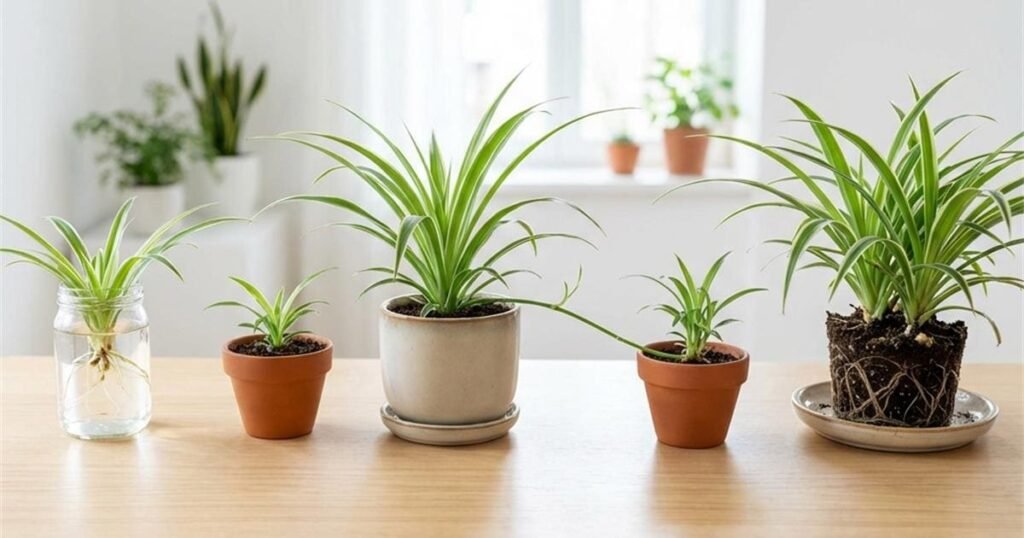
If you’re propagating spider plant pups, give each new plant enough time to establish a healthy root system before following the same watering routine as a mature plant.
That’s why a watering routine that worked for months can suddenly stop matching the plant. Use the soil’s drying rate to adjust when you check for water rather than keeping the same schedule year-round.
Common Spider Plant Watering Mistakes
Fixed weekly schedule: Watering automatically every seven days regardless of soil condition.
Small sips: Giving frequent small sips instead of one thorough soak.
Standing water: Leaving the pot sitting in saucer or cachepot water can create one of the more common challenges of growing spider plants, especially when drainage is poor.
No drainage holes: Using rocks at the bottom of the pot as a substitute for actual drainage holes.
Meter-only decisions: Trusting a single moisture-meter reading without cross-checking.
Bottom watering only: Relying exclusively on bottom watering without periodically flushing the potting mix from the top.
Sudden faster drying: Ignoring a noticeably faster drying rate without checking what changed.
Lower-light move: Keeping the same schedule after moving the plant to lower light.
Spider Plant Watering FAQs
Are self-watering pots good for spider plants?
Yes, self-watering pots can work for spider plants if the potting mix doesn’t stay continuously saturated. Check the soil periodically to make sure the reservoir isn’t keeping the root zone wet for too long.
How long can a spider plant go without water?
A healthy, established spider plant can often go about two to three weeks without water under moderate indoor conditions. Hot temperatures, brighter light, low humidity, and a root-bound pot can make the soil dry faster and shorten that window.
Why does my spider plant have water droplets on its leaf tips?
Water droplets on spider plant leaf tips are often caused by guttation, the release of excess water through specialized openings near the leaf tips. Guttation can occur when the soil is moist and the plant is taking up more water than it loses through transpiration. Droplets alone don’t confirm overwatering; check the soil and other symptoms before diagnosing a watering problem.
Can you water spider plants with ice cubes?
Room-temperature water is a better choice for spider plants than ice cubes. Melting ice can wet only a small part of the potting mix, while normal watering makes it easier to saturate the root zone evenly and allow excess water to drain.
Is rice water good for spider plants?
Spider plants don’t need rice water for healthy growth, and plain suitable water is the better choice for routine watering. Rice water may contain small amounts of nutrients or organic compounds, but there isn’t a clear spider-plant-specific benefit that makes it preferable to normal irrigation water.
Final Thoughts on Spider Plant Watering
Good spider plant watering comes down to responding to the plant and its growing conditions rather than following the calendar. As light, temperature, season, root growth, and pot conditions change, your watering routine should change with them. These simple habits can also help you get more from the indoor benefits of spider plants.
Use the moisture in the potting mix as your main guide, then consider how quickly the root zone has been drying between waterings. Once you learn that pattern for your own spider plant, meeting its water needs becomes much more predictable.
Explore more:

Muddsir Munir
Houseplant enthusiast researching and writing about indoor plants, helping beginners grow spider plants, snake plants, and more with confidence.