Last updated on October 4, 2026
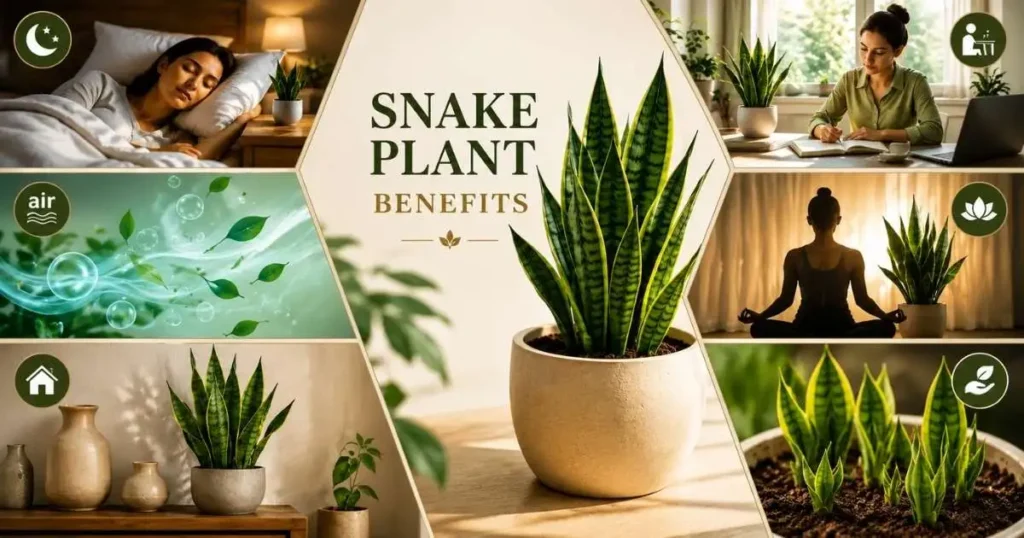
The benefits of snake plant are practical, wide-ranging, and rooted in both science and centuries of cultural use. Growing your first houseplant or just adding something low-maintenance to your home. This resilient plant brings more than attractive foliage. It purifies indoor air, produces oxygen at night, regulates humidity, supports better sleep, and holds up in conditions that would challenge most houseplants. Not many indoor plants deliver this much value with this little effort.
Quick Benefits at a Glance
Air Purification
Absorbs benzene, formaldehyde, xylene, trichloroethylene
Nighttime Oxygen
Releases O₂ at night via CAM photosynthesis
Sleep Support
Fresher bedroom air, reduced congestion
Humidity Regulation
Natural humidifier effect through transpiration
Mental Wellness
Lowers cortisol, improves focus via biophilic design
Low Maintenance
Drought tolerant, low-light, beginner friendly
Cultural Significance
Vastu, Feng Shui, protection symbolism
Easy Propagation
Rhizome division or leaf cutting
Who Benefits Most
Better air quality in enclosed spaces.
Survives irregular watering schedules.
Tolerates common plant care mistakes.
Supports focus and a calmer workspace.
Provides fresher nighttime bedroom air.
High-impact indoor plant with minimal upkeep.
What Makes Snake Plants Stand Out Indoors?
Most houseplants release oxygen during the day and stop at night. Snake plant works the other way around: stomata stay closed during the day to retain moisture, then open after dark to absorb CO₂ and release oxygen. That one trait makes it a better fit for bedrooms and other enclosed spaces, where air quality matters most at night.
Why This Matters
Most houseplants are passive decorations after dark. The snake plant is actively working during the hours you spend most of your time in one room without ventilation. That distinction separates it from nearly every other houseplant, once you understand how snake plants grow indoors.
Everday Benefit: If you live in a sealed apartment, work from a closed room, or sleep with windows shut, this plant is doing something useful in exactly those conditions. Few popular houseplants share this characteristic.
Air Purification
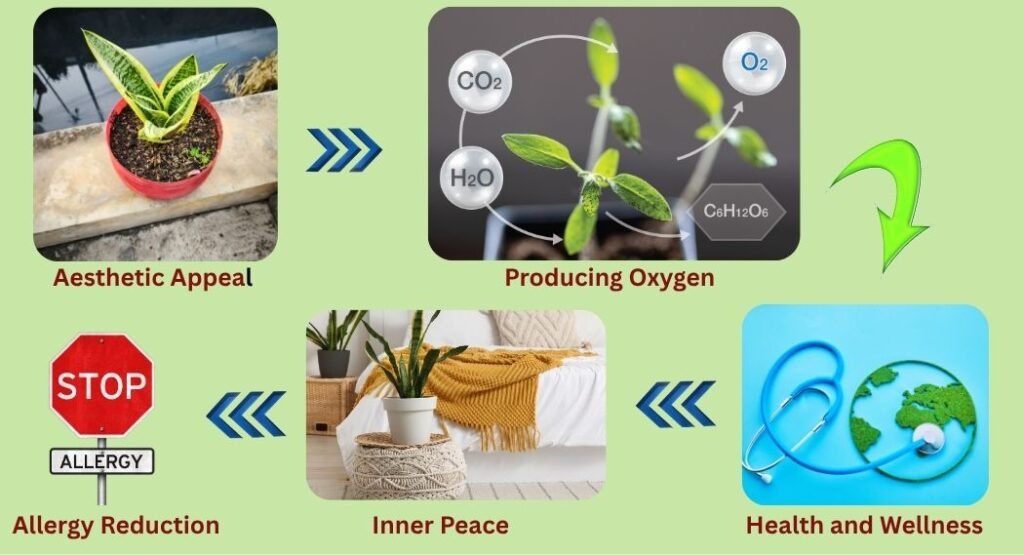
Snake plants remove benzene, formaldehyde, xylene, and trichloroethylene from indoor air. These common VOCs are often found in furniture, flooring, paints, and household products. NASA’s Clean Air Study from 1989 is one reason snake plants are widely recognized for their air-purifying abilities. While a snake plant won’t replace proper ventilation or an air purifier. It can still help support cleaner indoor air, much like other low-light plants known for indoor air benefits.
Benefit vs Expectation
| Claim | Reality | Verdict |
|---|---|---|
| Replaces an air purifier | Does not replace a HEPA filter | ✕ No |
| Genuinely improves air quality | Real but gradual improvement | ✓ Yes — gradually |
| Works equally in all room sizes | Best in smaller spaces | ✕ No |
| Instant results | Benefits build over time | ✕ No |
| Long-term passive contribution | Works quietly in background | ✓ Yes |
Reality Check: Placement matters more than quantity. Snake plants are often most effective when placed in the rooms where you spend the most time. While they won’t replace proper ventilation or an air purifier. The benefits of snake plant here are modest but consistent, a simple, low-maintenance way to support a healthier indoor environment over time.
Health and Wellness
Snake plants support allergy relief, humidity regulation, and mould reduction with no electricity and no ongoing cost. Broad leaves trap airborne dust directly, which is helpful if you deal with indoor allergies.
Transpiration gradually releases moisture into your air, helping support more comfortable indoor humidity levels. This can be especially useful in dry indoor environments where heated or air-conditioned air often feels uncomfortable.
Who Benefits Most
You’ll notice the humidity benefit most in winter if you’re in a heated apartment or sealed office. For allergy sufferers, the dust-collecting effect can be a small but useful advantage when combined with regular cleaning and good indoor hygiene.
Where You’ll Notice It Most
Dry throat, stuffy air, and general indoor dryness are common in centrally heated homes. A snake plant in your bedroom or living room won’t fix severe dryness, but in a moderately dry environment, you’ll notice a difference over a few weeks. If you’re exploring other options, spider plants offer a comparable set of wellness benefits worth considering.
Important to know: The contribution is smaller, but consistent.
Bedroom Benefits
One of the most overlooked benefits of snake plant is nighttime oxygen production, making it better suited for bedrooms than almost any other common houseplant. It thrives in low light, though ideal light for snake plants still affects where it performs best. Beyond the air quality contribution covered earlier, the bedroom is where its biophilic effect may matter most.
Keeping the plant in view with no interaction needed can help create a calmer, more relaxing environment. Many people enjoy having natural greenery in the bedroom because it adds a sense of comfort and well-being.
Placement: Any corner works. Keep it away from AC vents and fans since direct airflow dehydrates the leaves.
Reality Check
The cortisol and sleep benefits apply regardless of ventilation in your room. A snake plant’s air-quality benefits tend to be easier to notice in smaller bedrooms with limited airflow. In larger, well-ventilated spaces, the effect is generally less noticeable. Either way, a snake plant can be a simple addition to a more comfortable bedroom environment.
Focus and Productivity
Snake plants actively support focus and reduce ambient stress — especially in closed, low-light workspaces where most other solutions simply don’t work.
Why it matters in a closed room
Work two to three hours with the door shut and focus can start slipping for many reasons, including poor indoor air quality. A snake plant won’t replace opening a window, but in a room you can’t always ventilate, it’s a consistent passive contribution that costs nothing to maintain.
Why it helps at a desk
Plants in your line of sight give your eyes a natural resting point during screen-heavy sessions. Research links indoor plants to lower cortisol and better mood, not dramatic, but real and cumulative over time.
One Practical note: One plant near your desk. No bright window needed, no low maintenance watering routine to follow. It quietly supports the conditions you need to focus without asking for anything in return.
Snake Plant Benefits by Room
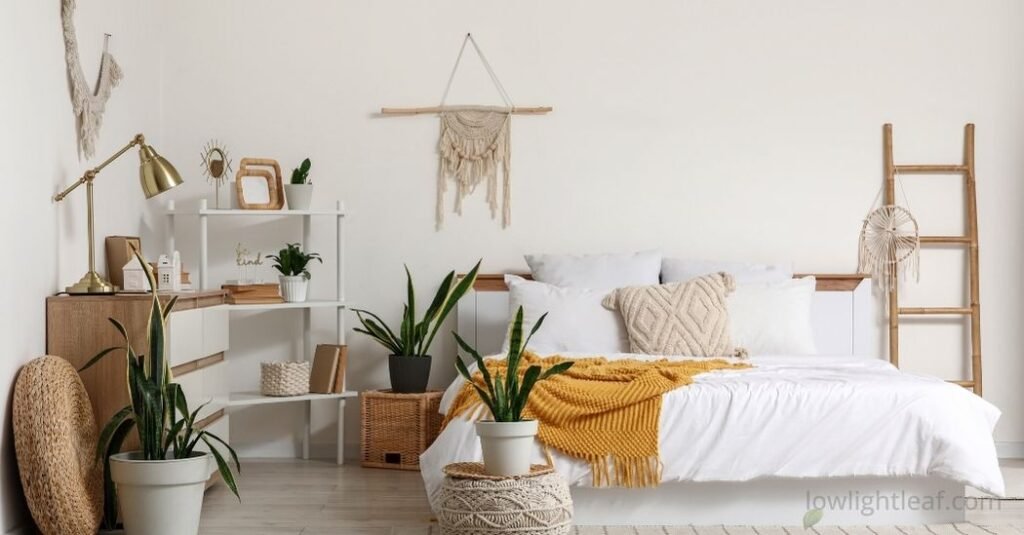
Most owners buy one snake plant and put it where it looks good. Placement based on function, where you spend the most time, can help you get more value from the same plant.
Living room: Architectural foliage adds structure and greenery to your most-used space while providing the everyday benefits of an indoor plant.
Bathroom: Low light and high humidity suit it perfectly. It absorbs excess moisture that would otherwise promote mould and processes VOCs from cleaning products. Most people don’t consider the bathroom; it’s actually one of the best placements.
Home office: A practical choice for workspaces thanks to its low-maintenance nature, low-light tolerance, and suitability for indoor environments.
Apartments and small flats: Enclosed spaces with limited ventilation show the most noticeable improvement from even one or two plants.
Vastu and Feng Shui
This section reflects traditional belief systems, Vastu Shastra, Feng Shui, and related cultural practices. These are not scientifically verified claims.
In Vastu Shastra, the snake plant is considered protective and auspicious, believed to absorb negative energy and generate positive vibrations. It is one of several low light friendly houseplants commonly recommended for home placement.
Recommended placement: east, south, or southeast, ideally near the entrance.
In Feng Shui, the upward-pointing leaves are believed to cut through stagnant energy, known as sha chi. The plant is linked to wood energy growth, upward movement, and vitality. Variegated types such as Sansevieria Laurentii are also popular for their bright yellow-and-green foliage, which adds a visually prominent element to these placements. Across East Asian and South Asian traditions, it stands for prosperity, protection, and good fortune. It’s a common housewarming gift for this reason.
Important to Know: The recommended Vastu and Feng Shui placements near entrances, in corners, and near windows also align with where the plant’s practical benefits are strongest. Tradition and sound plant care point in the same direction here.
Leaf Remedies
Snake plant leaves contain saponin compounds with mild antiseptic and anti-inflammatory properties. Traditional medicine across West Africa, Asia, and South America applied bruised leaves to minor wounds, burns, and insect bites. Some practices used diluted preparations for scalp dryness and skin irritation. Before trying anything at home, it’s worth understanding the limitations of snake plants too.
That’s where the documented evidence stops.
Reality Check: Saponin content is real and measurable. Controlled human trials are not. Traditional use and proven treatment are not the same thing and with this plant, the gap between the two is significant.
Before You Try Anything Topical
- Leaves are toxic if ingested, keep away from children and pets
- Topical use can irritate sensitive skin, especially undiluted
- No snake plant preparation is an approved medical treatment
- If you have a skin condition or open wound, consult a doctor first
Snake Plant Symbolism
Few houseplants carry as much symbolic meaning as the snake plant. Across different cultures, it is commonly associated with resilience, protection, prosperity, and new beginnings largely, Because of its ability to survive difficult growing conditions and thrive with minimal care.
Resilience:: Survives neglect, low light, and drought. Gifting one is quietly a message of encouragement “you’ll get through this.”
Protection: Sharp upward leaves read as a symbolic barrier in multiple traditions. Commonly placed at doorways to guard against negative energy.
New Beginnings: A single cutting grows into a full plant. A natural symbol of renewal — common gift for moves, new jobs, and life transitions.
Why it makes a thoughtful gift It’s low-maintenance enough for someone who has never kept a plant alive. It feels intentional rather than generic. And it lives long enough to serve as a lasting reminder, which very few plants actually do.
The Practical Advantages of Snake Plants
The long-term benefits of snake plants come from their durability, adaptability, and lasting value, making them one of the most practical indoor plants for modern homes.
Drought-tolerant: Forgives missed waterings better than most houseplants.
Low-Light Adaptable: Performs well in spaces where many indoor plants struggle.
Naturally Resilient: Less prone to common houseplant pest problems.
Long-Lasting: Can remain attractive and healthy for decades.
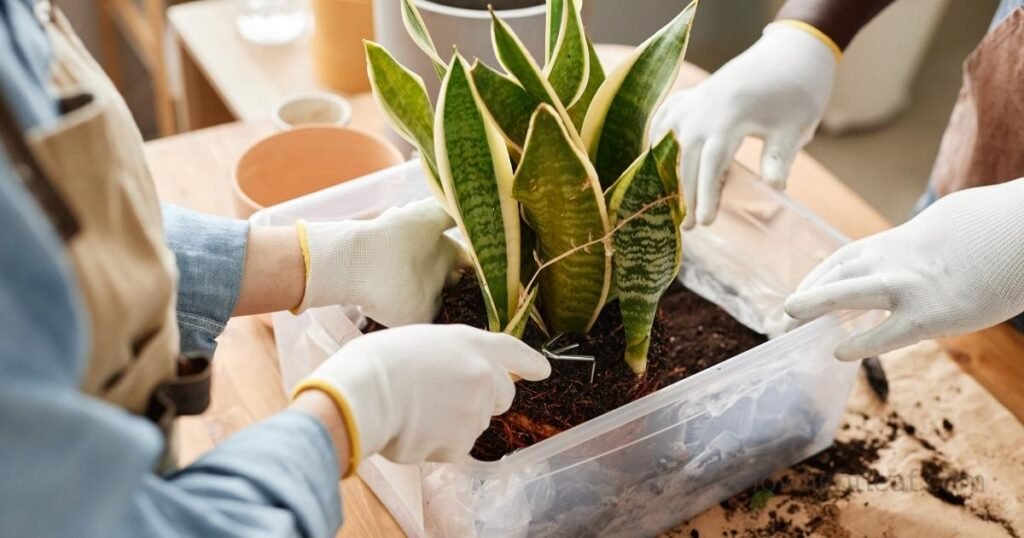
Easy to Multiply: Produces offshoots that allow you to expand your collection at little to no cost.
Budget-Friendly: Delivers long-term value without ongoing expense.
Good Fit If
- You travel or have an unpredictable schedule
- You’ve killed houseplants before and want something forgiving
- You want long-term value from a one-time purchase
- You need a plant that works in low-light rooms
- You want to expand your collection through propagation without ongoing cost
Not a Replacement For
- A mechanical air purifier in high-pollution environments
- A humidifier in severely dry climates
- Medical treatment for health conditions
- Fast-growing plants if visual impact within a season is the goal
FAQs: Benefits of Snake Plant
What are the benefits of having a snake plant at home?
Snake plants help support cleaner indoor air, produce oxygen at night, regulate humidity, and require very little maintenance. Their adaptability and long lifespan make them one of the most practical indoor plants for modern homes.
Can I keep a snake plant in my bedroom at night?
Yes. Snake plants use CAM photosynthesis, allowing them to release oxygen at night. This makes them a popular choice for bedrooms, especially in smaller sleeping spaces where fresh indoor air is valued.
Is a snake plant good for air purification?
Yes. Snake plants can absorb certain airborne compounds, including benzene, formaldehyde, xylene, and trichloroethylene. While they do not replace an air purifier, they can contribute to better indoor air quality over time.
Is a snake plant lucky for the home according to vastu?
According to Vastu Shastra, snake plants are considered auspicious and are believed to attract positive energy while helping reduce negative influences. East, south, and southeast placements are commonly recommended.
What are the health benefits of snake plant leaves?
Snake plant leaves contain naturally occurring saponins with mild antiseptic and anti-inflammatory properties. Traditional medicine has used them for minor skin concerns, although these uses are not considered medically proven treatments.
Explore more:

Muddsir Munir
Houseplant enthusiast researching and writing about indoor plants, helping beginners grow spider plants, snake plants, and more with confidence.