Last updated on October 19, 2026
The way to decorate with plants in a dim home is to put them where the light already is, then style around them. University of Illinois Extension’s lighting bands put medium light only directly in front of a north window, so the plants that carry the look belong near the glass, in pots that drain.
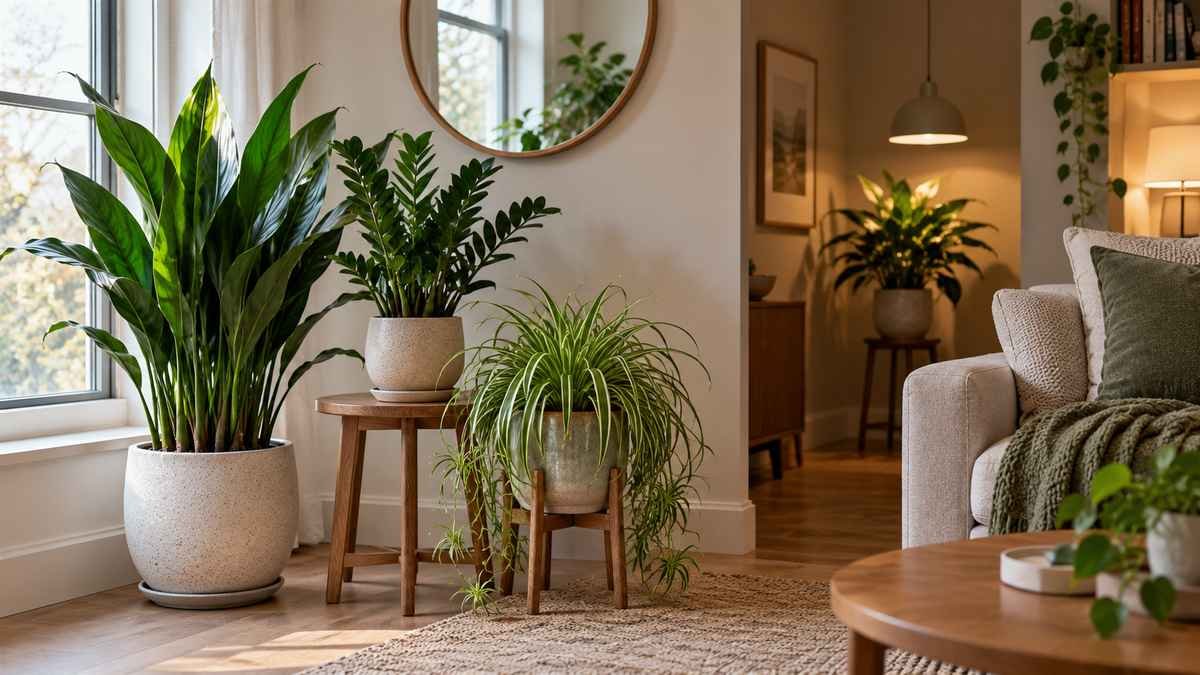
Knowing how to decorate with plants is mostly knowing which styling habits the plant can live with. A cachepot, a cluster by the window and a lamp in the dark corner all work. A pretty pot with no hole, a fern on the radiator and a plant moved every time you rearrange the sofa don’t.
Light first: how to decorate with plants in five steps
Start with the light, pick plants that fit it, pot them so water can drain, then place them and leave them. The order matters because a plant chosen for the look first ends up in a spot it can’t live in, and the decor goes with it.
- Find where the light reaches. Illinois Extension puts low light a few feet back from a north window, 3 to 10 feet from an east or west window and 15 to 20 feet from a south one. University of Missouri Extension says even low-light plants generally lack light beyond 10 feet from an average window. The north-facing window plants page sorts plants by how close they need to sit.
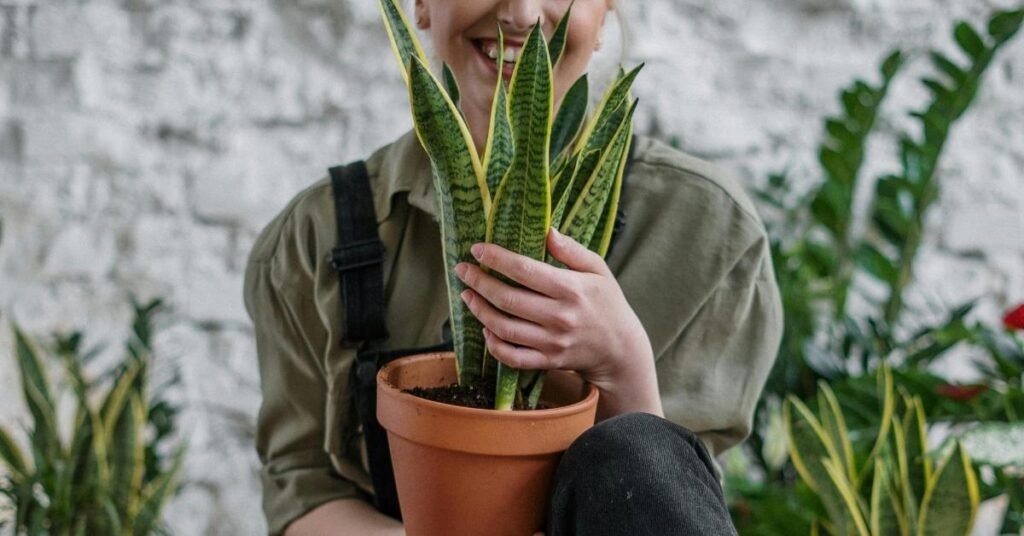
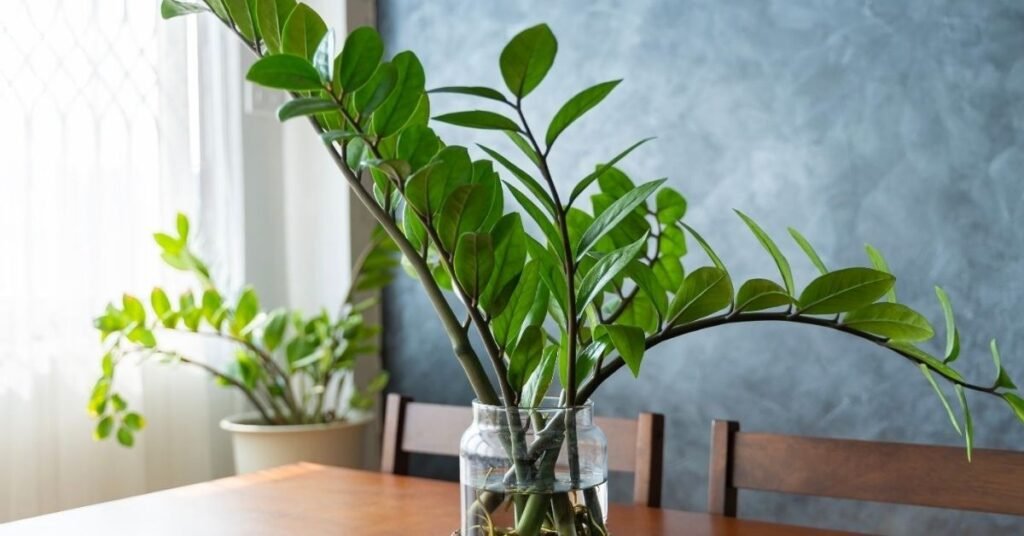
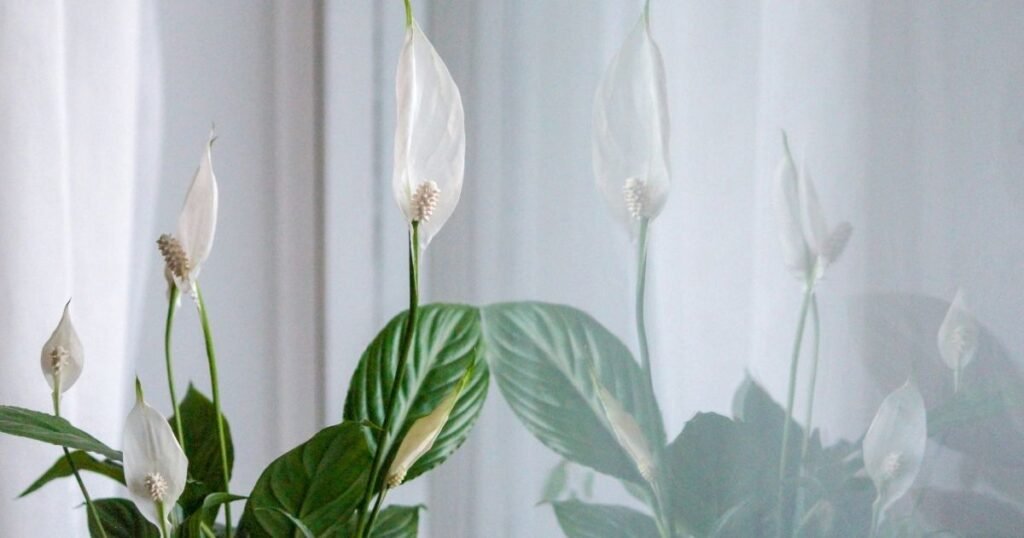
- Choose plants for that light, then for their shape. University of Maryland Extension’s low-light group, for north windows and artificially lit rooms, is ZZ plant, snake plant, cast iron plant and peace lily. Height, leaf size and color come second.
- Pot them so you can water without wrecking the look. Grow each plant in a plain plastic pot with holes and slip it inside the decorative one. Illinois Extension calls this double potting.
- Place them and let them settle. Some decor favorites drop leaves when they’re shuffled from place to place.
- Check them once they’ve settled. Maryland lists the low-light signs: stems that lean toward the window, long gaps between leaves, faded color. If you see them, move the plant closer over a week or two, as University of Minnesota Extension suggests for shifting plants toward brighter windows, or add a grow light.
Six decorating habits that cost the plant
Six common decorating habits cost a houseplant something: a dark corner, a pot with no drainage hole, restyling by moving plants, heat from a radiator or fireplace, dust on high leaves, and gravel in the pot bottom. Each one has a fix that keeps the look.
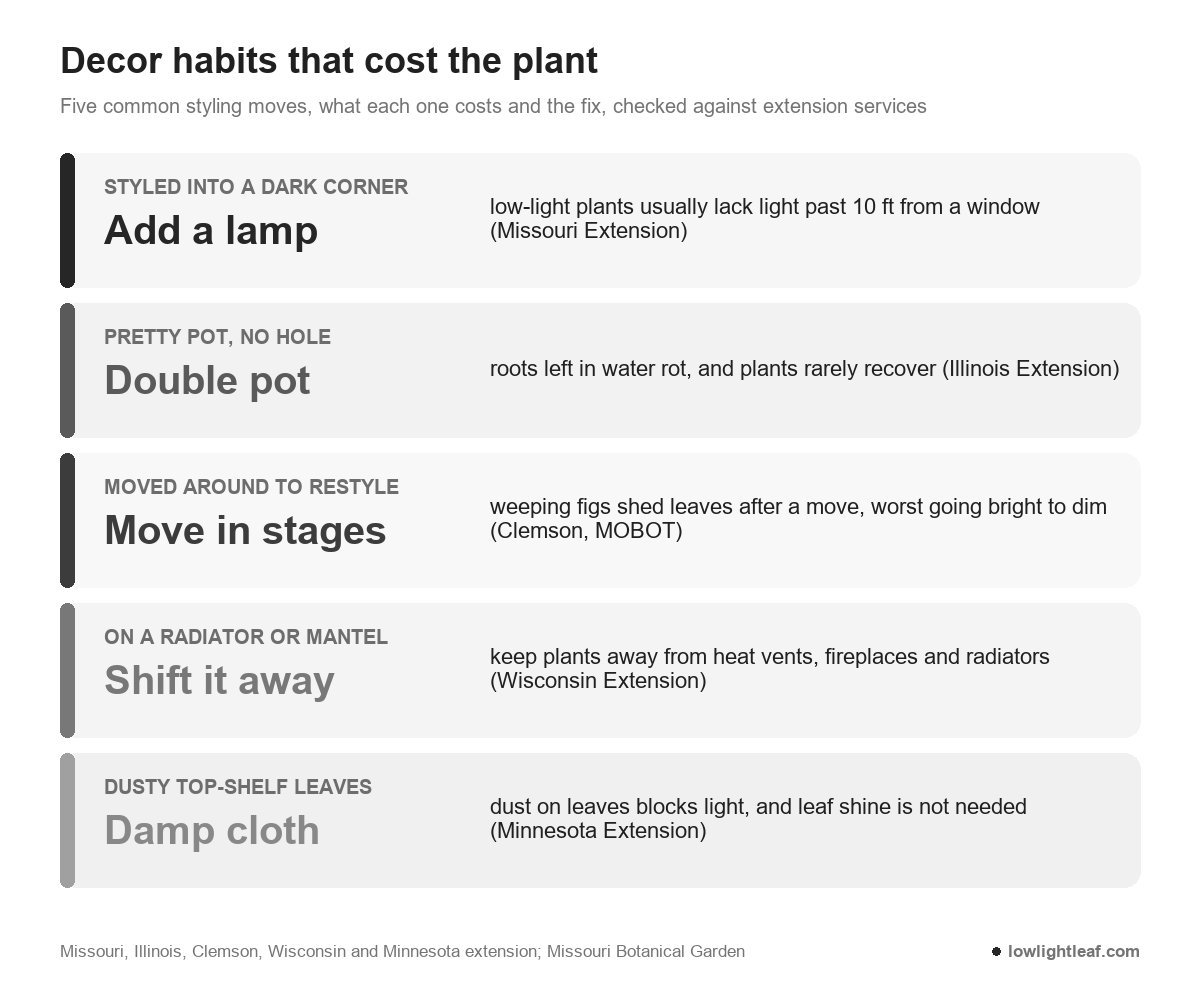
A plant styled into a dark corner. Missouri Extension’s 10-foot limit applies to the plants sold for low light, and lack of light is the most common factor limiting houseplant growth, Missouri says. Measure from the window before you buy the plant for that corner, and if it’s past the band, plan for a lamp.
A decorative pot with no drainage hole. This is the one that kills plants outright. Illinois Extension’s container drainage page says few plants tolerate sitting in stagnant water and that plants rarely recover from root rot. Drill a hole, or keep the plant in a liner pot inside it. If water collects in the outer pot, lift the liner out and pour it off.
“this is why i always plant into a plastic nursery pot and just use these as cover pots. you’ll have good drainage and a cute pot”
– r/houseplants, July 2026 (585 upvotes)
Gravel in the bottom of the pot. It looks like a drainage fix and isn’t one. Illinois explains that water perches in the soil just above the gravel until the soil is saturated, and only then drains down, so the roots sit wet anyway.
Moving plants around to restyle. A weeping fig is the classic case. Clemson’s Home & Garden Information Center says weeping figs shed leaves in response to almost any stress and often drop them after being moved or repotted, then settle if conditions are adequate. Missouri Botanical Garden says the worst move is an abrupt one from bright to dim light, and that moving the plant in stages softens it. Pick the plant’s place once, and rearrange the furniture around it.
A plant on the radiator, the mantel over a working fireplace, or a heat vent. University of Wisconsin-Madison Extension tells you to keep houseplants away from heat vents, fireplaces and radiators, and Clemson says a weeping fig near a vent or draft drops leaves heavily.
Dusty leaves on the top shelf. University of Minnesota Extension says dust built up over winter can block light when plants need it most. Wipe large leaves with a damp cloth. Iowa State University Extension says clear water does the job with no risk to the leaf, while household soaps can damage the waxy surface. Minnesota says leaf shine products aren’t necessary and can clog leaf pores.
Arranging plants in a small living room
In a small living room, arrange plants by height and keep them clustered near the window instead of spreading one to every surface. A floor plant, a tabletop plant and a trailing plant at different levels give the look of more greenery without pushing any of them into the dark half of the room. Outdoors, the same light-first approach runs through small patio ideas.
Grouping helps the plants a little too. Penn State Extension says grouping is beneficial, though how much it raises humidity depends on the number of plants and the size of the room.
The “rule of three” that decorators mention is a styling habit of grouping objects in odd numbers, most often three. It’s about how the arrangement looks, so use it with plants that share the same light. A pale wall or a mirror opposite the window helps a little: Maryland says light-colored, reflective surfaces raise the light around plants.
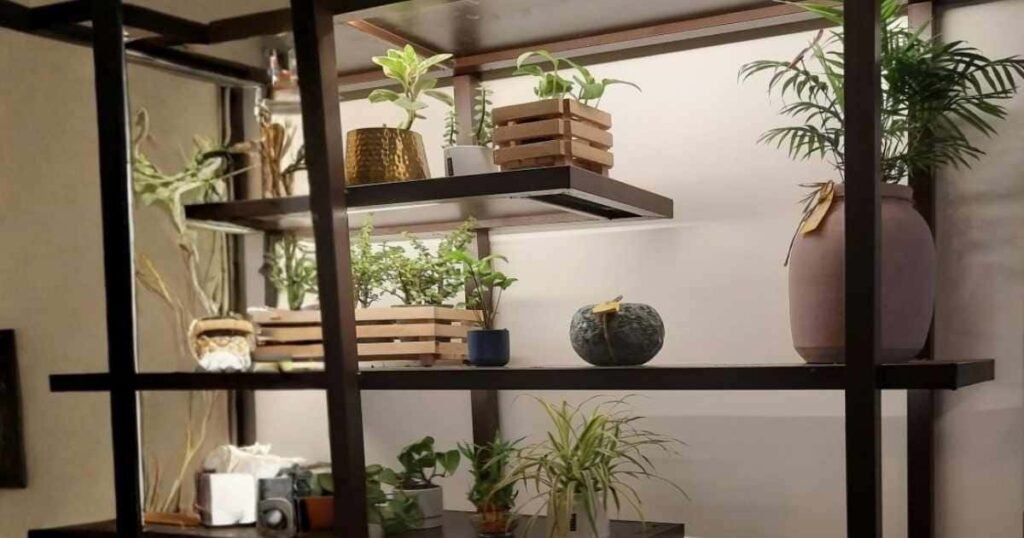
Shelves stretch the window light upward. How far from each window a shelf can go is worked out in the plant shelf ideas page.
Decorating the dark spots with a grow light
A grow light lets you decorate the spots that look best but get no window light: the corner by the sofa, a bookcase across from the window, an entryway. For leafy houseplants, the site’s grow lights guide uses University of Minnesota Extension’s range of 12 to 24 inches above the leaves for an LED fixture.
It’s how I keep plants in the darkest corners. Iowa State suggests running a grow light 14 hours a day and keeping timers between 8 and 16 hours. Illinois and Maryland both cap total light at 16 hours, since plants need a dark period. A timer handles that without you thinking about it.
“I’m looking for aesthetic suggestions on a grow light setup for my monstera. I have limited lighting in my townhome and want to give this plant as much love as possible.”
– r/houseplants, April 2026 (469 upvotes)
The look is the hard part. One reply on that post hung a grow bulb from a plain pendant cord, which reads as an ordinary light fixture.
Bathrooms and bedrooms
Bathrooms and bedrooms both get plants for reasons that don’t always hold. Penn State says bathroom humidity depends on how much the room is used and that bathrooms often lack light, so check the window before styling a fern by the tub. The bathroom plants page includes rooms with no window.
In the bedroom, plants are decor, not an air filter. Iowa State University Extension explains that the 1989 NASA study tested sealed chambers, and it quotes the EPA: there is currently no evidence that a reasonable number of houseplants remove significant quantities of pollutants in homes and offices. Pick bedroom plants for the light and the look; the bedroom plants page sorts them that way.
Plants as decor with a cat or dog
Some of the most popular decor plants are toxic to pets. The ASPCA lists snake plant as toxic to dogs and cats, with saponins that cause nausea, vomiting and diarrhea, and lists weeping fig as toxic too. Parlor palm, areca palm, spider plant and Boston fern are on its non-toxic list.
Swapping in fake plants doesn’t always solve it either.
“I’ve always had to remove my fake plants because of my cats. My new cat even eats the fake ones so now I have no plants!”
– r/HomeDecorating, September 2026 (41 upvotes)
With Miso in the house, I check every plant against the ASPCA list before it goes anywhere a cat can reach, and a high shelf doesn’t count as out of reach. The pet-friendly plants list has more low-light options. A snake plant can still go in a room the pet never enters.

Ellie Marsh
Houseplant grower who spent years in a north-facing apartment. Writes practical care guides for low light homes, checked against extension and botanical garden sources.