Last updated on November 26, 2026
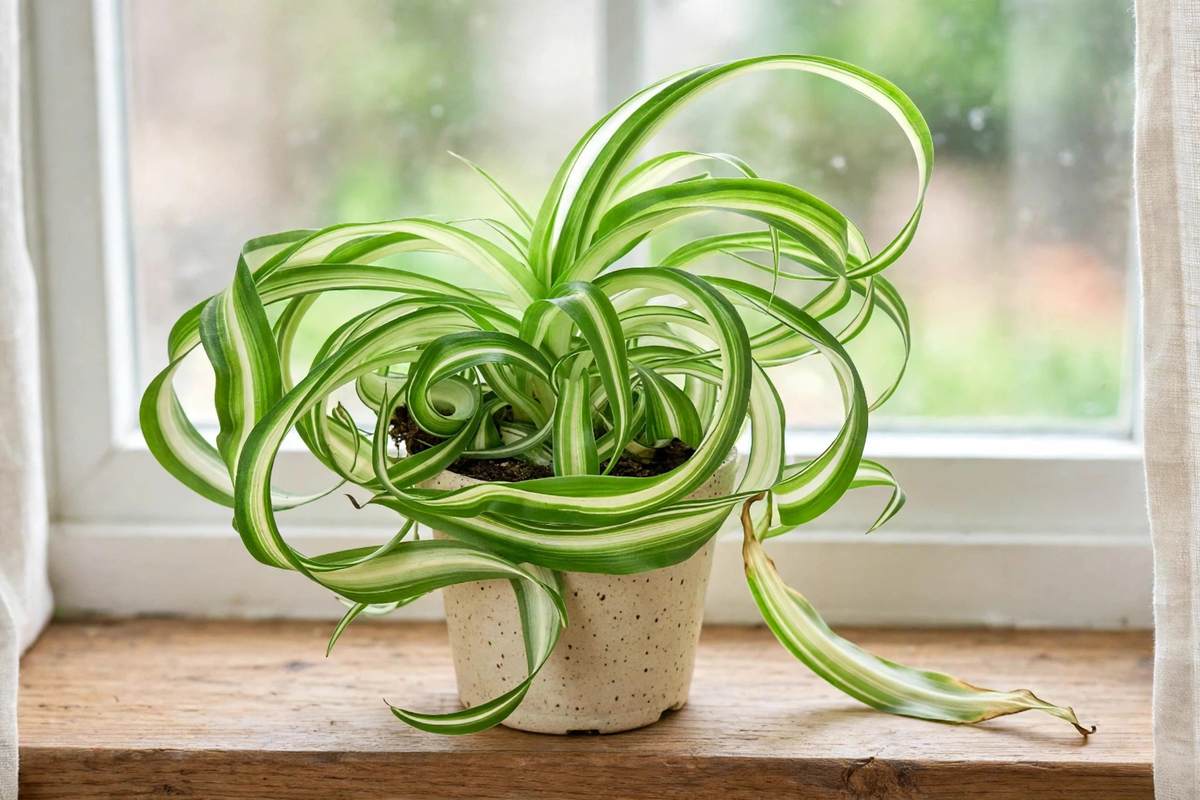
A curly spider plant is Chlorophytum comosum ‘Bonnie’, a compact cultivar whose leaves twist and spiral instead of arching. NC State Extension lists a green form and a creamy-striped ‘Bonnie Variegated’, and puts the cold limit at 45°F.
Everything else about it is ordinary spider plant care, which is the easy part. The hard part is why the curls loosen and the new leaves arrive thin, and that gets most of the space here. I keep mine a few feet from a north-facing window, with Miso asleep on the sill beside it.
What Is a Curly Spider Plant (‘Bonnie’)?
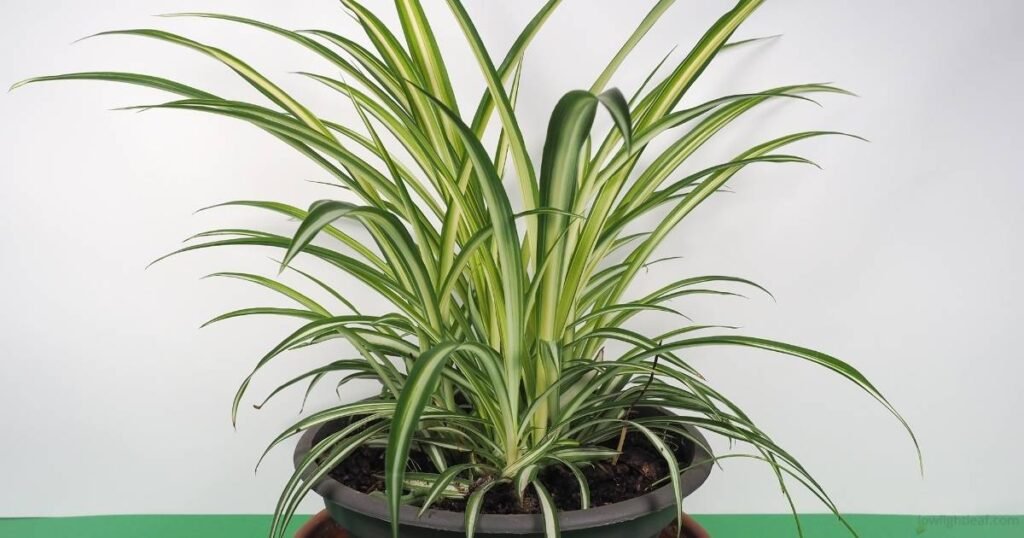
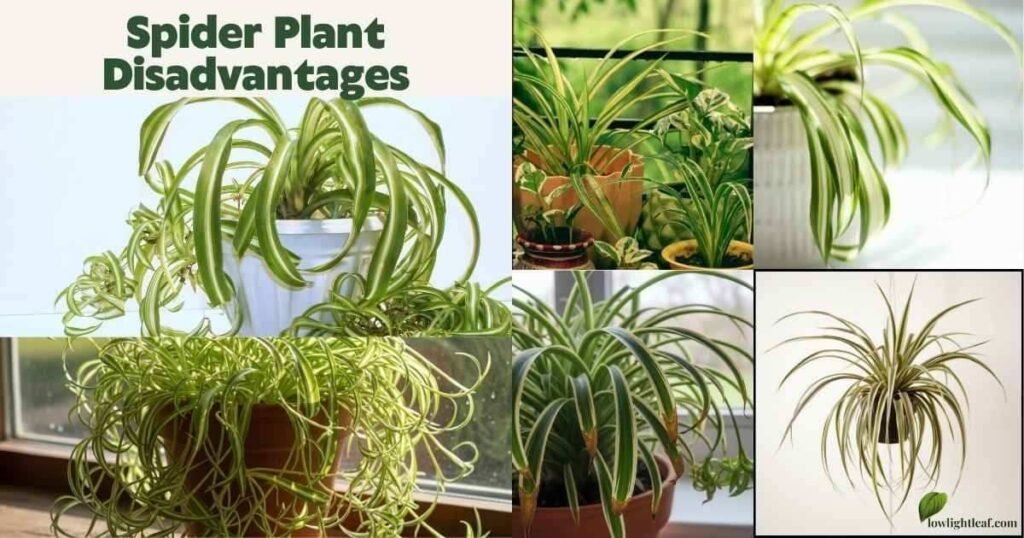
The plant sold under this name is the ‘Bonnie’ cultivar of Chlorophytum comosum, grown for leaves that curl and twist rather than arch, and it is the same species as the ordinary spider plant. It comes in a solid green form and a variegated form with creamy white stripes, the striped one sold as ‘Bonnie Variegated’.
- Botanical name: Chlorophytum comosum ‘Bonnie’
- Leaf form: short, curled and twisted, on a compact plant
- Variegated form: ‘Bonnie Variegated’, green with creamy white stripes
- Light: medium; tolerates heavy shade, no direct sun
- Temperature: above 45°F
- Pet safety: non-toxic to cats and dogs, per the ASPCA
The solid green plant is usually just labeled curly spider plant. The striped one is sold as ‘Bonnie Variegated’, and its cream edges are the main difference you can see at a glance. In deep shade that contrast fades, which becomes useful later when you are working out whether light is the problem.
| Plant | Leaves | Color | Light it wants | When the curls loosen |
|---|---|---|---|---|
| ‘Bonnie’ | Short, tight curls, compact habit | Solid green | Medium, diffused | Move it brighter, then judge new leaves only |
| ‘Bonnie Variegated’ | Same curl, a little slower to fill out | Green with cream stripes | Brighter end of medium | Fix light first, then check the watering |
| Ordinary spider plant | Long and arching, straight | Green or striped | Medium to bright indirect | One twisted leaf is a one-off, not a new cultivar |
An ordinary spider plant can throw the odd twisted leaf, but that is a one-off rather than a change of type. A plant sold as curly carries the twist on nearly every leaf from the start, and it keeps it as long as the new growth is healthy. The older green and striped types are compared in spider plant varieties, and baseline care sits in the spider plant care guide.
Why the Curls Loosen and New Leaves Come In Thin
The curls loosen because the leaves that carry them are already finished growing. A leaf that has opened will not re-curl, however much light you add; only the next leaves can come in tighter.
“What’s grown is grown, and isn’t going to change to be more curly, only new growth will be affected by the changes.”
r/plantclinic, 184 upvotes
In threads about uncurling, three causes come up over and over: not enough light, leaves that have simply aged, and watering that swings from bone dry to soaked. They look alike from above the pot, and they call for different fixes.
Light is the first one to rule out.
Light changes the shape of new growth. In a dim corner the plant stretches toward whatever light reaches it, and stretched leaves come in longer, flatter and thinner than they should. The curl has not left the plant; there is just not enough energy going into compact growth to show it.
Age does the rest. Older leaves relax as they lengthen, so a plant that was tight in the shop can look looser a year later even in decent light, and that is normal rather than a sign you failed. Watering that stays too wet or goes too dry pushes out weak growth on top of it, and a plant still sitting in the soggy mix it came in is worth checking before light gets the blame, because roots that never dry out cannot support the tight growth you are after.
I use one test to settle which cause it is. Move the plant to the brightest spot you can give it without direct sun, leave it there, and judge the next three leaves that unfurl. If all three come in tight, light was the problem. If they still come in flat while the light is good, tip the plant out and look at the roots and the watering instead.
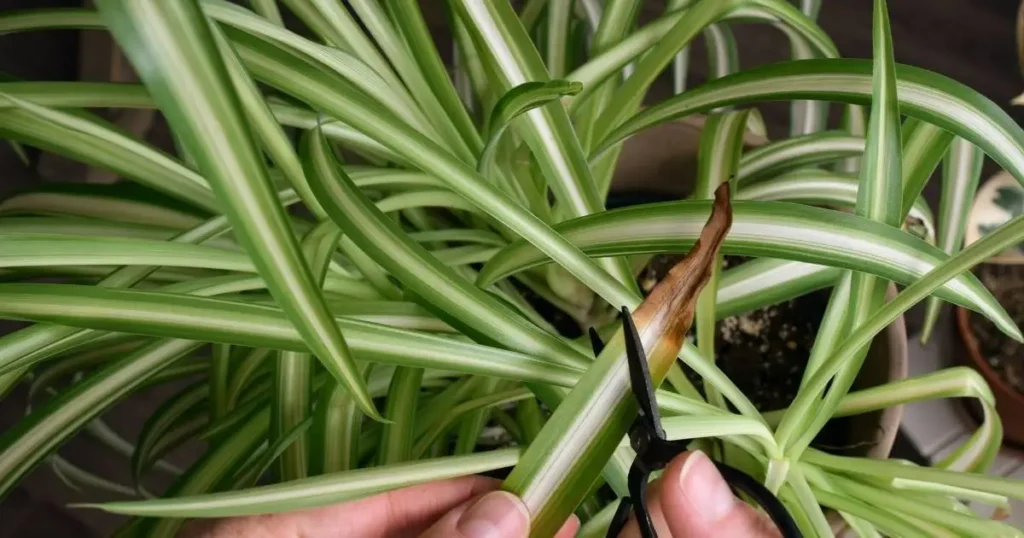
Do not strip every old leaf to force a tidier look. The plant is still feeding from them, and a plant cut back hard while it is already stressed has less to work with. Trim the worst tips and leave the rest until the new growth has proved the fix worked.
Light and Placement for a Curly Spider Plant
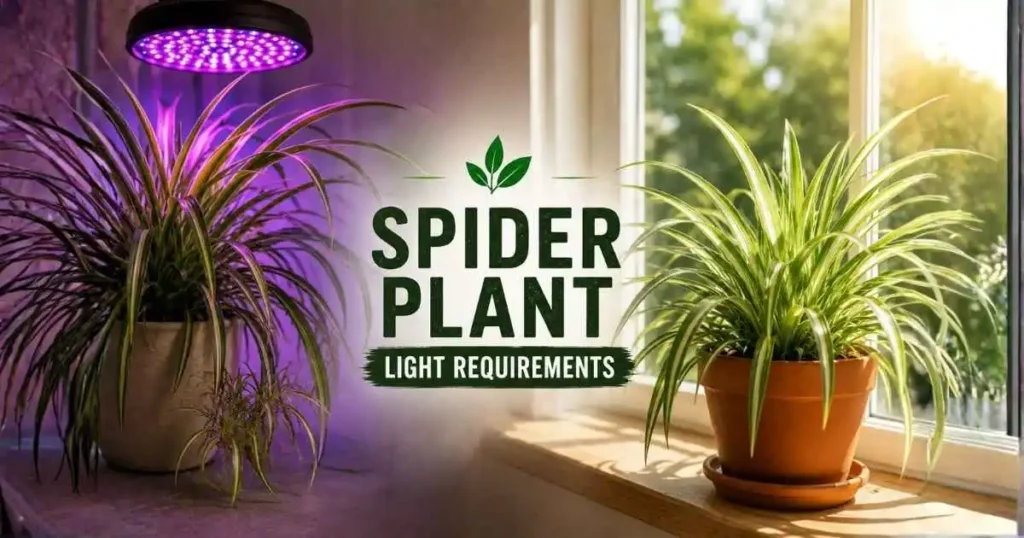
Medium light is the target, and I would take the brightest indirect spot the room has. NC State Extension says the species tolerates heavy shade but does not want direct sun, which puts a bright east window or a spot two to three feet inside a south or west window in range. A sheer curtain helps if the afternoon sun hits the glass. A grow light a hand’s width above the leaves works for a dark shelf, and the compact habit means it does not need much room. The full range is set out in spider plant light requirements.
More light is the usual fix for loose curls, but more direct sun is not. One grower in r/houseplants reported that her curly spider plant started thriving once it went outside, in a post with 537 upvotes. Treat that as one report rather than a rule: outdoor shade in frost-free weather is brighter than most rooms, and full summer sun will scorch the leaves within an afternoon.
Water, Tap Water, and Brown Tips
Spider plants want evenly moist soil, not wet feet, and they hold up better through a dry spell than most plants on the same shelf, so a missed week is survivable. What they do not shrug off is tap water, because NC State Extension notes that chlorine and fluoride in municipal water burn the leaf tips, which is why a plant can look fine everywhere except the very ends.
Rainwater, distilled water or a filtered supply that removes fluoride keeps the tips cleaner. Letting a jug of tap water stand overnight does not remove fluoride, and bottom watering does not stop the salts from building up in the mix. If tap water is the only option, accept some browning and flush the pot with a long, slow watering every few months. Water less in winter, when growth slows and the mix stays wet longer. The full list of causes is in spider plant brown tips.
Soil and Pot Size
A curly spider plant does better slightly crowded than swimming in soil. Choose a pot one size up from the one it came in, and move up again only when roots push out of the drainage holes. An oversized pot holds water the roots cannot use, and that is how a plant that hates wet feet ends up with rot.
Any standard houseplant mix with some perlite or bark in it will do; the roots want air as much as moisture. Repot in spring if you can, keep the crown at the same level, and water less for the first couple of weeks while the roots settle. The mix recipe and the case for skipping perlite are covered in best soil for spider plant.
Flowers and Babies (Spiderettes)
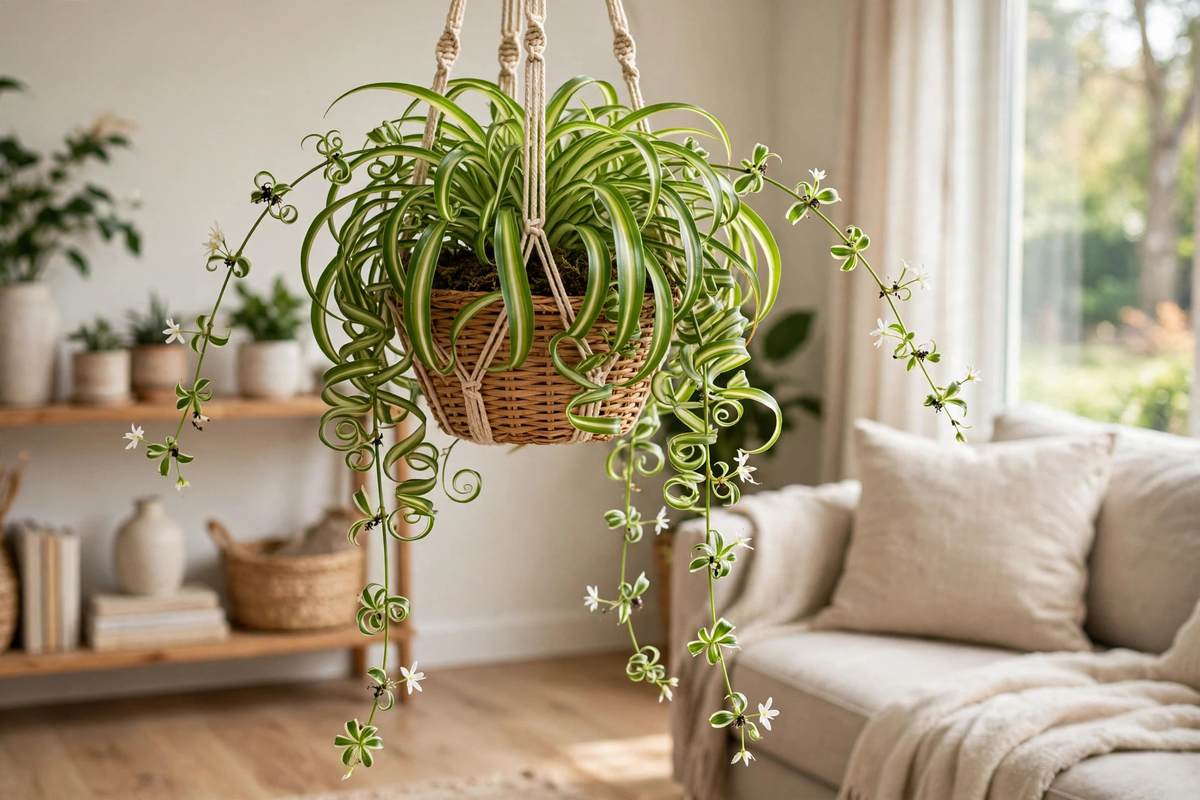
Flowering is not rare. A mature spider plant in decent light sends up long, thin stems with small white flowers, usually in spring or summer. Many plants kept indoors never get there, because they are young or the room is dim, but a flower is a sign of a settled plant rather than a freak event.
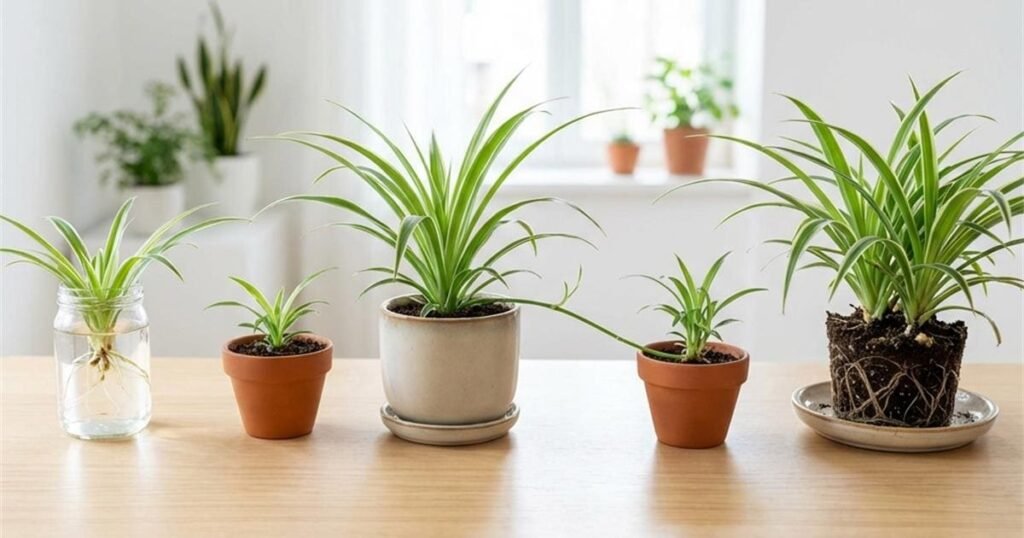
The plantlets follow the flowers. Each stem carries small spiderettes that can be rooted in water or pressed into damp soil while still attached to the parent, then cut loose once roots show. A plant that is making babies is usually getting enough light to keep its curls, so treat a run of spiderettes as a good sign. The timing and the stem shape are described in spider plant flower.
Is a Curly Spider Plant Safe for Cats?
Yes. The ASPCA lists Chlorophytum comosum, the spider plant, as non-toxic to cats and dogs. ‘Bonnie’ is the same species, so the same listing applies. A cat that eats a large amount of any houseplant can still vomit, so non-toxic is not the same as edible.
Miso is the reason I check every new plant against the ASPCA list before it comes inside the house. A spider plant is one of the few on that shelf that does not need a hanging basket or a closed door to be safe. If you are bringing home something else, the plant toxicity checker sorts common houseplants by cat and dog safety in one place.
The next leaf is the answer. I would give the plant brighter diffused light, water it before the mix goes bone dry, and leave the old leaves alone for a month. If the next three leaves come in tight and thick, nothing else needs changing.

Ellie Marsh
Houseplant grower who spent years in a north-facing apartment. Writes practical care guides for low light homes, checked against extension and botanical garden sources.