Last updated on November 9, 2026
The Janet Craig dracaena is one of the few houseplants that really does tolerate low light. University of Missouri Extension groups it with dracaenas that cope with low light and do well in medium light. Keep it within about 10 feet of a window, water it with non-fluoridated water, and keep it away from pets, since the ASPCA lists dracaenas as toxic.
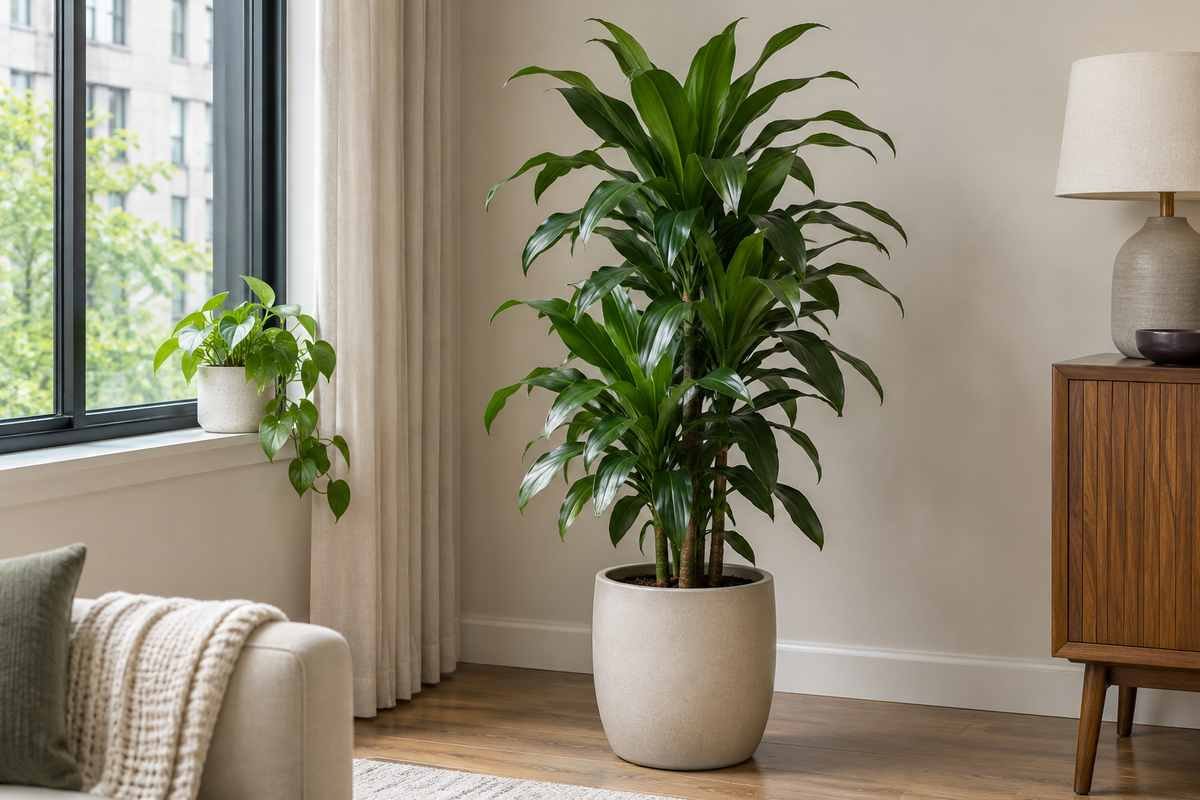
Janet Craig is a cultivar of the corn plant, Dracaena fragrans, sold for years as Dracaena deremensis. NC State Extension describes it as a solid green plant with dense clusters of short, wavy-edged leaves, growing 3 to 6 feet tall. For the genus as a whole, see the dracaena care guide.
How much light does a Janet Craig dracaena need?
A Janet Craig needs at least low light, roughly 50 to 250 foot-candles, and grows better with more. That is University of Missouri Extension’s low-light band.
MU’s guide says the dracaenas, Janet Craig included, tolerate low light although they also do well in medium light, 250 to 1,000 foot-candles. MU also notes that growth is often best at the higher end of a plant’s range.
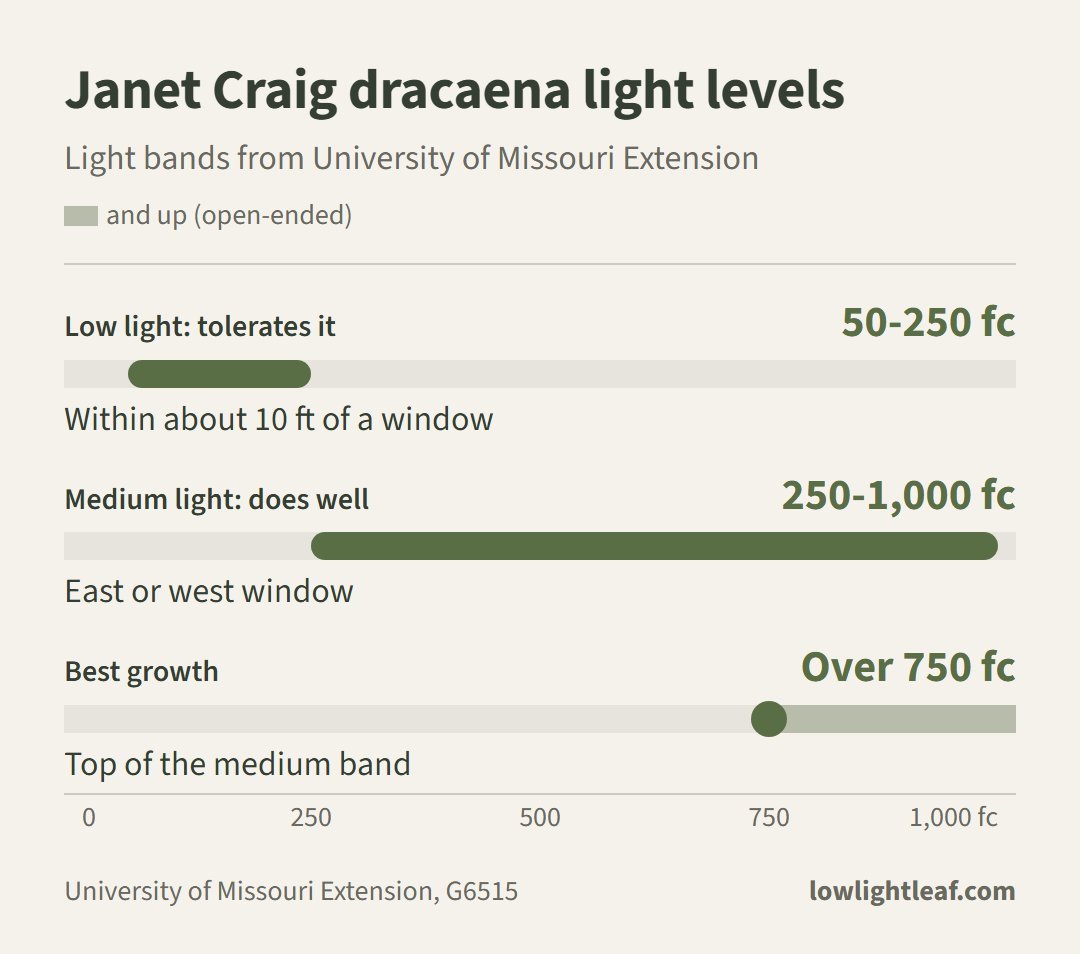
Low light still has a floor. MU says that even low-light plants usually don’t get enough light more than 10 feet from an average window. In a north-facing room, which MU rates as low light, that puts a Janet Craig near the window, not in the far corner.
The plant will tell you when it has gone past that point. NC State Extension says that when light levels are too low, the leaves narrow. New leaves coming in thinner than the old ones mean the plant wants to be closer to the window. Direct sun is the opposite problem, since NC State says it can burn the foliage, so keep it out of strong sun.
When someone on r/plants asked whether a dim corner was enough light for a Janet Craig, the answer was blunt:
“No, this is not near enough light, it needs to be in a window or under a strong grow light”
– r/plants, September 2026 (3 upvotes)
If the only spot you have is farther back, a grow light over the plant fills the gap. To check a spot, take a light-meter reading where the leaves are and run it through the DLI calculator, which has a preset for dracaenas.
Watering a Janet Craig
Keep it moist in spring and summer. Water less in winter. That is NC State’s advice for the corn plant, and MU says dracaenas need to be kept constantly moist for best growth. Some retailer care cards say to let the soil dry fully between waterings; the extension sources don’t.
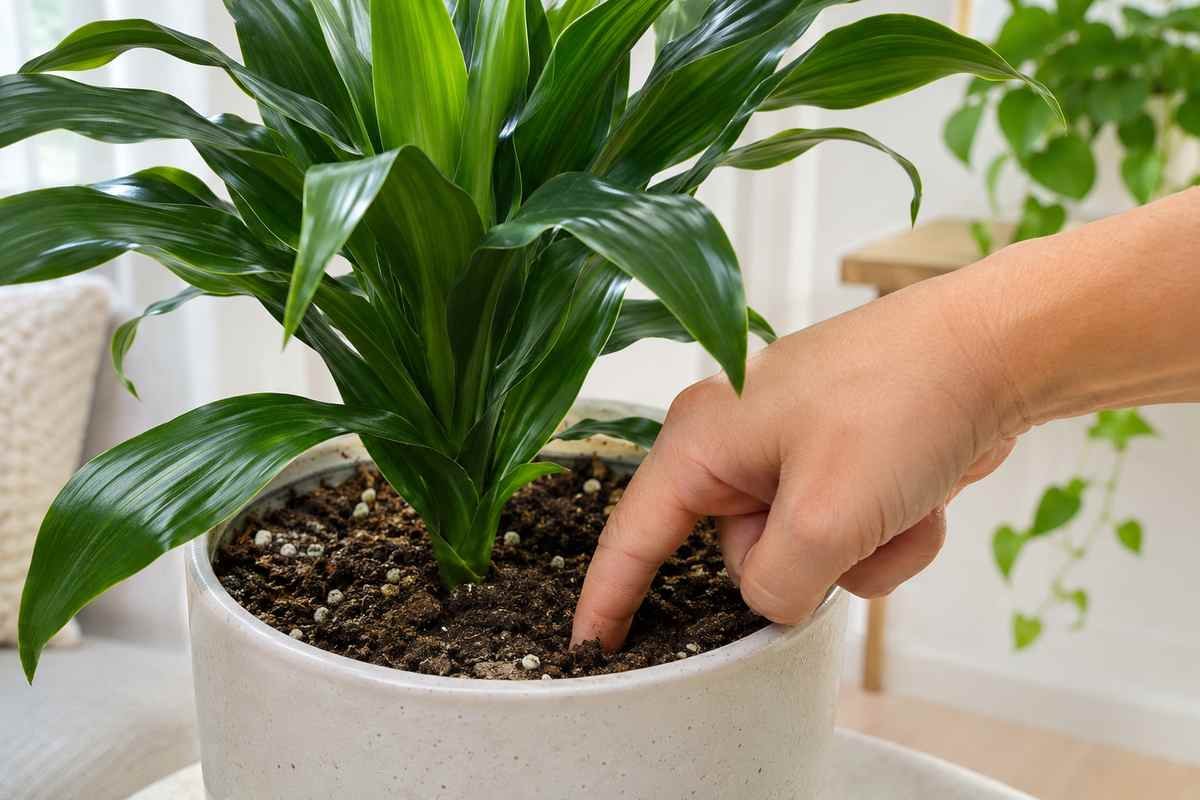
Moist is not soggy. Use a pot with drainage holes, empty the saucer after watering, and in a dim room, where the soil takes longer to dry, check it with a finger before you water instead of keeping to a fixed day.
Brown tips: fluoride, salts and dry air
Brown leaf tips on a Janet Craig usually come back to the water or the air. NC State says the plant is sensitive to fluorides and built-up salts, and that if leaves turn brown you should switch to non-fluoridated water and flush the salts out of the pot monthly. Flushing means running plenty of water through the soil until it pours from the drainage holes.
Dry air is the other cause. NC State says tips also brown when indoor humidity is too low, and that a humidifier may help, especially in winter when the heat is on. Brown tips won’t turn green again, so judge whether a fix worked by the next new leaves.
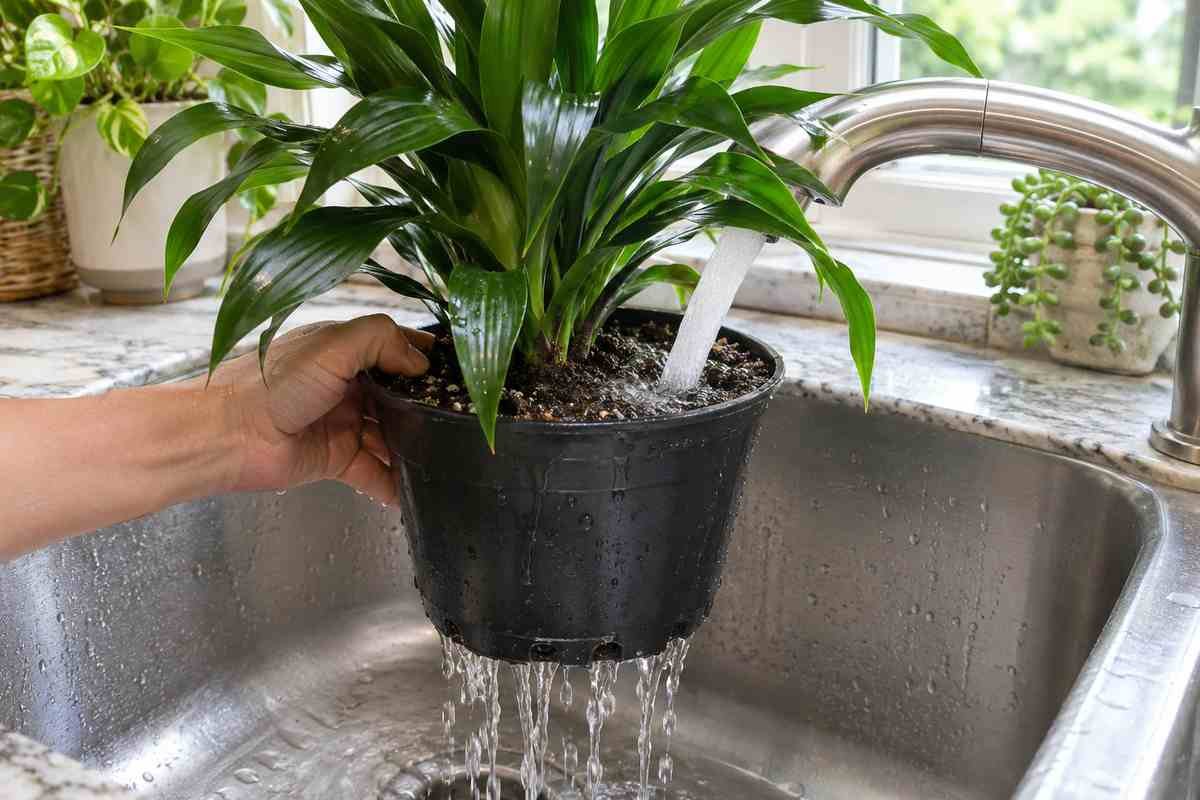
Temperature, soil and repotting
NC State says the corn plant thrives at 70 to 80°F and should be kept above 50°F if possible, and MU says dracaenas need to be kept warm for best growth.
Grow it in regular commercial potting soil in a pot with drainage holes. It grows slowly, so repot only when the plant starts lifting out of its pot or roots come out of the drainage hole, per NC State.
Janet Craig or Janet Craig Compacta?
NC State lists ‘Compacta’ and Janet Craig as the same name, a 3- to 6-foot plant with dense clusters of short leaves. Shops and growers often sell two forms, though: plain Janet Craig with longer leaves, and Janet Craig Compacta with short leaves packed tightly up the stem. One grower on r/Dracaena posted the two side by side:
“Here is my Dracaena Janet Craig next to Janet Craig Compacta. I find the the Janet Craig to be extremely tough; as my compacta survived being ship in 10 degree weather.”
– r/Dracaena, January 2026 (14 upvotes)
Care is the same for both. Flowers are rare indoors: NC State says corn plant flowers are produced infrequently but announce themselves with a very strong fragrance at night.
Pests and pets
NC State lists thrips and mealybugs as the pests to watch on corn plants. The mealybug guide covers spotting and treating them.
The ASPCA’s dracaena entry covers the whole genus and lists it as toxic to cats and dogs. The toxin is saponins, and the listed signs are vomiting (occasionally with blood), depression, loss of appetite, drooling and, in cats, dilated pupils. With a cat like my Miso around, check the plant toxicity table before a new plant comes home.

Ellie Marsh
Houseplant grower who spent years in a north-facing apartment. Writes practical care guides for low light homes, checked against extension and botanical garden sources.