Last updated on October 14, 2026
Poinsettias are mildly poisonous to cats. The ASPCA lists the plant as toxic because its sap irritates the mouth and stomach and sometimes causes vomiting, and in the same entry calls poinsettia “generally over-rated in toxicity.”
So are poinsettias poisonous to cats in the way their reputation suggests? No. Expect drooling, lip licking or a bout of vomiting if your cat chews a leaf. The holiday plant to worry about is a true lily, which can cause kidney failure.
Serious poisoning from a poinsettia is rare.
What happens if a cat eats a poinsettia?
A cat that eats poinsettia usually drools, licks its lips or vomits, and the signs tend to pass on their own. Pet Poison Helpline rates poinsettia as mildly toxic to cats and dogs, says diarrhea is rare, and says medical treatment is rarely necessary unless signs are severe and persistent.
Most of the trouble comes from the milky sap that beads up when a stem or leaf breaks. Pet Poison Helpline names two irritants in it, diterpenoid euphorbol esters and saponin-like detergents. There’s no antidote, which sounds alarming until you read the next line on the same page: with toxicity this low, there’s rarely anything to treat.
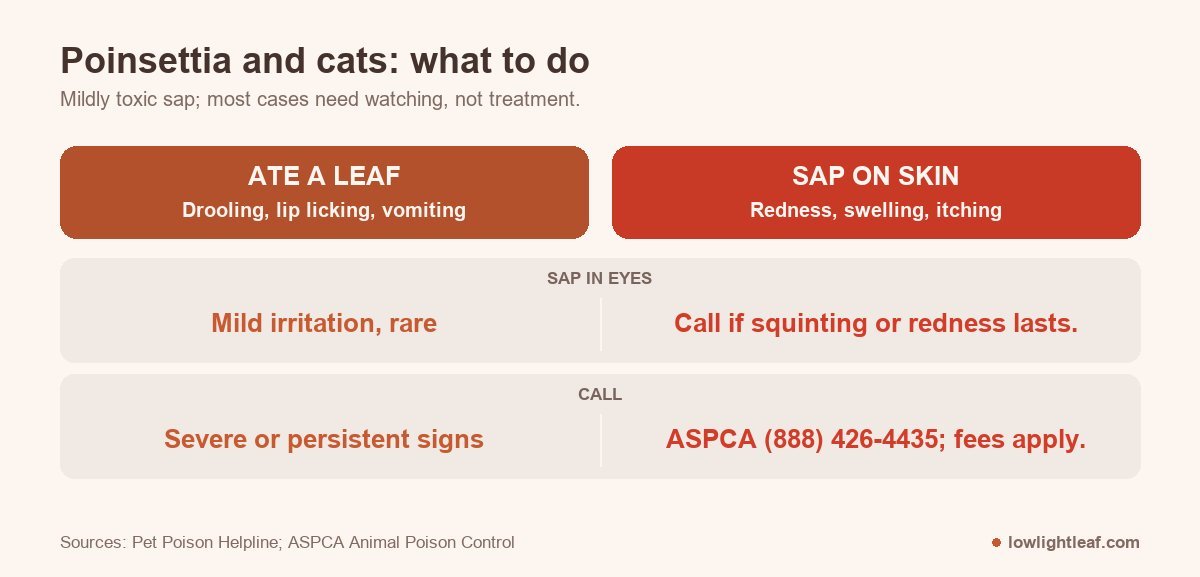
Leaf, sap or eyes: what to do for each exposure
A torn red bract next to a drooling cat can mean three different things, depending on where the sap ended up. Match what you see to a row.
| Exposure | What you may see | What to do |
|---|---|---|
| Chewed or swallowed a leaf | Drooling, lip licking, vomiting; diarrhea is rare (Pet Poison Helpline) | Take the plant away and watch. Signs are generally self-limiting. |
| Sap on the skin or fur | Redness, swelling and itching where the sap touched (Pet Poison Helpline) | Watch the spot. Call if the irritation is severe or doesn’t settle. |
| Sap in the eyes | Mild irritation, which Pet Poison Helpline calls rare | Call a vet if your cat keeps squinting or the eye stays red. |
| Any of the above, but signs are severe or keep going | Repeated vomiting, a cat that won’t eat or seems unwell | Call your vet or a pet poison line now (numbers below). |
On its holiday safety page, the ASPCA describes poinsettia as causing mild to moderate gastrointestinal irritation. That’s a slightly stronger phrase than its plant entry uses, and it’s a fair reminder that a cat that eats a lot of plant will feel worse than one that took a single bite.
When to call a vet or poison control
Call when the signs are severe or don’t stop, or when you aren’t sure the plant was a poinsettia. Pet Poison Helpline notes that the amount eaten, the animal’s size and allergies all change how a pet reacts.
- ASPCA Animal Poison Control: (888) 426-4435, open 24 hours a day, 365 days a year. The ASPCA says a one-time consultation fee applies.
- Pet Poison Helpline: (855) 764-7661, also around the clock, with a per-incident fee.
- Your own veterinarian, who knows your cat’s health history.
Have the plant or its tag nearby when you call. Poinsettias are easy to recognize, but a gift arrangement can hide other plants underneath the red leaves.
Why poinsettias have a worse reputation than they deserve
Fear of the plant goes back more than a century. Poison Control, run by the National Capital Poison Center, says a child found next to a wild poinsettia died and people blamed the plant, and nothing like it has happened since.
Researchers later tried to find a poisonous dose and couldn’t, Poison Control says, even at experimental doses of about 1.25 pounds, or 500 to 600 leaves. That figure doesn’t come from a cat study, so it doesn’t make poinsettia harmless for a cat. It does explain why the ASPCA calls the plant’s danger overstated.
The same story made the rounds on Reddit last December, where it reached thousands of readers who had grown up hearing the opposite:
“TIL poinsettias being poisonous is largely an urban legend spreading from early false stories and reporting. An attempt to determine a poisonous dose of poinsettia to rats failed, even after reaching experimental doses…” [excerpt — 286 characters in full]
– r/todayilearned, December 2025 (4,740 upvotes)
Lilies deserve the scary reputation instead, since the FDA says a cat that eats a small piece of a true lily or daylily, licks the pollen or drinks vase water can develop fatal kidney failure in less than three days. If a holiday bouquet comes into a home with cats, look for lilies before you worry about the poinsettia.
A top reply in that same thread put it plainly:
“I wish people would have the same caution over lilies that they did poinsettias. Lilies are so poisonous to cats that just the pollen can kill them.”
– r/todayilearned, December 2025 (601 upvotes)
Are poinsettias poisonous to cats FAQ
Are poinsettias poisonous to dogs?
Poinsettias are mildly poisonous to dogs, about the same as for cats. The ASPCA lists them as toxic to dogs, cats and horses, and Pet Poison Helpline rates the toxicity as mild for both dogs and cats, with drooling and vomiting the usual signs.
Is a poinsettia pet friendly?
Not quite. A poinsettia is safe enough to keep if you put it where pets can’t chew it, and the ASPCA suggests keeping floral decorations out of paws’ reach or using a faux plant. A plant that’s actually non-toxic is a better pick for a low shelf. Light, water and reblooming for the one up high are in how to keep poinsettia alive.
Do cats know not to eat toxic plants?
You can’t count on it. None of the poison control sources here suggest cats avoid harmful plants on their own, and all of them tell owners to keep risky plants out of reach. Curious cats chew leaves whether or not the plant is safe.
What is the most toxic holiday flower for cats?
True lilies, including the Easter lily, are the most toxic holiday flowers for cats. The FDA says even pollen or vase water can cause kidney failure, and treatment delayed 18 hours or more generally can’t reverse it. The tree itself is a smaller worry, covered in are Christmas trees toxic to cats.
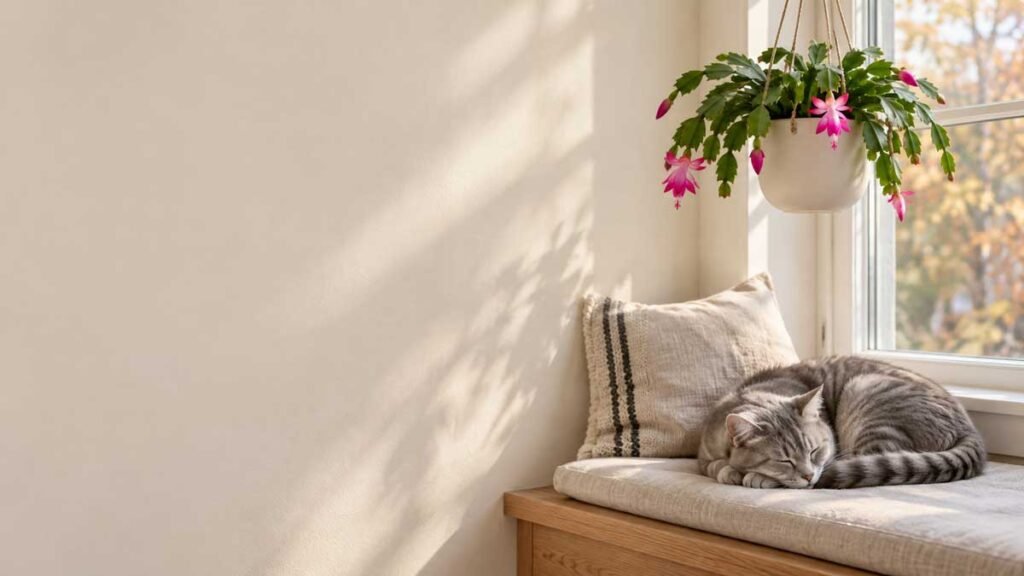
If you’d rather not keep an eye on the holiday plants at all, the ASPCA lists Christmas cactus as non-toxic to cats and dogs, and there are more choices in pet friendly indoor plants.

Ellie Marsh
Houseplant grower who spent years in a north-facing apartment. Writes practical care guides for low light homes, checked against extension and botanical garden sources.