Last updated on October 11, 2026
If you’re wondering how often to water pothos, most do well on an interval of about 7 to 10 days, though light, temperature, and location can push that range up or down. A pot in a warm, bright spot may dry out closer to every 5 to 7 days; one sitting in a dimmer or cooler room can usually go 10 to 14. Treat those numbers as reference points, not a rule. What matters more is what your potting mix is doing, specifically whether the top 1 to 2 inches have dried out, given the conditions around your plant.
Many pothos watering problems start with watering on autopilot instead of checking what your soil is actually doing. This guide shows you how to read those moisture signals, how much water to give your plant and how to apply it, what changes across seasons and pot types, and what to do if your pothos is still drooping after you’ve already watered it.
How Often Should You Water a Pothos?
A pothos in a sunny kitchen and one in a dim hallway are drying out at very different speeds, so a single fixed number rarely fits both. What works better is using a starting point, then letting your own plant’s conditions narrow it down.
Why Shouldn’t I Water Pothos on the Same Day Every Week?
Your plant’s needs shift with the seasons and its surroundings, but a fixed date on the calendar doesn’t. A rigid pothos watering schedule — “every Sunday,” for instance — ignores the fact that potting mix dries at different rates depending on light, temperature, pot size, and time of year.
A Better Approach: Let the Mix Decide
Use your calendar as a reminder to check your pothos, not as a trigger to pour. Set a recurring reminder to inspect its moisture every few days. The reminder tells you to look, not to water. Only water once you’ve confirmed the mix has actually dried down.
Watering Frequency by Season
These ranges reflect typical indoor conditions. Your pothos may fall a little outside them depending on its light and room.
| Season | Typical Frequency | Why |
|---|---|---|
| Spring | Every 7–10 days | Active growth resumes; mix dries faster |
| Summer | Every 5–7 days | Peak growth, warmer air, often faster moisture loss |
| Fall | Every 10–12 days | Growth slows as light and temperature drop |
| Winter | Every 10–14 days | Growth often slows; mix may stay moist longer |
In winter, heated indoor air can lower humidity and speed up moisture loss — the same seasonal slowdown shows up in how often snake plants need water, which also stretches out in cooler months. If your heat runs, don’t assume the full 14-day interval; check the soil sooner.
How Do You Know When Your Pothos Needs Water?
Start with the mix itself, then use more than one signal when you’re unsure.
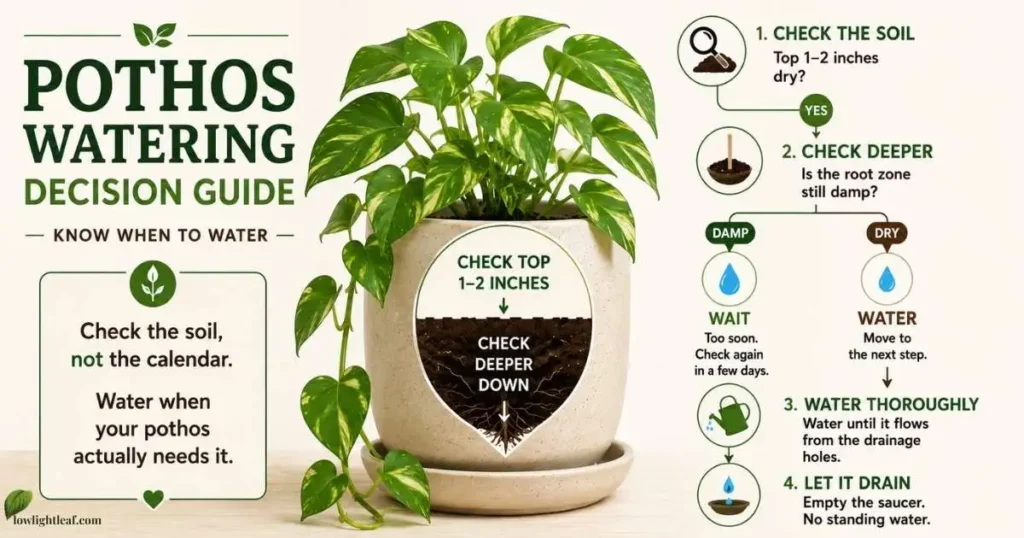
How Dry Should Pothos Soil Be Before Watering?
Aim for the top 1–2 inches dry to the touch. Cool or damp at that depth means wait; dry means it’s time.
Finger Test: Insert your finger to the first or second knuckle. It gives you a quick read on whether the mix has reached the watering threshold. It costs nothing and works well enough for most standard pots.
Moisture Meter: For larger containers, a moisture meter helps reduce the uncertainty. Push it deep into the mix without forcing it toward the bottom, and test two or three spots. Moisture can vary surprisingly across a single pot.
Wooden Chopstick Method: Push a chopstick or skewer to the bottom of the pot, leave it a few seconds, then pull it out. A mostly clean, dry chopstick suggests the lower mix is dry enough to consider watering; soil clinging to it or a damp feel means it’s better to wait.
What if the top feels dry but it’s still damp deeper down? That’s exactly the situation the chopstick reveals, the surface can dry out while the lower mix stays saturated. Watering again in that state means the lower root zone stays wet for even longer, and prolonged moisture down there can increase the risk of root problems over time. If persistent moisture is followed by slower or stalled growth, look at what may be holding your Pothos back.
Other Practical Clues
- Pot weight: lift the pot. A pothos that needs water feels noticeably lighter than one that was just watered, since dry potting mix weighs far less than moist mix.
- Leaf posture: perky, upright leaves generally mean the plant is comfortable; slightly softened or drooping leaves are often, though not always, a thirst signal.
- Soil color: moist potting mix looks noticeably darker than dry mix on the surface.
Take these together rather than on their own. If your pothos looks droopy but the mix underneath is still damp, avoid watering again until you’ve ruled out other causes.
How to Water a Pothos Correctly
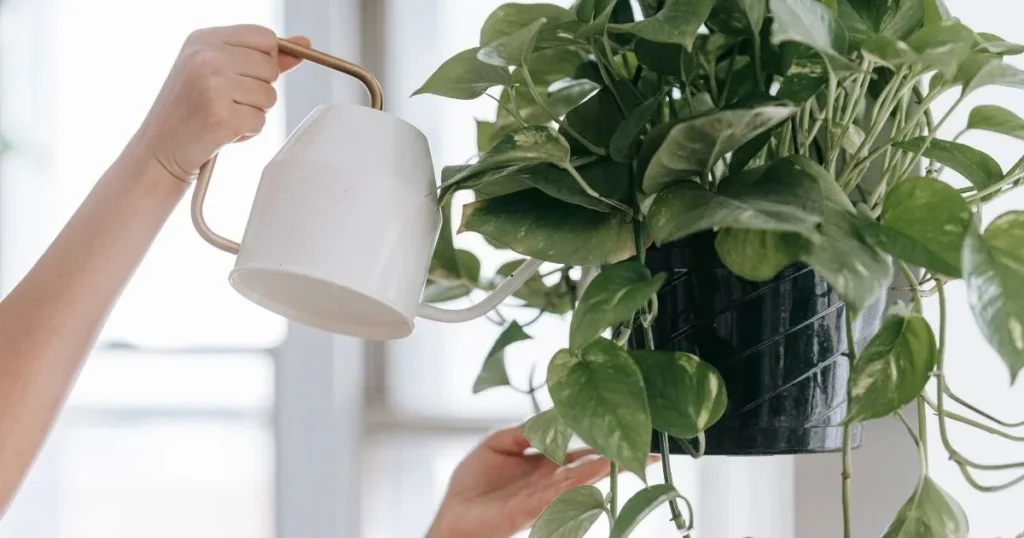
Knowing when to water only solves part of the process. The way you apply water also affects how evenly the root zone gets hydrated.
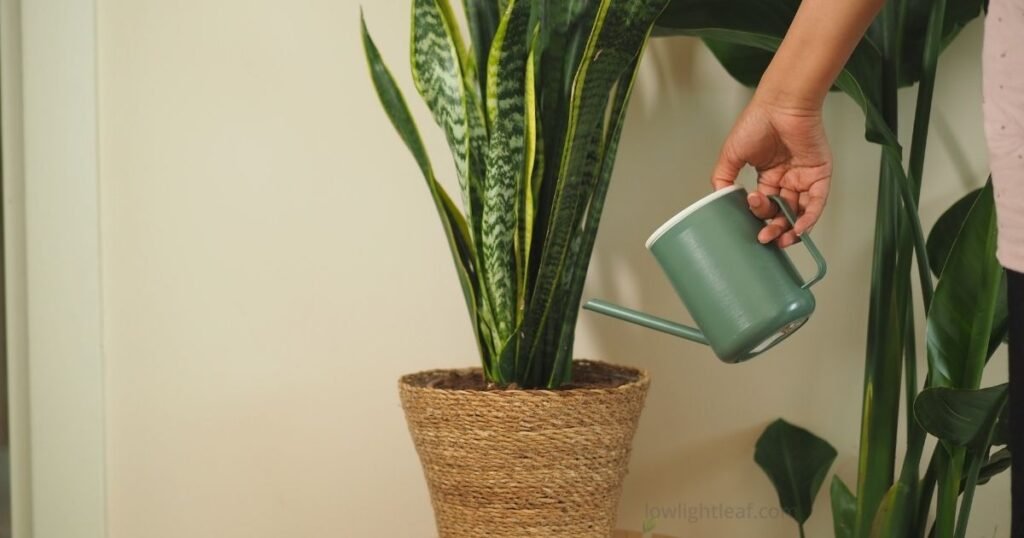
1. Pour slowly and evenly around the base of the plant, not directly against the stem, so the mix has time to absorb rather than letting water run straight through dry, unabsorbed pockets.
2. Continue until water begins flowing from the drainage holes. That indicates water has moved through the full depth of the pot rather than only wetting the surface.
3. Empty the saucer once drainage stops. Standing water left underneath keeps the base of the root ball wet long after the top of the pot has dried, which can increase the risk of root rot.
How Much Water Does a Pothos Need?
There’s no fixed cup measurement that works across every pot because pot size and soil volume vary too much. Use the pot’s drainage response rather than a fixed volume: apply enough water to wet the mix thoroughly, then allow the excess to drain away.
Is Bottom Watering Better for Pothos?
Not necessarily. It can be useful in specific situations, but top watering is the standard approach for most pothos.
When Is Bottom Watering Useful? earns its place when the surface has dried and hardened enough to pull away from the pot’s edges, repelling water poured from above instead of soaking it in. Set the pot in a shallow basin and let the mix draw moisture upward through the drainage holes until the surface feels evenly damp, then lift the pot out and let it drain completely before setting it back on a saucer.
For everyday care, top watering with a thorough drain-through works just as well.
What Affects How Often You Need to Water?
Once you have a starting watering range, your pothos may need water sooner or later depending on how quickly its potting mix dries.
| Factor | Effect on Watering |
|---|---|
| Bright, indirect light | Mix dries faster; check and water more often |
| Low light | Mix stays moist longer; water less often |
| Warm room | Faster moisture loss; shorter intervals |
| Small pot | Less mix volume; dries faster |
| Terracotta pot | Porous walls allow moisture to escape; dries faster |
| No drainage holes | Moisture can remain trapped longer; drainage holes are strongly preferred |
| Root-bound plant | Roots occupy more of the pot, leaving less mix to hold moisture |
| Chunky, well-aerated mix | Drains and dries faster |
| Low humidity | Speeds drying; shorter intervals |
How Light Changes Pothos Watering Frequency
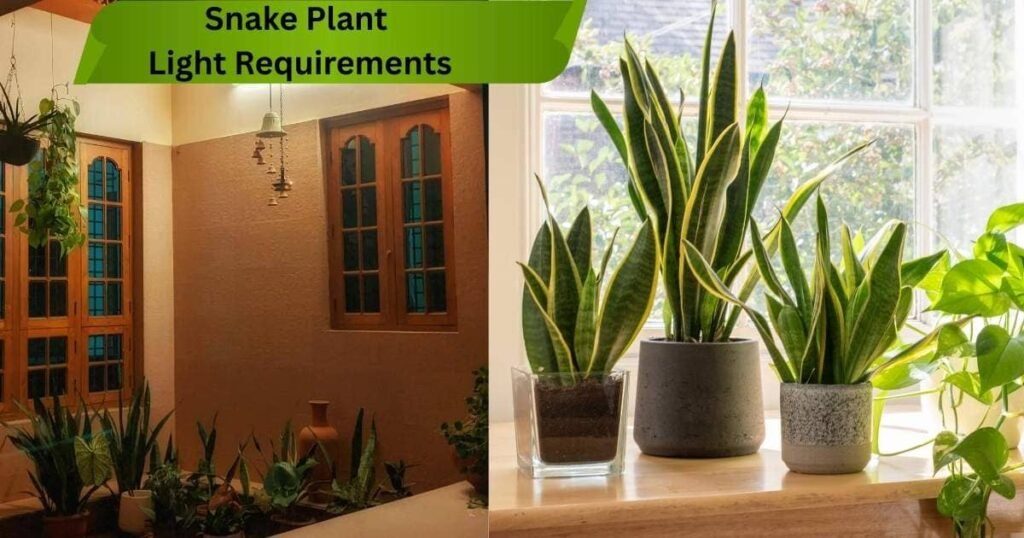
Light is one of the main factors that changes how quickly a pothos uses and loses water. A plant in bright, indirect light generally dries out sooner than one growing in a dim corner. If your pothos is kept in low light, allow more time for the mix to dry instead of matching the watering frequency of a brighter-grown plant, this is common with most plants suited to dim indoor corners.
Does a Terracotta Pot Change How Often Pothos Needs Water?
Yes. Terracotta and unglazed clay are porous, so moisture can escape through the container walls as well as from the potting mix. As a result, a pothos in terracotta may dry out sooner than the same plant in plastic or glazed ceramic.
Pothos potting mix composition matters too. A chunky, well-aerated blend containing materials such as perlite or bark usually loses moisture faster, while a denser mix holds it longer.
Root-Bound Pothos and Large Plants
A pothos that has outgrown its container can dry out faster because its roots occupy more of the available space, leaving less potting mix to retain moisture, Penn State Extension describes it as a fast, vigorous grower that can reach several feet indoors. If yours suddenly seems to need water more often despite otherwise stable conditions, look for roots circling the inside of the pot or growing through the drainage holes.
What About Humidity?
Humidity also changes how quickly moisture is lost. In a humid bathroom or kitchen, the mix may stay moist for longer. In a dry room, especially one affected by heating or air conditioning, the same pot can dry out sooner even when its light remains unchanged.
Water Quality and Pothos: What Actually Matters
Can I Water My Pothos With Tap Water?
Usually yes. Ordinary tap water is fine for pothos in most homes, although water quality can matter if your supply has high mineral content or your plant shows signs of sensitivity.
Chlorine and chloramine. Some growers let tap water sit uncovered for about 24 hours so chlorine has time to dissipate. Chloramine does not dissipate the same way, so filtered water can be a reasonable alternative if you notice ongoing issues.
Hard water. High-mineral water can leave a white crust on the mix surface over time. Flushing the pot with plain water occasionally can help reduce mineral buildup around the root zone.
pH. Pothos isn’t particularly fussy about pH. Most tap water and potting mixes fall within a range it tolerates well, so there’s usually no need to manage pH separately.
Temperature. Room-temperature water is a practical everyday choice, especially for smaller pots.
Signs of Overwatering vs. Underwatering
Too much or too little water can both make a Pothos (Epipremnum aureum) droop, so the soil condition is more useful than the leaves alone when deciding what went wrong. When light changes, watering needs can change with it, so Pothos light conditions are worth considering alongside soil moisture.
Signs of Overwatering
Signs of Underwatering
Why Does Drooping Happen With Both Overwatering and Underwatering?
Underwatering limits the moisture available to the roots, while prolonged saturation can damage roots and interfere with water uptake. Pothos is a climbing aroid with aerial roots that can assist with moisture uptake, but it still relies mainly on its soil-based root system for hydration, just one piece of the full pothos plant guide covering everything else about growing it. Stress or damage to that root system can therefore cause wilting even when the pot feels wet. When the leaves look droopy, check the moisture level before adding more water.
| Symptom | More Consistent With | What to Check |
|---|---|---|
| Yellow, soft leaves | Overwatering | Soil moisture and smell |
| Yellow, dry or crispy leaves | Underwatering | Soil dryness and pot edges |
| Drooping with wet mix | Overwatering or root stress | How long the mix stays wet |
| Drooping with dry mix | Underwatering | Moisture deeper in the pot |
| A few yellow lower leaves | Often normal aging | Condition of new growth |
A few yellow lower leaves do not automatically mean a watering problem. If only one or two older leaves are yellowing while new growth remains healthy, normal leaf aging may be the more likely explanation.
Why Is My Pothos Still Droopy After Watering?
If you’ve given your pothos a thorough watering and it still looks droopy, don’t add more water immediately. A mildly underwatered plant may begin to recover within a few hours, but a more stressed plant can take longer.
What if your pothos is still droopy after a day or two? Look at the conditions around the root zone rather than watering again automatically. If the mix is still wet, persistent drooping can point to root stress, poor drainage, or another source of plant stress rather than a lack of water.
Recent repotting, propagating a pothos, or a change in location can also cause temporary drooping, even when your watering is appropriate. In those cases, giving the plant time to adjust is more useful than increasing its watering frequency.
Why Are My Pothos Leaves Yellow After I Just Watered It?
Yellowing soon after watering can be a sign that the root zone is staying too wet, particularly if the mix was already moist before you watered. Check the soil before watering again and pay attention to whether it remains damp for several days. If the yellowing continues or spreads, our full breakdown of why pothos leaves turn yellow walks through the rest of the possible causes and how to fix each one.
Special Watering Situations
Should You Water a Pothos After Repotting?
If the fresh potting mix is dry, water thoroughly after repotting so the mix settles around the roots and makes good contact with them. If the mix is already moist, don’t add another watering simply because the plant has been repotted. Return to your normal moisture-based checks once the plant is settled.
How Should You Water a Pothos Cutting After Moving It Into Soil?
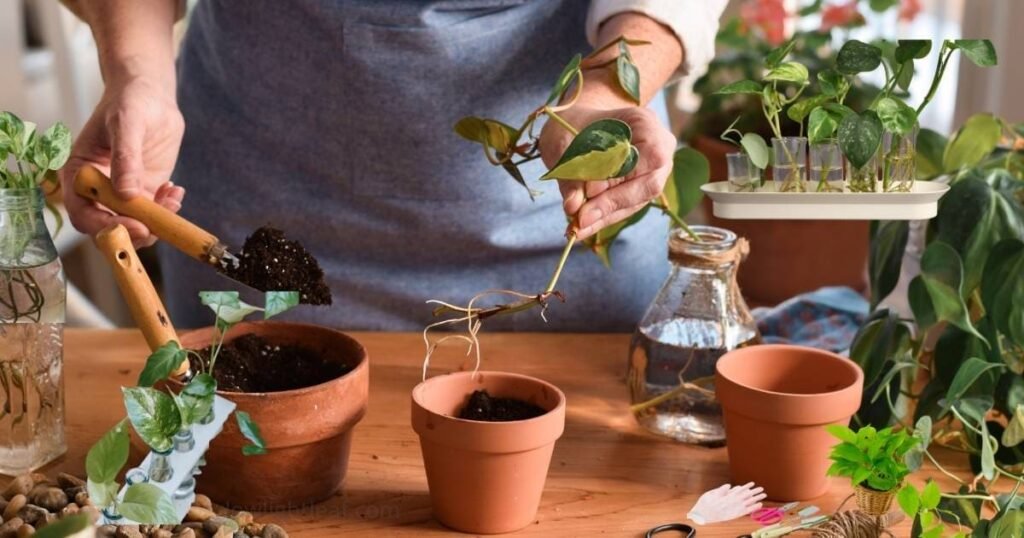
Treat a newly soil-planted cutting according to the condition of its mix rather than your established plant’s usual schedule. Check the pot more frequently while the cutting adjusts, but water only when the mix reaches the same dryness threshold used for a rooted pothos.
Does a Pothos Grown in Water Need the Same Watering Schedule?
No. A pothos growing permanently in water doesn’t follow a soil-based watering schedule. Monitor the water level instead; once the plant is moved into potting mix, switch back to soil-moisture checks.
How Long Can a Pothos Go Without Water?
A healthy, established pothos can tolerate a period without watering, one of the reasons it’s considered such a forgiving plant to keep even for beginners. Ten days may be manageable in some indoor conditions, while three weeks without water can put the plant under significant drought stress. Light, humidity, pot size, and the condition of the mix all affect how long it can go.
If you’re going away, don’t use a fixed “maximum days” number as your only plan. A self-watering setup or someone checking the plant during a longer absence is safer.
Are Self-Watering Pots or Watering Globes Good for Pothos?
Self-watering pots can be useful when you want a more consistent moisture supply, but the reservoir should not be treated as permission to keep the root zone constantly saturated. The setup still needs to match the plant’s drying rate and potting mix.
Watering globes can provide a temporary water supply during short absences, but their release rate isn’t the same as checking the mix yourself. They’re better viewed as a convenience than a replacement for moisture-based watering.
Why Does My Pothos Have Water Droplets on Its Leaves?
Water droplets along the leaf edges or tips, especially in the morning, can result from guttation. This happens when root pressure pushes water out through specialized pores while transpiration is low.
Droplets alone don’t mean your pothos is overwatered. Check the potting mix and the plant’s overall condition before changing your watering routine. It also helps to consider the other factors that affect healthy growth, including light, soil, and placement. Our guide to keeping your pothos healthy overall covers these care adjustments in more detail.
Does Watering Differ Between Pothos Varieties?
Not usually. Golden, Neon, Jade, Marble Queen, Manjula, and Cebu Blue Pothos generally follow the same moisture-based watering approach. Their watering needs are influenced more by the conditions in which they’re grown than by the cultivar name itself.
Variegated varieties such as Marble Queen and Manjula are often kept in brighter light, which can make their mix dry faster. The difference comes from the growing conditions, not simply from variegation.
Satin pothos is a common name for Scindapsus pictus, a different genus, so it shouldn’t be treated as another Epipremnum aureum cultivar.
Frequently Asked Questions
Is Misting a Substitute for Watering Pothos?
No. Misting only adds moisture to the leaf surface and does not replace watering the potting mix. Your pothos still needs water delivered to the root zone.
Can I Water Pothos With Tap Water?
Usually yes. Most pothos tolerate ordinary tap water well. If you notice persistent mineral buildup or other signs that your water quality may be an issue, filtered water is a reasonable alternative.
Can Pothos Be Watered With Room-Temperature Water?
Yes. Room-temperature water is a practical choice for routine watering, particularly for smaller containers.
Do Pothos Need Different Watering Based on Their Variety?
Usually not. Golden, Neon, Jade, Marble Queen, Manjula, and Cebu Blue Pothos can generally follow the same moisture-based approach. Their actual watering frequency depends more on growing conditions such as light, pot, and potting mix.

Ellie Marsh
Houseplant grower who spent years in a north-facing apartment. Writes practical care guides for low light homes, checked against extension and botanical garden sources.
Explore more: