Last updated on November 25, 2026
A dark corner can hold a Janet Craig dracaena at 3 to 6 feet, a lady palm at 4 to 12, or a ZZ plant that tops out at 2 to 4. None grows in the dark, and most label heights are outdoor numbers.
Tall indoor plants low light: the short list
Every row below comes from an extension record or an ASPCA entry, not from a product page. The height column is the number the source gives for a plant in a container, and where a source only has a landscape figure I say so instead of converting it.
| Plant | Height in a pot | Light it takes | Water | Cats | Source |
|---|---|---|---|---|---|
| Janet Craig dracaena (Dracaena fragrans ‘Compacta’) | 3 to 6 ft | tagged low light | top of the mix dry | Toxic | NC State; ASPCA |
| Dragon tree (Dracaena reflexa var. angustifolia) | to 6 ft, prunable shorter | deep shade | top of the mix dry | Toxic | NC State; ASPCA |
| Kentia palm (Howea forsteriana) | no pot figure in the record | little light | when half dry | Non-toxic | NC State; ASPCA |
| Lady palm (Rhapis excelsa) | 4 to 12 ft | deep shade | steady moisture | Non-toxic | NC State; ASPCA |
| Parlor palm (Chamaedorea elegans) | 2 to 7.5 ft | low light | lightly moist | Non-toxic | NC State; ASPCA |
| ZZ plant (Zamioculcas zamiifolia) | 2 to 4 ft | deep shade | dries out fully | Poisonous | NC State |
| Cast iron plant (Aspidistra elatior) | 1 to 3 ft | dense shade | long dry spells | Non-toxic | NC State; ASPCA |
| Snake plant (Dracaena trifasciata) | leaves to 4 ft | very low light | dries out fully | Toxic | NC State; ASPCA |
Sources: NC State Extension Gardener Plant Toolbox and ASPCA plant entries, all opened 25 November 2026.
What the height numbers mean
- Species range: the biggest number on an extension page belongs to plants in the ground in a warm climate, not to yours in a pot.
- Cultivar figure: the same page often gives a smaller number for the named cultivar sold as a houseplant. That is the one to use.
- No figure: when the record has none for a pot, treat every round number you see elsewhere as marketing. I would rather leave a blank than repeat one.
If you are still choosing between light levels, the broad list of low light indoor plants covers the small and trailing end of the same question.
What each one is like in a low-light corner
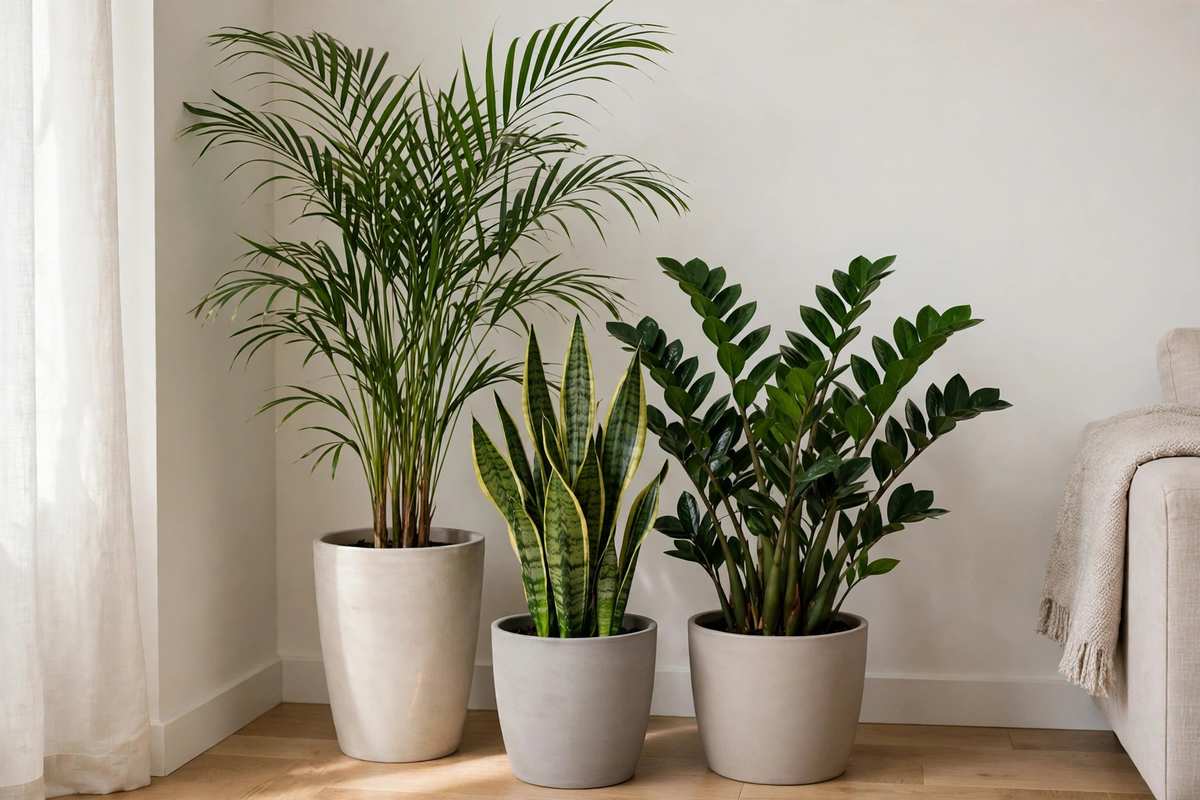
Eight plants, in the order I would consider them for a corner with a window across the room. The order changes the moment a cat is involved, and the last section deals with that.
Dracaena fragrans ‘Janet Craig’
This is the one I would put in a hallway first. NC State lists ‘Compacta’, sold as Janet Craig, at 3 to 6 feet with solid green leaves in dense clusters and wavy margins, and tags it for low light. The same page carries a species range of 3 feet to 14 feet 6 inches, which is the figure a lot of lists quote and the one that makes people expect a tree.
Expect slow work upward. A cane that reaches the ceiling is a plant grown for years in good light, and in a corner it will add height at a crawl. The wide leaves collect dust, so wipe them when the surface goes dull; that matters more in low light than fertilizer does. Toxicity is the catch. Cats, dogs and people all react to it, with drooling and vomiting after chewing. Janet Craig care goes deeper on the cultivar, and dracaena care covers the genus.
Dragon tree (Dracaena reflexa var. angustifolia)
Dragon tree is the thin option. NC State gives it 6 feet as a houseplant against 20 feet in habitat, and notes that pruned stems branch into two or more growing points, which is how you keep one from turning into a pole. Deep shade is on its light list, so a corner away from the window is fair game.
The look is a tuft of narrow leaves on bare stems, about 2 feet long and half an inch wide, with the lower leaves dropping as the cane ages. That bare-stem habit is either the point or a dealbreaker, depending on what you want the corner to look like. It is toxic to cats and dogs, and the ASPCA entry lists dilated pupils, abdominal pain and drooling in cats.
Kentia palm (Howea forsteriana)
Here is the honest answer on height, and it is unusual. NC State’s Kentia page says the palm needs little light and adapts to sunny spots, and its height field reads 12 to 24 feet. Those are plants in the ground in a mild climate. There is no pot height in the record, so anyone who tells you a Kentia reaches a specific height indoors is working from something other than an extension service.
What the record does settle is safety: the ASPCA lists Kentia palm as non-toxic to dogs and cats, and NC State tags it the same way for cats, dogs and horses. For a large, arching, floor-standing plant in a household with a cat, that combination is hard to beat. It is slow, it hates being moved, and it wants the soil to dry halfway before you water again.
Lady palm (Rhapis excelsa)
Lady palm grows in fan-shaped clumps of dark green stems, and NC State puts it at 4 to 12 feet with deep shade on its light list, plus low humidity requirements. That last part is why it survives winter indoors better than most palms: dry air is the norm in a heated room, and this one does not need a humidifier running all day.
The trade-off is width. A mature clump spreads as much as it rises, so give it a corner with floor space rather than a narrow slot. Regular watering in summer, less in winter. Non-toxic to cats and dogs, per ASPCA and the NC State tags.
Parlor palm (Chamaedorea elegans)
Parlor palm is the smallest palm here, 2 feet to 7 feet 6 inches in the record, and nurseries sell it as three or more stems in one pot to make it look fuller. NC State notes that the weaker stems get out-competed and die over time, so a pot that thins out is behaving normally, not failing.
It is slower and softer than a Kentia, and it takes low light without complaint. Water when the surface is dry, keep it out of drafts, and expect it to stay under waist height for a long time. Non-toxic to cats and dogs.
ZZ plant (Zamioculcas zamiifolia)
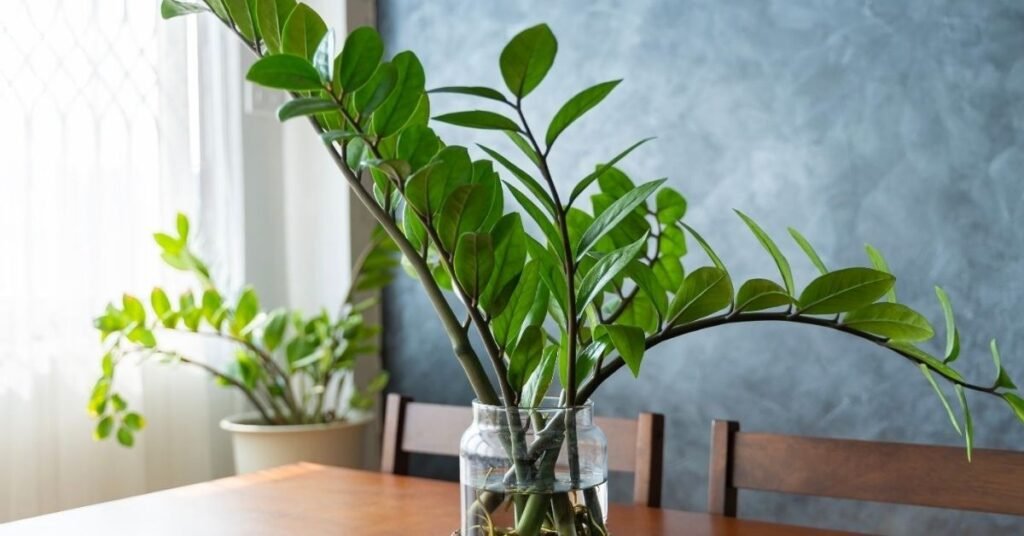
ZZ plant is the one for the corner nobody remembers. NC State records slow growth to 2 to 4 feet in both height and width, deep shade on its light list, and thick bulbous rhizomes under the soil that store water. That storage is why it forgives a missed month and why overwatering is the usual way people kill it.
Leaves are glossy and compound, on arching stems, and new growth unfurls a pale green shoot that darkens over weeks. It is poisonous according to NC State, so it stays off the floor in a house with a cat that chews. ZZ plant care covers the watering rhythm in more detail.
Cast iron plant (Aspidistra elatior)
Cast iron plant is not tall, and pretending otherwise is how this list would go wrong. NC State puts it at up to 2 feet in upright clumps, 1 to 3 feet in the height field, and calls it a specimen for dense shade. What it lacks in height it makes up for in tolerance: it handles dry soil, poor soil and heavy shade, which is a combination almost nothing else in this list survives.
Use it at the base of a taller plant, or alone where the ceiling is low and the light is worse than you would admit to a plant seller. Non-toxic to cats, dogs and horses according to the ASPCA entry.
Snake plant (Dracaena trifasciata)
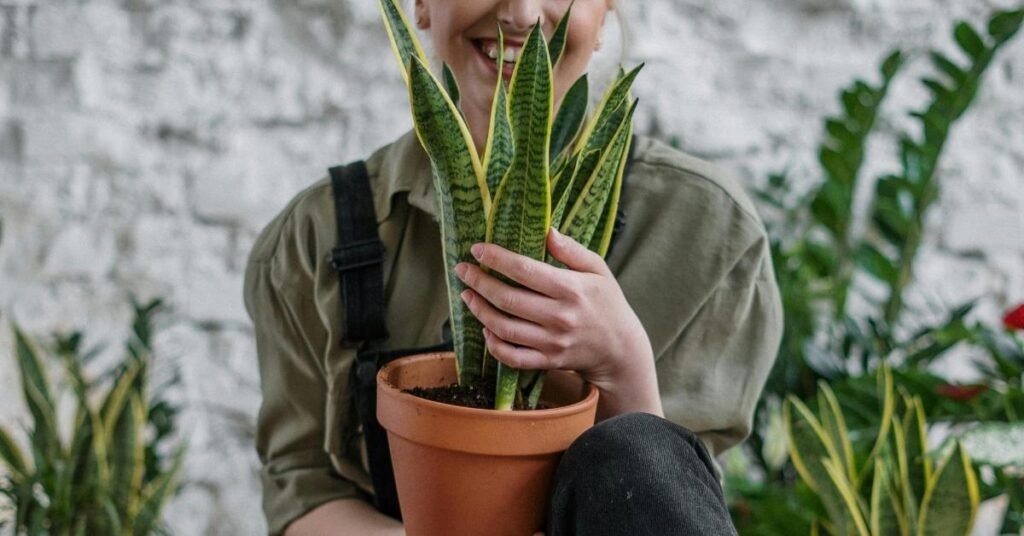
Snake plant is the narrowest of the eight. The leaves are flat, upright and up to 4 feet long, banded across the width, growing in a rosette that takes up little floor space. NC State says it tolerates very low light, with the caveat that light drives how fast it grows and how well the variegation holds.
The rosette habit is the reason people recommend it for tight spots, and the recommendation shows up in the places where this question gets asked. One r/IndoorGarden commenter put it this way:
“I’d do a snake plant. There are several varieties, and they grow nice and straight, and not bushy, so you won’t have a plant sticking out in an area you are walking by.”
– r/IndoorGarden, July 2026 (141 upvotes)
It is toxic to cats and dogs, with nausea, vomiting and diarrhea listed by the ASPCA, so it goes where a cat cannot reach the leaves. Snake plant care has the watering side.
Do big plants in dark corners need a grow light?
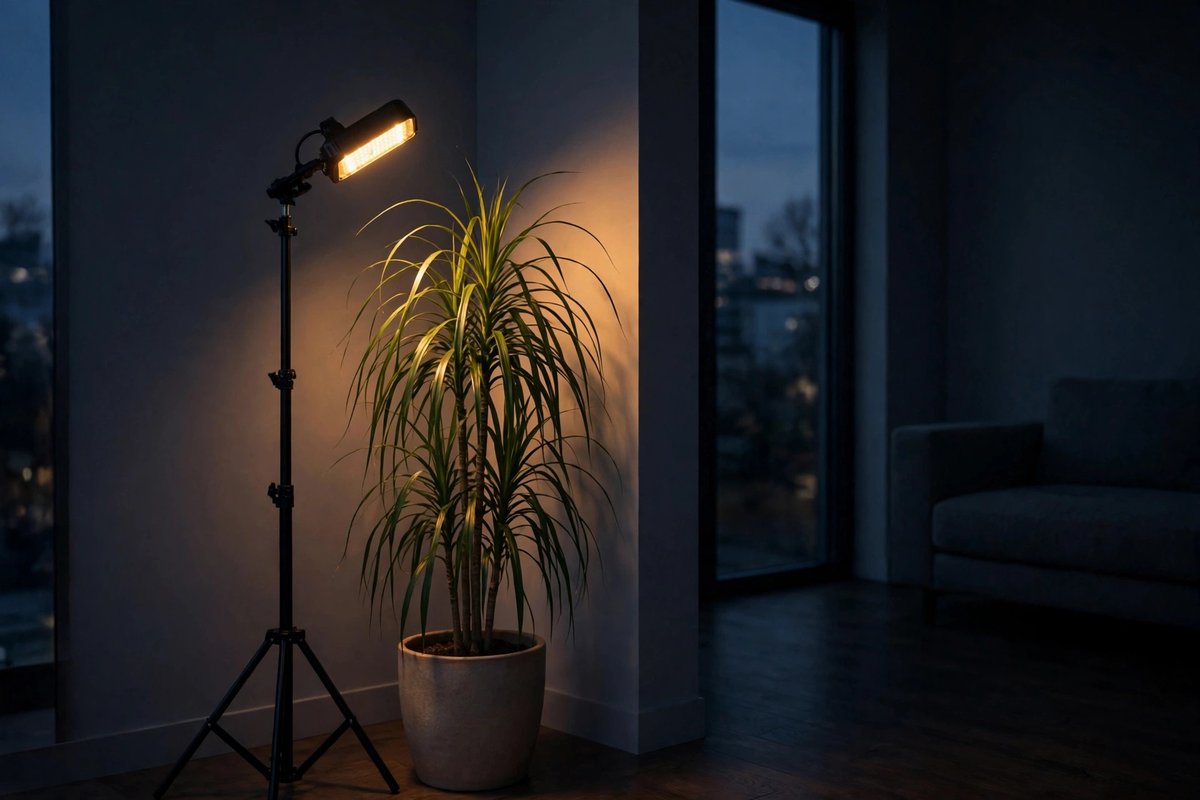
A large plant in a corner with no window light will hold its shape for a while but not put on new growth, so if you want it to get bigger rather than merely survive, add a light. The extension records describe tolerance, not growth, and those are different promises.
That gap is what the plant communities keep pointing at. A reply in r/IndoorPlants to someone asking about a genuinely dark corner was blunt about it:
“A snake plant or dracaena could survive there. Not thrive… All plants need more light to grow well.”
– r/IndoorPlants, 2026 (18 upvotes)
Before buying a lamp, work out how much light the spot gets in a day. The DLI calculator turns a window direction and a few hours of sun into a number you can compare against what a low-light plant needs. If the corner comes out far below that, a small lamp beats moving a six-foot palm around the house every week, and grow lights for indoor plants covers distance and hours without the sales pitch.
One practical note from my own north-facing flat: a lamp aimed at the ceiling bounces enough light down to keep a dracaena going, and it looks less like a grow operation than a strip light strapped to a shelf. The leaves that grew before you bought the lamp will not recover their size. New ones will.
Pot, floor space, and where to put it
A floor plant needs a pot one size up from the nursery pot, a saucer that actually holds the runoff, and enough weight that a cat landing on the rim does not tip it. Terracotta is heavier than plastic and dries faster, which helps in a cool corner where soil stays wet.
Placement matters more than pot choice. A corner with a window on the far wall gets a fraction of the light that the same distance in front of the window would, and the difference between the two sides of one room is bigger than the difference between two species on this list. Put the tallest plant where the ceiling allows it, turn the pot a quarter turn every couple of weeks so the growth does not lean, and keep it clear of heat vents and radiators.
If the corner turns out to be a walkway, a floor plant will be moved until it gives up. That is the point at which a shelf or a hook is the better answer, and hanging indoor plants covers the options that do not need floor space.
Cat-safe tall options
Four of the eight are listed as non-toxic to cats: Kentia palm, lady palm, parlor palm and cast iron plant. The other four, all three dracaenas and the ZZ plant, are toxic if chewed, with saponins behind most of the reactions and drooling, vomiting and, in cats, dilated pupils among the signs.
Miso is the reason the cast iron plant sits on the floor and the dracaenas do not. She ignores the stiff leaves and goes for anything that dangles, which rules out a low shelf for the dragon tree and puts the ZZ plant somewhere with a door. If you are weighing a species that is not on this list, the plant toxicity checker is faster than reading seven ASPCA pages in a row.
Height is the easy part to get right. Light and a cat are the two things that decide whether the plant you buy in November is still there in June. Work out the corner’s light first, then pick from the half of the table that your household can actually keep.

Ellie Marsh
Houseplant grower who spent years in a north-facing apartment. Writes practical care guides for low light homes, checked against extension and botanical garden sources.