Last updated on November 21, 2026
Thick, white, fleshy spider plant roots are normal. Wisconsin Horticulture says they evolved to store water, which is why the plant survives a late watering. Soft, dark, sour-smelling roots are the ones that need action.
I’d sort whatever you’re seeing into three piles: tubers doing their job, roots crowding the pot that say it’s time for a bigger one, and rot. Each pile gets a different response, and only the last one involves scissors.
Thick white roots are normal
Pull a spider plant out of its pot and you’ll find two kinds of root. Thin feeder roots do the everyday drinking and dominate in young plants, according to Gardener’s Path. As the plant settles in, it adds fat tuberous roots that taper at both ends and bulge in the middle, a bit like pale carrots. They look wrong if nobody told you to expect them.
The shape follows the job. Wisconsin Horticulture describes thick, fleshy roots and rhizomes that store water so the plant can handle inconsistent watering, and NC State Extension calls the species tolerant of drought and dry soil while noting it grows best in moist soil. The tanks cover a late watering. They don’t replace watering.
I wouldn’t cut healthy tubers off, even when they’ve wrapped the whole root ball. Gardener’s Path warns that trimming them at repotting can kill the plant or leave it struggling to recover. The one root I will cut is a rotted one, covered below.
Roots at the drainage hole: repot now or wait
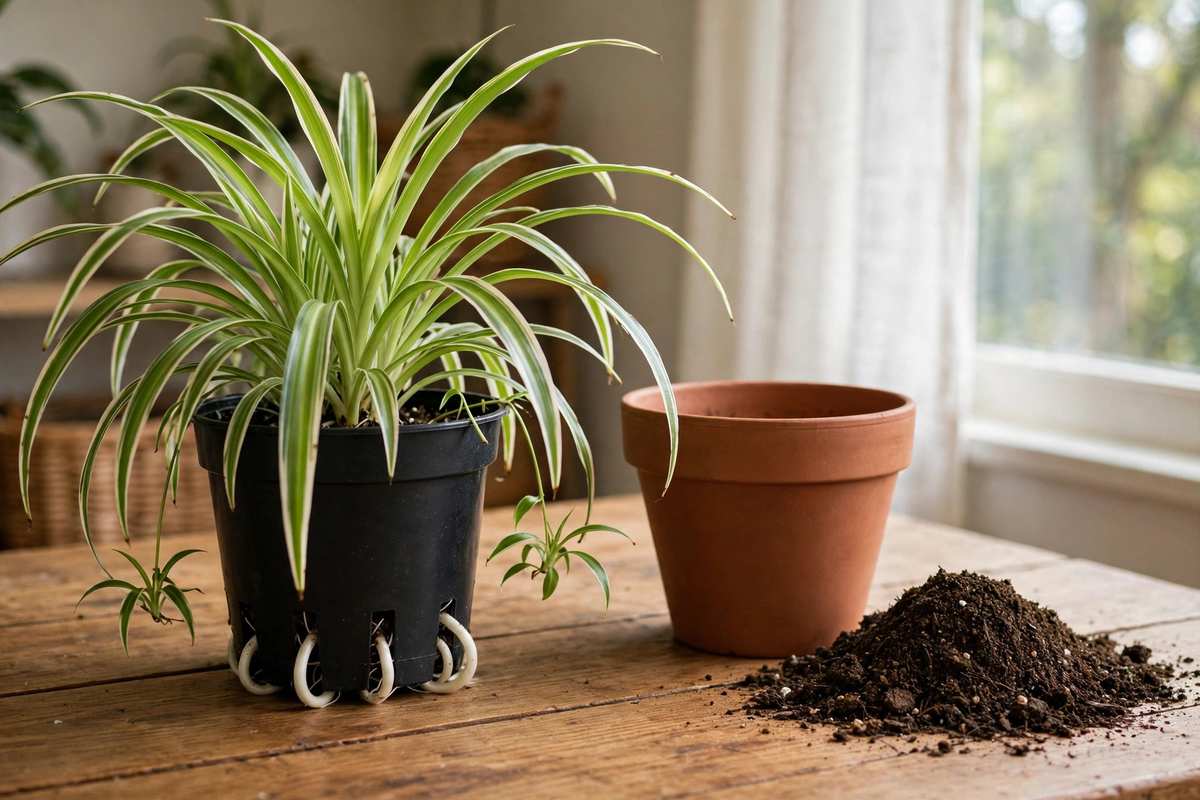
A few roots at the drainage hole don’t force a repot. Repot when the pot is mostly roots, tubers push up through the soil surface, and the soil dries out faster than it used to. Wisconsin Horticulture notes spider plants grow and make plantlets best when slightly pot bound, so the plant isn’t in trouble at the first poke.
Gardener’s Path counts tubers at the drainage holes, tubers at the soil surface and a pot with barely any soil left, along with more frequent watering, as the signals to go up a size. I read that as a stack. One sign is a watch item. Two or three together mean it’s repotting time.
How hard to tease the root ball apart is where growers disagree. Gardener’s Path suggests massaging the tubers loose first, while one commenter in an r/houseplants thread about a root-bound plant had a different experience:
“Honestly I think they prefer it like this. Every time I’ve ever tried to tease roots and repot they just die”
– r/houseplants (54 upvotes)
That’s one grower, not a trial. My middle path is to go up one pot size, loosen only the outer edge of the root ball and let a firm tangle go in whole. The steps, timing and aftercare are in my spider plant repotting guide.
If the plant has outgrown its spot rather than just its pot, division is the other route. NC State Extension lists division and plantlets as the ways to propagate it, so you can split the root ball into clumps that each carry their own roots and pot them up separately.
A single long fleshy root climbing out over the rim is a stranger case. Brooklyn Botanic Garden staff answered a reader with exactly that and advised snipping it with sharp shears below the knot of small aerial roots, since spider plants regrow roots easily. Roots growing in the air along stems are a separate topic, which my aerial roots guide sorts out.
Healthy spider plant roots or rotted ones
Healthy spider plant roots are firm and plump, white to tan, and smell like damp soil. Rotted ones are soft, dark brown or black, and smell sour. Wisconsin Horticulture says overwatering or poorly drained soil can lead to root rot, so the cause usually sits in the watering or the soil.
| Check | Healthy root | Rotted root |
|---|---|---|
| Color | White to tan | Dark brown or black |
| Feel when pinched | Firm and plump | Soft and mushy, collapses |
| Smell | Damp soil or nothing | Sour or foul |
I lean on the pinch test over color. Squeeze a root gently between two fingers: a tuber that stays plump is alive even if it looks dingy, and one that caves in is finished. Color alone misleads because potting mix stains healthy roots tan or brown, so rinse them before judging.
Smell settles the close calls.
What to do about rot
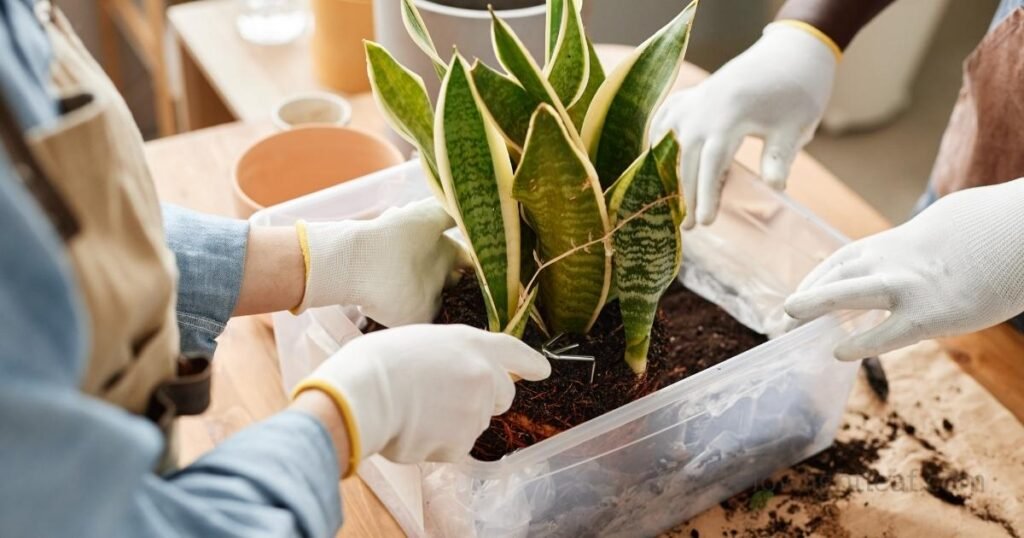
Rot gets fixed out of the pot in four moves: rinse the roots, cut away the soft dark ones, repot into fresh fast-draining mix, then water lightly. Every firm root stays.
- Slide the plant out and rinse off the old soil so every root is visible.
- Cut away the soft, dark, sour-smelling roots with clean scissors and leave every firm one in place.
- Repot into fresh, fast-draining mix in a pot with drainage holes. The old soil is part of the problem, so don’t reuse it. My notes on the best soil for a spider plant go through the mixes.
- Water lightly and let the soil dry slightly between thorough waterings, which is the rhythm Wisconsin Horticulture recommends.
If nothing firm is left, the plantlets on the long stems are your backup. NC State Extension says the plant propagates easily from plantlets, so a rotted mother plant doesn’t have to be the end of the line.
Roots in water, and moving them to soil
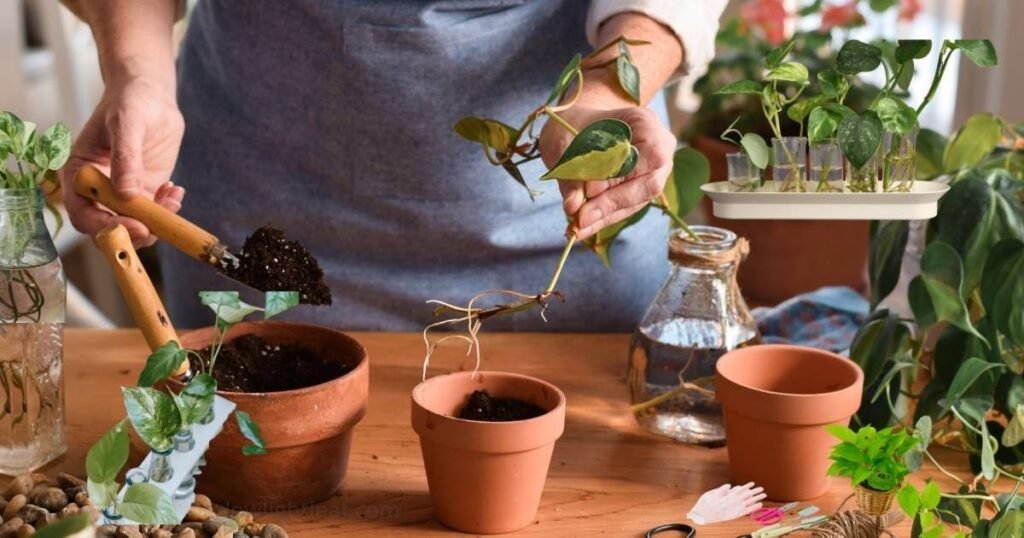
A spider plant can root and stay in water, and it can move to soil whenever you like. Plantlets form roots in a jar easily, and NC State Extension lists plantlets as a standard way to propagate the plant. Expect the first soil roots to look different from the ones that grew in water.
An r/spiderplants thread about a water-grown plant that suddenly sprouted roots drew a simple reply: “put her in dirt – she may surprise you and pop out a bunch of new growth.” Another commenter identified the white lumps as tubers and called it a happy plant with water storage roots. Neither reply comes with a controlled comparison, so take them as a prompt to try soil, not a rule.
The same Brooklyn Botanic Garden answer has a jar trick for a plant bent out of shape. Stand it upright with the main root submerged, and over a couple of weeks the roots stretch downward while the leaves grow up, which leaves it better oriented for repotting.
Frequently asked questions
Should I cut the thick white spider plant roots off?
No, not while they’re firm. They store water for the plant, and Gardener’s Path warns that trimming them can kill it. Cut only roots that are soft, dark and sour-smelling, and leave everything that passes the pinch test.
Do spider plants need deep pots?
I haven’t found an extension depth rule, so this is my judgment: pick a pot a little wider than the current one rather than a deep one. The tubers spread through the root ball, and a thick layer of soil below them tends to stay wet longer, which is the condition Wisconsin Horticulture links to root rot.

Ellie Marsh
Houseplant grower who spent years in a north-facing apartment. Writes practical care guides for low light homes, checked against extension and botanical garden sources.