Last updated on November 21, 2026
The best soil for monstera is a light, chunky mix that drains fast, built on bark and perlite with a little peat or coir to hold moisture. Clemson Extension lists a bark, peat and perlite blend for Monstera, and heavy potting soil or garden soil tends to stay wet too long around the roots.
I’m not a horticulturist, so I went to extension services for the soil side of this. They agree on the principle: roots need air as much as water. The pages I found don’t include a Monstera-only recipe, which means a bag’s name tells you less than how the mix behaves in your hand and in your pot.
What is the best soil for monstera? A bark-and-perlite mix
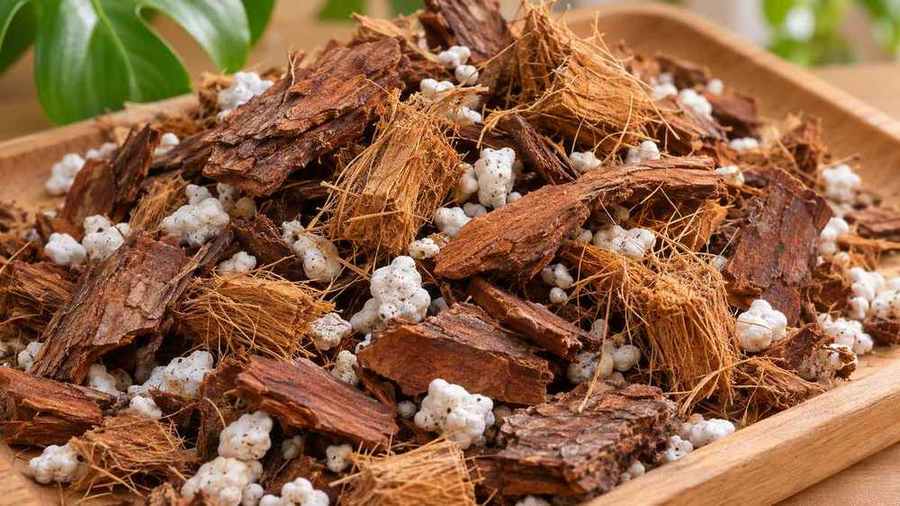
A mix of roughly equal parts bark, peat and perlite by volume is the closest published match, because Clemson Extension lists that Cornell epiphytic blend as suitable for Monstera. Any bagged mix that behaves the same way, light and airy and quick to drain, does the same job.
Clemson’s indoor plant soil mix fact sheet gives that recipe as one third finely ground Douglas fir bark, one third shredded sphagnum peat and one third medium-fine perlite, plus lime and fertilizer. It was developed at Cornell for commercial growers. Clemson says it suits bromeliads, cacti, Hoya, Philodendron and Monstera, among others.
The same fact sheet lists a few general foliage plant mixes: peat with perlite and coarse sand, peat with coarse sand, peat with pine bark and sand, and peat with pine bark and perlite. Line all four up and the logic is the same. Each one pairs something that holds moisture, peat or coir, with something that opens up air space, like bark, perlite or sand. That pairing is the spec. The ratio is a tuning dial, and these recipes only use whole-number parts.
One limit: these are general foliage and epiphyte recipes from grower practice, not results from a Monstera trial. They tell you what to aim for, not that thirds is magic.
The plant’s history explains why bark belongs in there. The NC State Extension Plant Toolbox says Monstera deliciosa starts life as a terrestrial plant and turns epiphytic once it reaches a sturdy tree to climb. A pot offers neither forest floor nor trunk. My own inference, not NC State’s, is that a mix with bark in it comes closer to what those climbing roots expect than a tub of fine soil does.
Picking a bagged monstera mix with five checks
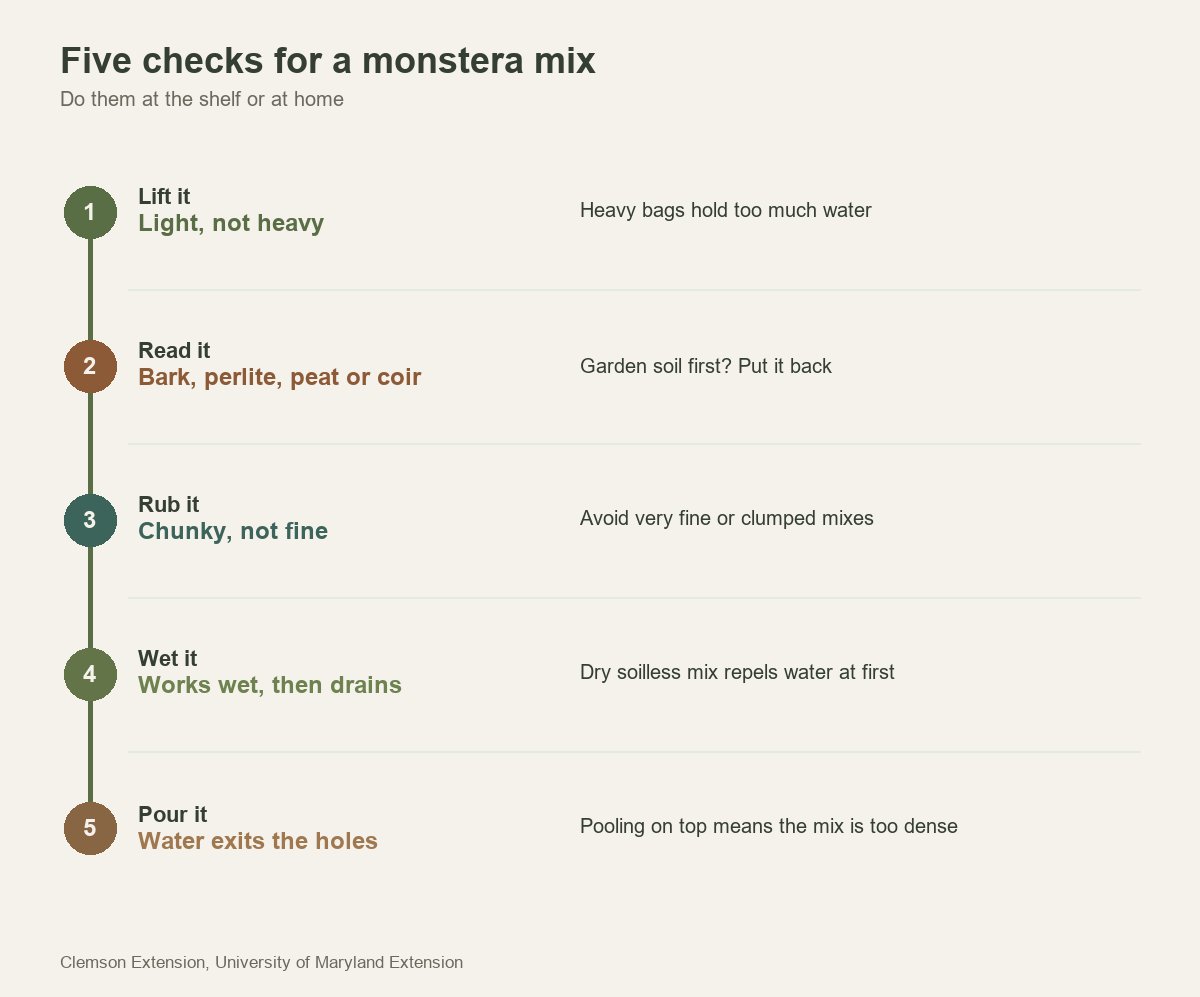
Labels like “monstera mix”, “aroid mix” and “indoor potting soil” aren’t standardized, so I pick the best soil for monstera by what a bag does. Each check below leans on an extension statement, and the last one is a rule of thumb of mine.
Start by lifting the bag. The University of Maryland Extension tells container gardeners to choose light, fluffy growing media for good aeration, and to avoid mixes that feel heavy. A bag that feels like wet sand won’t open up when it’s in a pot.
Next, read the ingredient list. Clemson notes that most commercial indoor mixes are soilless peat-lite blends, peat moss with perlite or vermiculite, and that coconut coir has become a lower-cost alternative to peat. You want bark, perlite, peat or coir near the top. If “topsoil” or “garden soil” leads the list, put it back: Clemson says garden soils aren’t recommended for containers. If you buy a coir-heavy bag or block, Clemson says to rinse the coir thoroughly to avoid salt problems.
Then rub a pinch between your fingers. Maryland’s advice is to avoid mixes with very fine particles or ones that look clumped. Fine, uniform crumbs pack tight and leave the roots little air, while a mix with visible chips and white perlite beads has gaps built in.
Fourth, wet it. Maryland points out that soilless mixes tend to repel water until you work it in by hand. So a bone-dry bag that sheds water at first isn’t a failure. Moisten it thoroughly, then see how it feels. It should hold some water and still crumble.
The last check happens after potting, and it’s mine, not an extension’s. Water the pot and watch the drainage holes. Maryland’s reasoning is that if excess water can’t drain, fresh air can’t get in and roots suffocate. So I want water coming out the bottom soon after I pour, not sitting in a pool on top. If it pools, the mix is too dense or too fine for this plant.
Is regular potting soil OK for monstera?
Not on its own, in most cases. Regular potting soil is often too dense for a monstera, while extension guidance says a container mix should let water and air pass readily. A light potting mix amended with bark or perlite can work. A heavy, fine or clumpy one won’t.
Growers disagree about how much amendment is enough, and the disagreement is instructive. One reply in an r/Monstera thread on what to buy:
“I literally only use orchid bark and regular soil 🙂 as long as it’s a chunky mix your monstera will like it. You can add perlite too if you really feel like it. Good rule of thumb, pot 1-2 inches bigger than the whole root ball.”
– r/Monstera, January 2026 (7 upvotes)
A different reply in the same thread was blunter:
“60 potting soil 20 perlite 20 orchid bark. Enjoy.”
– r/Monstera (5 upvotes)
Both keep potting soil as the base and add chunk to it, and neither shows a test behind the numbers. I wouldn’t copy 60-20-20 as a recipe. What the two replies do agree on is that the amendment carries the work, and that matches the extension logic above: it’s the air space that matters, and potting soil only supplies the moisture side.
Where it breaks down is a bag whose potting soil is the whole mix and feels heavy, fine or clumped. If that’s what you already own, Clemson’s own advice for heavy native soil is to amend it with bark, peat, perlite or sand to improve its structure. The same move works on a dense bag.
Soils to skip
Garden soil is the clearest no. Maryland says soil is too dense to allow good air and water movement in a container and holds water in its small pore spaces, which can drown roots, especially in shallow pots. Clemson adds that garden soil carries too many bacteria for containers and has to be pasteurized to kill disease organisms, insects and weed seeds before it goes in a pot.
Maryland also warns against mixes that contain sedge peat or feel heavy or gritty, and against bags sold as generic “planting mix” or “topsoil”, because those vary widely in quality. A label that says “indoor” doesn’t settle it. The five checks do.
Signs your monstera soil is wrong, not your watering
Waterlogged roots tend to show up as yellowing lower leaves, a stem base that goes soft, a sour or musty smell from the pot, and soil that is still wet far longer than you’d expect. None of those prove the soil is the problem on their own, since overwatering looks the same in a good mix.
The test is your watering routine. The NC State Plant Toolbox says to water this plant thoroughly, then let the top quarter to one third of the soil dry before watering again. If you’re following that and the pot is still wet deeper down, or the top never dries, the mix is holding too much. That points at the soil, and changing the schedule won’t fix it. In that case the best soil for monstera is whatever drains faster than what you have now.
Check the basics first: a drainage hole that isn’t blocked, and a pot that isn’t much bigger than the root ball. Light and leaf problems are a separate topic, covered in my monstera deliciosa care page.
Repotting and refreshing the mix
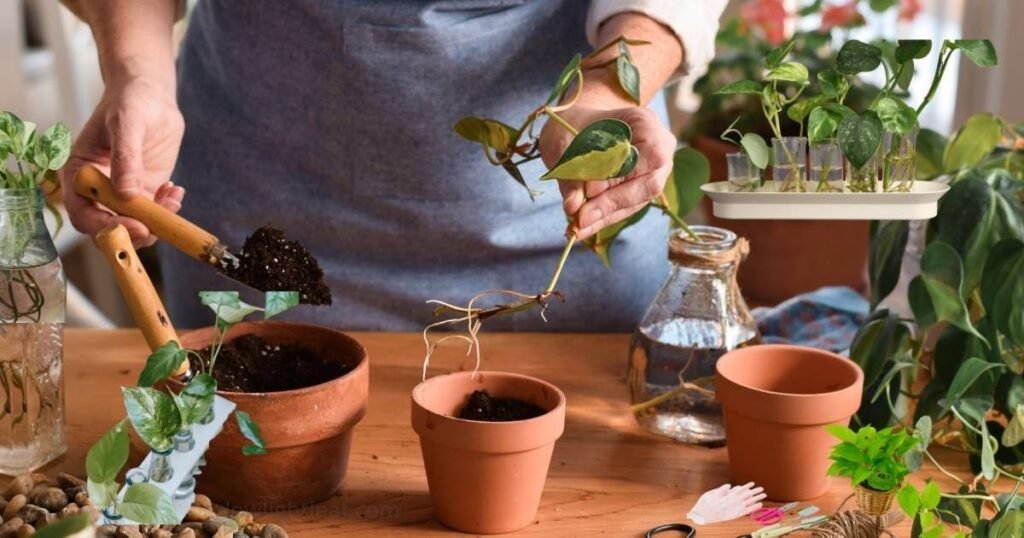
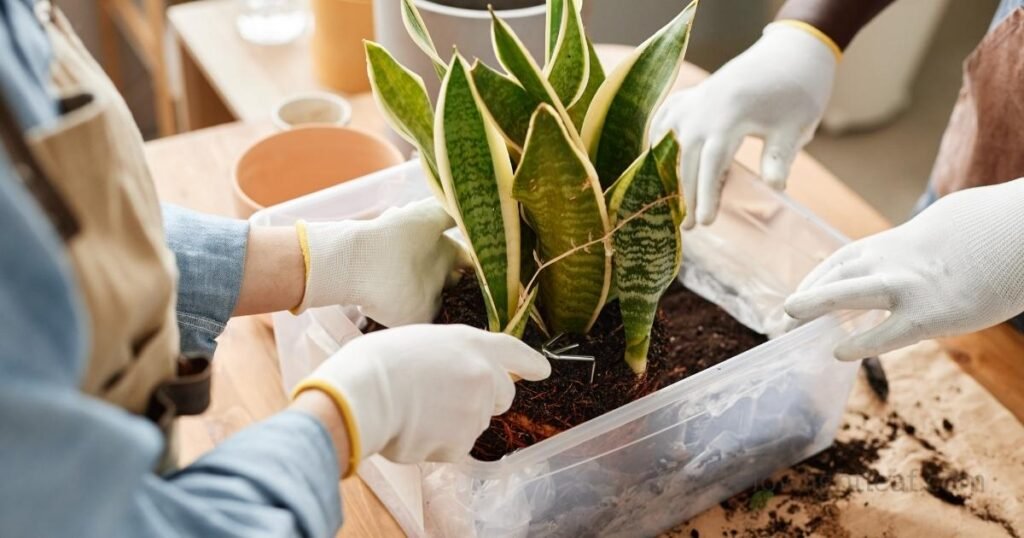
NC State says to prune or re-pot in spring if needed. A monstera that has outgrown its pot or sits in a mix that has turned to mush is the case where it’s needed.
Soilless mixes don’t last forever. Maryland notes that soilless growing media and compost lose nutrients and break down physically over time, which is how a good chunky mix slowly becomes a dense one. If the mix in an older pot has packed down or drains slowly, a fresh batch fixes it even when the plant doesn’t need a bigger pot.
To work out how much to buy, the potting soil calculator does the pot arithmetic. If you grow pothos as well, my pothos soil page follows the same air-and-drainage logic. A ZZ plant is a different case, because its rhizomes store water, so I keep that advice on its own page.
One safety note for repotting day: monstera is toxic to cats, so I do the job where Miso can’t investigate the spilled mix. The details are in the monstera and cats page.
Best soil for monstera FAQ
Is Miracle-Gro potting mix good for Monsteras?
It can work if it passes the drainage checks. Scotts, the maker, tells growers to use very well-drained soil for monstera and points to its own Indoor Potting Mix, which is a manufacturer’s claim, so lift the bag, rub the mix and watch how the pot drains before you trust it.
What soil mix should I use when repotting my Monstera?
Use a bark, peat and perlite blend in roughly equal parts, or a bagged mix that passes the five checks above. Repot in spring if the plant needs it, and pick a pot with drainage holes.

Ellie Marsh
Houseplant grower who spent years in a north-facing apartment. Writes practical care guides for low light homes, checked against extension and botanical garden sources.