A potted chrysanthemum (mum) can come indoors while it’s in bloom, but it isn’t a houseplant you keep. Iowa State University Extension’s advice for a mum received in flower is to keep it in a bright, cool spot at 60 to 70°F, water when the soil surface dries, and compost it once flowering is over, because the florist varieties sold in bloom aren’t winter hardy there.
Chrysanthemum care after that depends on which mum you have. A hardy garden mum can go into the ground; a florist mum rarely survives the winter outside or blooms again. Mums are also toxic to cats, dogs and horses, according to the ASPCA.
Chrysanthemum care indoors while it blooms
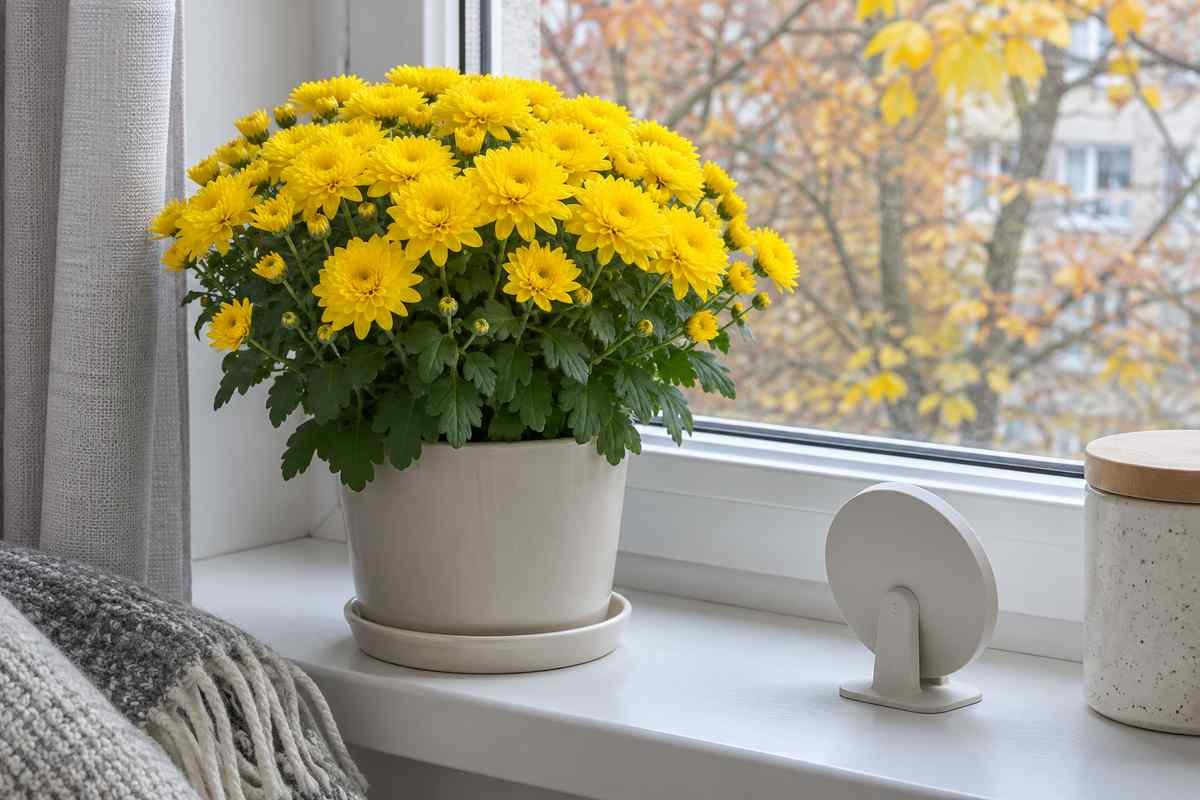
Indoors, a blooming mum wants bright light without direct sun and a cool room. Iowa State Extension recommends a spot near a window that gets bright light but no direct sunlight, at 60 to 70°F.
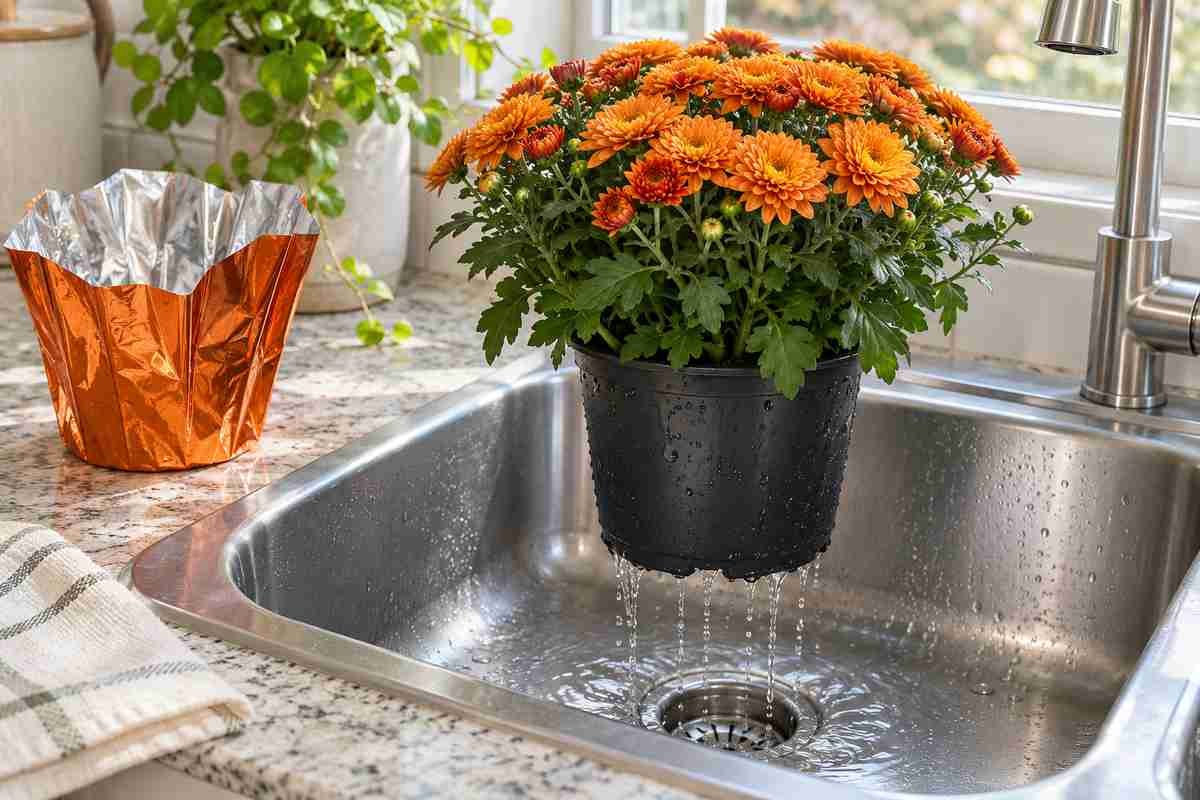
Water is where most potted mums go wrong. Iowa State says to check soil moisture often and water when the surface feels dry, until water runs out the bottom. Most potted mums sit inside a decorative foil or sleeve, so take the pot out, water it in the sink, and drop it back in once it drains. A pot left standing in a full sleeve stays wet at the bottom.
Pull off flowers as they fade so the plant looks tidy. Once the open buds are done, don’t wait for more: NYBG says a florist mum will probably not flower again.
Can a mum live indoors after it flowers?
A mum can stay alive indoors for a while after it flowers, but it won’t do well there and it usually won’t flower again. Two things work against it: light and day length.
Light first. NC State Extension lists chrysanthemums as full-sun plants and says too much shade makes them sprawl instead of growing upright. A window that suits a pothos usually falls well short of that. University of Missouri Extension (publication G6515, 2017 revision) gives the general signs of a plant short on light: long gaps between leaves, smaller leaves, pale growth, and lower leaves yellowing and dropping. A mum kept on after flowering in a dim room heads down that path.
Day length is the bigger obstacle to flowering. MU Extension names chrysanthemum, along with poinsettia, as a short-day plant that can be kept from flowering by the long hours of light normal in a lit home. To make one flower indoors, MU says to give it only about 10 hours of light a day until flower buds appear and show color. Every evening under a lamp counts as daylight to the plant. It’s the same reason a kalanchoe or a Christmas cactus needs long, dark nights before it reblooms.
One reply in a Reddit thread about a wilting indoor mum put the practical answer plainly:
“People bring them indoors when it gets too cold out for them, but they won’t thrive if kept inside for long and they won’t flower again. Mums sold at grocery stores or florists are usually treated more like poinsettias where they’re kept as long as they bloom and then trashed or transplanted outside if they’re still viable.”
– r/plants, May 2026 (2 upvotes)
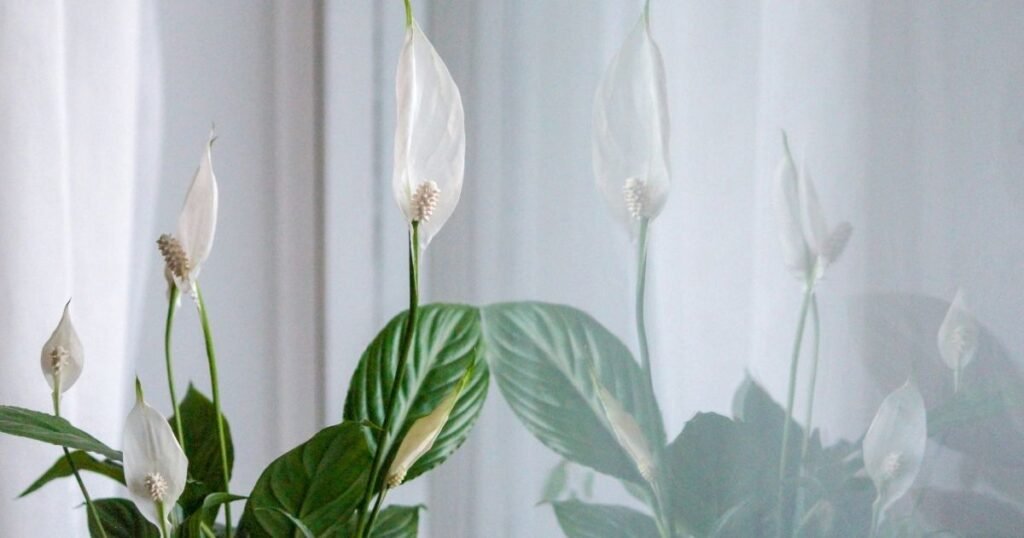
I lived for years in a north-facing apartment, and for a home like that this is the honest call. Enjoy the mum while it blooms, then let it go. If you want flowers indoors in lower light, a peace lily or a kalanchoe on your brightest sill is the better long-term plant.
What to do after a potted mum flowers
After a potted mum flowers, first work out whether it’s a florist mum or a hardy garden mum, because the two have different next steps. The NYBG Mertz Library says hardy mums can be told apart by their thick underground shoots, called stolons; a gift-pot mum from a florist is usually the other kind.
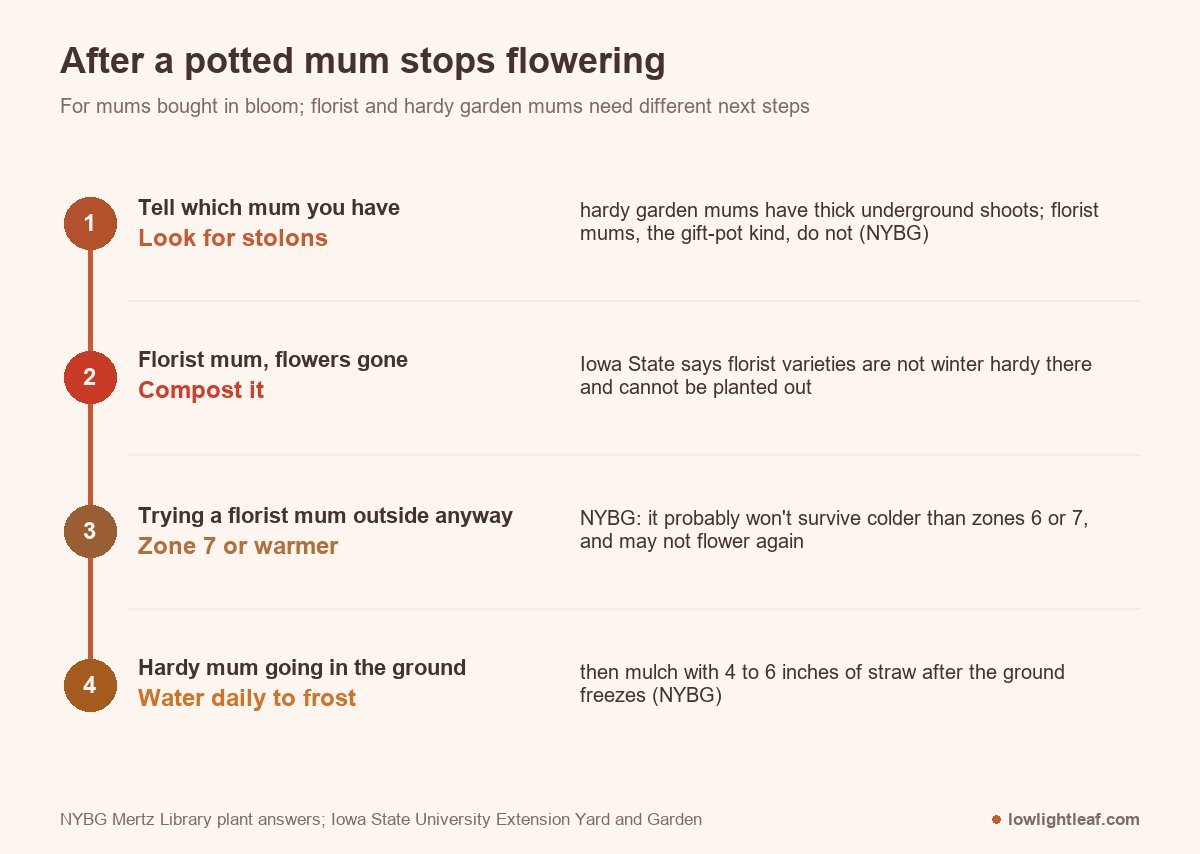
For a florist mum, Iowa State’s answer is to compost it. NYBG says a florist mum will probably not survive winter outdoors anywhere colder than zones 6 or 7, and that even if it does, it will probably not flower again, because florist chrysanthemums flower so late in the year.
For a hardy garden mum, planting out is worth a try. NYBG suggests keeping it well watered, checking daily, until the first frost, then mulching with 4 to 6 inches of straw once the ground freezes. It adds a warning that applies to both kinds: mums grown in pots for fall display may not live through the winter unless they’ve built a strong root system first.
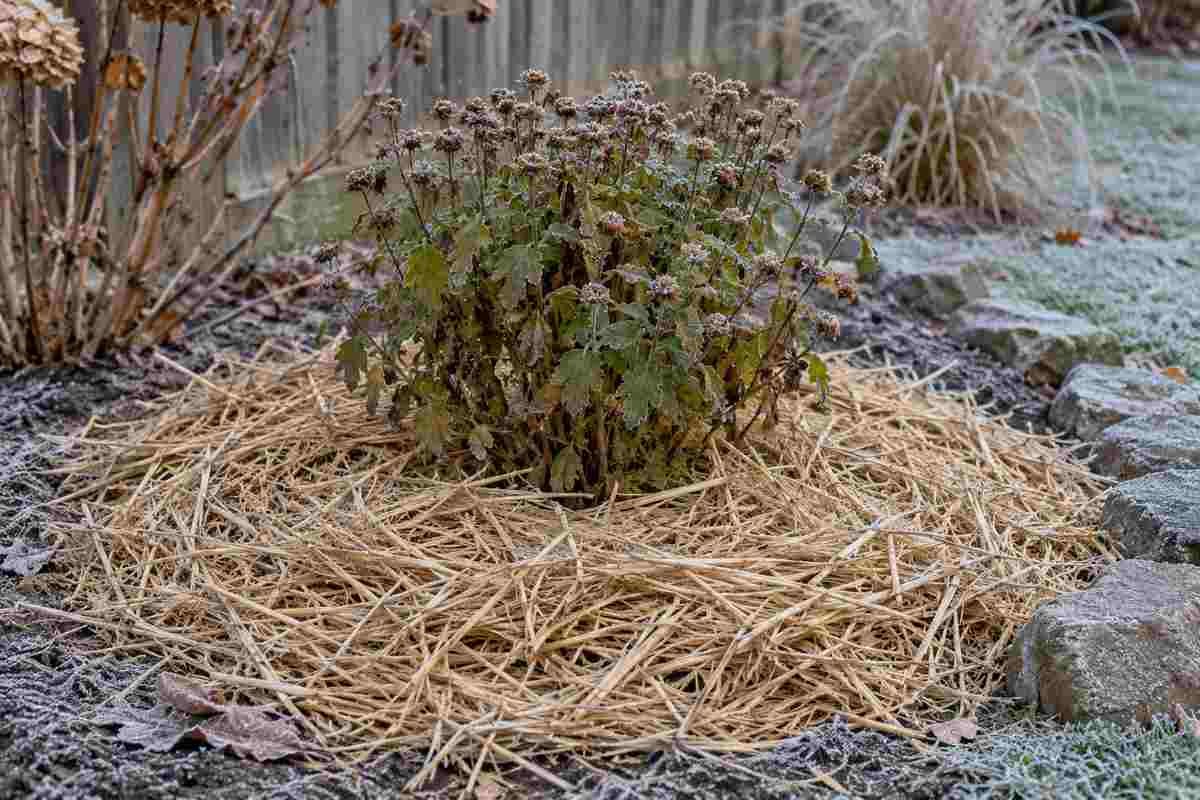
NC State notes that in colder climates even garden mums may need to be dug up and overwintered in a greenhouse.
Outdoor chrysanthemum care
Outdoors, chrysanthemums need full sun and well-drained soil, with some afternoon shade in hot areas, NC State says. They begin growing in spring but don’t flower until autumn.
Pinching is what keeps a garden mum compact. NC State recommends cutting the plant back three times through spring and summer, with the last cut around mid-August, which encourages bushy growth and stops it from flowering in spring. Divide clumps in spring every few years so they don’t get crowded.
Pests and pets
NC State lists aphids, thrips, spider mites and lace bugs as occasional pests, and powdery mildew, rust, leaf spot and root rot among the diseases.
The ASPCA lists chrysanthemum as toxic to dogs, cats and horses. It contains sesquiterpene lactones, pyrethrins and other irritants, and can cause vomiting, diarrhea, drooling, poor coordination and skin irritation. With a cat like my Miso around, a blooming mum belongs somewhere she can’t reach, and the plant toxicity table lists pet-safe flowering plants that also cope with lower light.

Ellie Marsh
Houseplant grower who spent years in a north-facing apartment. Writes practical care guides for low light homes, checked against extension and botanical garden sources.