Yes, snake plants flower, and it’s normal. The sources describe a tall spike of small, sweet-smelling, greenish-white flowers that drip something sticky, and none of the pages I read says it harms the plant. Indoors it’s rare, so a spike is more a bit of luck than a warning.
I read nine extension, botanical-garden and plant-database pages and two Reddit threads, because most advice on snake plant flowers is folk wisdom with no source behind it. Where the pages go quiet, I say so instead of filling the gap. Everything below comes from those sources, not from a bloom I watched.
Do snake plants flower indoors?
Yes, but rarely. NC State Extension says that in its native habitat the plant blooms in the winter, but as a houseplant it rarely blooms, and that flowers are rarely seen on indoor plants.
Mississippi State and Illinois treat it as an event. Mississippi State Extension says many gardeners are surprised to learn these plants bloom at all, and that blooms typically come on mature, well-established plants. Illinois Extension’s author says a snake plant kept since childhood now often flowers, and that typically only mature plants will flower. One grower with an old plant tells you what’s possible, not what’s likely.
Online, the reaction to a bloom fits the rarity:
“Snake plants are pretty reluctant bloomers. Some people grow them their whole lives and never get flowers. I didn’t expect mine to bloom, and it even sent up two flower spikes! I’m really thrilled.”
– r/gardening, October 2026 (3,462 upvotes)
What does a snake plant flower look like?
A tall spike rises from the base of the plant, carrying small greenish-white to cream flowers arranged along it in a raceme, which is a long cluster on one stalk. UF/IFAS, NC State and the RHS all describe them that way.
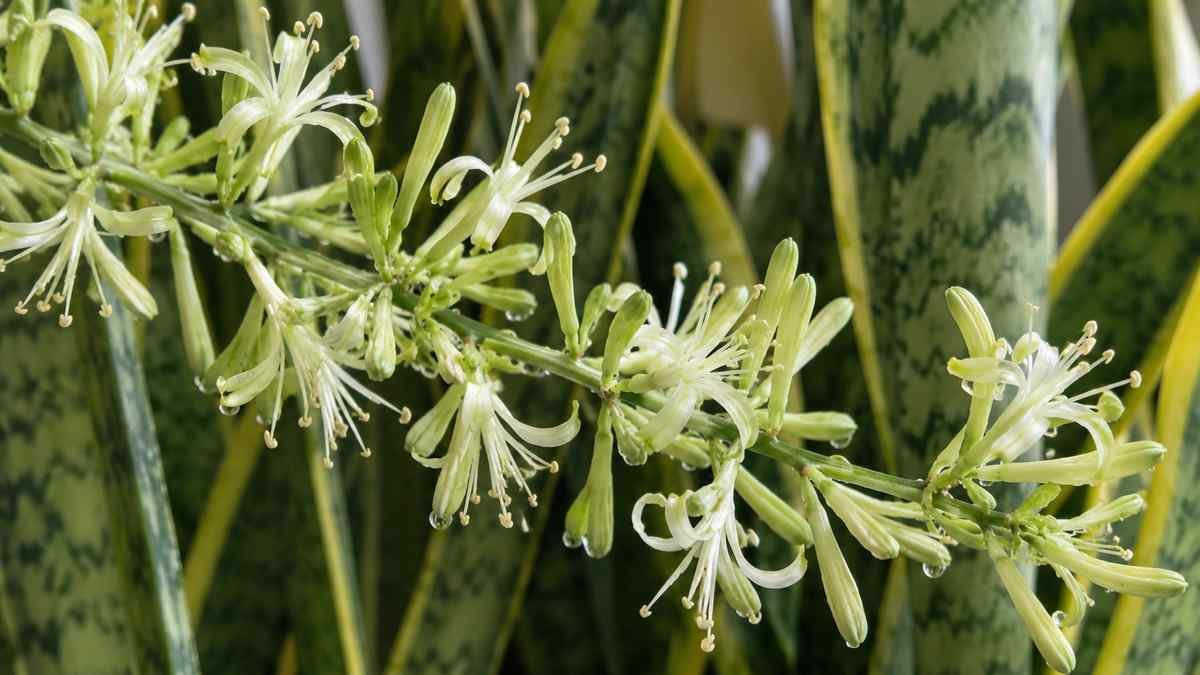
Two sources give two views of the same flower. RHS calls the flowers tubular, and Mississippi State calls the blooms star-shaped. Mississippi State also says the stalk comes up from the base, and the RHS puts the season in summer or autumn.
On scent, UF/IFAS, NC State, Illinois and the San Luis Obispo master gardeners all call the flowers fragrant or scented. Mississippi State goes further and says they’re often pleasantly fragrant, especially in the evening. RHS is the cautious one, with “occasionally fragranced”. None of them describes what the scent is like, so I can’t tell you more than that it’s usually sweet enough to be called pleasant.
Why is my snake plant flower sticky?
Nectar is the answer. Mississippi State says the stalk may carry sticky droplets of nectar, and both NC State and the RHS describe the flowers themselves as sticky.
No page I read says what to do about the drip, so this part is just my practical call. I’d keep the pot off a surface that marks easily while it’s flowering and wipe up with a damp cloth. If the plant is sticky and has no flower stalk, nectar isn’t the explanation. NC State lists mealybugs and spider mites as the pests to watch for, though I didn’t find a page that ties either one to stickiness, so I’d look the leaves over before assuming anything.
Is a flowering snake plant stressed or dying?
No page I read says so. None of the nine ties flowering to decline or death, and Mississippi State describes blooms as something mature, well-established plants do.
Worry about it is common enough to get a thread of its own. A grower in r/houseplants asked this after a friend raised it:
“My friend said my snake plant is stressed and dying because it’s flowering, but I don’t see a difference in the leaves?”
– r/houseplants, March 2026 (1,195 upvotes)
The reply that got the most agreement dismissed the idea outright:
“she’s probably going off the old wives tail of “if it’s flowering it means it’s dying and trying to save it’s species by seeding!!!” When it’s almost always the opposite and indicates a very happy plant.”
– r/houseplants, March 2026 (203 upvotes)
That’s a Reddit comment, not a botany source, and I’d weigh it that way. In one respect it lines up with the extension pages: both are silent on flowering as a sign of trouble. Just as unsourced is the opposite claim, that a spike always means a happy plant. What the pages do support is narrower. Flowering shows up on mature plants, so check the leaves and the roots for the usual problems instead of reading the spike as a symptom. What a healthy plant looks like is in the snake plant care guide.
What makes a snake plant bloom?
Hints, not a method, is what the sources give. Illinois says typically only mature plants flower, Mississippi State adds slightly root-bound and bright, indirect light, and the San Luis Obispo master gardeners say more light may prompt bud development.
Only Mississippi State names the root-bound condition, so I’d treat it as a lead. Alongside the RHS advice to pot on only when pot bound, it’s a reason not to rush a repot of a crowded plant, though nobody tests it. If you do need to move it up a size, repotting a snake plant covers the how.
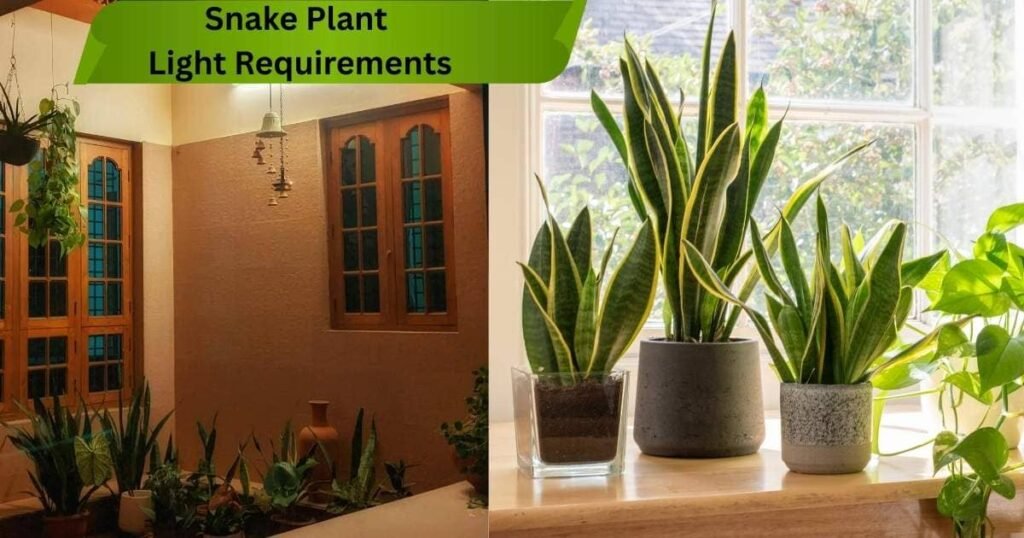
Every pointer is toward more light, which is the opposite of why many of us keep snake plants. University of Minnesota Extension says low-light plants are mostly grown for their foliage, not flowers, and that more light may be required for flowering. I wouldn’t move a plant out of a spot where it’s doing well to chase a bloom the sources don’t promise. How much light it needs to stay healthy is on the snake plant light requirements page, which is a different question from how much it needs to flower.
Snake plant flower: what the sources say and where they go quiet
| What you’re asking | What the pages say | Who says it |
|---|---|---|
| What does it look like? | A raceme of small, greenish-white to cream flowers on a tall spike from the base | NC State, UF/IFAS, RHS, Mississippi State, Illinois |
| Does it smell? | Mostly fragrant; Mississippi State says especially in the evening, and the RHS says only occasionally | NC State, UF/IFAS, Mississippi State, Illinois, San Luis Obispo, RHS |
| Is it sticky? | Yes: sticky flowers, and nectar droplets on the stalk | NC State, RHS, Mississippi State |
| When does it bloom? | Winter in its native habitat, spring as the listed bloom time, winter to early spring, or summer to autumn | NC State, Mississippi State, RHS |
| What brings it on? | Maturity; more light; slightly root-bound in bright, indirect light (one source) | Illinois, San Luis Obispo, Mississippi State |
| Does flowering harm the plant? | Not addressed by any page I read | Silent |
| Should I cut the spike? | Not addressed | Silent |
| How long do flowers last, and how often? | Illinois says “quite a long time” with no number; nothing on frequency | Illinois only |
Penn State Extension’s snake plant page doesn’t mention flowers at all. The ASPCA entry covers toxicity only. Each gap in the table is a gap in the sources, not a detail I chose to skip.
Should you cut the snake plant flower spike?
No page I read says either way. With nothing to go on, I’d leave a fresh spike alone and cut it off at the base once it dries, because I found nothing saying the plant needs it removed or kept.
One source-based reason points to cutting sooner: NC State says orange berries appear after flowering, though they’re rarely seen on indoor plants, and it lists fruits as well as flowers among the poisonous parts. With a cat in the house, I’d rather not wait to find out whether a berry forms. No page says cutting the spike changes whether the plant flowers again, so I wouldn’t count on it either way.
Is the snake plant flower toxic to cats?
Treat it as toxic. The ASPCA lists snake plant as toxic to cats and dogs, with nausea, vomiting and diarrhea as the signs, and NC State’s plant database lists flowers among the poisonous parts.
For the plant as a whole, the ASPCA entry doesn’t mention flowers or nectar, so it neither clears them nor singles them out. NC State rates the severity as low, but I’d still keep a flowering plant out of a cat’s reach. A stalk that sways, smells sweet and drips nectar is a plausible thing for a cat to want a taste of, and that’s my inference, not a source’s. I check every plant against the ASPCA before it comes home with Miso in the house. The fuller answer is in Is snake plant toxic to cats?

Ellie Marsh
Houseplant grower who spent years in a north-facing apartment. Writes practical care guides for low light homes, checked against extension and botanical garden sources.