Last updated on October 19, 2026
The small patio ideas that work are the ones that fit the patio’s sun. Nebraska Extension counts at least 6 hours of direct sun as full sun, 3 to 5 hours as light shade and no direct sun as dense shade, and each band suits different plants and pots.
Chairs, a rug and string lights look the same in any light. Plants don’t. On a small patio they also carry most of the look. Count the sun first. Then choose the pots, and decorate around them last.
Count the patio’s sun hours first
Count the hours of direct sun the patio gets on a summer day, and note when they arrive. Nebraska Extension says a spot in sun all afternoon, from noon until dusk, counts as full sun even with some morning shade, because afternoon sun is the more intense.
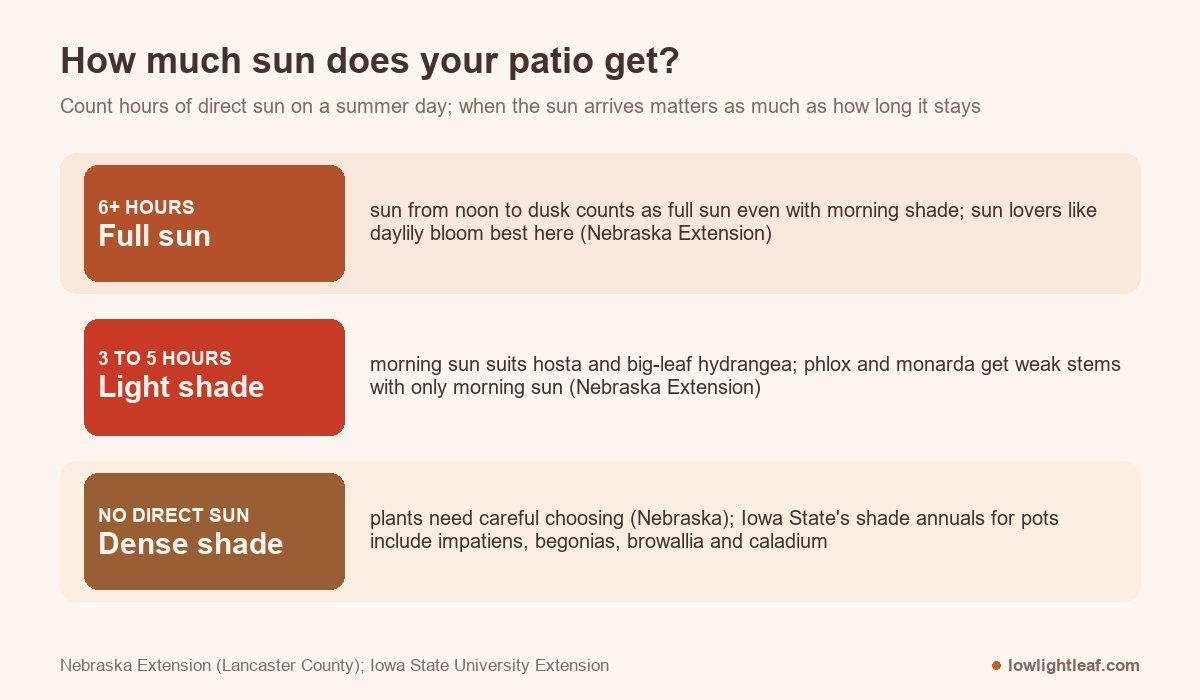
Look out at the patio every hour or two on a day you’re home and jot down when the sun reaches the pots and when it leaves. UGA Extension points out that morning and evening light are weaker than afternoon light, and that trees leafing out can turn a spot that got full sun in winter into partial sun or shade by summer. A count taken in April can overstate a patio under a tree, so count again once the trees are in full leaf.
Plant labels won’t settle it. UGA says growers don’t agree on what “partial sun” and “partial shade” mean, and its own partial shade covers anywhere from two to six hours with afternoon shade. When a label is vague, UGA suggests leaving the plant in its nursery pot where you want it for several weeks and watching how it responds. On a small patio, that test costs nothing.
Small patio ideas by how much sun it gets
On a patio in afternoon sun, plan shade for people and water for pots; with morning sun only, grow hostas and big-leaf hydrangea; on a shady patio, use containers of shade annuals and foliage. Those three bands, from Nebraska Extension and Iowa State, sort most small patio ideas.
A patio in afternoon sun
This is the easy one for plants and the hard one for people. Nebraska says full-sun sites can get 10 to 12 hours of intense sun in midsummer, and that sun lovers like daylily grow and bloom best in full sun. Pots here need water more often than anywhere else, and the people need shade as much as the plants need sun.
“With increasing summer temperatures I get something tree like in a big pot for shade.”
– r/GardeningUK, September 2026 (7 upvotes)
A large pot does double duty here: more soil holds water longer, and a tall plant in it shades a chair. UC Marin says unglazed clay pots dry out very quickly, so on a sunny patio glazed or plastic pots stretch the time between waterings.
A patio with morning sun only
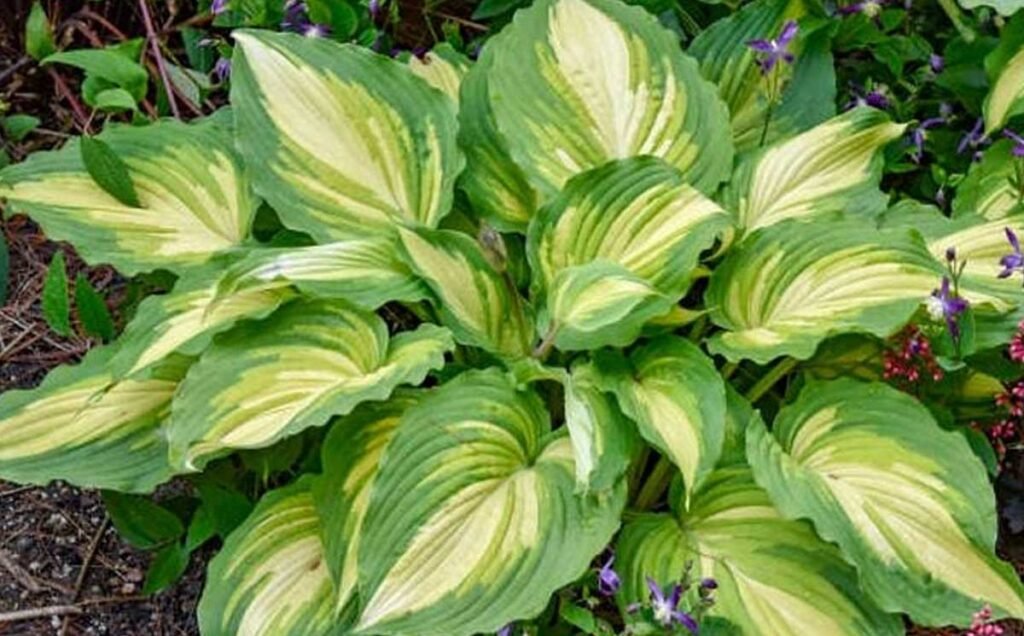
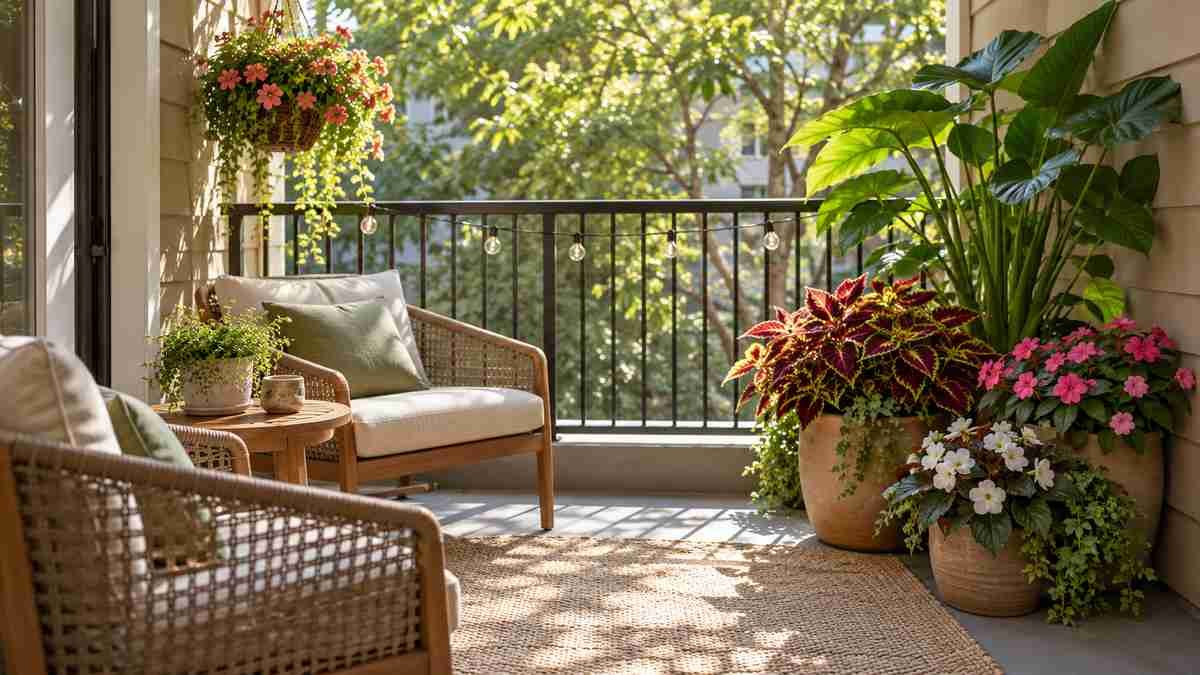
An east-facing patio, or one shaded by the house after lunch, gets the gentler half of the day. Nebraska says morning sun is easier for shade-loving plants to tolerate, and that hosta and big-leaf hydrangea perform well with morning sun only, while tall sedum, garden phlox and monarda may grow weak stems with few flowers there.
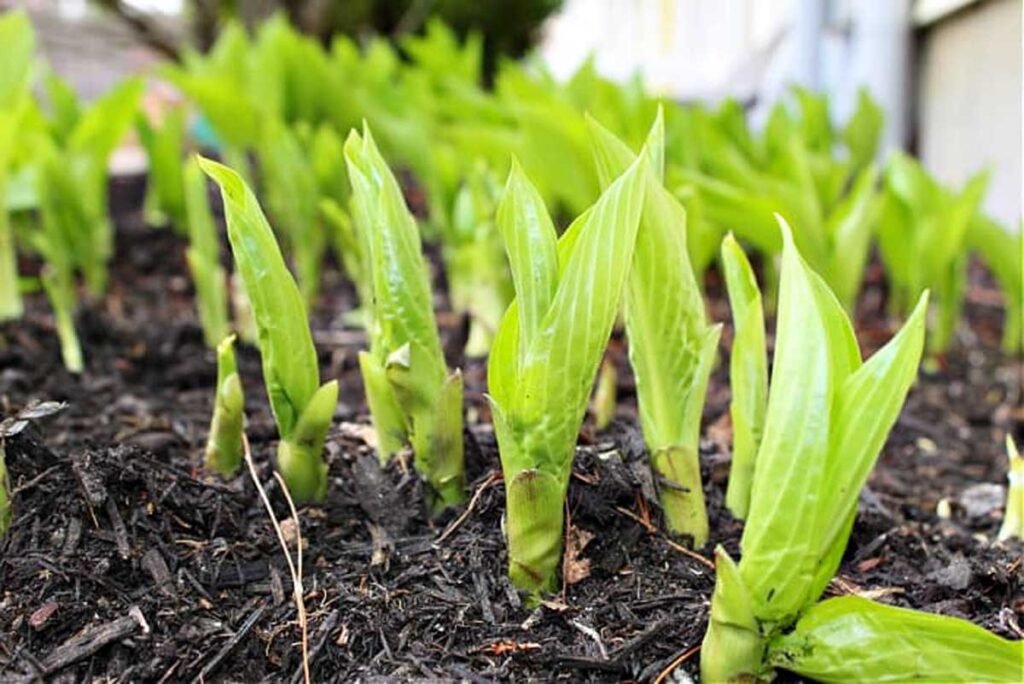
Hostas give you the most choice here. Iowa State University Extension says most yellow and gold hostas color best in partial sun, about 4 to 6 hours, while blue hostas need heavy shade to keep their blue. The best hostas for shade are sorted by how much light each one takes, which matters in a pot you can’t easily move once it’s full.
A shady patio
A patio boxed in by walls, a fence or a big tree is where container plants earn their place. Iowa State’s list of annuals for shade reads like a shady patio planting plan:
- Impatiens, which Iowa State calls the kings of shade-loving annuals, 8 to 24 inches tall and ideal in containers or near buildings.
- Wax begonias, which make excellent container plants in shady or sunny sites, and tuberous begonias, grown in containers or hanging baskets.
- Browallia, commonly grown in containers or hanging baskets for shady decks and patios.
- Caladium and coleus for leaf color, and polka dot plant, which does best in containers in partial shade.
My own backyard is small and mostly shaded, and in that kind of space the hanging baskets matter: they put color at eye level without taking floor space. For a strip of soil along the patio edge, the ground cover for shade list covers what fills in under trees.
Pots that last on a small patio
Patio pots last when they’re big enough, drain freely and get watered by feel. UC Marin Master Gardeners say smaller containers and unglazed clay pots dry out very quickly, so a few large pots outlast a row of small ones, especially in the sun.
“The small pots are cute but usually not nearly big enough. Super hard to keep watered enough when there’s next to no soil to retain moisture.”
– r/gardening, November 2025 (3 upvotes)
Every pot needs a drainage hole.
Illinois Extension says few plants tolerate sitting in stagnant water and that plants rarely recover from root rot. Skip the layer of gravel in the bottom: UC Marin says it makes it harder for excess water to drain away from the roots. If you love a pot with no hole, grow the plant in a plain liner pot inside it, the same double-potting trick used indoors in how to decorate with plants.
Water by touch, not by calendar. UC Marin’s test is to push a finger into the top inch of soil and, if it’s dry, water until some runs out the bottom. Container plants need watering and feeding more often than plants in the ground, and more again in midsummer and on windy days.
Budget decorating that leaves room for plants
The cheapest small patio ideas on a budget reuse what you have and keep the floor clear: two chairs scaled to the space, an outdoor rug to mark the seating, string lights overhead, and plants grouped in a few large pots instead of scattered small ones.
Among small patio decorating ideas, grouping does two jobs. A cluster of three large pots in one corner reads as a planting, not clutter, and it’s one stop with the watering can. Put the tallest pot at the back against the wall or railing and the trailing plants at the front edge.
On a small backyard patio with soil around it, plant the edge instead of adding more pots. Plants in the ground need watering less often than container plants, UC Marin points out, and a border of hostas or shade ground cover frames the seating the way a row of pots would.
Go up before you go out. On a small apartment patio, a freestanding plant stand or a ladder shelf holds pots without drilling into the building, and hanging baskets on the shady side keep the floor free for chairs. Match each level to the light it gets.
Saucers, standing water and mosquitoes
Saucers under patio pots hold water, and the CDC lists flowerpot saucers among the items to empty and scrub, turn over, cover or throw out once a week so mosquitoes can’t lay eggs in them. Tip each saucer after a heavy watering or a rainstorm, and the weekly job shrinks to a glance.
Patio plants and pets
Several of the most common shade-patio plants are toxic to dogs and cats. The ASPCA lists hosta, begonia, coleus and caladium as toxic to dogs, cats and horses, while coral bells, polka dot plant and Boston fern are on its non-toxic list.
“le sigh, now if only i could find a plant that is safe FROM cats”
– r/CatAdvice, April 2026 (261 upvotes)
If a dog spends its afternoons on the patio, keep the hostas and begonias on a stand it can’t reach, or fill the low pots with polka dot plant and Boston fern instead. Polka dot plant is on both lists: Iowa State’s shade annuals for containers and the ASPCA’s non-toxic plants.

Ellie Marsh
Houseplant grower who spent years in a north-facing apartment. Writes practical care guides for low light homes, checked against extension and botanical garden sources.