Last updated on November 12, 2026
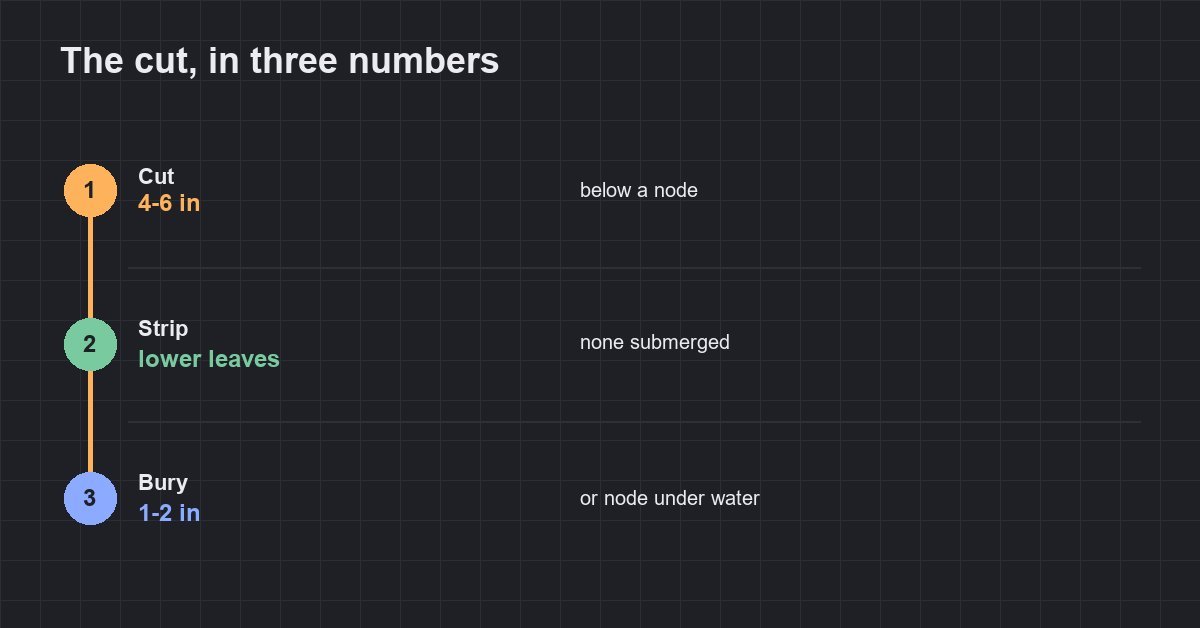
How to propagate philodendron comes down to one cut: take 4 to 6 inches of stem, cut just below a node, and root it in water, perlite, or a perlite and peat mix. Missouri Extension puts the base of the cutting 1 or 2 inches deep and lists philodendron among the plants that root in water.
The node is the part people skip, and it is the only part that decides whether the cutting can root at all. I have kept a bare leaf in a glass for a month out of stubbornness, and it never does anything except go yellow. Everything after the cut is speed and hygiene.
The Cut, in Five Steps
Propagating a philodendron takes a vine with two leaves, a 4 to 6 inch cut just under a node, and one of three rooting media. Missouri Extension gives the length, the cut point and the burial depth; the rest is keeping the stem damp and the leaves clear of the water until new growth appears.
- Pick a vine with at least two leaves. A node sits where a leaf joins the stem, so a bare stretch of stem between leaves gives you nothing to root.
- Cut 4 to 6 inches below the top of the vine. Missouri Extension gives that length for most cuttings and says to cut just below a node with a sharp, clean knife.
- Strip the bottom leaves. Leave two or three leaves up top and clear the stem that will sit in water or medium, so no leaf ends up submerged.
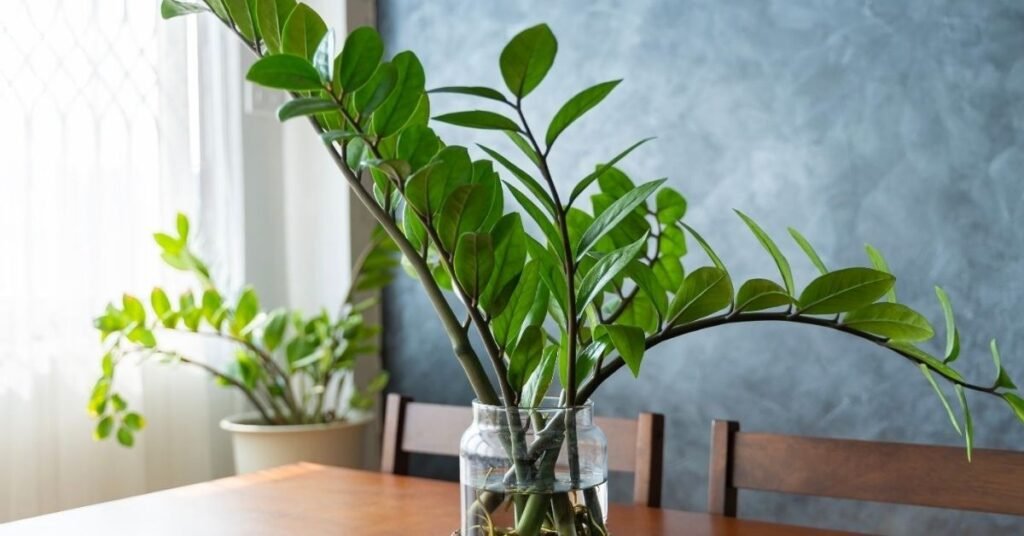
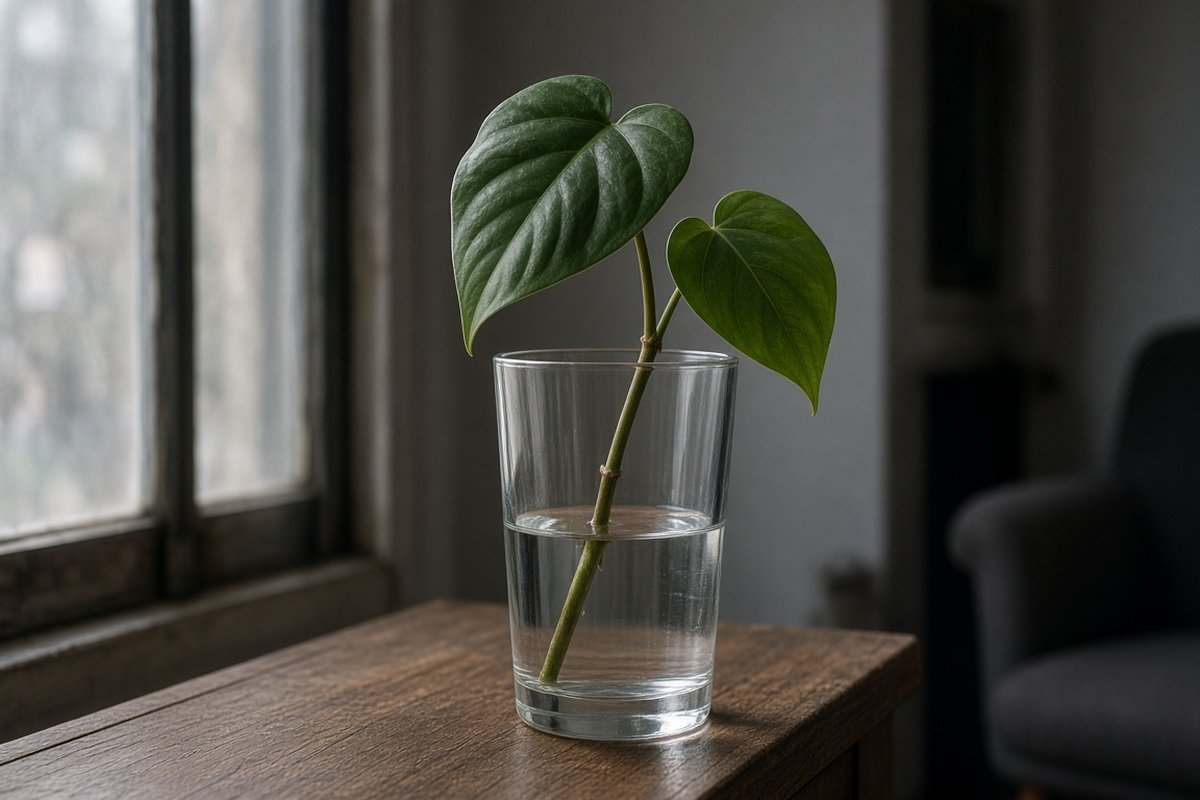
- Root it. Water is enough for a philodendron. Perlite holds moisture well, and the extension guide rates perlite mixed with an equal volume of peat moss as one of the best rooting media. Push the base 1 or 2 inches into a solid medium, or stand the stem in a glass so the node sits under the water line.
- Check it in three weeks, not three days. New growth and a cutting that resists a gentle tug both say it has rooted. Until then, the only jobs are fresh water and a spot with light.
Rooting hormone is optional here. The extension guide recommends it for all cuttings except easy-to-root plants, and philodendron is not a hard case. If the vine is old and woody, a dip does no harm.
Where to Cut: Just Below a Node
Cut just below the node, not above it. A cutting needs the node to make roots, so the cut goes on the stem side of it, a quarter inch or so under the bump, and the node stays on the piece you keep.
The node looks like a small swelling where a leaf stalk meets the vine, and on older philodendrons there is often a short brown aerial root already poking out beside it. That root is a head start, not a problem. Nothing about propagation requires you to cut above the node, and a cutting taken that way carries no node at all.
One vine usually gives more than one cutting, and each node with a leaf can become a plant. A long piece with three nodes will root as one plant; split into three, you get three plants that each need to callus and push roots. Both work. The single-piece version fails less often, and it is the one to use the first time.
Water, Perlite, or Potting Soil
The medium decides how much you can see and how much you have to remember. I start in water because I want to watch the roots, and a solid medium hides them but asks for less attention.
| Your situation | Start it in | What it asks of you |
|---|---|---|
| One cutting, and you want to watch the roots | A glass of water, node submerged | Fresh water every few days, and a decision later about potting |
| Several cuttings at once | Perlite with an equal volume of peat moss | Keep it damp, and push each base 1 or 2 inches in |
| You would rather not repot a rooted cutting | The potting mix it will live in | The slowest of the three, and the least visible progress |
| A cutting that already has roots in water | Its permanent pot, kept damp for the first week | Watch for wilt as the roots adapt to soil |
The depth rule belongs to the solid media. In water there is nothing to bury; the node just sits below the surface, and that is the whole requirement.
The Dim-Room Version
A cutting has no roots, so it cannot go looking for light the way an established plant can. Put it on the brightest sill you have, or under the grow light you already keep for the dark corners, and skip the shelf four feet back. Placement does the work here; the cut was settled earlier.
Warmth matters as much as the window.
A cutting on a cold sill in January sits there doing very little, and a spot above a radiator is worse. The top of a kitchen cabinet, near a window and away from the draught, is the sort of place that works, and it is where my own glasses of cuttings end up.
If the room has no window at all, root the cutting under a light rather than in the corner. Water in a dark hallway is the one version of this that reliably stalls, and the cutting has nothing in reserve to wait out a bad month.
When Roots Are Enough to Pot Up
New growth is the signal, not a number of weeks. Missouri Extension describes feeding a cutting once it is growing vigorously, in spring and summer, which is the same moment the plant is ready for its own pot.
The second test is the tug. Hold the cutting at the stem and pull gently; a rooted cutting holds, and a loose one slides. Roots an inch long will take, and longer roots make the move easier on you because the plant has more to lose if it goes wrong.
Pot it into a mix that drains, water it in, and keep it damper than you would a settled plant for the first week or two. That is the only special treatment the move needs, and it is where a water-rooted cutting most often struggles. I pot mine in spring for the same reason the guide feeds in spring: the plant is already growing, so the move lands in a good week.
Why Cuttings Rot Before They Root
A cutting with no node is the failure that gets diagnosed last, because the leaf stays green for a while and the glass looks right. Without a node there is no place for roots to form, so a single leaf in water will sit there until it yellows.
The rest of the list is short. A submerged leaf rots and takes the stem with it. A dull blade crushes the stem instead of cutting it, which is why the extension guide asks for a sharp, clean knife. A cutting left in cloudy water goes soft at the base. And a cutting taken in the slow season, from a plant that is not growing, has less to work with than one taken while the vine is pushing new leaves.
“Purple are aerial roots, green are new shoots, blue is where I would cut”
– r/propagation, 6 upvotes
Marking a photo before cutting is worth the minute it takes. Aerial roots and new shoots sit close together on a philodendron, and the cut goes below the node, not below the newest growth.
Questions Before You Cut
How to propagate philodendron from a single leaf?
You cannot. A philodendron leaf on its own has no node, and roots form at the node. Leaf cuttings work for plants like African violet, which the same extension guide covers separately; a philodendron needs a piece of stem with the node attached.
How long does it take to root?
Missouri Extension gives no timeline and neither will I. I stopped counting days after the first winter of watching nothing happen. Judge it by new growth and by the tug test, and give a cutting in a dim room longer than one on a bright sill.
Is philodendron toxic to cats?
Yes. The ASPCA lists Philodendron hederaceum as toxic to cats, dogs and horses, with insoluble calcium oxalates as the toxic principle, and the reaction it describes runs from oral irritation and drooling to difficulty swallowing. A glass of cuttings on a low sill sits exactly where a cat can reach it. Mine goes on a shelf with a lip instead. For other plants in the same room, the plant toxicity checker sorts the same list by animal.

Ellie Marsh
Houseplant grower who spent years in a north-facing apartment. Writes practical care guides for low light homes, checked against extension and botanical garden sources.