Last updated on November 12, 2026
Aglaonema varieties differ in leaf pattern and in how wide the plant eventually spreads. Care barely moves between them: one genus, one light range, one watering rule. What changes is the space the pot needs, and how much color the leaf holds in a dim room.
The footprint question comes first. A plant three feet across does not sit on a windowsill, and in a north-facing room the green and silver leaves keep their pattern long after the pink ones drift back toward green.
I learned that the slow way, in an apartment that got about an hour of direct sun a day.
What Separates the Aglaonema Varieties From Each Other
Pattern, then size. These plants share one set of growing conditions, and the named cultivars mostly vary in leaf variegation rather than in what they need from you.
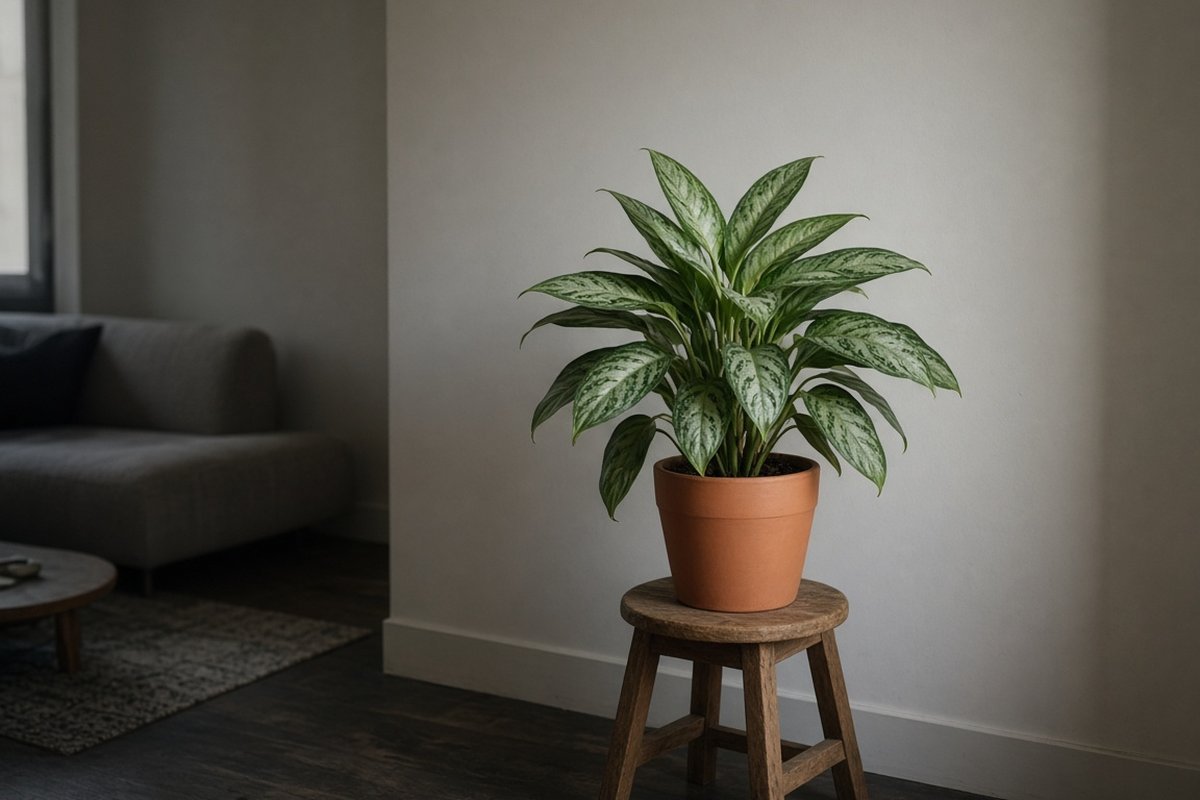
The University of Florida breeding program shows what that means in practice. Moonlight Bay carries bold silver markings over medium green. Emerald Bay is silvery-green with darker dapples along the margins, and Diamond Bay is light green with solid green edges. Stripes alternates bands of green and silver.
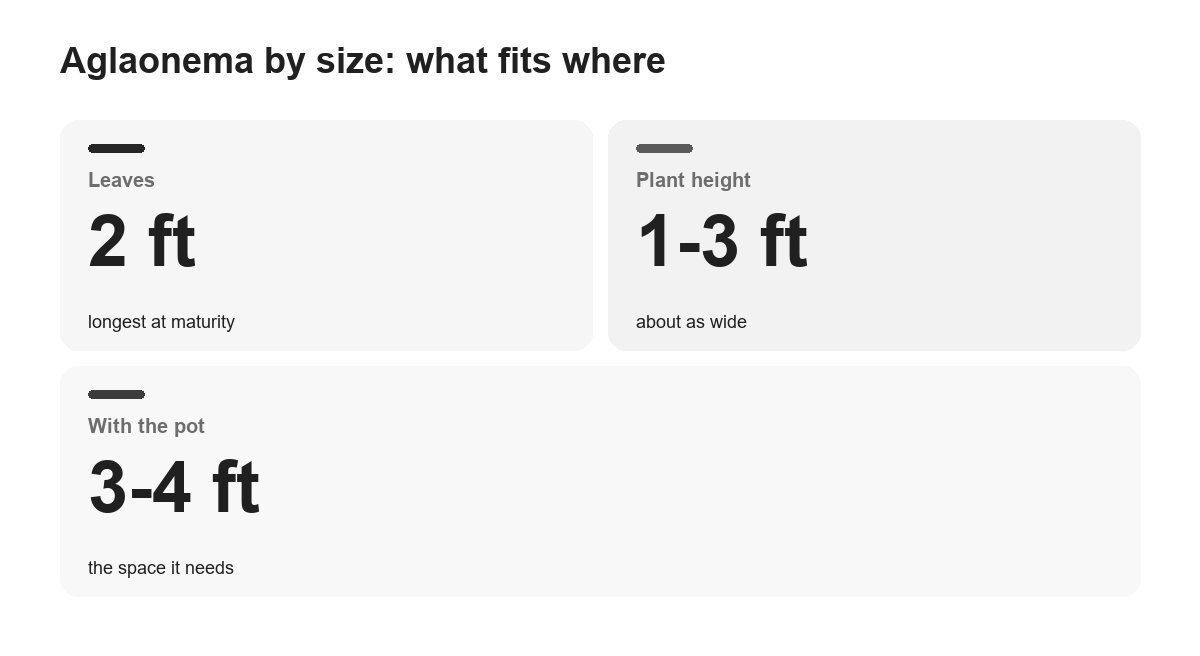
Size separates them less than the photographs suggest. UF/IFAS puts the leaves at up to two feet long and the whole plant at one to three feet tall, about as wide as it is tall.
Everything else holds across the genus: medium to low light, rich potting mix, water when the top inch of soil feels dry. That watering rule is the one new plants get wrong, and a grocery-store Chinese evergreen follows it exactly like a named cultivar does. The care side sits in one place, the chinese evergreen care guide.
Which Group Fits the Light You Have
The leaf pattern is a fair proxy for the light a plant will tolerate. Green and silver cultivars sit in the low range, and the pink, red and cream ones want a brighter window.
The silver and green group
When the room gives a few hours of soft, indirect light and nothing direct, stay inside the green and silver range. Every cultivar named above sits in it, and the extension guide describes the genus as a plant for low-light areas. Silver and gray variegation also buys something visual, because a lighter leaf makes a dim corner read as a lit corner while a dark green one disappears into the wall.
In my north-facing place, those were the only aglaonemas that held a pattern past the first winter.
Where the light is genuinely poor, the plant does not die. It stalls: new leaves come out smaller, the gaps between them lengthen, and nothing changes for months. In a windowless room, plan on a grow light.
The pink and red group
The pink, red and cream cultivars are the ones people buy for color, and color is the first thing a dim room takes away. Expect brighter indirect light to hold it, and expect the newest leaves to open greener when the plant sits back from the window.
I like them. I do not buy them for a dim room.
That does not make them bad plants, and a red one will survive a dark corner for years while slowly losing the color that made you pick it up in the first place. It makes them the wrong plant for the corner where the light never changes.
One practical read: a pink or red cultivar on a south or west window with a sheer curtain keeps its color better than the same plant four feet into the room. Move it closer to the glass before changing anything else about its care.
The Footprint Rule: Shelf, Floor, or Corner
One dimension decides placement more reliably than any product photo, and it is spread. A mature aglaonema runs one to three feet tall and about as wide, with leaves up to two feet long, so the biggest plants are wider than most furniture is deep.
Add the pot and the realistic footprint at the top of that range lands at three to four feet across. That is a floor plant in a small apartment, and a shelf plant only while it is young.
| Your space | What fits | Why that one |
|---|---|---|
| A windowsill about ten inches deep | A young plant in a six-inch pot | The leaves outgrow the sill long before the plant outgrows the pot |
| A desk or an open shelf | Anything that stays under eighteen inches wide | Width reaches the shelf edge first, and a wide plant shades its own lower leaves |
| A floor corner with soft light | A silver or green cultivar in a ten to twelve inch pot | There is room for the spread, and the pattern survives the low light |
Buy for the plant the pot will hold in two years rather than the one on the shelf today. Aglaonemas grow slowly, which gives you time to move things around. It also means the pot you choose now is the pot you live with for a while.
Names on the Tag Are Not a Care Instruction
Tags carry trade names. Silver Bay, Maria, Siam Aurora, Pink Dalmatian, Snow White, Khanza. The same plant circulates under more than one of them, and the name on the label says almost nothing about the light the plant was bred for.
I ask for two things instead: the genus name, Aglaonema, and the leaf color.
“Land of Alice has good ones. Beyond that, it’s very hit or miss amongst nurseries. I find most of mine by going to rare plant shows.”
– r/Aglaonema, October 2026 (8 upvotes)
That matches what the named plants do in practice. A garden center carries the same three cultivars all year, and the unusual ones turn up at shows, at specialist sellers, and in the hands of other growers.
The Cat Check Comes Before the Pot
The ASPCA lists Chinese evergreen as toxic to dogs, cats and horses, names insoluble calcium oxalates as the toxic principle, and describes oral irritation, swelling of the mouth and tongue, drooling, vomiting and difficulty swallowing as the signs. The entry is filed under Aglaonema modestum, one species in the genus rather than the whole cultivar list, which matters when a tag carries a name the list does not. Miso chews anything with a leaf at her height, so the plant goes where she cannot reach it. A shelf with a lip, a hanging pot, or a room she does not use all solve that without banning the plant.
For the rest of a shopping trip, the plant toxicity checker sorts the same list by cat, dog and horse.
The First Two Weeks After It Arrives
Water when the top inch of soil feels dry, and check it with a finger rather than a calendar. A new plant in a dim room dries out far more slowly than the same plant in a bright one. The usual mistake is watering on the day the last plant got watered.
Leave it in the nursery pot for a few weeks. I repot in spring, not on arrival, because repotting adds root disturbance to a plant already adjusting to new light.
Then watch the new leaves. Smaller and greener than the old ones means the light is the first variable to change, not the water.
Moving the pot two feet closer to the window is enough to see the difference on the next leaf. The named varieties are worth the attention they get, but not because they need different care.

Ellie Marsh
Houseplant grower who spent years in a north-facing apartment. Writes practical care guides for low light homes, checked against extension and botanical garden sources.