Last updated on November 3, 2026
Are succulents toxic to cats? Some are and some aren’t, because the ASPCA rates each species, not the group. Jade plant, kalanchoe, aloe vera, pencil cactus, snake plant and string of pearls are toxic to cats. Echeveria, haworthia, burro’s tail, hens and chicks and Christmas cactus are on the ASPCA’s non-toxic list.
For most of the toxic ones, the listed signs are stomach trouble: vomiting, diarrhea, drooling or a cat that seems flat. Kalanchoe is the exception worth knowing, since the ASPCA adds a rare abnormal heart rhythm to its signs.
Which succulents are toxic to cats?
Six succulents you’re likely to see for sale are toxic to cats, according to the ASPCA’s plant list and its succulent guide. Here’s what each one contains and the signs the ASPCA lists.
| Succulent | Scientific name | What causes it | Signs the ASPCA lists |
|---|---|---|---|
| Jade plant | Crassula argentea (C. ovata) | Unknown | Vomiting, depression, incoordination |
| Kalanchoe | Kalanchoe spp. | Bufadienolides | Vomiting, diarrhea, abnormal heart rhythm (rare) |
| Aloe vera | Aloe vera | Saponins, anthraquinones | Vomiting, lethargy, diarrhea |
| Pencil cactus | Euphorbia tirucalli | Irritant sap (latex) | Mouth and stomach irritation, sometimes vomiting |
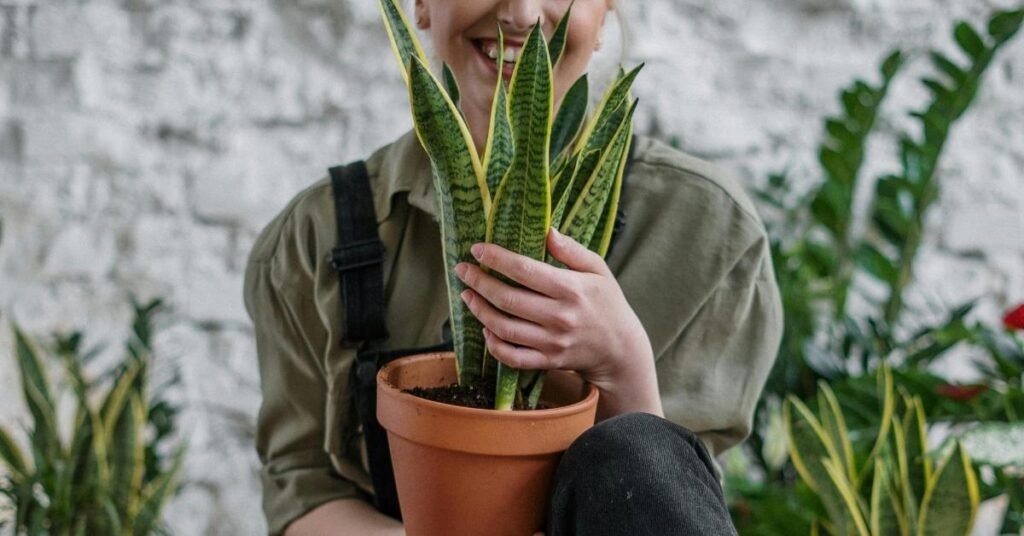
| Snake plant | Sansevieria trifasciata | Saponins | Nausea, vomiting, diarrhea |
| String of pearls | Senecio (Curio) rowleyanus | Pyrrolizidine alkaloid (per NC State) | Stomach upset, mainly vomiting, and lethargy |
Two of these have their own pages here. The aloe vera and cats guide explains why the ASPCA treats the gel differently from the rest of the leaf. The snake plant toxicity page covers what saponins do and what a vet will ask.
Kalanchoe deserves a closer look if you have one. The ASPCA’s entry covers the whole genus, so flaming Katy, the fuzzy panda plant and mother of millions all count. If yours is flowering on a windowsill, our kalanchoe care guide has light and watering, but keep it on a shelf your cat can’t reach.
Which succulents are safe for cats?
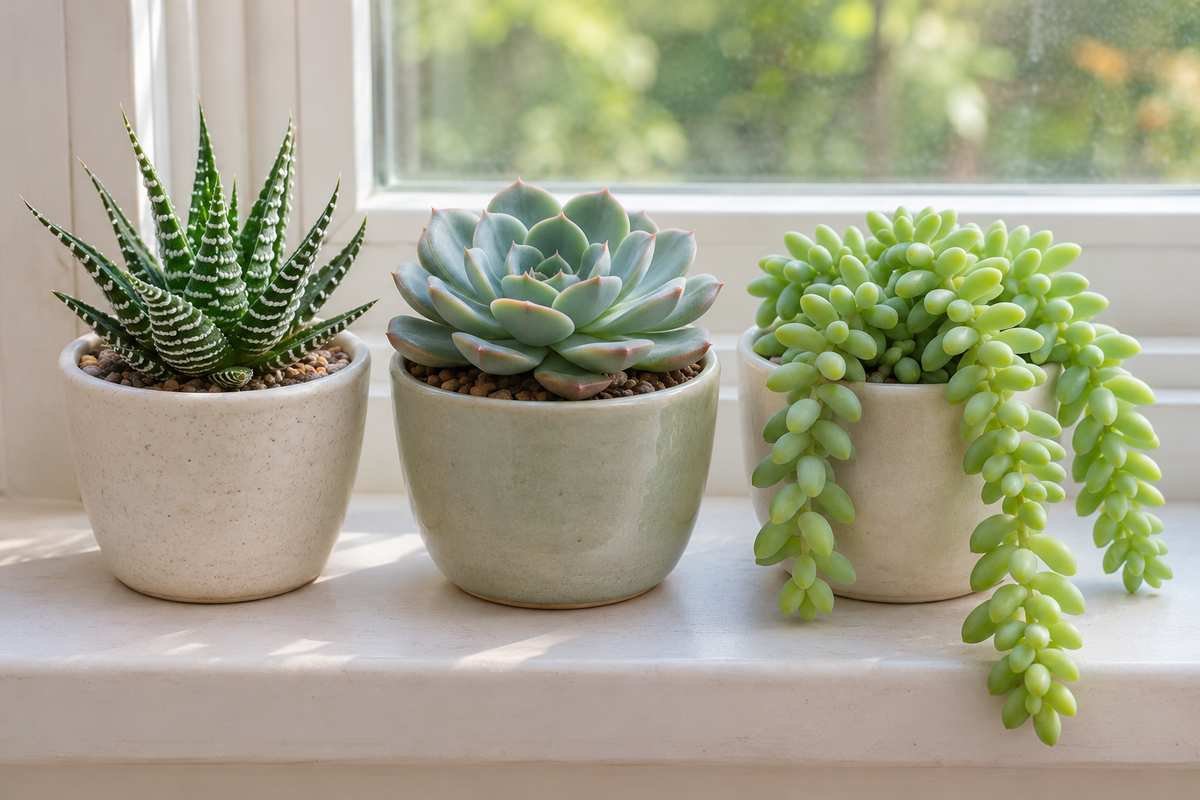
Succulents that are safe for cats include echeveria, haworthia, burro’s tail, hens and chicks, bunny ear cactus, Christmas cactus and mistletoe cactus. The ASPCA lists each of these as non-toxic to cats:
- Echeveria, including Echeveria elegans, which the database also calls hens and chickens.
- Haworthia, all species. The haworthia care guide covers the light it needs.
- Burro’s tail (Sedum morganianum), also sold as donkey’s tail.
- Hens and chicks (Sempervivum), named in the ASPCA’s succulent guide.
- Bunny ear cactus (Opuntia microdasys), also from the guide.
- Christmas cactus, explained in is Christmas cactus toxic to cats.
- Mistletoe cactus (Rhipsalis).
The guide adds a caution that applies to all of them: “non-toxic” doesn’t mean “no problem.” A cat that chews a lot of any plant can still get a mild upset stomach.
Are succulents toxic to cats as a group? It depends on the species
Succulents aren’t toxic or safe to cats as a group. “Succulent” describes a plant that stores water in thick leaves or stems. It isn’t a plant family, and it tells you nothing about toxicity. The ASPCA’s own entries show how far apart close relatives can be.
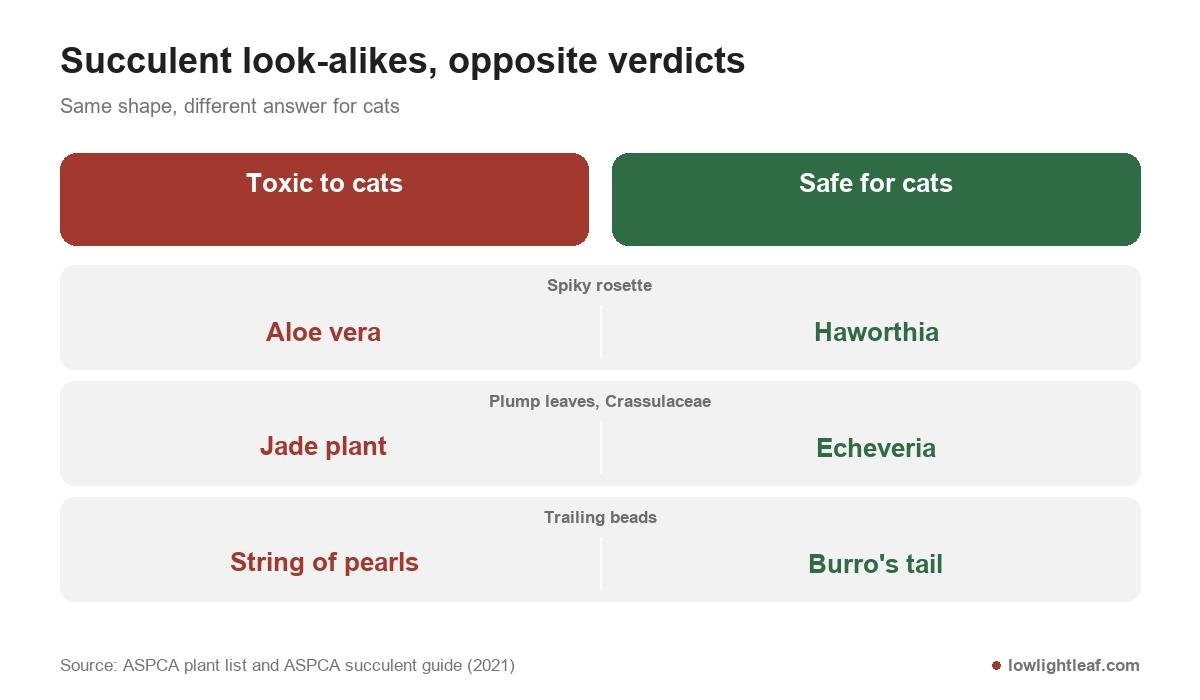
Jade, kalanchoe, echeveria and burro’s tail all belong to the same family, Crassulaceae. The first two are toxic. The other two aren’t. So a tag that says “assorted Crassulaceae” or just “succulent” can’t tell you whether the pot is safe for a cat.
Common names make it harder. The ASPCA’s kalanchoe entry lists “mother-in-law plant” as one of its other names, while mother-in-law’s tongue is the snake plant. Both are toxic, but they’re different plants with different signs. “Hens and chickens” is filed as Echeveria elegans in the database, and the ASPCA’s succulent guide uses “hens and chicks” for Sempervivum. Both happen to be safe, which is luck rather than a rule you can rely on.
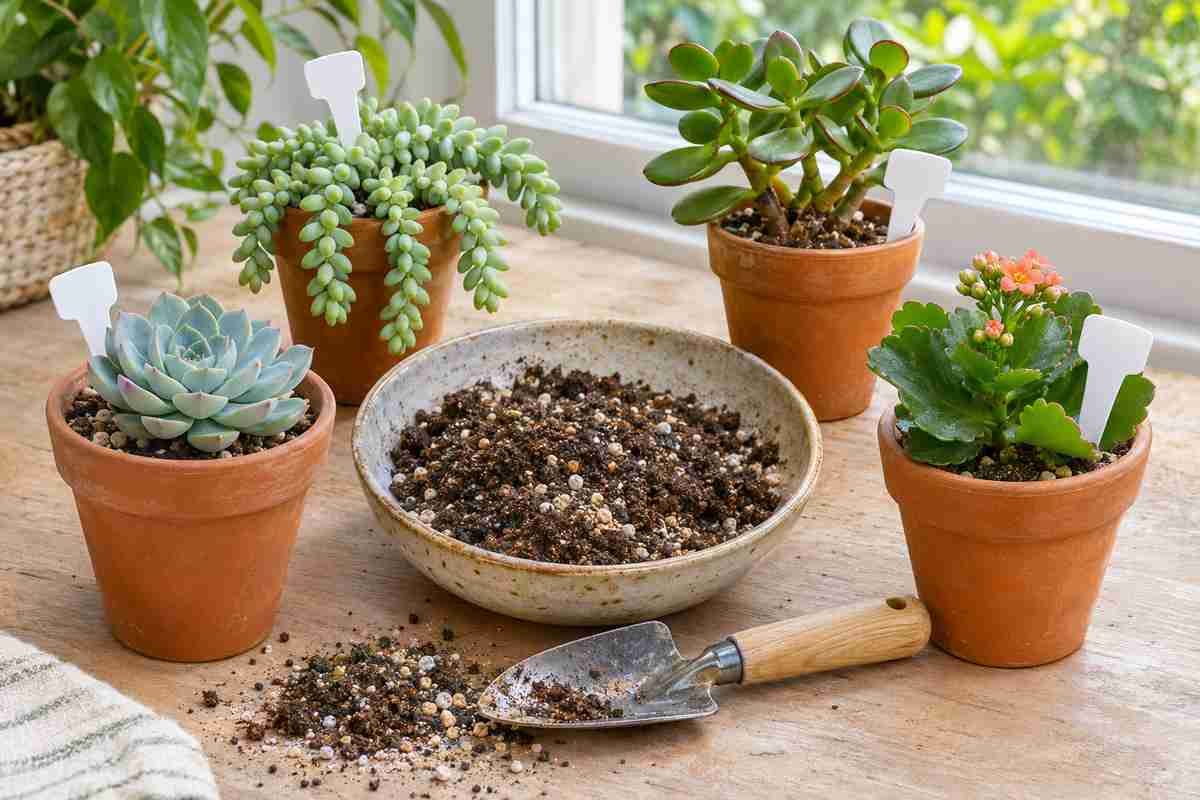
Mixed pots are where this bites. One cat owner on r/succulents posted a new mixed pot and asked whether it was safe, and this reply sorted it plant by plant:
“The two reddish ones on the bottom of your photo appear to be sedums which are generally fine for pets. The green one all the way to the right of the photo looks like an echeveria and they’re safe too. The leafy one in the middle I think is a kalanchoe which are not pet safe. The other two I think are crassulas which I’ve seen conflicting information on depending on the species, so I’d play it safe and assume they’re toxic. I’d split this up (you’ll want to anyway to keep them all alive) and pl…” [excerpt, 843 characters in full]
– r/succulents, August 2026 (4 upvotes)
That’s the right instinct. When you can’t name every plant in the pot, treat the unknowns as toxic until you can. String of pearls shows why. It has no entry in the ASPCA’s plant database at all, yet the ASPCA’s succulent guide lists it as toxic, and NC State Extension rates it toxic if eaten, with low severity, and notes its sap can irritate skin.
Is a jade plant toxic to cats?
Yes. A jade plant is toxic to cats, dogs and horses, according to the ASPCA. The plant database lists the toxic principle as unknown and the signs as vomiting, depression and incoordination. The ASPCA’s succulent guide, which uses the name Crassula ovata, lists vomiting, diarrhea, lethargy and reduced appetite.
Jade is also sold as baby jade, jade tree, dwarf rubber plant, and Chinese or Japanese rubber plant, so check the tag for Crassula rather than the common name. The ASPCA’s advice for owners who keep one is plain: put it in a high spot your pet can’t get to.

What happens if a cat eats a succulent?
If a cat eats a toxic succulent, expect stomach signs first: vomiting, drooling, diarrhea, or a cat that’s quiet and off its food. With kalanchoe, the ASPCA also lists abnormal heart rhythm, though it calls that rare.
Pencil cactus works a little differently. The ASPCA’s database calls its toxicity “generally over-rated” when swallowed, the same wording it uses for poinsettia, another Euphorbia. Its succulent guide adds that the white sap can irritate the eyes and, in severe cases, cause corneal ulcers. A cat that rubs against a broken stem and then paws its face needs its eyes checked.
If you think your cat ate part of a toxic succulent:
- Move the plant out of reach and keep any chewed pieces.
- Find the plant’s name on the tag, since the name is what decides the answer.
- Call your vet or the ASPCA Animal Poison Control Center at (888) 426-4435. The ASPCA notes a consultation fee may apply.
Keeping succulents in a home with a cat
The ASPCA’s succulent guide suggests keeping a list of the scientific names of every plant you own, because common names overlap and toxicity can differ between species. That’s what I do. My cat, Miso, is the reason every new plant gets looked up on the ASPCA list before it comes through the door, and a tag that only says “succulent” doesn’t pass.
For a plant you already have, our plant toxicity checker searches by common or scientific name. Toxic ones can stay if they live where your cat can’t reach them, though the guide’s other option, leaving them at the store, is simpler.
Some swaps keep the look without the risk. Haworthia gives you a spiky rosette like aloe. Echeveria gives you the plump leaves of a jade. Burro’s tail trails like string of pearls. If your room is dim, check our low light succulents list first. Even haworthia wants bright, indirect light, so a shaded corner may not be enough for any of them.
A mixed pot with no names on the tag belongs on a high shelf until you’ve identified every plant in it.

Ellie Marsh
Houseplant grower who spent years in a north-facing apartment. Writes practical care guides for low light homes, checked against extension and botanical garden sources.