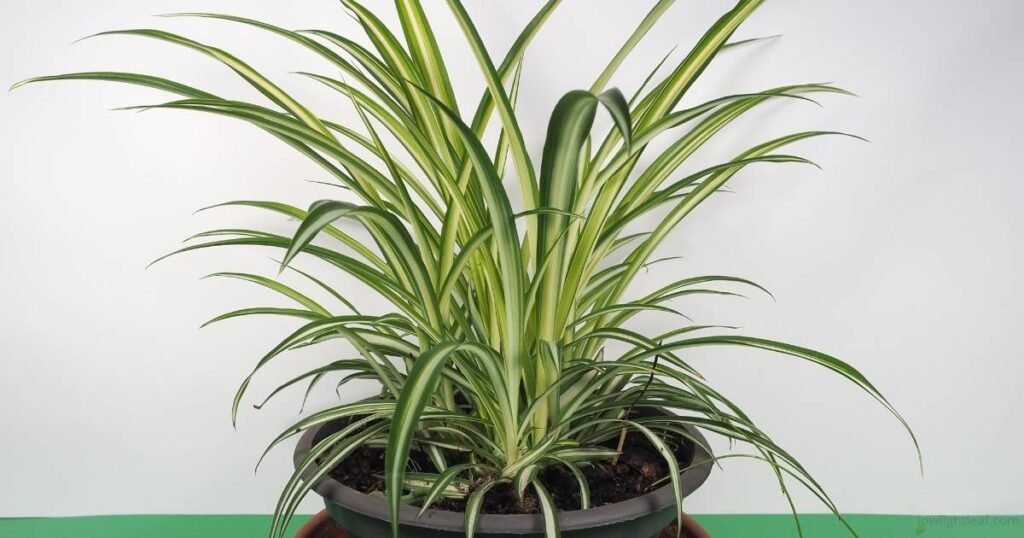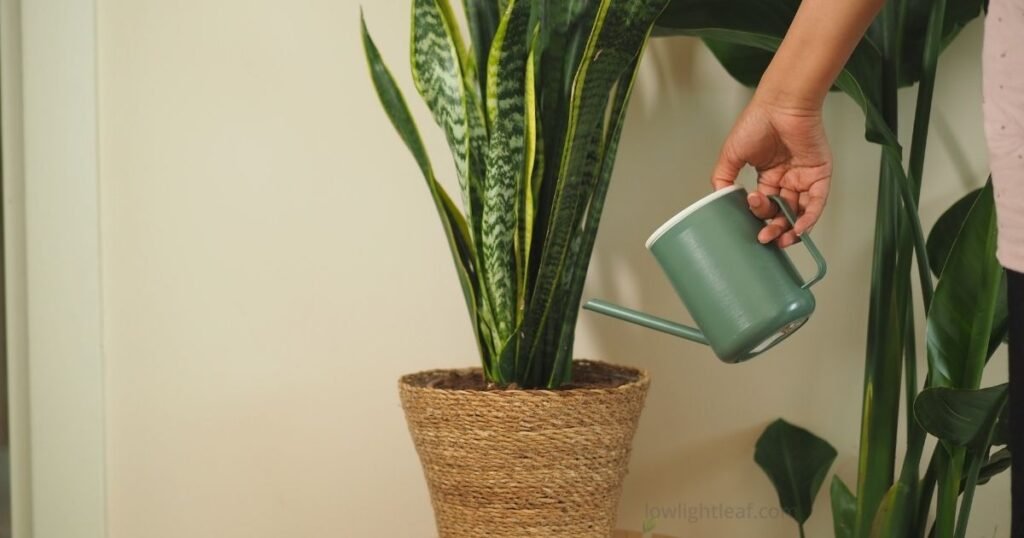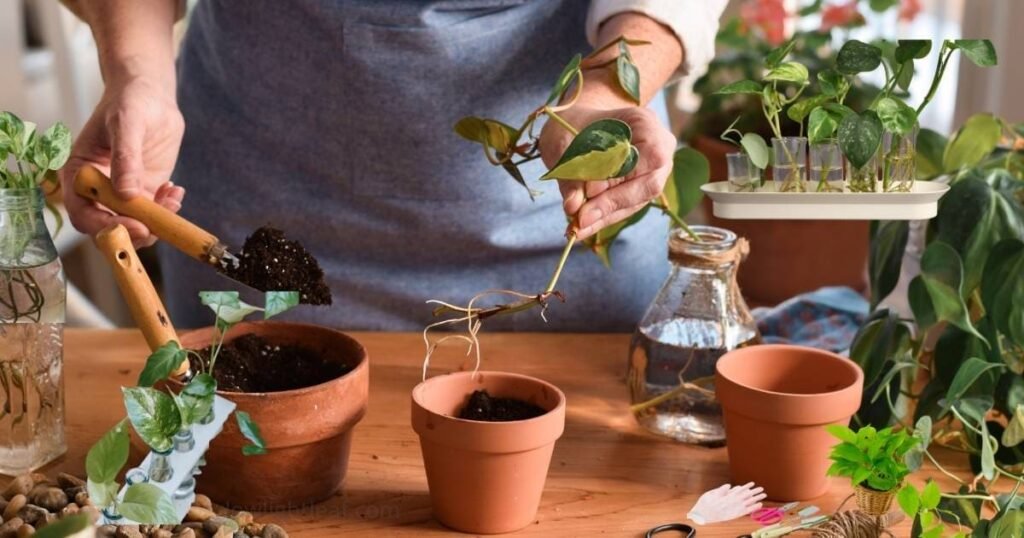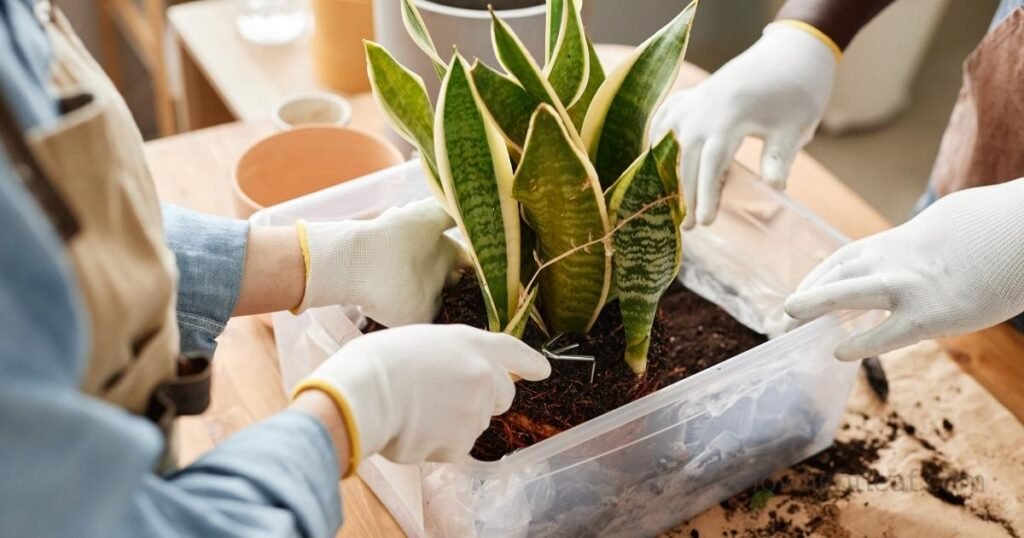
The best soil for spider plant is a plain, general-purpose potting mix that stays lightly moist and drains freely. Clemson, Wisconsin and Illinois extension services all say a regular bagged mix is enough, and the RHS suggests peat-free multi-purpose compost. The one real decision is whether to add perlite, and that depends on your leaf tips and your tap water.
If your spider plant’s tips are already browning, you can skip the perlite and use a peat and coarse sand mix instead. Here’s why the sources split on it, and the two perlite-free recipes they publish.
Start with a plain bagged mix
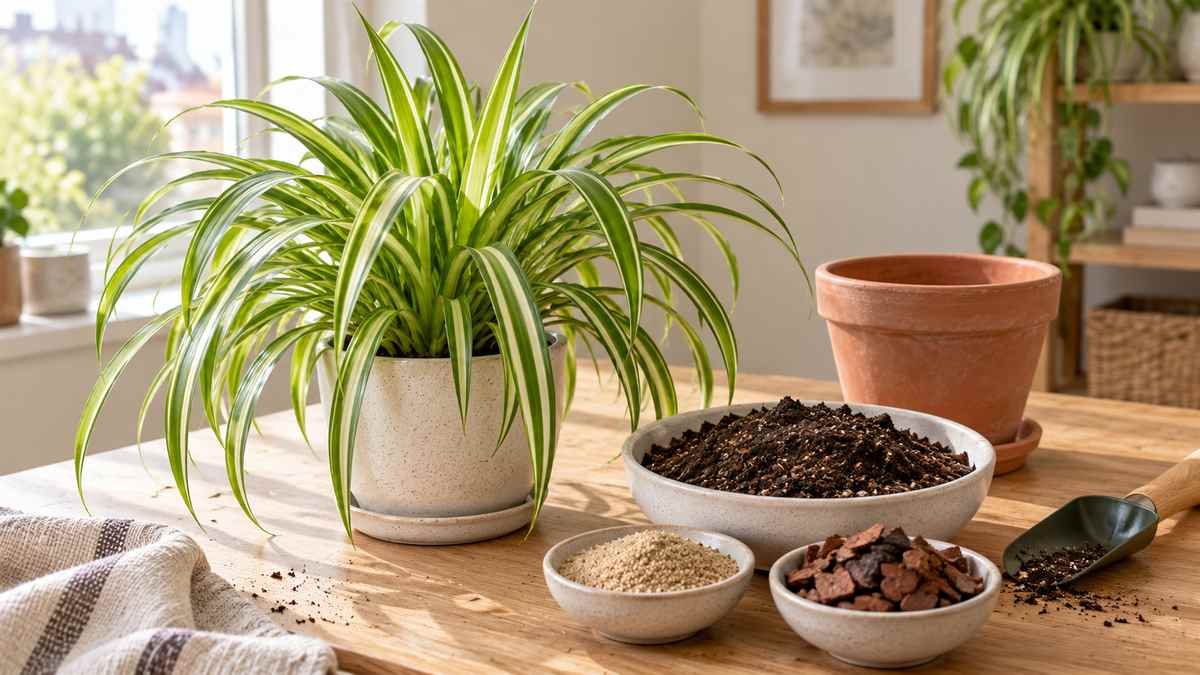
You don’t need a special blend. Clemson calls a general-purpose potting soil suitable, Wisconsin recommends a general-purpose potting soil or soilless medium, and Illinois says to plant in regular potting mix. UF/IFAS goes further and says spider plants tolerate a wide range of soil conditions.
What separates spider plants from snake plants or ZZ plants is moisture. NC State Extension says they grow best in moist soil, though they tolerate drought, and the RHS aims for compost that’s just lightly moist to the touch. Their thick, fleshy roots store water, Wisconsin explains, which is why a missed watering rarely kills one.
“The title says it all. As soon as the soil dries out, my spider plant droops immediately even if the soil has been dry for couple of days only. I decided to try watering every other day but I forget so I got the watering globes (birds in this case😅) and I keep the water moist all the time now. My spider plant has started to thrive and grow the new leaves finally fast, as opposed to before where new growth was so slow that looked almost skewed. I have this plant two years now and it is quite spa…” [excerpt — 1,285 characters in full]
– r/spiderplants, December 2025 (43 upvotes)
So pick a mix that holds water without staying soggy. Clemson traces root rot in spider plants to a soil mix that doesn’t drain quickly, or to watering too often.
The perlite question
Extension sources disagree on perlite for spider plants. The NC State Extension Gardener Handbook says perlite contains some fluoride and shouldn’t go into the potting mix for fluoride-sensitive plants, naming spider plants and dracaenas. Clemson’s beginner houseplant page goes the other way and suggests adding perlite to a basic bagged potting soil to improve drainage.
For fluoride, the water matters more than the bag. NC State’s plant profile says to avoid watering spider plants with tap water because chlorine and fluorides can cause tip burn. UF/IFAS calls the plant particularly sensitive to fluoridated water, and both UF and Wisconsin suggest rainwater or distilled water. The RHS recommends collected rainwater for the same reason.
“This is tip burn from minerals in your tap water. Spider plants are notoriously sensitive to fluoride and chlorine, way more than most houseplants, which is why your other plants are fine with the same soil and water. A year of weekly tap water leaves salt deposits in the soil that burn the leaf tips from the inside out. Switch to filtered water, distilled, or even just tap water that’s sat out for 24 hours. Run a good flush through the soil every few weeks to clear the buildup. On the babies,…” [excerpt — 719 characters in full]
– r/plantclinic, June 2026 (1,116 upvotes)
Here’s how I’d settle it. If your plant’s tips look healthy, a bagged mix with some perlite already in it is fine, which matches Clemson. If the tips keep browning, or your water is fluoridated, leave perlite out of anything you add and switch the water first, since four sources point at the tap and only NC State’s handbook points at the perlite.
Brown tips have other causes too. Clemson lists too much fertilizer and water high in soluble salts, plus low humidity and very dry soil. The full list is in spider plant brown tips.
Two perlite-free spider plant soil mixes
To mix your own without perlite, Clemson’s indoor soil mix factsheet lists two foliage blends that leave it out:
- Two parts peat to one part coarse sand. The simpler of the two, and the closer match to a plain bagged mix.
- One part peat, one part coarse sand and one part pine bark. A third peat in place of two-thirds, and NC State says peat is what raises a mix’s water-holding capacity, so this one holds less water.
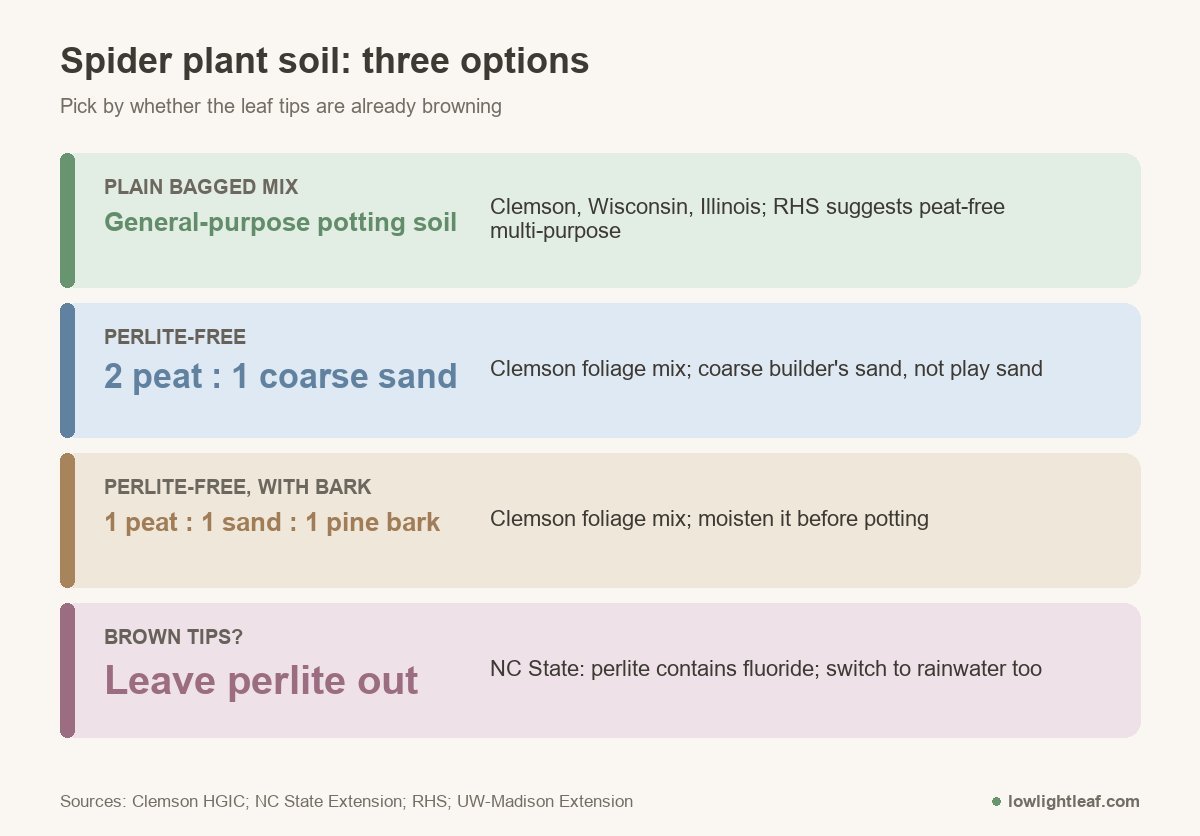
Three details matter when you blend them. Use coarse builder’s sand, not fine play sand, as NC State specifies. If you swap coconut coir in for peat, Clemson says to rinse it first to avoid salt problems, and the RHS steers growers toward peat-free compost anyway. And moisten the blend before potting, because NC State warns that peat or pine bark that dries out completely is very hard to rehydrate.
If you don’t want to mix at all, a plain bag is still the right answer for most plants. In a north-facing room like the ones I’ve lived in, I’d reach for the bark version, since a spider plant in low light grows more slowly, the RHS says, so it drinks less from the pot.
Can I use cactus soil or orchid mix for a spider plant?
Not on their own. Cactus soil and orchid mix are built to drain fast and hold little water, while NC State says spider plants grow best in moist soil. If one of them is all you have, blend it with a general-purpose potting mix so the result stays lightly moist.
Garden soil is a firmer no. Clemson doesn’t recommend garden soil for containers at all.
Pots, drainage and fresh soil
Spider plants grow and produce plantlets best when slightly pot bound, Wisconsin says, but their fleshy roots fill a pot fast. UF/IFAS suggests repotting once a year while the plant is young and every other year once it matures, and the RHS moves it each time into a pot only slightly larger.
“went to go water my plant and saw the roots like this, i heard they like being root bound but how much is TOO much”
– r/spiderplants, April 2026 (74 upvotes)
Roots circling the top of the pot, as in that photo, mean it’s time. The signs and steps are in spider plant repotting.
Whatever mix you choose, it only works in a pot that drains:
- Use a pot with a drainage hole, and don’t add a layer of gravel at the bottom. NC State explains that water collects in the mix just above gravel, keeping the roots wetter.
- Water thoroughly, then pour away any water left in the saucer or outer pot. The RHS says spider plants dislike standing in water.
- Let the top inch dry briefly before the next watering, as UF/IFAS advises, and water a little less in winter.
“This isn’t from tap water, unless your tap water is poison. Tap water can cause brown tips on spider plants, but this looks like it’s just been severely overwatered. Is there drainage in that pot? If not, then that’s most likely your problem. Take this plant out of that pot, pull all the dead leaves out, check the roots for rot and trim off anything that is rotted. Repot in a smaller pot, with drainage, that’s appropriate for the size of what is left of your plant. Water it in and don’t water a…” [excerpt — 1,206 characters in full]
– r/spiderplants, December 2025 (18 upvotes)
For timing, spider plant watering walks through how often and how much.
Best soil for spider plant FAQ
What’s the best soil to repot spider plants?
Repot spider plants into fresh general-purpose potting mix, which Clemson, Wisconsin and Illinois all recommend, or into the RHS’s peat-free multi-purpose compost. If the tips are browning, use Clemson’s two parts peat to one part coarse sand and leave perlite out.
Do spider plants like moist soil?
Yes, lightly moist. NC State says spider plants grow best in moist soil, and the RHS keeps the compost just moist to the touch. Pale, dull leaves usually mean the plant needs more water, the RHS says, and it perks up quickly after a thorough drink.
Can soil cause brown tips on a spider plant?
Partly. Salt buildup in the soil and soil that dries out too far can both brown the tips, Wisconsin says, and NC State’s handbook links perlite to fluoride. But tap water is the cause NC State, UF/IFAS, the RHS and Wisconsin name most directly.
Should I add fertilizer to spider plant soil?
Go light. Wisconsin says feeding every 3 to 4 months is usually enough and that excess fertilizer can brown the tips, and NC State warns that overfeeding reduces plantlets. The RHS finds regular repotting into fresh compost often makes feeding unnecessary.
For brown tips, the water usually matters more than the soil. Start with a plain bag, change to rainwater or distilled water if the tips keep browning, and leave perlite out only then. The same mix-and-pot approach for other easy plants is in best soil for pothos, best soil for ZZ plants and best soil for snake plant.

Ellie Marsh
Houseplant grower who spent years in a north-facing apartment. Writes practical care guides for low light homes, checked against extension and botanical garden sources.