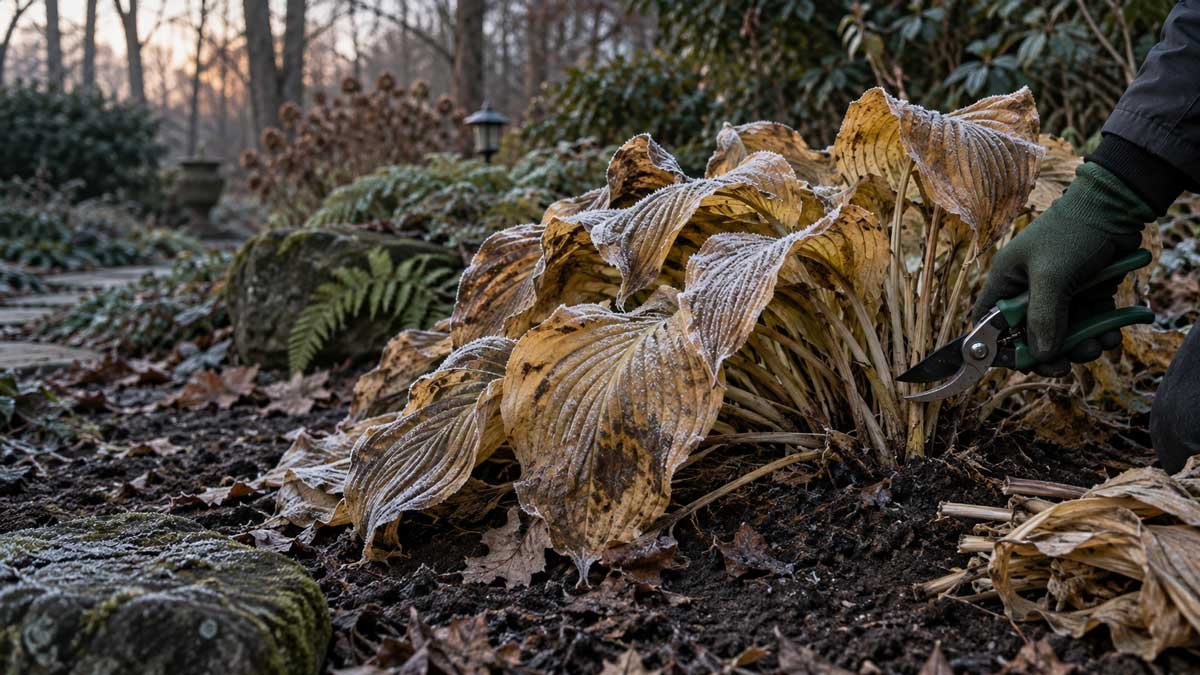
Cut back hostas in fall, once frost has killed the leaves and before snow or winter mulch covers the plants. Penn State Extension says to cut hostas back and clear every leaf off the ground as soon as the frost takes them, and University of Nebraska-Lincoln Extension says the foliage dies to the ground at 28°F or below.
So when to cut back hostas depends less on the calendar than on the weather. I garden in a small, mostly shaded backyard, and I go by the first hard freeze: frost-softened leaves lying flat over the crown are the signal. Below are the timing signals three extension services give, the reasons the cleanup matters, and a short routine that keeps one sick clump from infecting the rest.
The window: after frost, before snow
Three university extension services describe the same window in different words. Line them up and the rule is simple: start when the leaves collapse, finish before the bed is buried.
| Signal | What it looks like | Source |
|---|---|---|
| Fall color fades | Leaves turn yellow, then the color drains out | University of Illinois Extension: cut back foliage and leaf stalks once fall color subsides |
| First killing frost | Leaves go limp and dark, slumping flat | Penn State Extension: cut back and remove all leaves as soon as the frost takes them |
| 28°F or colder | Foliage dies to the ground | University of Nebraska-Lincoln Extension |
| Hard deadline | Before winter mulch goes on or snow covers the plant | University of Nebraska-Lincoln Extension: remove any remaining foliage first |
In a mild fall the leaves may hang on for weeks. Waiting costs nothing, because the work only has to be done before the snow. If snow comes first, the cleanup moves to early spring: Nebraska says to remove winter mulch and leaf debris before you see new growth.
Why cut back hostas at all?
Dead hosta leaves shelter the pests and diseases that damage next year’s plants. Penn State says the dead leaves harbor slug eggs that hatch in spring, and Illinois Extension says cutting back reduces future slug numbers and removes foliar nematodes before they settle into the crown.
Slugs are the familiar one. The Missouri Botanical Garden describes their damage as smooth, irregular holes along leaf edges or between veins, often with slime trails.
A bed of slumped, frost-blackened leaves is where those eggs spend the winter.
Foliar nematodes are less obvious. Illinois Extension says the symptoms show up in early summer, first as yellowing and then as brown streaks between the veins. Removing the leaves in fall takes many of them out of the garden. Disease is the third reason. The University of New Hampshire Extension says many fungal diseases overwinter in plant debris, and it lists hosta among perennials worth cutting back in fall because the plant has little winter interest or wildlife value.
Cutting back hostas without spreading hosta virus X
The routine takes a few minutes per clump. Cleaning the pruners is the step that protects the rest of the bed, because Nebraska Extension says hosta virus X spreads from plant to plant in infected sap on garden tools.
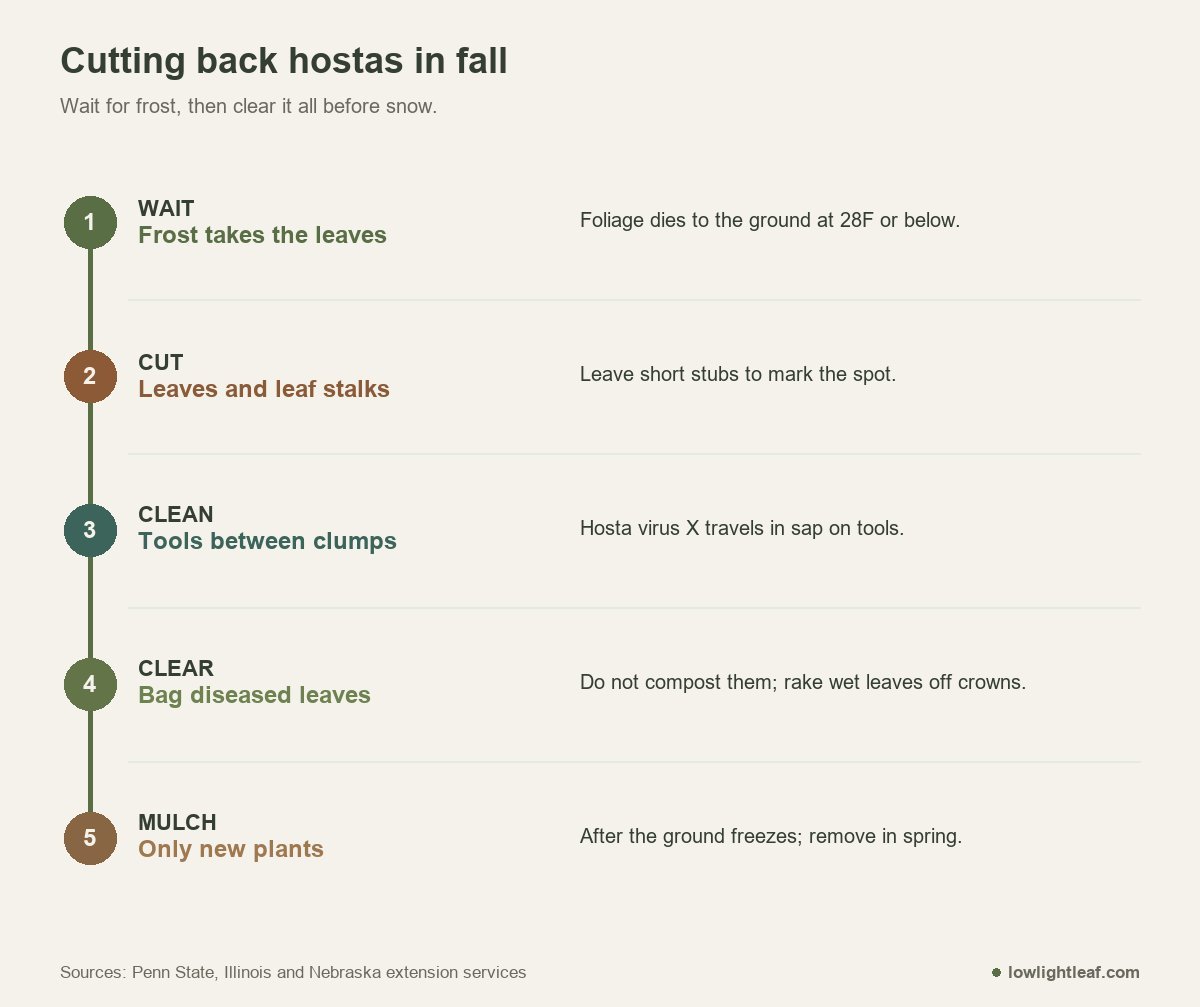
- Wait for the frost. Let the leaves collapse on their own.
- Cut the leaves and leaf stalks. Illinois Extension says to remove both. Penn State’s general advice for perennials is to leave about two inches above the soil so you can find the plant later.
- Clean your tools between clumps. One infected plant can pass hosta virus X to every hosta you cut after it. Nebraska lists leaf mottling and ink-like streaking between the veins as symptoms, and says plants that show them should be removed.
- Bag anything diseased. Penn State, Illinois and New Hampshire all say to throw out diseased leaves, not compost them.
- Clear the crown. Illinois Extension suggests raking soggy tree leaves off the crown to discourage slugs, rabbits and voles.
Winter mulch is only for hostas planted this year. Illinois says to put it on after the ground has frozen and take it off the following spring so the crown doesn’t rot, and Nebraska says it protects new plants from repeated freezing and thawing.
What happens if you don’t cut back hostas?
Usually the hosta still comes back, but the bed carries more slug eggs, nematodes and disease into spring. None of the extension services I read says skipping fall cleanup kills the plant. The risk is a rougher start next season, especially in a bed that already had holes or streaked leaves this year.
Spring cleanup is the fallback. New Hampshire says old stalks can be cut back in spring before new growth begins, and Nebraska puts the deadline before visible growth. Cutting early in spring avoids damaging the new shoots as they come up.
Not every shade plant needs the same treatment. Penn State says there’s no need to cut back heucheras or hellebores in fall, and New Hampshire adds Christmas fern; tidy those in spring instead.
Should you cut off hosta flowers?
You can cut off hosta flowers after they fade, or even before they open, without hurting the plant. Iowa State University Extension says removing spent blooms improves the plant’s look and keeps it from setting seed, and that removing flower stalks before bloom has no adverse effect.
Cut the stalk near the base of the leaves.
When to cut back hostas FAQ
Do hostas come back every year?
Yes. Hostas are herbaceous perennials, so the leaves die back in winter and new shoots return from the crown in spring. Nebraska Extension says the foliage dies to the ground at 28°F or below, which is why a hosta bed looks empty from late fall until spring.
Are hostas deer resistant?
No, deer eat hostas. The Missouri Botanical Garden says browsing deer can strip a plant quickly, leaving bare stalks with ragged ends, and Nebraska Extension lists deer among hosta pests. A fall cutback doesn’t change that; fencing or cages do more.
Can you cut hostas back in summer?
Trim flower stalks in summer if you like, since Iowa State says removing them has no adverse effect; the full cutback waits for frost.
Fall cleanup is also a good time to see which clumps have outgrown their space. If one has, mark it and divide it in spring; the timing and method are in when to divide hostas, and if you are filling gaps, the best hostas for shade are sorted by how much light each one needs.

Ellie Marsh
Houseplant grower who spent years in a north-facing apartment. Writes practical care guides for low light homes, checked against extension and botanical garden sources.