Haworthia care comes down to bright light with a little direct sun, a gritty mix that drains fast, and water only after the soil dries. University of Wisconsin-Madison Extension puts the ideal spot in an east or west window and names root rot from wet soil as the most common problem.
It’s also one of the more forgiving succulents for a dim home. Wisconsin’s extension writer calls haworthias more tolerant of modest lighting than many succulents, which is why they turn up on so many windowsills that would starve an echeveria. Dim light won’t kill one quickly. It changes the plant slowly, and the leaves are where you see it first.
How much light a haworthia needs
A haworthia does best with a few hours of direct sun and bright indirect light the rest of the day, which an east or west window usually supplies. UW-Madison Extension says a south window can work too, but may be too bright for some species unless a sheer curtain filters the sun.
The sources don’t fully agree on direct sun. The New York Botanical Garden’s plant library recommends medium light and no direct sun, especially in summer, and the RHS says bright, indirect light. Wisconsin’s point is about looks. Many species are adapted to partial shade, but few look their best without some direct sun, and the darker, more intense color and tight shape that growers like come from brighter conditions.
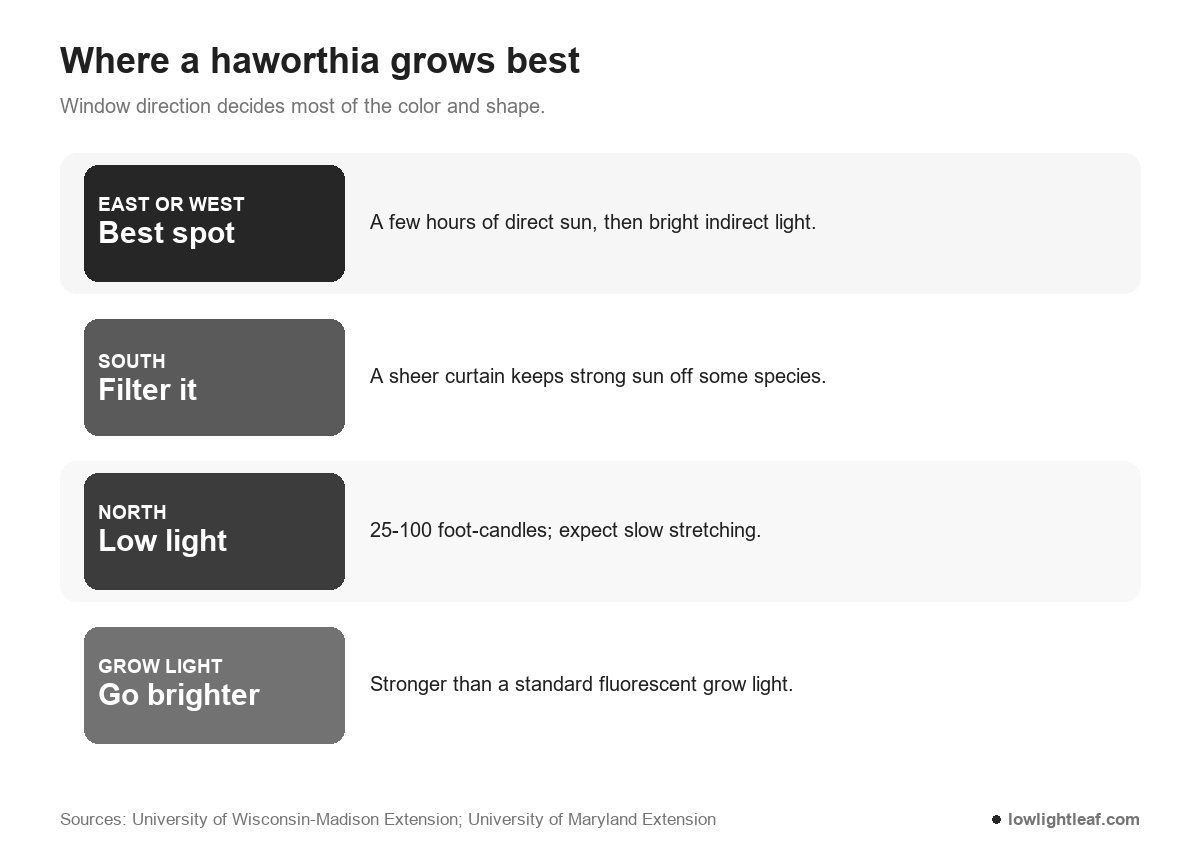
A north window is the hard case. University of Maryland Extension counts north-facing windows as low light, 25 to 100 foot-candles, against 100 to 500 for east and west. I lived for years with nothing brighter than a north window, and that’s the light where a haworthia keeps going but slowly stretches, so add a lamp there. UW-Madison says haworthias grow very well under artificial light, though they want more intensity than a standard fluorescent grow light delivers.
Watering haworthia without rotting it
Water is where most haworthia care goes wrong. Water thoroughly, then wait until the top half-inch of the mix is dry before watering again. That’s the New York Botanical Garden’s rule, and UW-Madison adds that a well-drained pot can take water about weekly in summer and less often in winter, with the soil drying between drinks.
The RHS says to water only when the compost is approaching dryness. All three describe the same habit of soaking the pot, letting it dry and repeating. The danger is the combination Wisconsin warns about, prolonged wet soil when it’s cool, the light is low or the plant isn’t actively growing. A haworthia on a dim windowsill in January is all three at once, so that’s the month to water least. Empty the saucer every time, too. UW-Madison tells growers to drain standing water from saucers promptly, because a pot sitting in water defeats the drainage holes underneath it.
Soil and pots
Soil is the quiet half of haworthia care. Use regular potting soil mixed with an equal amount of drainage material such as perlite, pumice, poultry grit or aquarium gravel. UW-Madison recommends that half-and-half blend and repotting into fresh soil every two to three years, since slow growers tend to sit in the same tired mix for too long.
Sand is where advice splits, and grain size explains it. Wisconsin says not to use sand because it is too fine and clogs the pores in the soil. The New York Botanical Garden’s mix is one part coarse sand or perlite to two parts standard soil. Fine play sand packs down, coarse grit doesn’t, so if you use sand at all, make it coarse, or skip it and use perlite.
- Pot size: about the same volume as the root system, per UW-Madison. A small plant in a big pot holds water its roots can’t use.
- Pot depth: shallow pots are generally better, though some species with thick roots want a deeper one.
- Material: terra cotta releases moisture faster than plastic or glazed ceramic. Every pot needs a drainage hole.
What haworthia leaves are telling you
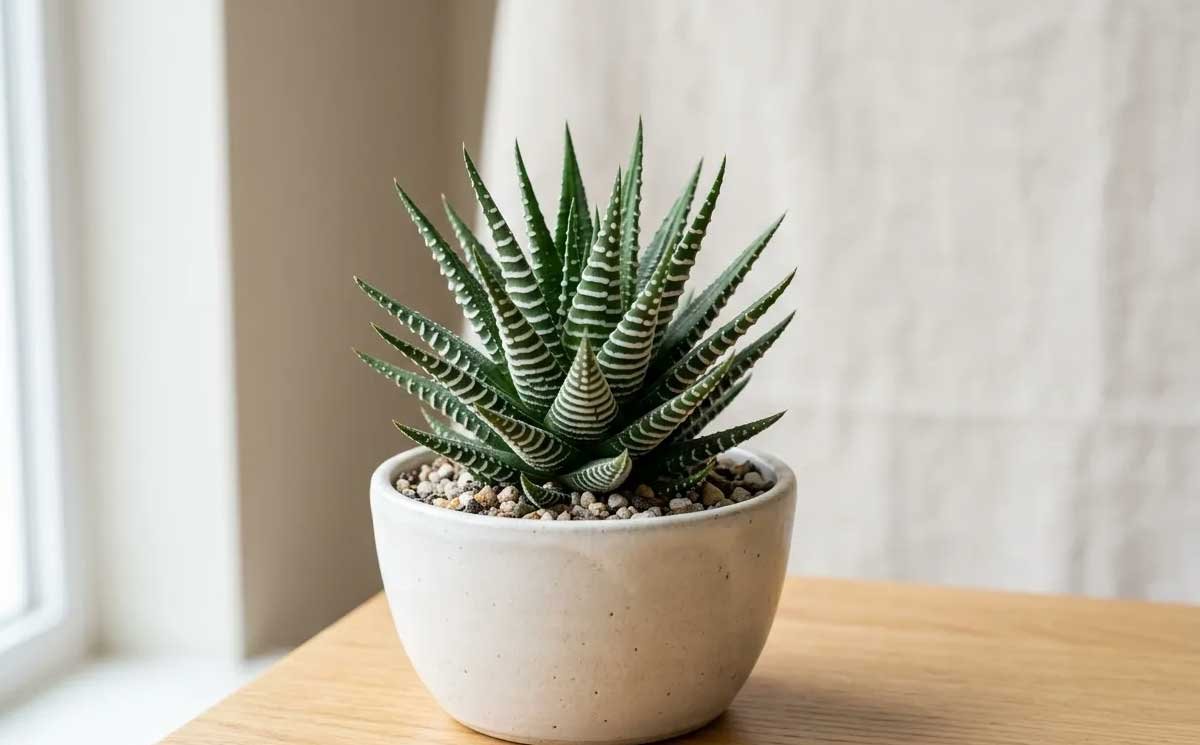
Most haworthia care questions start with a leaf that changed, and shriveled leaves don’t always mean thirst. UW-Madison lists leaf shriveling, along with stalled growth and shrinking leaves, as symptoms of a weak or rotted root system, so feel the soil and look at the roots before you add more water.
| What you see | Likely cause (source) | What to do |
|---|---|---|
| Soft, mushy or collapsing at the base | Root rot from prolonged wet soil, the most significant disease problem (UW-Madison) | Unpot, cut away decayed roots, let it lie out for a week, repot in fresh soil, water carefully |
| Shriveled or flattening leaves, soil still damp | Weak or rotted roots (UW-Madison) | Same as above; more water makes it worse |
| Shriveled leaves, soil dry for weeks | Too little water; the mix shouldn’t dry out completely even in rest (NYBG) | Water thoroughly, then go back to the half-inch rule |
| Stretched, pale, loose rosette | Not enough light; leaves elongate and lose color (UW-Madison) | Move to an east or west window or add a strong lamp |
| Bleached or scorched patches after a move | Sunburn after a winter without direct sun (UW-Madison) | Step back to bright indirect light and reintroduce sun over a few weeks |
| Deeper red or darker color, plant firm | Brighter light develops darker, more intense color (UW-Madison) | Nothing, if the leaves stay firm and unmarked |
| White cottony clumps between leaves | Mealybugs, the one common pest (UW-Madison) | Pick them off or use a houseplant insecticide |
That first row is the one that hurts.
A firm rosette that goes soft at the base has usually been wet for weeks before it shows. Wisconsin’s point is that root rot doesn’t necessarily mean the plant is lost, so trim back to healthy tissue, even to the stem, and give it the week out of soil before you repot.
Temperature, winter rest and feeding
UW-Madison’s figures put the best range at 75 to 90°F, with haworthias tolerating the low 40s, especially if the soil isn’t wet. The New York Botanical Garden puts the floor at 40°F and suggests keeping them below 60°F in winter.
When they rest is less settled. The New York Botanical Garden gives a rest period from midwinter to late spring, the RHS describes a cool winter dormancy with only occasional light watering, and Wisconsin says the growing season is hard to generalize because some species grow in winter and others in summer, with many growing from late winter through spring. Watch your own plant. New leaves at the center mean it’s growing and can take regular water; no change for weeks means it’s resting.
Feeding barely figures in haworthia care. The New York Botanical Garden says not to fertilize haworthias at all, and slow growth is normal for them, so skipping fertilizer costs you little.
Repotting and separating pups
Most haworthias form offsets, small plants at the base that UW-Madison says often grow their own roots while still attached. Separate them when you repot. If the break leaves a wound below the soil line, let it air-heal for a few days before potting so soil organisms can’t get into the fresh cut, then use the same gritty mix as the parent.
Haworthia care FAQ
Is haworthia safe for cats and dogs?
Yes. The ASPCA lists Haworthia species as non-toxic to both. My cat, Miso, is the reason every plant gets looked up on that list before it comes home, and haworthia passes.
How often should you water a zebra haworthia?
Water a zebra haworthia on the same schedule as other haworthias: when the top half-inch of mix is dry, roughly weekly in summer in a fast-draining pot and much less in winter. For any species, good haworthia care starts with feeling the soil before you pour.
Can haworthia live in a terrarium?
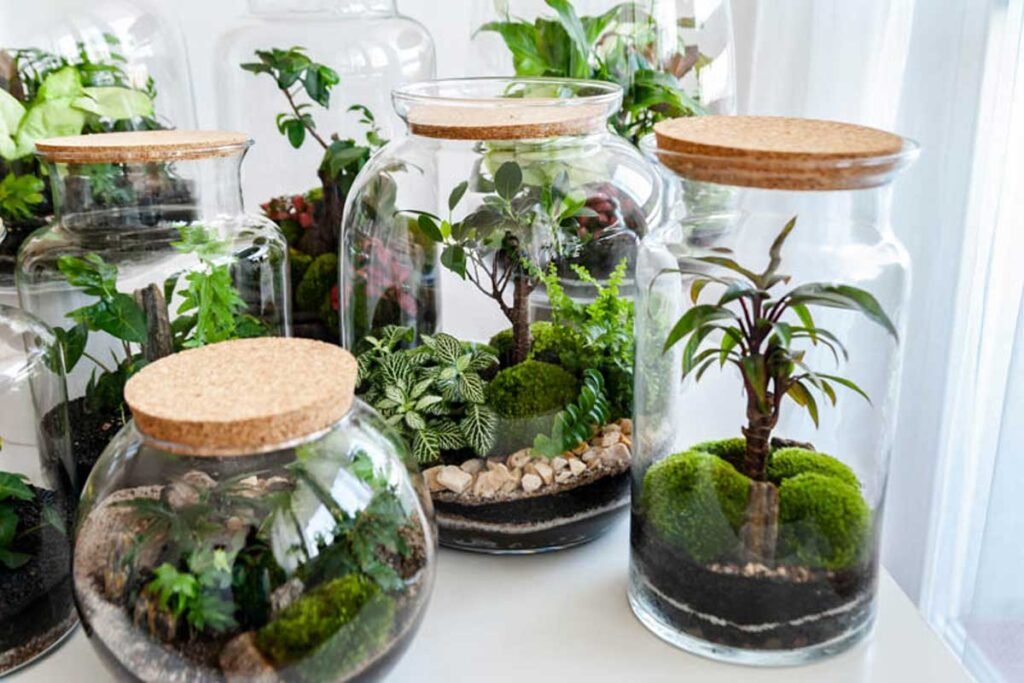
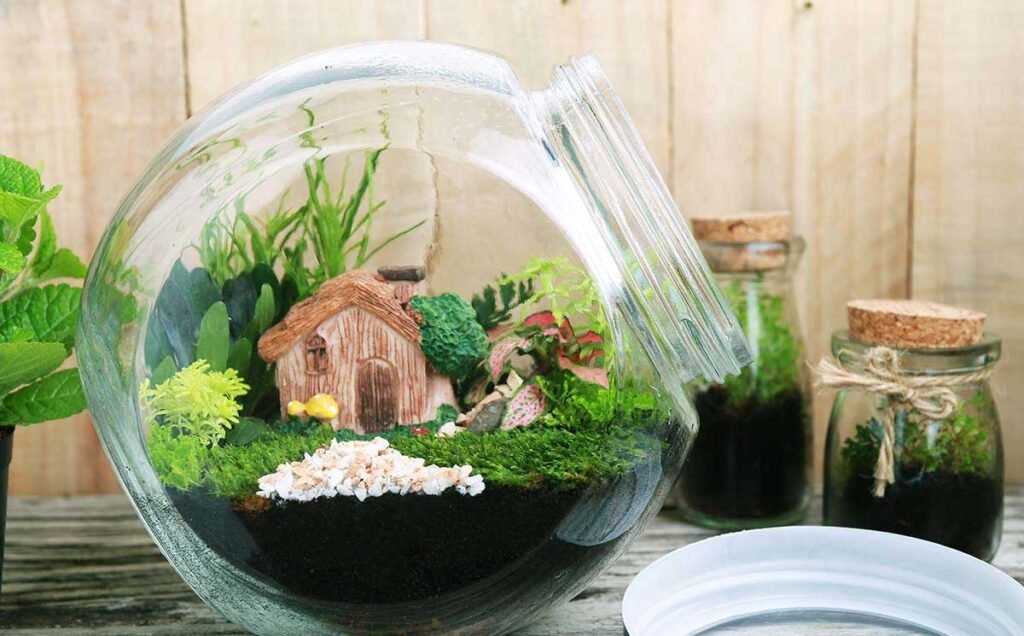
Only in an open one. University of Vermont Extension says cactus and succulents prefer far less humidity and belong in a terrarium without a lid, and Penn State Extension says succulents don’t make good closed terrarium plants. The layers for an open jar are in how to make a terrarium, and low light succulents lists other options that suit a dim room.

Ellie Marsh
Houseplant grower who spent years in a north-facing apartment. Writes practical care guides for low light homes, checked against extension and botanical garden sources.