
ZZ plant (Zamioculcas zamiifolia) Everything You Need To Know
ZZ Plant is a structured, upright aroid with a biology built for scarcity, the sole species in its genus, and the only non-aquatic member of its order known to run on drought-activated CAM photosynthesis.
- Sole species of Zamioculcas
- 7 documented cultivars
ZZ plant (Zamioculcas zamiifolia) Everything You Need To Know
A structured, upright aroid with a biology built for scarcity, the sole species in its genus, and the only non-aquatic member of its order known to run on drought-activated CAM photosynthesis.
- Sole species of Zamioculcas
- 7 documented cultivars
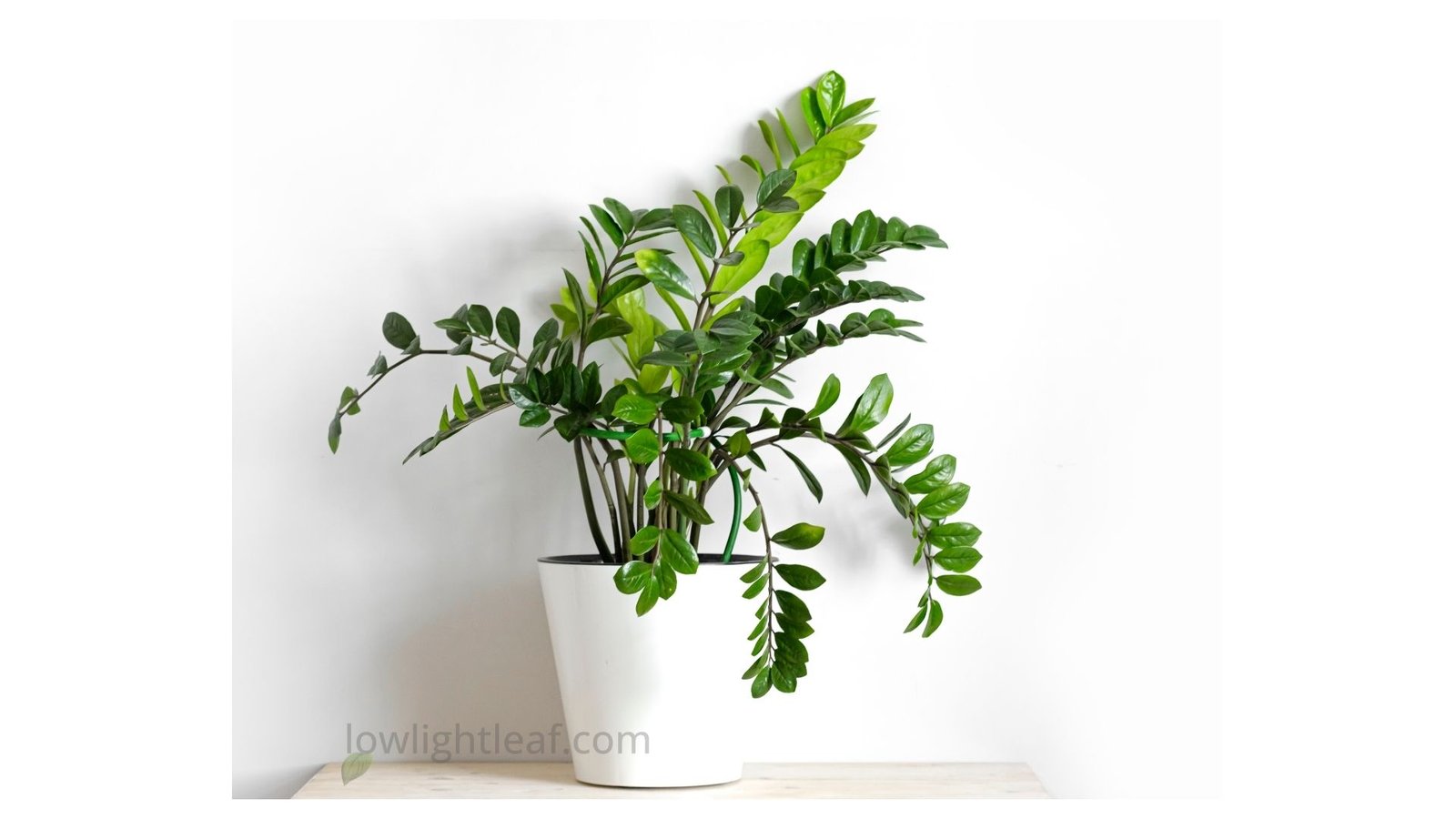
— BOTANICAL CONTEXT
What makes it special
Zamioculcas zamiifolia is the sole species of its genus, a member of Araceae native from Kenya to South Africa’s KwaZulu-Natal region. That range spans seasonally dry tropical landscapes, and the plant’s underground rhizome, a swollen storage structure beneath the soil reflects the unpredictability of water there.
The adaptation goes deeper than storage. Holtum and colleagues, writing in the American Journal of Botany (2007), documented weak, drought-activated Crassulacean Acid Metabolism in the species, a physiological shift most of its relatives don’t share.
Holtum, J.A.M. et al. — Amer. J. Botany 94(10):1670–1676, 2007
Dark-period carbon uptake
<1%
of daily carbon gain, well-watered conditions
~19%
after ten days without water, fully reversible on rewatering
1 of 1
only known non-aquatic CAM species in Alismatales at time of publication
— Deeper reading
Explore ZZ Plant Guides
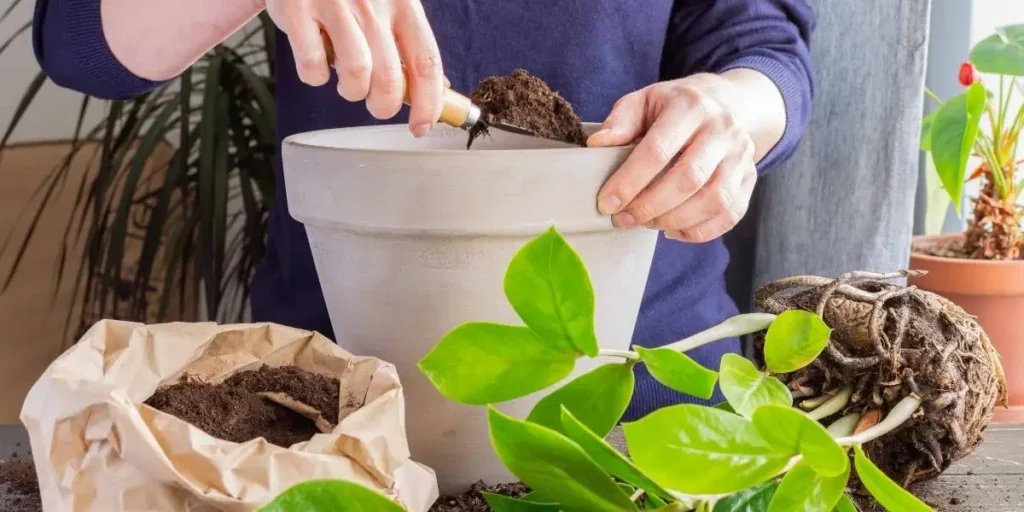
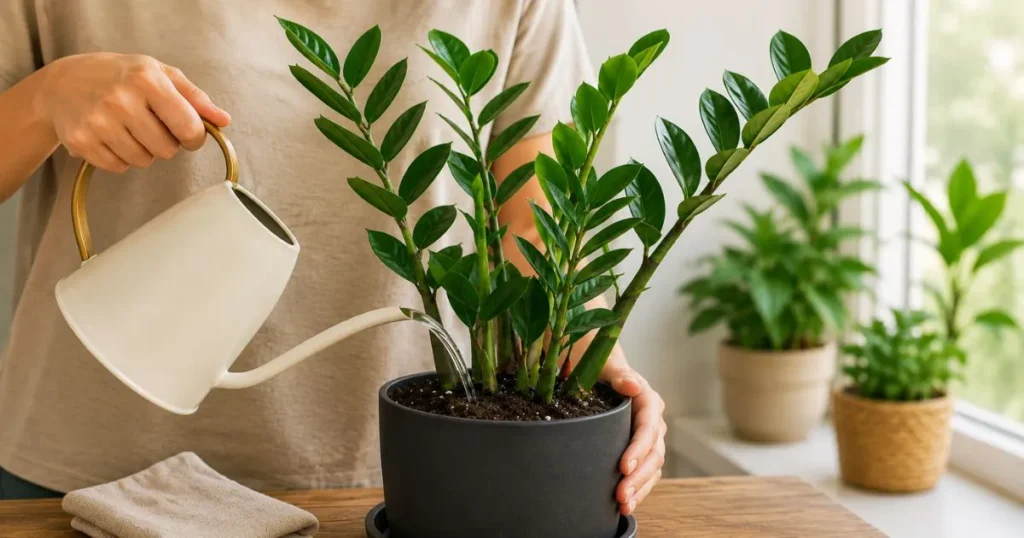
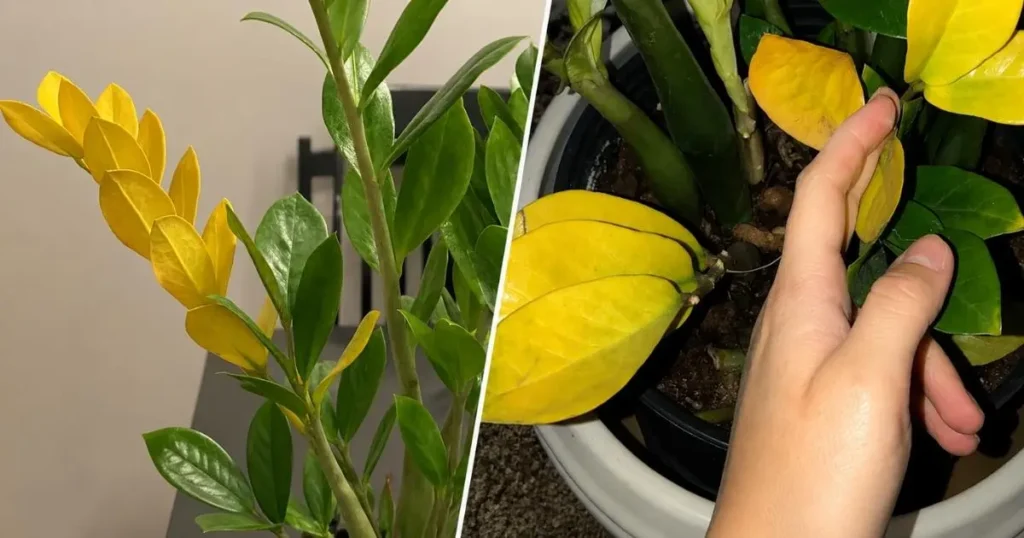
Explore the specialised ZZ plant guides below for deeper answers to individual growing questions and plant problems. The collection expands as new ZZ plant topics are published.


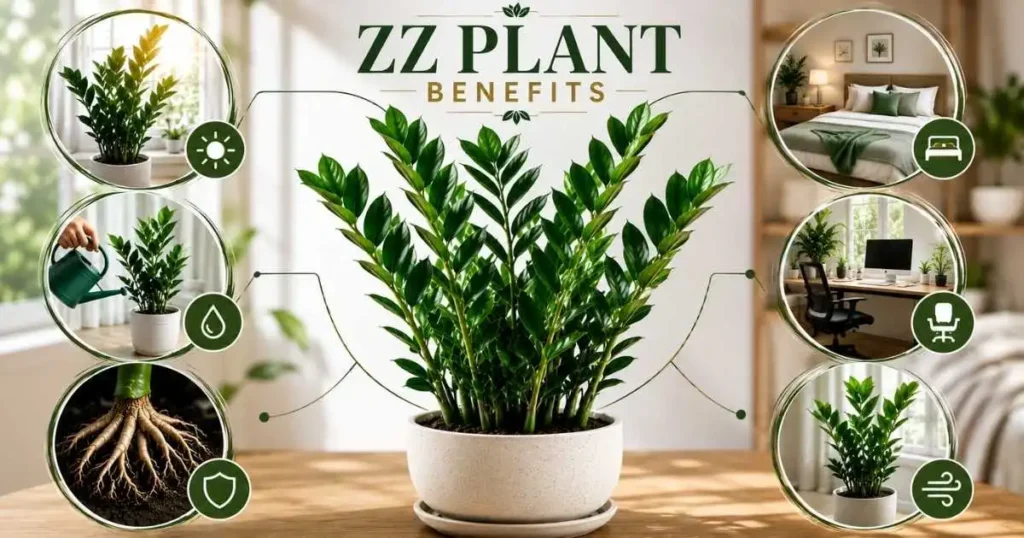
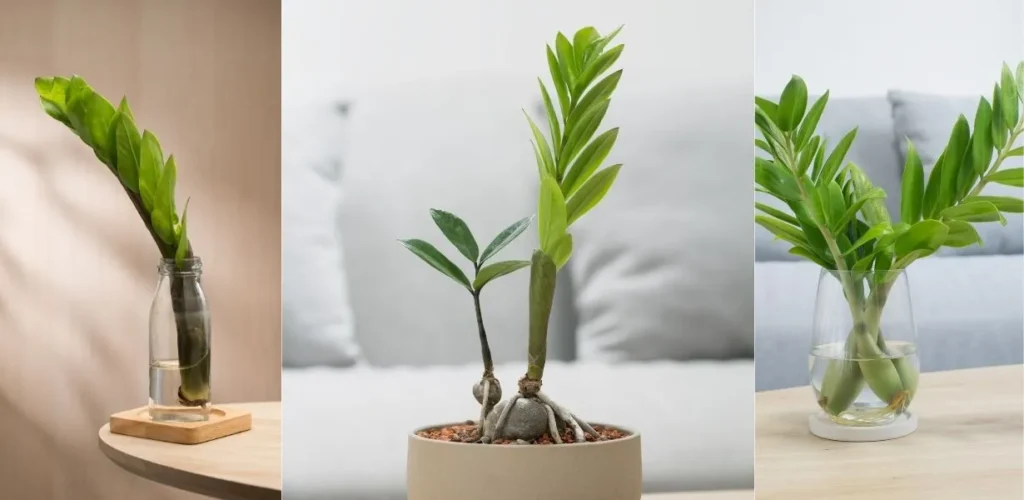

— CULTIVAR RECORD
ZZ Plant Varieties at a Glance
‘DOWON’
Raven ZZ
Fresh foliage emerges green, then matures to black or near-black across leaflets, rachis, and petiole. Naturally occurring mutation discovered in South Korea, 2006. Its green-to-dark maturation creates a pronounced contrast between emerging and established foliage.
PP19314
Zamicro
A documented compact cultivar with an upright growth habit and relatively small, glossy dark-green foliage compared with standard Z. zamiifolia. Its familiar green appearance is retained in a more compact overall form.
‘HANSOTI13’
Compact form
compact cultivar with closely spaced leaflets, smaller and thicker dark-green foliage, and an upright, slightly curved leaf structure. The closely packed foliage gives it a noticeably denser silhouette than the standard ZZ plant. It is often associated with compact ZZ forms in cultivation
US20170311530
Dark Zamicro
A mutation of Zamicro retaining its compact habit, with glossy foliage described in its patent as close to pure black. This combination separates it visually from both green Zamicro and larger dark-leaved ZZ forms.
PP32253
Chameleon
Foliage progresses from solid yellow to yellow-with-green-veins to green, a single plant can show all three at once. Because leaves can be at different stages simultaneously, one plant may carry yellow, variegated, and mature green foliage at the same time.
‘LUCKYWHIT’
Variegated ZZ
Rather than one universally defined cultivar, “variegated ZZ” can be used broadly for Z. zamiifolia forms showing cream, yellow, or lighter patterning against green foliage. Where the exact cultivar identity is unknown, describing the plant by its visible variegation is more accurate than assigning an unverifiable cultivar name.
A note on “Black ZZ”: retail names can blur several dark-leaved forms. ‘Dowon’ (Raven) and ‘Dark Zamicro’ are distinct named cultivars, while the ‘Dark Zamicro’ patent also compares it with an unpatented selection named ‘Black Zamio’. For identification, a documented cultivar name and its growth characteristics are therefore more reliable than the generic retail label “Black ZZ.”
— Decision support
Is the ZZ Plant Right for Your Space?
POTENTIAL FIT IF
- You want structured foliage rather than frequent flowers, blooming is rare and easy to miss indoors.
- You have an upright spot in mind rather than a shelf for trailing growth
- Slow, gradual change fits your expectations for indoor greenery
Worth considering if
- You want a plant that flowers on a predictable schedule
- You prefer cascading or vining foliage over stiff, upright stems
- You want visibly fast growth week to week
ZZ plant tissues contain insoluble calcium oxalate crystals that can irritate mouth tissue if chewed, so accessible placement deserves extra consideration around pets and young children.
ZZ Plant vs. Other Low-Light Indoor Plants
| Plant | Growth form | Visual character | Explore if you prefer |
|---|---|---|---|
ZZ plant baseline | Upright stems | Glossy compound foliage | A sculptural, self-contained shape |
Snake plant | Upright | Stiff, sword-like leaves | An architectural, blade-like form |
Pothos | Trailing / climbing | Vining stems | Cascading growth over shelves |
Spider plant | Arching | Strap-like foliage, plantlets | Foliage that visibly multiplies |
Cast iron plant | Clumping | Broad individual leaves | Dense, low-drama foliage |
Peace lily | Clumping | Broad foliage, white spathes | Conspicuous indoor flowers |