Last updated on November 13, 2026
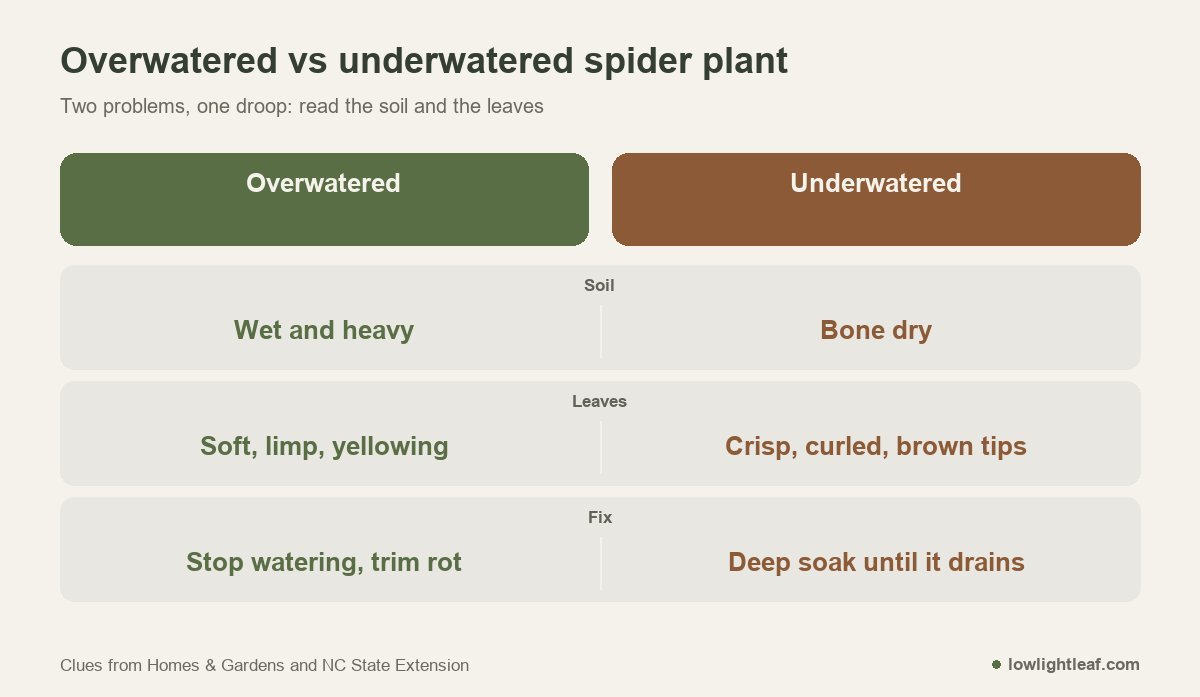
The answer to why is my spider plant drooping is nearly always water, and it looks the same whether the soil is too wet or too dry. Start with the soil. Bone-dry and feather-light means underwatered; soggy and heavy means overwatered. That single check settles most cases before you touch anything else.
In my north-facing apartment, when a spider plant has flopped, the soil has told me which mistake I made before the leaves did. Work the causes in order, water first, then light, then the pot, and you will find yours in a couple of minutes.
Check the soil: overwatered or underwatered
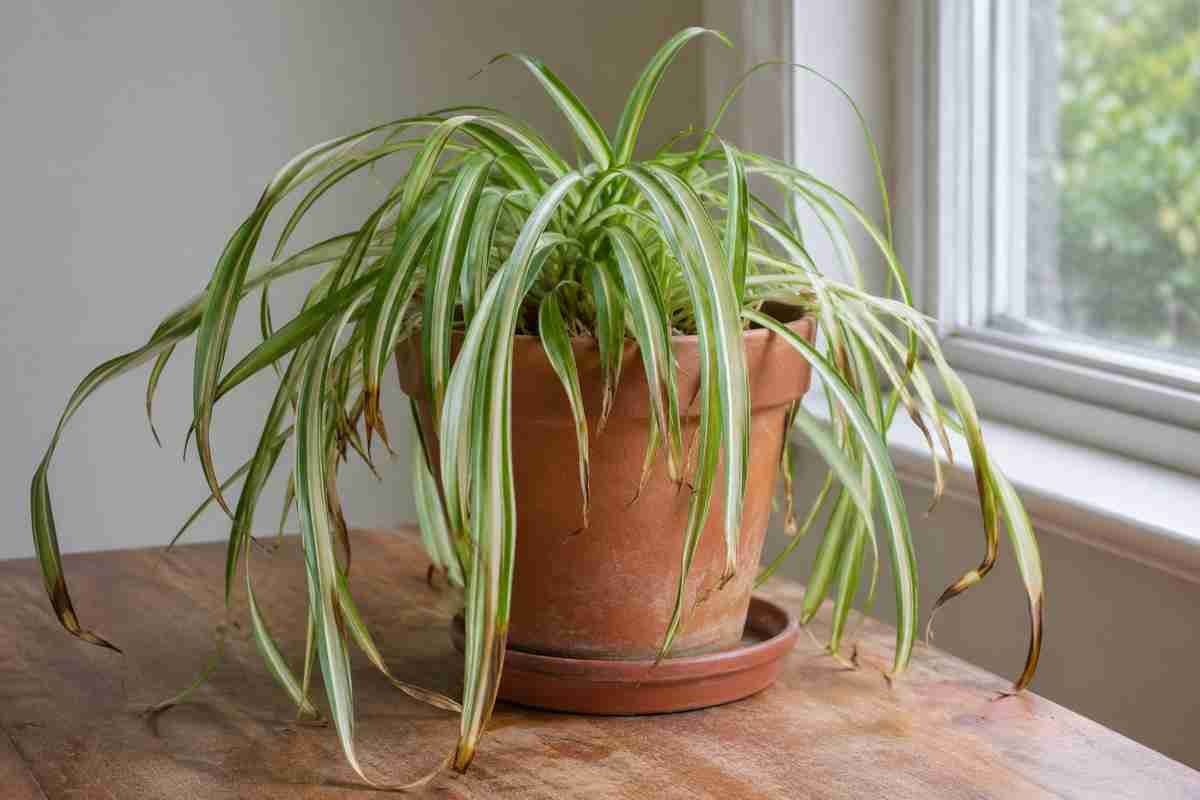
Overwatering and underwatering make a spider plant droop in almost the same way, so the droop alone will not tell you which one you did. The soil and the feel of the leaves do.
Spider plants hold water in thick, fleshy roots, which makes them tolerant of drought and quick to suffer in soggy soil, according to NC State Extension. Overwatering is the more common cause of drooping, and it shows as soft, limp, yellowing leaves, wilting even while the soil stays wet, and eventually mushy, rotten roots. The fix is to stop watering, lift the plant out, trim the rotten roots, and repot in fresh, well-draining mix.
Underwatering shows up the other way: bone-dry soil, a pot that feels light when you lift it, and leaves that turn thin, crisp, or curled with brown tips. The fix is a deep soak until water runs out of the drainage holes. If you want the full schedule, the spider plant watering guide has it.
“Any idea what’s wrong with my spider plant? The leaves are falling, which I understand is an issue of overwatering. However, the tips of the leaves are brown and crispy, which I understand means it’s under-watered. Which is it? Thanks for any help!”
– r/houseplants, September 2026 (34 upvotes)
That question is the whole problem in one post. The leaves fall with overwatering and the tips go brown with underwatering, and a stressed plant often shows both at once. What settles it is the soil and the roots, not the leaves. Homes & Gardens puts it the same way: read the soil moisture first, because the two problems are treated in opposite directions.
Then check the light and temperature
If the soil is fine, the light is the next thing to look at. Too much direct sun scorches and weakens the leaves until they sag, while too little light produces weak, leggy growth that flops over. Spider plants want bright, indirect light, and the spider plant light requirements page covers the exact spots. If you want a number on your room, the DLI calculator turns the light into a reading.
Temperature is a smaller player. Spider plants handle a normal room but not sudden change: a cold draft from a winter window, an air vent, or a spot right beside a radiator can all make a healthy plant droop overnight. Move it somewhere steady and out of the airflow.
Then the pot: root-bound or freshly repotted
A spider plant whose roots have filled the pot stops absorbing water well, so it droops the same way a thirsty plant does. Slide it out and look: if the roots are a tight, circling mass, it is time to move up a pot size, following the spider plant repotting steps.
The opposite case is a plant you repotted a day or two ago. Transplant shock makes a spider plant go limp right after a move, even if it was healthy before. One grower on the National Gardening Association forum described exactly this: a plant that had been pushing out babies went droopy two days after repotting, and it recovered on its own once it settled. In that situation, do not reach for more water; the roots are already stressed.
How fast it should bounce back
An underwatered spider plant perks up within a day of a good soak. Transplant shock clears in a few days to a couple of weeks. Overwatering is the slow one: after the rotten roots are cut away, recovery can take weeks.
The sign to watch is new leaves.
When the plant sends up fresh, firm growth, the cause is fixed. If it keeps drooping after you corrected the water and the light, lift it and check the roots, because rot is the one cause that hides.
Why is my spider plant drooping FAQs
Why are my spider plant leaves falling off?
Leaves falling off is the next stage past drooping, and it points to the same water problem. Overwatering rots the roots so the leaves lose their hold and drop; underwatering dries them until they snap. Check the soil to decide which way to go.
What does an overwatered spider plant look like?
Soft, limp, yellowing leaves that wilt while the soil is still wet, often with a sour smell and brown-black mushy roots. A plant that looks thirsty while its pot feels heavy is overwatered, not dry.
How do I revive a dried spider plant?
Soak it: set the pot in a basin of water for 15 to 20 minutes so the dry soil rehydrates, then let it drain. Trim the fully dead leaves, move it to bright indirect light, and water normally from then on, waiting until the top inch of soil dries.

Ellie Marsh
Houseplant grower who spent years in a north-facing apartment. Writes practical care guides for low light homes, checked against extension and botanical garden sources.