Last updated on October 11, 2026
Most low light succulents are really bright-shade succulents. Of the plants usually sold that way, only snake plant and the succulent-like ZZ plant appear on University of Maryland Extension’s low-light list of 25 to 100 foot-candles. Haworthia, gasteria and holiday cacti want bright, indirect light, and jade and aloe want more than that.I spent years in a north-facing apartment, and that gap between “tolerates shade” and “lives in a dim corner” is where most succulents go wrong. If your room is genuinely dark, start with a snake plant or a ZZ. If you have your heart set on a rosette, plan on a bright window or a small grow light.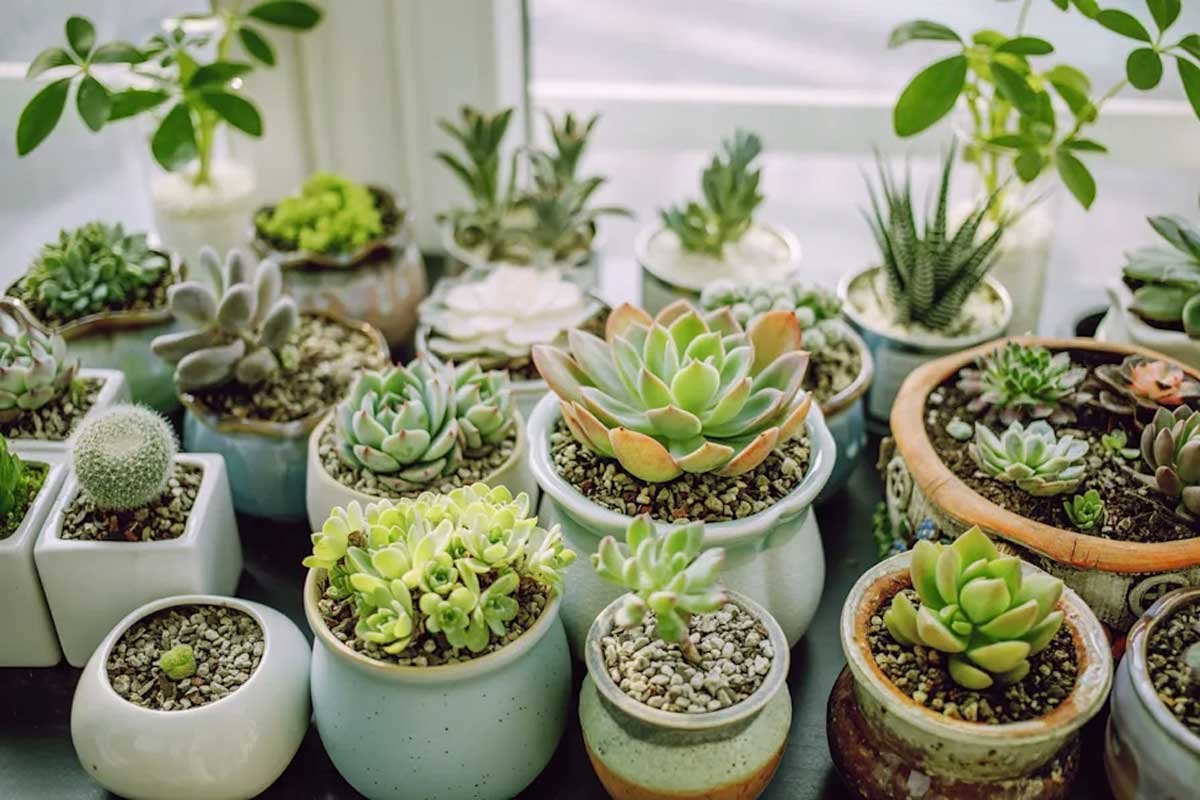
Low light succulents, sorted by how much light they need
Each row gives the light the plant needs in the source’s own words, a plain call on whether it suits a dim room, and its ASPCA toxicity rating for cats and dogs.| Plant | What the source says about light | OK in a dim room? | Cats and dogs (ASPCA) |
|---|---|---|---|
| Snake plant (Dracaena trifasciata) | On UMD Extension’s low-light list (25-100 foot-candles) | Yes, growth just slows | Toxic |
| ZZ plant (Zamioculcas zamiifolia), succulent-like | UMD low-light list; Missouri Botanical Garden rates it part shade to full shade | Yes | Not rated on the pages cited here |
| Thanksgiving cactus (Schlumbergera truncata) | Missouri Botanical Garden: grows best in light shade; bright summer sun turns it pale | Near a window, not deep in a room | Christmas cactus (S. bridgesii) is non-toxic |
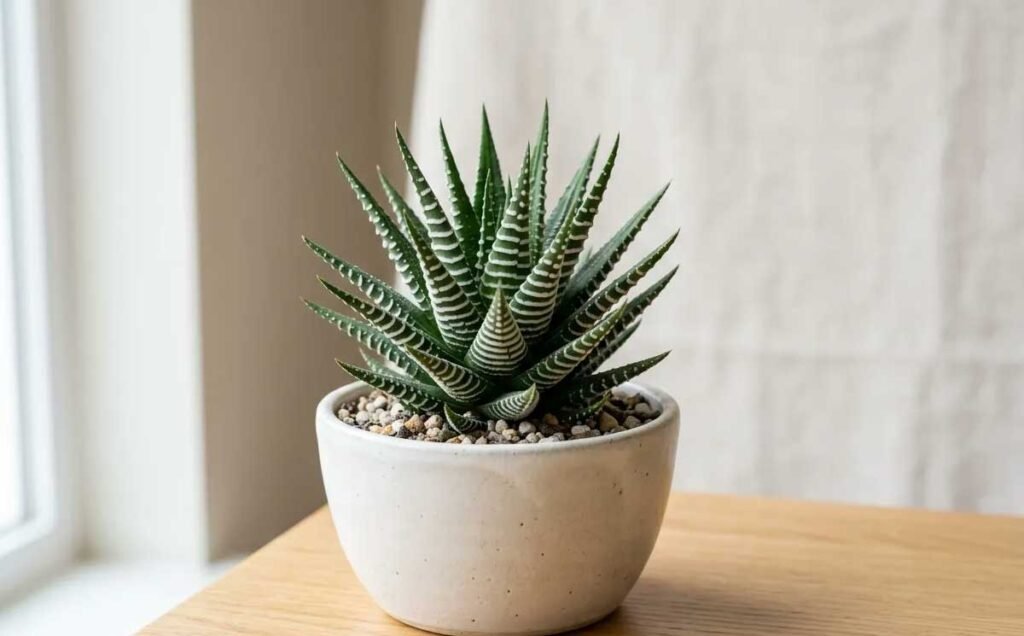
| Haworthia | RHS: position in bright, indirect light | Only beside a bright window or under a grow light | Non-toxic |
| Gasteria (G. armstrongii) | RHS: grow in filtered light | Only beside a bright window or under a grow light | Not rated on the pages cited here |
| Jade plant (Crassula ovata) | Missouri Botanical Garden: needs bright light, appreciates some afternoon shade | No, not without a grow light | Toxic |
| Aloe vera | Missouri Botanical Garden: best in full sun, adapts to some part shade, needs bright light to flower | No, not without a grow light | Toxic |
What low light means for a succulent
Low light, in University of Maryland Extension’s terms, is 25 to 100 foot-candles: a north-facing window or a room lit mostly by lamps. An east or west window falls in the next band up, 100 to 500 foot-candles, and that is the band haworthia, gasteria and holiday cacti need. Haworthia has its own page, haworthia care, with light, watering and what its leaves tell you.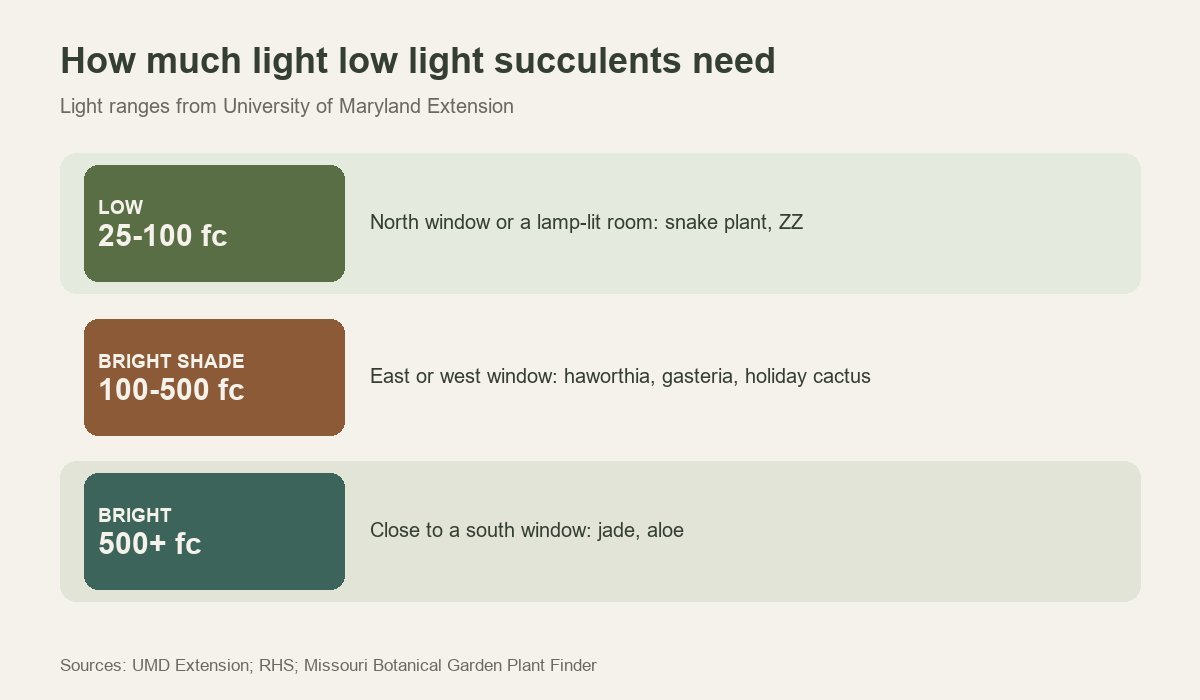
Signs your succulent wants more light
A succulent short on light usually tells you by stretching. New growth gets longer and paler, the gaps between leaves widen, and the whole plant leans toward the window. A rosette that was tight when you bought it slowly opens into something that looks like it is reaching for the glass, because it is.Stretched growth generally stays stretched once the plant gets more light; it is the new growth that comes in compact. So the earlier you move it, the less of the plant ends up lopsided.Holiday cacti can show the opposite problem. Missouri Botanical Garden notes that bright summer sun can make a Thanksgiving cactus look pale and yellow, so a south window in July is too much for it.When a grow light beats a better plant
A grow light is the better answer when the plant you love needs more light than the room has. That covers haworthia or gasteria anywhere away from a bright window, and jade or aloe almost anywhere indoors that isn’t right against south-facing glass.I use grow lights for the darkest corners of my own home, and the logic is simple: moving a jade into a dim room and hoping is how you end up with the stretched plant described above. A small LED grow light on a timer gives the plant a consistent day, and the light-hungry succulents finally have a reason to stay compact. Follow the light maker’s guidance on distance, since output varies a lot between models. If you would sooner not run a light at all, swap the plant, not the window. The snake plant and ZZ rows above are the honest options for a room that stays dim, and the wider list of low light indoor plants adds non-succulent choices for the same conditions.Watering succulents in a dim room
Water succulents in low light less often than you would in a bright window. The RHS advises watering haworthia sparingly, only when the compost is approaching dryness, and Missouri Botanical Garden says to let the soil dry between waterings for both jade and ZZ. A plant growing slowly in dim light uses water slowly, so a schedule built for a sunny sill will keep its roots wet for too long.Winter stretches the gap further. The RHS gives haworthia a cool winter rest with only occasional, light watering, and it says gasteria should be kept dry over winter. For the basics of picking and caring for plants in shade, start with low light plants for beginners.Low light succulents FAQ
Do indoor cacti need direct sunlight?
Indoor cacti split into two groups. Desert cacti generally need the brightest window you have, while jungle cacti such as the Thanksgiving cactus grow best in light shade, Missouri Botanical Garden notes, and can bleach in strong summer sun.Are low light succulents safe for cats?
Some low light succulents are safe for cats and some are not. The ASPCA rates haworthia and Christmas cactus as non-toxic to cats and dogs, and snake plant, jade plant and aloe as toxic.Snake plant is the one to think about, since it is the best pick for a dim room.The ASPCA names nausea, vomiting and diarrhea as its signs in pets. My cat, Miso, is the reason I look up every plant on the ASPCA list before it comes home; if a plant-chewing pet shares your space, haworthia or a holiday cactus near a bright window is the safer trade.
Ellie Marsh
Houseplant grower who spent years in a north-facing apartment. Writes practical care guides for low light homes, checked against extension and botanical garden sources.