Last updated on May 18, 2026
Reviewed by: Ellie Marsh
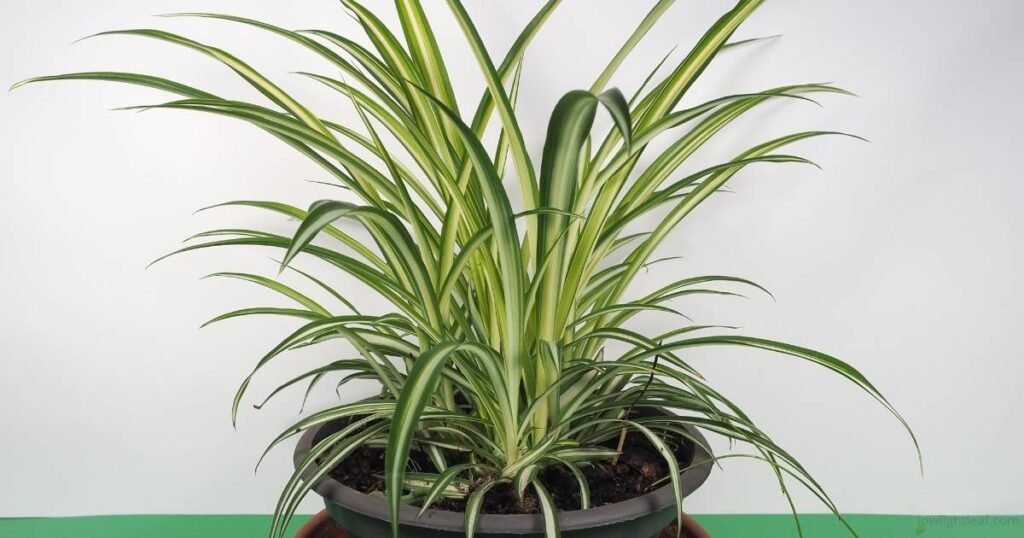
Cast Iron Plants (Aspidistra elatior) are hardy, low-maintenance plants that thrive in low light. The Cast Iron plant is eye-catching with tall, upright stems reaching up to 24 inches. Their long, glossy, dark green lance-shaped leaves look fresh, healthy, and naturally beautiful. The rich green color makes the plant stand out and adds a calm, stylish feel to any place.
With the basics in mind, let’s now shift focus to a closer look at this elegant plant’s botanical features and native habitat.
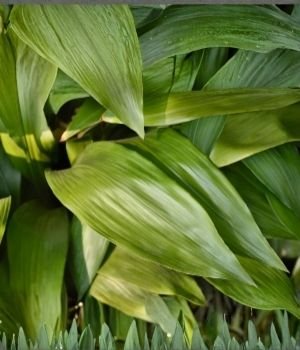
Scientific Name: Aspidistra elatior
Botanical Family: Asparagaceae Plant
Type: Perennial, Herbaceous
Mature Size: 2ft 4 inches
Sunlight Required: Partial shade
Soil Category: Well-drained
Soil pH: Neutral acidic
Bloom Time: Spring, summer
Bloom Colour: Purple, white
Resilience: 8–10 (USDA)
Native Habitat: Asia
How to Plant Cast Iron Plant
Planting a Cast Iron Plant is straightforward. Follow these steps to successfully plant your Cast Iron Plant:
Cast Iron Planter and Soil
Preparing the right planter is essential for long-term health, especially since the Cast Iron plant dislikes sitting in water. Choose a pot with drainage holes, preferably 8–10 inches in diameter. Fill with a well-draining mix, combine perlite, coco peat, and neutral to slightly acidic soil to ensure healthy growth.
Place the Rootball
After preparing the pot, gently place the plant’s rootball into the centre of the planter. Then start adding soil around it, pressing lightly to eliminate any air pockets.
Water lightly
Once the soil is settled, water the top 2 inches just enough to make them slightly moist. Avoid overwatering at this stage.
Where to Plant Cast Iron Plant?
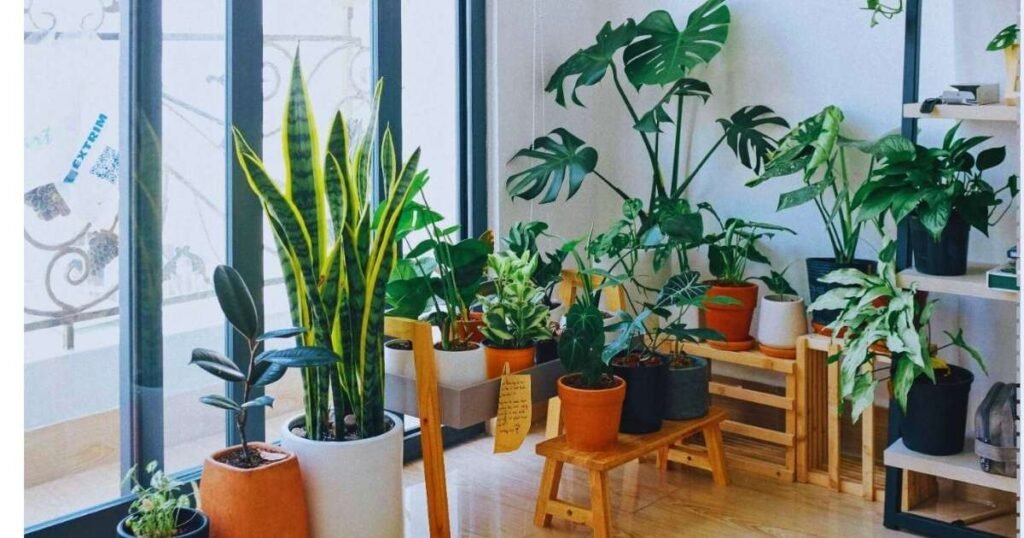
After planting, consider where you’ll place this plant for the best results. Move your newly planted plant to a bright, indirect light spot. You can confidently place it in:
- Hallway
- Livingroom
- offices
- Any corner of your house
For more placement ideas and low-light care tips, check out my full guide: key factors for growing indoor plants
When to plant Cast Iron Plant?
Once you know where to plant Cast Iron, the next question is: When should you plant it? The best season to plant this low-light plant is spring or summer, as these warmer months support healthy root growth and overall development for most houseplants.
Planting Cast Iron Plants Outside
The Cast Iron Plant is also used as a hardy outdoor ground cover. Space each plant about 20 inches apart for proper spreading. In the first two weeks, water regularly to keep the soil evenly moist; this helps roots establish. Afterwards, let the soil dry between waterings to maintain healthy roots and enable the plant to spread well.
Cast Iron Plant Care
The Cast-Iron Plant is a hardy, low-maintenance houseplant that thrives with minimal care. To begin with, allow the soil to dry out between waterings to prevent root issues. Additionally, place it in bright, indirect light and use any well-draining soil mix. Finally, keep it in temperatures between 60°F and 75°F to support steady, healthy growth indoors or outdoors.
Light Requirement for Cast Iron Plant
The cast-iron plant is well-known for its impressive tolerance of low light and strong survival abilities. In fact, it can adapt to almost every light condition except direct sunlight. However, direct light can scorch its foliage, causing the leaves to turn yellow or develop burnt tips. Therefore, it’s best to keep this plant in bright, indirect light to sustain healthy growth and vibrant, deep-green leaves.
👉 If you love hardy low-light plants, you’ll also enjoy my list of 37 low-light indoor plants.
Soil Need
The cast-iron plant prefers rich, nutrient-filled soil, yet it can still survive in almost any soil type as long as it is well-draining. Good drainage is essential to prevent water from sitting around the roots and causing rot.
Watering Cast Iron Plant
The soil of this plant prefers to stay slightly moist, but you should avoid overwatering. Even though this plant is famous for its toughness, its roots can still rot if they remain too wet. Therefore, always allow the soil to dry out completely before watering again to prevent any risk of root rot. The rule of thumb is better for checking the soil moisture.
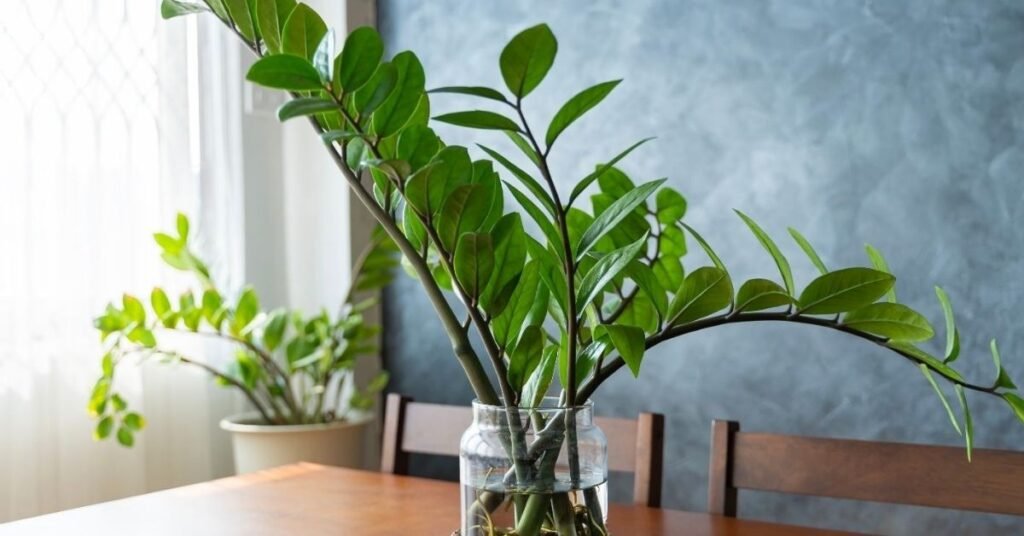
For comparison, check how another tough plant grows: ZZ Plant Care Guide
Temperature
The ideal temperature range for the cast-iron plant is 59°F to 77°F. However, if you are keeping the plant outdoors in a planter and the temperature drops below 59°F, it’s best to bring it indoors. This way, the plant stays within its preferred temperature range, ensuring healthy, steady growth.
Fertilizer
Always fertilize houseplants during their active growing season, which runs from spring to summer. During these months, plants use nutrients more efficiently and grow the most.
Humidity
The normal household humidity level is ideal for this plant. However, if you keep the plant outdoors, make sure to monitor the humidity. If your home environment is naturally dry, you can use a humidifier to monitor the moisture level your cast-iron plant needs for healthy growth.
Pruning the Cast-Iron Plant
Although the cast-iron plant is a slow grower, it still benefits from occasional pruning to maintain its health. If you notice any brown tips or damaged foliage, it’s best to remove the entire leaf to prevent the spread of disease. When pruning, always use clean, sharp, and unused scissors to avoid introducing infections to the plant.
The cast-iron plant is perfect if:
- Low-maintenance, beginner-friendly houseplants appeal to you.
- A slow-growing plant that rarely needs repotting fits your routine.
- A pet-safe, completely non-toxic Houseplant is important for your home.
Benefits of Cast Iron Plant
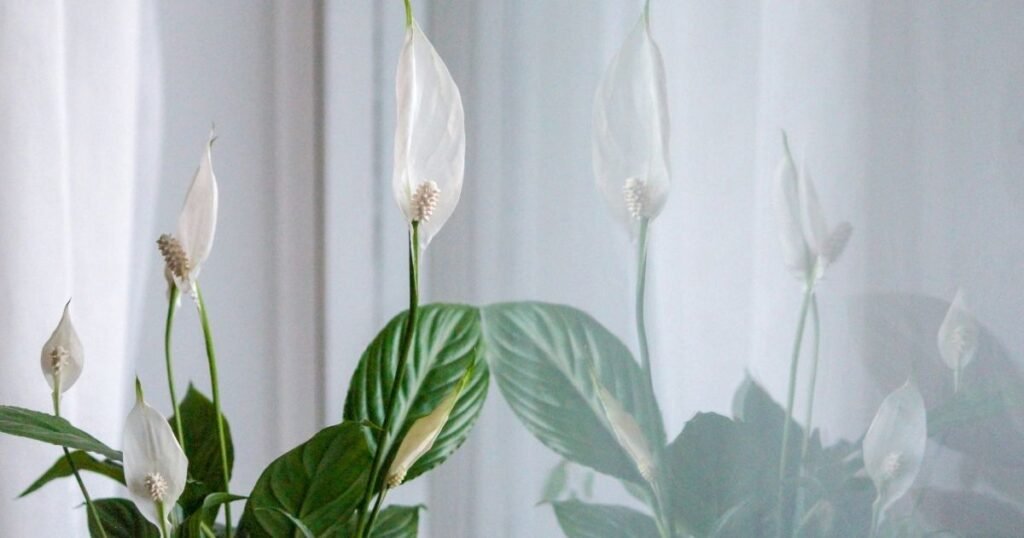
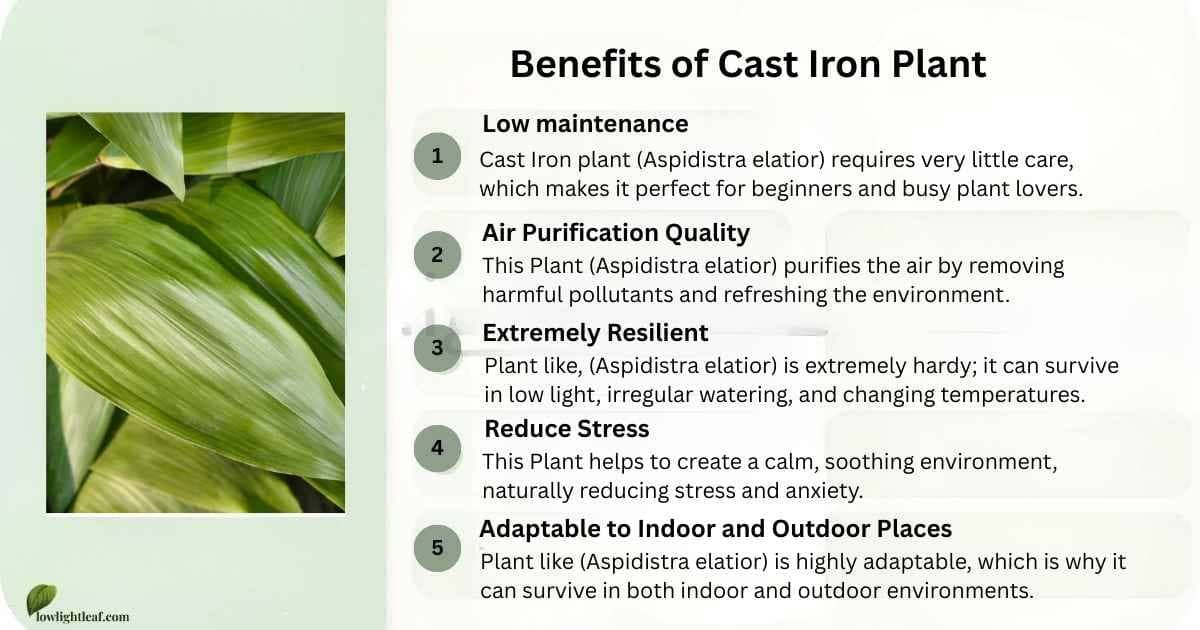
The Plant (Aspidistra elatior) is an extremely hardy, low-maintenance plant that thrives in low light, irregular watering, and fluctuating temperatures. It also helps purify indoor air and lasts for many years with minimal care. Another excellent air-purifying option is the Peace Lily Care.
Cast-Iron Plant Varieties
When we talk about cast-iron plant varieties, we mean specific types of cast-iron plants that have unique traits. This refers to the different types or cultivars of Aspidistra elatior that have been either naturally developed or selectively cultivated. Some popular cast-iron plant varieties include;
Aspidistra elatior ‘Milky Way’ variety
The Cast-Iron Plant variety ‘Milky Way’ gets its name from the tiny white spots spread across its deep green leaves, resembling stars in the night sky.
Aspidistra elatior ‘Asahi’ variety
The Cast-Iron Plant variety ‘Asahi’ is named for its unique white-frosted leaves and softly airbrushed tips, giving each leaf a sunrise-like glow.
Aspidistra elatior ‘Variegata’ variety
The Cast-Iron Plant variety ‘Variegata’ gets its name from its leaves, which are decorated with elegant white stripes that create a striking contrast against the green foliage.
Aspidistra elatior ‘China Star’ variety
The Cast Iron plant variety ‘China Star’ gets its name from the large (8 to 10 cm long and 2.5 cm wide) leaves. Moreover, its long, narrow shape makes this variety stand out.
Aspidistra elatior ‘Gold feather’ variety
The Cast Iron plant variety ‘Gold feather’ gets its name from the yellow stripes across the length of the Deep green leaves. As a result, the foliage looks like a delicate golden feather.
Propagation Cast Iron Plant
Propagation means multiplying a plant. For Cast-Iron Plant, the only reliable way is through root division (separating a mature plant into parts, each with roots and leaves). Below is the proper step-by-step process:
1_ Remove the Plant from Its Pot
To begin, carefully remove the Cast-Iron plant from its pot by loosening the sides and sliding it out gently. Avoid pulling it forcefully to keep the roots intact. This step allows you to clearly examine the entire root system.
2_ Identify Healthy Root Clumps
Next, look for naturally formed clumps within the root ball. Choose sections that have at least 3 to 4 leaves, as this leaf count indicates a mature and viable root division. Lightly brush off extra soil only if needed to improve visibility.
3_ Separate the Root Divisions
After that, separate the healthy clumps using your hands. If the roots are tightly packed, you may use a clean, sharp knife to cut them, ensuring each division contains adequate roots and leaves for successful growth.
4_ Prepare New Pots with Fresh Soil
Then, prepare new containers slightly larger than each division. Fill them with a fresh, well-draining potting mix, place each root section in the centre, and add more soil around it while gently pressing to remove air pockets.
5_ Water and Support Root Establishment
Finally, water the soil thoroughly. For the first two weeks, keep the soil consistently moist (but not waterlogged) to help the roots establish. After this period, allow the soil to dry out completely between waterings, as Cast-Iron Plants prefer slightly dry conditions once settled.
Repotting Cast-Iron Plant
Since the Cast Iron plant is a slow grower, you only need to repot it once every few years. However, it’s best to wait until spring or summer to repot, because Aspidistra elatior grows more actively during these seasons. Additionally, repot the plant only when it becomes too large for its pot and the roots start circling inside. Method of Repotting is given below:
➦To repot the plant, first take it and gently remove its roots from the old pot.
➦After that, brush the roots lightly so the old soil can fall off.
➦Next, choose a new pot with drainage holes for better growth, and make it 2 to 4 inches larger than the old one.
➦Then place the plant back in its original spot, where all its growing needs are met.
➦Finally, water the soil thoroughly and make sure excess water drains from the holes in the Cast Iron planter.
Problems of Cast Iron Plants:
This Plant is hard to kill, but a few mistakes in care can cause problems.
Why are Cast Iron Plants Turning Yellow Leaves?
When the whole leaf turns yellow, it’s time to worry; otherwise, leaves with yellow strips are the Gold feather” variety.
Reason: The yellow leaves can be caused by
- Over watering
- Poor drainage
- Too much low light
Solution: To control the yellow leaf problem, always check soil moisture with your thumb and let the soil dry out completely before watering. Moreover, move the plant to a brighter location to support healthy growth.
If you’re struggling with similar problems on other houseplants, my Pothos Plant Care covers common leaf issues too.
Brown Leaf Tips Problem
If you notice the tips of your Cast-Iron Plant’s leaves turning brown, start by taking the following measures, as these issues are often linked to specific care conditions.
Reason: Brown leaf tips usually occur due to:
- Underwatering
- Low humidity
Solution: To reduce brown tips, mist the plant occasionally to increase humidity and maintain a consistent watering schedule so the soil stays evenly moist.
Cast Iron Drooping Leaves
If you notice drooping leaves without any climate change, then take the following actions.
Reason: Drooping leaves can be caused by
- Sudden Temperature Change
- Root rot due to over-watering According to the University of Florida IFAS Extension, proper drainage reduces root rot risks.
Solution: First, remove the plant from the pot and check the roots. If you notice any pale, mushy, or rotten roots, carefully cut them off. Next, adjust and control the watering schedule to prevent further root rot. Check the temperature around the plant and move it to a location that suits its preferred growing conditions.
Slow or No Growth
The Aspidistra elatior plant is usually the slow grower, but if you notice no growth, then it’s time to worry a little bit.
Reason: No growth to this hardy plant can be caused by
- Poor soil nutrients
- Too much low light
Solution: To prevent this, fertilize the plant every 2 months to improve nutrient levels. Add fresh soil to the planter every year, and check the location and adjust it according to bright, indirect light.
Brown Spots on Leaves
Brown spots on leaves are a serious problem.
Reason: Brown spots can be seen on the leaves by
- Fungal infection due to too much moist soil
- Air-circulating problem
Solution: To control the infection, first remove all affected leaves immediately to prevent spread; then reduce watering frequency to avoid creating a damp environment that favours fungal growth; and finally, apply a suitable fungicide spray following the instructions to ensure the plant recovers fully and stays healthy.
Common Pest Problems With Cast Iron Plant
Aspidistra elatior Plant is resilient to pests when grown in its native habitat. However, many indoor plants, including the Cast-Iron plant, can still be attacked by a few common pests:
Spider Mites: Spider mites are tiny creatures that are almost impossible to see with the naked eye and are usually visible only under a microscope. They create fine, delicate webs on the leaves.
Mealy Bugs: Mealybugs are soft, cottony pests that adhere to leaves and stems. They suck the plant’s sap, therefore causing brown spots and weakening the plant over time.
Solution:
To manage these pests, start by washing the plant gently to remove visible insects. After that, apply a light coating of neem oil to the leaves to prevent further spread. Additionally, use a liquid-based fertilizer to strengthen the plant and help it recover. Most importantly, make time for regular inspection of all houseplants to catch pests and diseases early.
Did you know?
Cast iron plant is
- Perfect for beginners
- Disease free
- Evergreen foliage
- Extremely tough
Tips to Buy a Healthy Cast Iron Plant
When buying a cast iron plant, take a few steps to help you select the healthiest, longest-lasting plant.
➦ Observe the Leaves: The leaves of this plant should be dark green and glossy. Moreover, avoid the leaves with yellow or brown tips and brown spots, as these are signs of stress and disease.
➦ Check the Base: Secondly, check the base of the plant; its stems should feel firm, not mushy or soft.
➦ Smell the Soil: Thirdly, check the soil’s smell; it should be slightly moist but never soggy or foul-smelling. If the soil smells sour or feels too wet, it may indicate root rot.
➦ Drainage Holes on the Planter: Lastly, check the planter to ensure it drains well, because proper drainage is essential for a healthy Cast-Iron planter.
Cast Iron Plant FAQs
Q. How much sun does a cast iron plant need?
A. The ideal light for the Cast Iron plants is bright but indirect, which means the Aspidistra elatior needs shaded sun.
Q. How often should I water a cast iron plant?
A. Cast-Iron plants should be watered only when the soil becomes completely dry. This usually means watering about once a week, depending on your home’s temperature and humidity.
Q. Do cast iron plants like to be misted?
A. No, Cast Iron plants are adaptable to indoor dry air conditions, that’s why they don’t require any misting. However, you should mist them to clean the leaves, but regular misting is not required.
Q. Are cast iron plants toxic to cats?
A. No, Cast Iron plant is non-toxic to cats, dogs, and other pets, which means it is a completely safe houseplant.
Q. Do cast iron plants bloom?
A. Aspidistra elatior plants can bloom, but it is uncommon in an indoor environment. However, they bloom when planted outside, but the flowers are rare and small. They usually appear at the base of the plant, near the soil, and are purple-brown.
Ellie Marsh
Houseplant grower who spent years in a north-facing apartment. Writes practical care guides for low light homes, checked against extension and botanical garden sources.