Reviewed by: Muddsir Munir
Peace lilies are often described as low-maintenance, easy-to-care-for houseplants, making them a great choice for beginners. However, despite their hardy reputation, peace lilies are quite sensitive, and yellowing leaves are one of the most common problems plant owners face. In fact, minor care mistakes, such as watering issues, light conditions, or sudden environmental changes, can quickly cause leaves to turn yellow, leaving new plant parents confused and worried.Therefore, understanding the causes of this issue is essential to keeping your plant healthy and attractive. In this guide, you’ll learn the most common causes of peace lily yellow leaves along with practical, proven fixes to help your plant recover and thrive again.
Is It Normal for Peace Lily Leaves to Turn Yellow?
Yes, yellow leaves on peace lilies can be completely normal in many cases. Peace lilies go through a natural leaf-aging cycle, during which older leaves gradually lose their deep green color, turn pale yellow, and eventually dry out or droop. This happens because the plant redirects energy and nutrients from older leaves to support new growth and flowering.
As a result, occasional yellow leaves at the base of the plant are a natural sign of healthy growth, not a cause for concern. Simply trimming these aging leaves helps keep the plant looking fresh and encourages stronger, vibrant foliage.
Normal Yellowing of Peace Lily (Natural Leaf Aging)
Normal yellowing usually affects older, lower leaves and happens gradually over time. These leaves turn yellow, weaken, and eventually die off as part of the plant’s natural growth cycle. This type of yellowing is expected and does not indicate a problem.
When Peace Lily Yellow Leaves Are a Serious Problem
Yellowing becomes a concern when it appears suddenly, affects multiple leaves at once, or spreads to younger, new growth, often due to mistakes in proper peace lily care at home. In these cases, the issue is usually linked to care problems such as improper watering, poor lighting, nutrient imbalance, or environmental stress. Spotting these symptoms early reduces the risk of serious damage and improves the plant’s chances of recovery.
How to Identify the Real Cause of Yellow Leaves
You can identify the real cause of yellow leaves on a peace lily by closely observing three key factors: leaf color, soil moisture, and leaf position. These visual clues often point directly to the underlying care issue.
Check the Leaf color
➦Pale, soft yellow leaves indicate overwatering and poor root oxygenation.
➦Yellow leaves with brown or crispy edges indicate underwatering or low humidity.
➦Peace Lily leaves turning yellow with green veins are a common sign of nutrient deficiency, especially iron or magnesium.
➦Yellow leaves with dark brown or black spots may indicate disease, fungal infecction or root damage.
Check the Soil moisture
➦Consistently wet or foul-smelling soil is a strong sign of overwatering and possible root rot.
➦Dry, hardened soil that shrinks and separates from the sides of the pot is a clear sign the plant has been underwatered for too long.
Check Leaf position (bottom vs new)
➦Yellowing of older, lower leaves is often part of the plant’s natural aging process or an adjustment to light changes.
➦New Peace Lily yellowing leaves usually signal a more serious issue related to watering, nutrients, or root health
➦Occasional yellowing of a single older leaf is normal and not a cause for concern.
Most Common Reasons Peace Lily Leaves Turn Yellow
In most cases, yellow leaves on peace lilies are a sign of stress caused by watering mistakes, light issues, nutrient deficiencies, or environmental factors. Addressing the underlying problem early helps the plant recover faster and encourages healthy new foliage.
Watering Problems
Overwatering
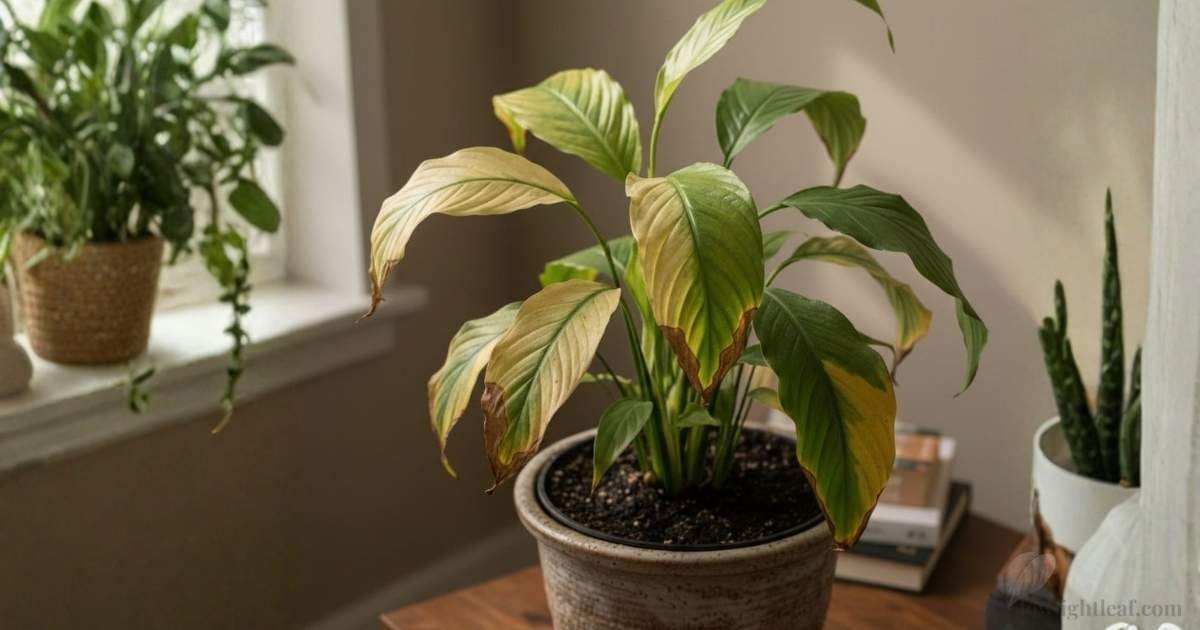
If the soil remains constantly wet, takes a long time to dry, and emits a foul odor, these are clear symptoms of root rot, a condition caused by overwatering. Overwatering usually occurs due to daily watering habits or using pots without proper drainage holes, both of which lead to soggy soil and confusion about how often indoor plants really need water. Constantly waterlogged soil reduces oxygen around the root system, weakening the roots and causing them to decay. Once the roots are damaged, the plant struggles to absorb nutrients, leading to yellow leaves and poor overall growth.
Solution: Allow the top layer of soil to dry slightly before watering again. Using a pot with proper drainage and watering according to the soil’s condition helps prevent excess moisture around the roots.
Underwatering
Peace lilies prefer consistently moist soil rather than completely dry conditions. When the soil dries out too much, the plant becomes stressed and may develop drooping leaves, brown leaf tips, and yellowing foliage. These symptoms are common signs that the peace lily is not receiving enough water.
Solution: Check the soil moisture regularly by inserting a finger into the soil. Check the soil regularly and water once the surface has dried slightly, ensuring the potting mix never becomes fully dry.
Drainage Holes or No Drainage Holes
Drainage holes or using a pot without drainage holes can cause excess water to collect in the soil, keeping the roots constantly wet. When water cannot drain properly, oxygen levels around the roots drop, weakening the root system and increasing the risk of rot, often caused by improper repotting and drainage issues. Over time, damaged roots are unable to absorb nutrients efficiently, leading to yellowing peace lily leaves.
Solution: Growing peace lilies in containers with proper drainage and using a light, free-draining soil mix helps prevent water buildup.
Light Problems
Too Much Direct Sunlight
Peace lilies grow in bright, indirect light, similar to other indoor plants that need balanced light conditions to stay healthy. Prolonged exposure to direct sunlight, especially during midday or afternoon hours, can damage peace lily leaves. This damage typically shows up as dry, brown, or crispy patches on the foliage, which are signs of light stress rather than disease.
Solution: Move the plant away from direct sunlight by placing it about 4–5 feet from a bright window or using sheer curtains to filter harsh light.
Very Low Light for Long Period
Keeping a peace lily in very low light for extended periods can gradually weaken it, especially when it is placed in spaces better suited for plants that grow well in low light environments. When light levels are too low, the plant struggles to produce enough energy, resulting in pale or yellow leaves, slower growth, and fewer flowers.
Solution: Place the peace lily in a spot with bright, indirect light to support healthy leaf color and steady growth.
H3: Nutrients and Fertilizer Issues
Nitrogen / Iron / Magnesium Deficiency
Nutrient deficiencies can cause peace lily leaves to turn yellow when the soil becomes depleted or is unable to supply essential nutrients properly, specially in plants that need balanced feeding to stay healthy indoors. Over time, the soil may stop providing enough nutrients, especially if feeding is irregular.
Nitrogen deficiency causes overall pale or yellow leaves and weak growth.
Iron deficiency results in yellow leaves with green veins, most noticeable on new growth.
Magnesium deficiency usually appears on older leaves, where the leaf tissue turns yellow while the veins remain green.
Solution: Use a balanced liquid fertilizer every 4 to 6 weeks to avoid nutrient deficiencies. (When the plant becomes alright, feed the fertilizer in the growing season)
Overfertilizing Damage
Applying too much fertilizer can harm peace lilies by causing soil salinity. These salts damage the roots and interfere with normal water absorption, leading to yellow leaves, brown or burnt leaf tips, and slowed growth.
Solution: Fertilize sparingly and avoid feeding more often than recommended. If signs of fertilizer stress appear, stop fertilizing temporarily and flush the soil with water to remove excess salts.
Salt Buildup in Soil
When plants cannot absorb all nutrients, excess salts accumulate in the soil, damaging roots and blocking proper water uptake. As a result, leaves start turning yellow, develop brown tips, and overall growth slows down. Salt accumulation in soil occurs due to frequent fertilizer use, poor drainage, underwatering, and hot, dry weather.
Solution: Repot the peace lily using a fresh, well-draining soil mix to remove accumulated salts and allow the roots to recover.
Water Quality Issue
Tap Water
Regular use of tap water can expose peace lilies to chlorine and fluoride, which may gradually affect their overall health. These chemicals may disrupt nutrient absorption, preventing the plant from taking up essential minerals from the soil. With the passage of time, this can lead to yellowing leaves, brown tips, and stunted growth, even if your care routine is otherwise correct.
Solution: Water your peace lily with filtered, distilled, or rainwater whenever possible to reduce chemical buildup and support healthier growth.
Environmental Stress Issues
Cold Drafts & Temperature Shock
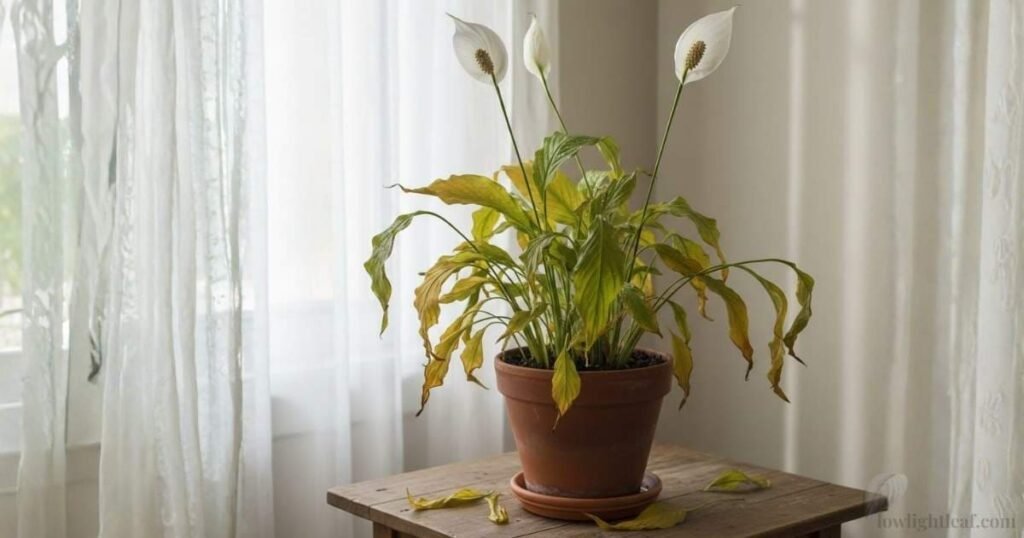
Sudden temperature shifts, often from drafts near windows, doors, air conditioners, or heaters, can stress peace lilies. Exposure to these conditions can stress the plant, often leading to pale or yellow leaves and slowed growth.
Solution: Place the plant in a consistently warm location away from drafts, and maintain moderate humidity to reduce stress.
Low Humidity
Low humidity levels can cause peace lily leaves to droop and turn yellow, especially in dry indoor environments, where plants that tolerate dry air better tend to perform more reliably. Since peace lilies naturally prefer humid conditions, dry air can quickly affect their foliage.
Solution: Use a humidifier to maintain optimal humidity, or mist the Peace Lily once a week to prevent dry-air stress and leaf-tip browning.
Sudden Location Change
Temperature shock can also occur after repotting or pot replacement, when the plant experiences a sudden change in temperature. Sudden changes in temperature, light, or airflow can cause temporary yellowing, drooping leaves, and slowed growth while the plant adjusts, especially when plants are moved between spots instead of being kept in stable indoor plant placements.
Solution: Keep the plant in one stable location and avoid frequent repotting or moving the pot. Allow the Peace Lily time to settle for better growth and healthy leaf development.
Pests and Diseases Causing Yellow Leaves
Yellow leaves on a peace lily can also be caused by common pests and diseases that affect indoor plants. Identifying the problem early is important, as timely treatment often prevents serious damage and helps the plant recover more easily.
Common Pest Attacks – How to Identify
Spider mites: Thin web-like strands beneath the leaves, small yellow spotting, and a dull or dusty appearance on the foliage.
Aphids: Small green or black insects clustered on new growth, often leaving behind a sticky residue.
Mealybugs: White, cotton-like masses found on stems and at leaf joints.
Scale insects: Small, brown, hard bumps attached to stems or the undersides of leaves.
Disease Problems – How to Identify
Root rot: Constantly wet soil, a foul smell, mushy roots, and yellow, wilting leaves.
Fungal leaf spots: Brown or black spots on leaves, often surrounded by yellow halos.
Bacterial infection: Soft, water-soaked patches on leaves that spread quickly.
Peace Lily Leaves Turning Yellow with Brown Tips
Yellow leaves with brown tips are often a sign that the peace lily is under stress due to care-related issues, as described in botanical plant references. This problem is commonly linked to watering mistakes, excess fertilizer, soil salt buildup, low humidity, or the use of chemically treated tap water. Brown leaf tips develop when the roots are damaged or when the plant loses moisture faster than it can absorb it, leading to dryness at the leaf edges.
- Don’t increase watering without checking the soil.
- Don’t move the plant repeatedly.
- Don’t fertilize a stressed plant immediately.
- Don’t place the plant in direct sunlight to boost growth.
- Don’t ignore drainage problems.
- Don’t expect yellow leaves to turn green again.
How to Fix Yellow Leaves on Peace Lily (Step-by-Step)
You can address yellow leaves on a peace lily by taking the following steps:
➦Start by identifying the root cause based on the plant’s condition, such as watering issues, light stress, nutrient imbalance, or environmental changes.
➦Next, apply the appropriate corrective measures to resolve the problem.
➦Once the issue is under control, prune the yellow or damaged leaves so the plant can redirect its energy toward healthy new growth.
➦Finally, maintain consistent care moving forward to prevent yellow leaves from returning and to keep the plant healthy.
| Problem Area | Visible Symptoms | Likely Cause | Recommended Action |
|---|---|---|---|
| Watering Issues | Soft yellow leaves, drooping | Overwatering | Reduce watering and let soil dry slightly |
| Dry Soil | Yellow leaves with brown tips | Underwatering | Water based on soil moisture |
| Drainage Problems | Yellow leaves, wet soil | Poor drainage | Use free-draining containers and soil |
| Light Stress | Crispy or pale leaves | Too much or too little light | Move to bright, indirect light |
| Nutrient Issues | Yellow leaves with green veins | Nutrient deficiency | Feed lightly during growing season |
| Environmental Stress | Drooping, yellow leaves | Drafts or dry air | Keep plant in stable conditions |
| Pests | Yellow spots, webbing | Spider mites or aphids | Treat with neem oil |
How to Prevent Peace Lily Leaves Turning Yellow
To keep your Peace Lily healthy and green, prevention is always better than cure. Follow these care tips consistently to reduce the risk of yellowing leaves:
➦Water regularly, but avoid overwatering or letting the soil stay soggy.
➦Use filtered, distilled, or rainwater whenever possible.
➦Fertilize lightly, about once every 4–6 weeks during the growing season.
➦Keep the plant away from cold drafts and direct sunlight.
➦Maintain moderate to high indoor humidity levels.
➦Repot every 1–2 years using fresh, well-draining soil.
How Long Does a Peace Lily yellow leaves Take to Recover?
A peace lily typically begins to recover within 2–4 weeks after the underlying problem is corrected. Plants that have experienced more severe stress may take up to 6 weeks to produce fresh, healthy new leaves, depending on care conditions.
FAQs About Peace Lily Yellow Leaves
How do I fix yellow leaves on a peace lily?
To fix yellow leaves on a peace lily, first identify the underlying cause, such as overwatering, underwatering, poor lighting, nutrient imbalance, or pest issues. Once the problem is corrected, prune the yellow or damaged leaves so the plant can focus its energy on healthy new growth.
Can yellow peace lily leaves turn green again?
No, once a peace lily leaf turns yellow, it will not turn green again. This change is permanent. However, correcting the issue will allow the plant to produce fresh, healthy green leaves, which indicates recovery.
What does an overwatered peace lily look like?
An overwatered peace lily may have drooping or yellowing leaves, soil that remains wet for long periods, a foul smell from the pot, and little to no new growth. In severe cases, root rot can develop.
Should I cut off yellow leaves from my peace lily?
Yes, once a leaf has completely turned yellow, it’s best to remove it. Pruning yellow leaves improves the plant’s appearance and helps redirect energy toward healthy foliage and new growth.
How often should I water a peace lily to prevent yellow leaves?
Peace lilies should be watered when the top layer of soil begins to dry. Avoid watering on a fixed schedule, as light, temperature, and humidity affect moisture needs. Consistent, moisture-based watering helps prevent yellow leaves.