Last updated on October 11, 2026
Peace lily propagation is one of the easiest ways to multiply a healthy plant without buying a new one, yet many plant owners feel unsure about where to start. Questions like how to propagate peace lilies, whether they can grow in water, or whether a single leaf is enough to create a new plant often lead to confusion and failed attempts. In many cases, the problem isn’t the process itself but choosing the wrong method. Peace lily propagation is actually simple once you understand how the plant grows and which methods truly work, especially if you’re still learning how peace lily plants grow and develop. Whether you’re dividing an overgrown plant, curious about peace lily propagation in water, or dealing with a peace lily plant that’s stopped flowering, the right technique matters more than most people think.
Can You Propagate a Peace Lily?
Yes, you can propagate a peace lily, and it’s actually quite easy when you use the right method. Peace lilies don’t grow from leaf cuttings, but they do multiply through division. A healthy, mature plant naturally forms clumps, and each section with roots can become a new plant. Once you understand this growth pattern, peace lily propagation becomes simple and reliable, even for beginners. It also helps you better understand how to care for a peace lily as it grows. The key is to start with a healthy plant and separate it properly.
When Is the Best Time to Propagate a Peace Lily?
The best time to propagate a peace lily is during late winter or early spring, when the plant is semi-dormant and under less growth stress, similar to what you’ll notice when repotting a peace lily at the right time. Division during this period allows the roots to recover faster and adjust smoothly once active growth resumes. While peace lilies can technically be divided year-round, propagating during cooler months reduces shock and improves long-term success.
What Is the Best Method to Propagate a Peace Lily?
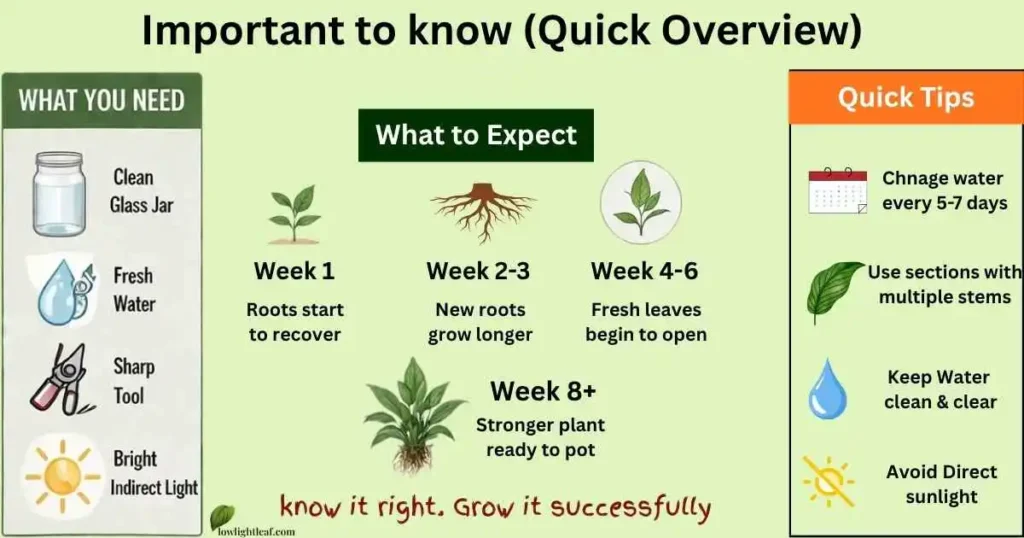
The easiest way to propagate a peace lily is to divide a well-grown plant into separate sections that already have roots supporting new growth. This method works because peace lilies grow in clumps, making it easy to create new plants that are already established and ready to grow.
Propagation by division is most successful when done during repotting, as the root system is already exposed. Compared to peace lily propagation in water or peace lily propagation from leaf, division offers the highest success rate and supports faster recovery with fewer growth problems.
What You Need to Propagate a Peace Lily
Before you start peace lily propagation, gather a few basic tools to keep the process smooth and stress-free:
- A healthy peace lily with multiple growth clumps
- Sharp, clean scissors or a knife to divide roots without damage
- Small pots with well-draining potting soil for soil propagation
- A clear container with clean, lukewarm water if propagating in water
- Watering can for gentle moisture after planting.
- Rooting hormone (optional), though not required for division
Always sanitize your cutting tools before use to prevent disease and ensure successful propagation.
How to Propagate a Peace Lily (Step-by-Step Guide)
The most reliable way to propagate a peace lily is through division, as peace lily propagation from leaf or cuttings does not work. When a peace lily outgrows its pot, it starts forming separate root clumps on its own. Splitting these sections and replanting them works with the plant’s natural growth, which is why this method is both safe and reliable for propagating peace lilies.
Propagating a Peace Lily by Division (Best Method)
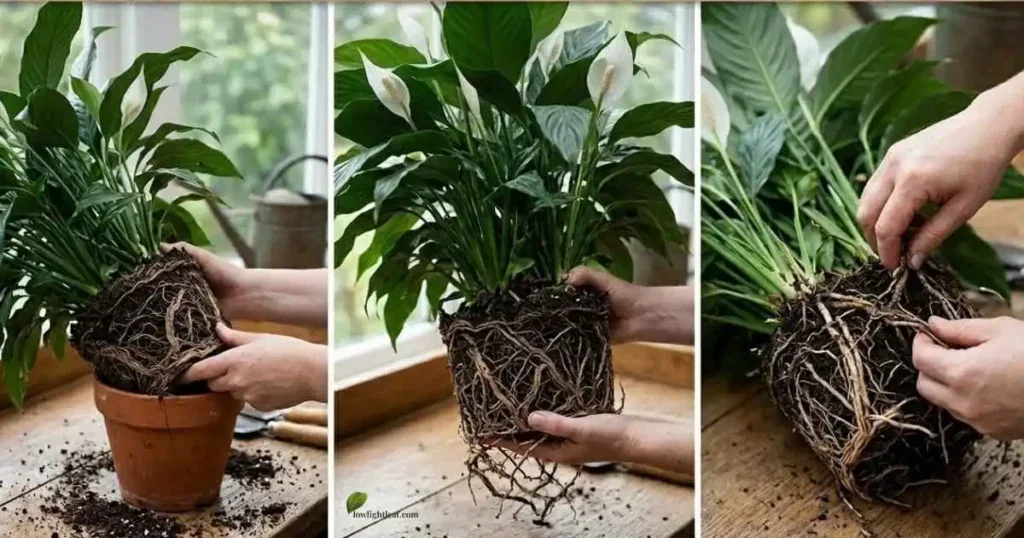
Dividing a peace lily is the most reliable and effective method to propagate a healthy plant because it works with its natural growth pattern. Using this method, you can create new plants with established roots, greatly improving success and reducing stress.
Step 1: Gently Remove the Peace Lily From Its Pot
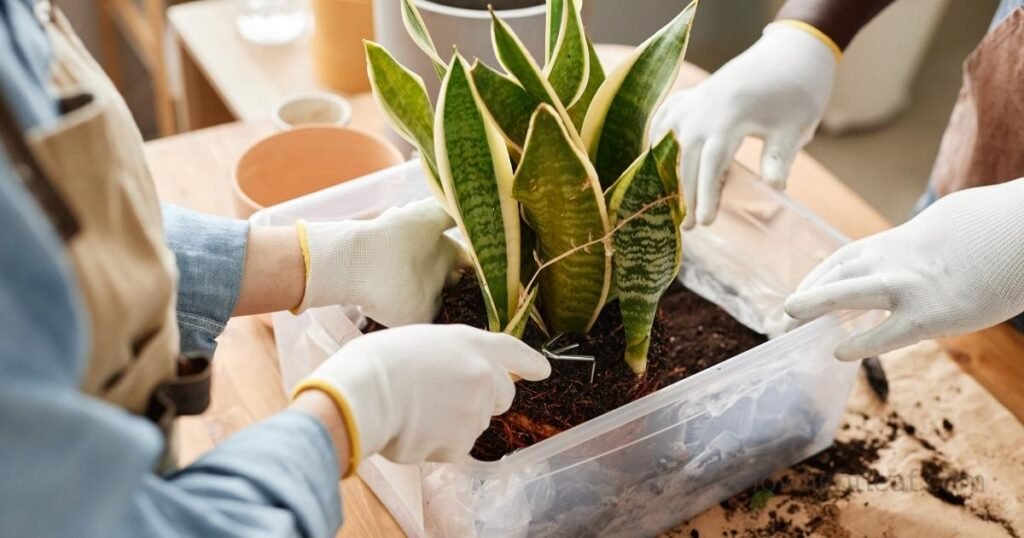
When you are propagating peace lilies by the division method, just take a mature, healthy peace lily plant that has outgrown its pot. Gently remove the plant by holding the base of the pot, not the leaves. If the roots are stuck in the pot, squeeze the sides of the pot or carefully loosen the edges with a knife, especially if it has become root-bound like in snake plant repotting situations. Carefully removing the plant helps protect the root system during peace lily propagation.
Step 2: Expose and Loosen the Roots
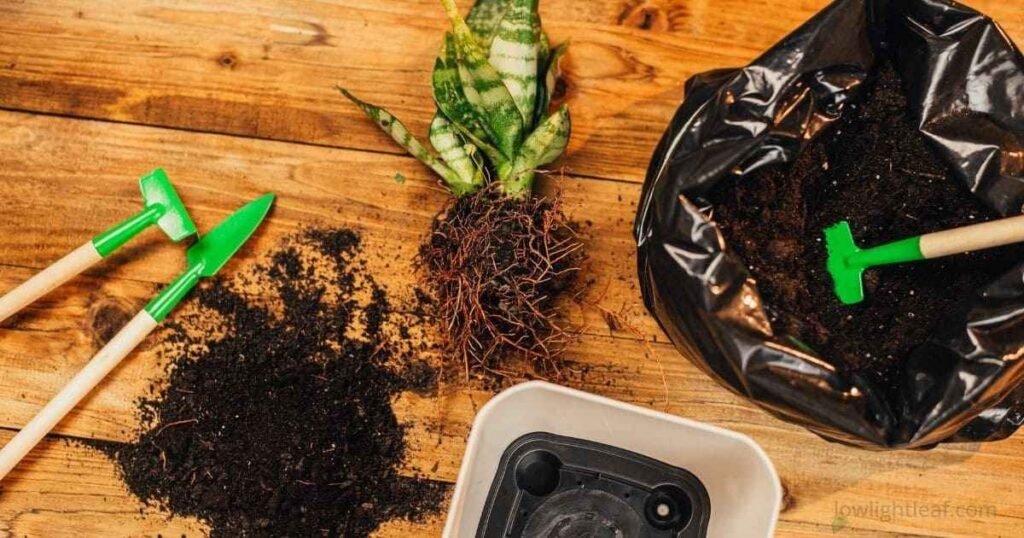
Shake off excess soil so you can clearly see the root structure. Take your time loosening the roots with your fingers until the sections start to come apart naturally. A few broken roots won’t harm the plant, as peace lilies recover well when most of the roots remain intact.
Step 3: Separate Healthy Root Sections
Look for natural divisions where multiple stems grow from the base. Each section should have its own roots and several healthy leaves. Slowly pull the sections apart, or use clean scissors if needed. This step is a key part of successfully propagating a peace lily without slowing future growth.
Step 4: Repot the Divisions Properly
Place each division into a small pot filled with well-draining potting soil. Plant each section at the same level it was growing earlier, then lightly press the soil around the roots so everything sits securely. A pot that isn’t too large, paired with well-draining soil, helps the divided peace lily recover faster and put out new growth.
Step 5: Water and Aftercare
After the divisions are potted, water them well and place them in bright, indirect light. For the next few weeks, keep the soil lightly moist and avoid letting it dry out completely. A little drooping is common after dividing, but most peace lilies perk up quickly as the roots adjust, a response often seen when peace lilies begin to droop after stress.
How to Propagate a Peace Lily in Water
Peace lily propagation in water can work, but only under the right conditions. This method isn’t meant to replace soil propagation. Instead, it’s best used as a temporary stage when you want to observe root health or help a divided plant settle before moving it to soil. This becomes easier to understand once you’ve seen how roots develop in spider plants when they’re propagated.
Step 1: Start With a Strong, Rooted Section
First, look for a healthy section of the peace lily that already has established roots. This part matters more than most people realize. Sections without roots rarely survive in water, while strong root systems adapt much more easily and stay stable during the process.
Step 2: Let the Roots Sit in Water, Not the Leaves
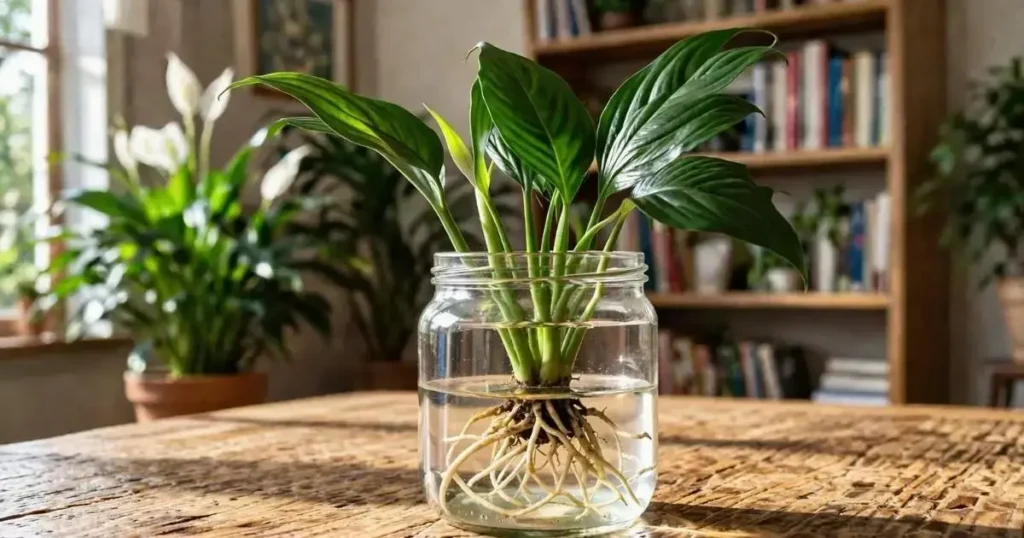
Next, place the roots into a clear container filled with clean, room-temperature water. Keep the leaves well above the waterline, as submerged foliage often leads to rot. At the same time, changing the water every few days keeps it fresh and prevents stagnation, which helps the roots stay firm and healthy.
Step 3: Move to Soil Before Growth Weakens
As soon as you notice steady root growth, it’s time to transition the plant into soil. Peace lilies don’t thrive long-term in water, and leaving them there too long can slow growth and affect flowering later on. Planting at the right moment gives the roots something to anchor into and supports stronger, more balanced growth.
Can You Propagate a Peace Lily From Cuttings or Leaves?
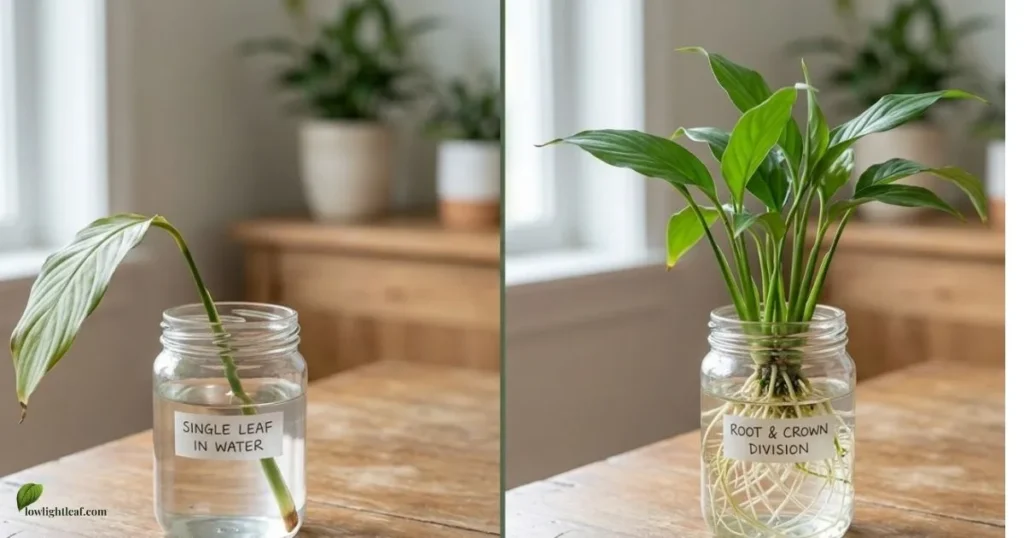
No, peace lily propagation from leaf or stem cuttings does not work. Unlike some houseplants, peace lilies do not have growth nodes on their leaves or stems that can produce new roots or shoots. A leaf placed in water or soil may stay green for a while, but it will never grow into a new plant.
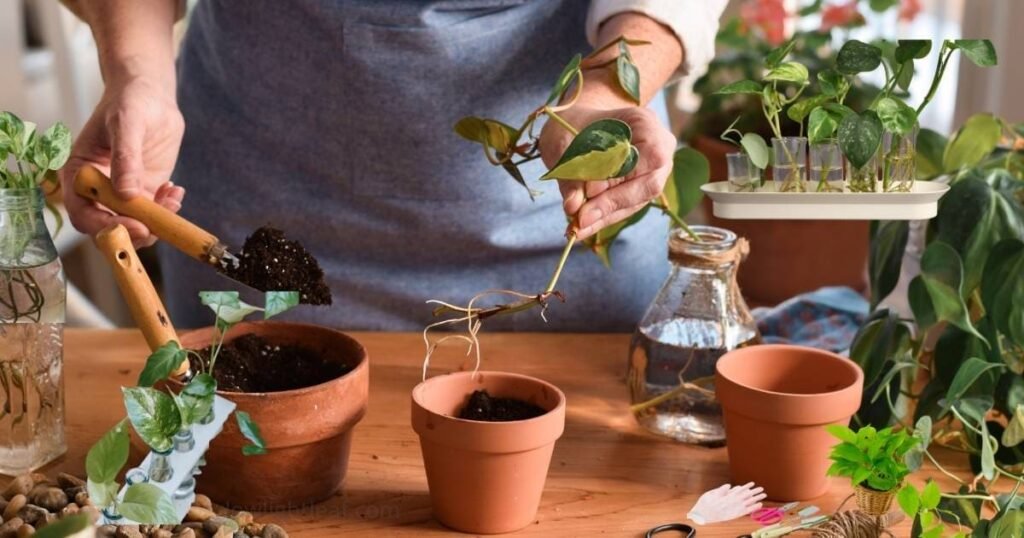
This is the reason attempts to propagate peace lilies from cuttings usually fail. Peace lilies can only be propagated through division, where each new plant already has part of the root system and crown. If you’re wondering, can you propagate a peace lily from leaves? The answer is no, and understanding this saves time and prevents disappointment. It also protects the parent plant from unnecessary damage, particularly when you compare it with how pothos cuttings develop roots in water or soil.
How to Propagate a Peace Lily From Seed (Is It Worth It?)
Peace lilies can be propagated from seed, but in real indoor conditions, it’s rarely worth the effort. Unlike division, seed propagation depends on successful flower pollination, something that doesn’t happen easily inside homes. Without pollination, seeds never develop in the first place.
Even when seeds are available, the process is slow and unpredictable, which is why peace lilies are usually propagated by division rather than seed, as reflected in the plant care guidance from Missouri Botanical Garden. Seeds need constant warmth, steady moisture, and high humidity just to germinate, and young seedlings take months, sometimes years, to grow into a recognizable peace lily. During this time, growth is delicate, and losses are common.
Because of the long timeline and low reliability, propagating a peace lily from seed is best seen as an experiment rather than a practical method. If your goal is healthy, mature plants, division remains the only dependable way to propagate a peace lily successfully, especially when setting up indoor spaces like those used for hanging plants.
Peace Lily Care After Propagation
Light, Water, and Soil Tips for Newly Propagated Plants
After propagating a peace lily, the plant needs a little time to recover and settle. At this stage, it’s busy repairing and settling its roots, not pushing out new growth, so calm, steady care makes a big difference.
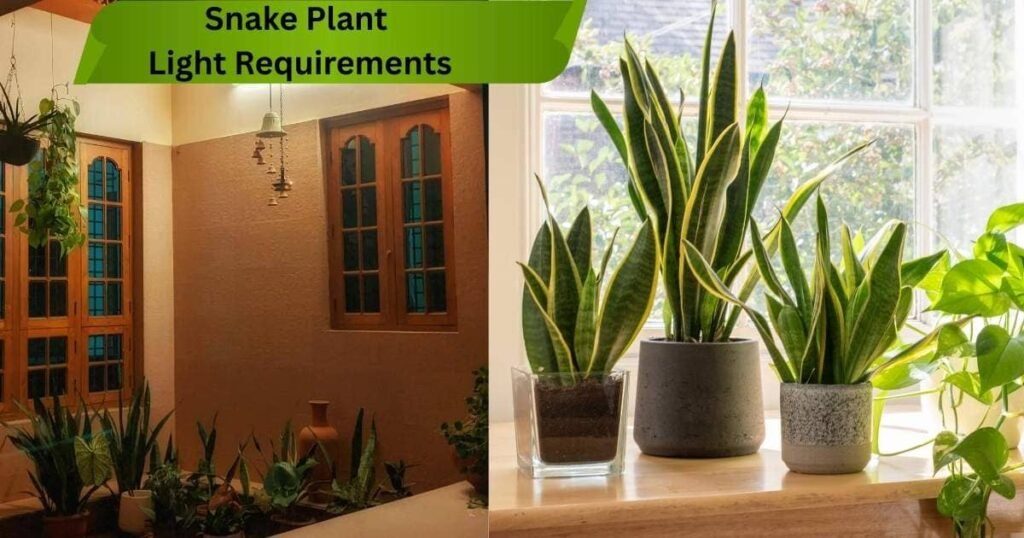
Light: Choose a bright spot that is not in direct sunlight. Harsh light can be too much for a recovering plant, but deep shade slows things down. A softly lit area where the light doesn’t change much works best, a setup that suits many plants suited to low light indoors.
Watering: When watering, go slow. The soil should stay lightly moist, but never heavy or waterlogged. Letting the surface dry slightly between waterings helps the roots adjust and reduces the risk of stress or rot.
Soil: A light potting mix that doesn’t pack down works best, as it lets water drain while keeping the roots comfortable. Loose, airy soil allows oxygen to reach the roots, which is critical as the plant establishes itself after propagation.
Once the plant shows new leaf growth, normal care routines can slowly resume. Until then, patience and consistency are the key to helping a newly propagated peace lily thrive. From here, exploring more indoor plant care topics can help you handle different plants and situations with confidence
Common Problems After Peace Lily Propagation
Even though peace lilies are tough plants, a few issues can show up after propagation while the roots are still settling in. Most of these problems are temporary and usually come down to small care adjustments.
Overwatering: It is one of the most common mistakes. Newly propagated peace lilies have sensitive roots, and soil that stays too wet often causes yellowing leaves or a limp, droopy appearance. These signs often show up when care conditions are off, which is also explained in more detail with peace lily yellowing. Allowing the top layer of soil to dry slightly and improving drainage usually helps the plant recover.
Low light: can also slow things down. When a peace lily isn’t getting enough bright, indirect light, you may notice poor growth, fewer blooms, or even flowers turning brown, something that even hardy plants like the cast iron plant indoors can tolerate much better.. Moving the plant to a brighter, stable location often improves both leaf health and flowering over time.
Most post-propagation problems are signs of adjustment, not failure. With a bit of patience and the right balance of light and water, peace lilies typically bounce back and continue growing strong.
Peace Lily Propagation FAQs
Will a peace lily leaf root in water?
No. A peace lily leaf may stay green in water for a while, but it will not form roots or grow into a new plant. Peace lilies don’t produce new growth from leaves because they lack the necessary growth points.
Do peace lilies grow pups?
Peace lilies don’t produce pups like succulents or spider plants. Instead, they grow in clumps, forming multiple crowns connected by the same root system. These clumps are what you separate during peace lily propagation.
Can you take a peace lily out of the soil and put it in water?
Yes, but only temporarily. A peace lily with established roots can be moved from soil to water for short periods. Long-term water stress usually leads to weaker roots and poor flowering.
Do peace lilies grow better in water or soil?
Peace lilies grow better in soil. While water can support short-term root health, soil provides oxygen, nutrients, and stability that water alone cannot. For long-term growth and blooms, soil is the better choice.
How long does peace lily propagation take?
Peace lily propagation by division shows results quickly. Roots usually settle within a few weeks, and new leaf growth often appears within one to two months. Full recovery and blooming can take several months, depending on light and care.

Ellie Marsh
Houseplant grower who spent years in a north-facing apartment. Writes practical care guides for low light homes, checked against extension and botanical garden sources.
Explore more: