Last updated on October 4, 2026
Yellowing snake plant leaves usually mean something is wrong with its care. While snake plants are known for being tough and low-maintenance, I’ve seen yellow leaves appear when light, watering, or soil conditions are slightly off. The good news is that snake plant yellow leaves are usually easy to fix once you understand the cause. In this guide, I’ll explain why your snake plant is yellowing and share practical, beginner-friendly solutions to help your plant recover.
Understanding Snake Plant Leaf Color Changes
Snake plant yellow leaves are often the first visible sign that the plant is under stress. Although snake plants are known for tolerating neglect, changes in leaf color usually indicate an issue with light, watering, or overall Snake Plant care. Learning how and why leaf color changes occur makes it easier to spot early snake plant issues and fix them before the plant declines.
Why Healthy Snake Plant Leaves Are Green
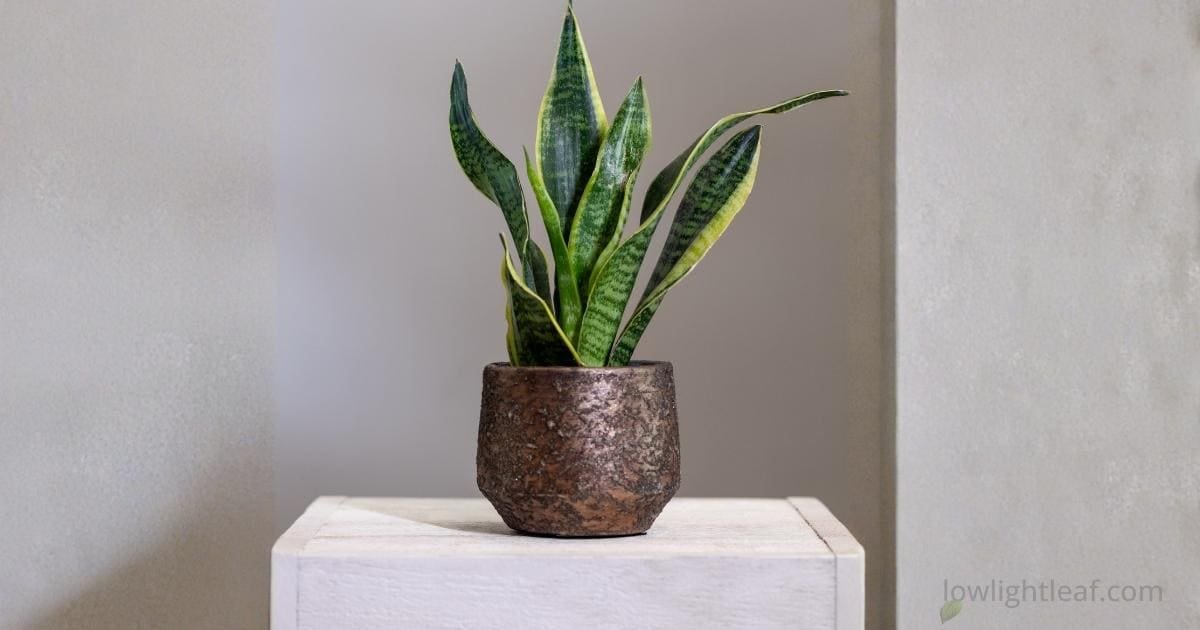
Healthy snake plant leaves remain green when the plant is producing enough chlorophyll through photosynthesis. With proper light exposure, well-draining soil, and balanced watering, nutrients move smoothly through the plant, keeping the foliage firm and vibrant, even in indoor spaces where lighting is limited, as explained by Penn State Extension’s guide to low-light houseplants.
In my experience, snake plants kept in bright, indirect light maintain stronger color and structure, while those grown in low or inconsistent conditions tend to yellow much sooner.
When Snake Plant Yellow Leaves Are Normal vs a Warning Sign
Normal: Not every yellow leaf on your snake plant is a cause for concern. It’s normal for older leaves near the base to gradually turn yellow as the plant matures, this is simply part of its growth process and usually limited to just one or two leaves at a time.
Warning: In contrast, when you see several leaves across the plant turning yellow, especially if the foliage becomes soft, droops, or develops yellow spots, this usually signals a problem. These wider changes indicate stress and mean care conditions should be adjusted.
How Growth and Maturity Affect Leaf Color
Snake plants grow slowly, so problems don’t appear quickly. One old leaf turning yellow can be normal, but when several leaves change color, it usually signals watering, light, or root stress, similar to what happens with many plants adapted to low light conditions indoors, that, if ignored, can threaten the plant’s health.
Common Reasons Snake Plant Leaves Turn Yellow
Although snake plants are known for being tough and low-maintenance, yellowing leaves are a common issue, just as they are in other popular indoor plants like the spider plant. In most cases, yellowing doesn’t happen without a reason. It’s usually the plant’s way of responding to stress from care or environmental factors. Below are the most common reasons behind snake plant yellowing and what you can do to fix each one.
Overwatering (Most Common Cause)
Root rot and oxygen loss
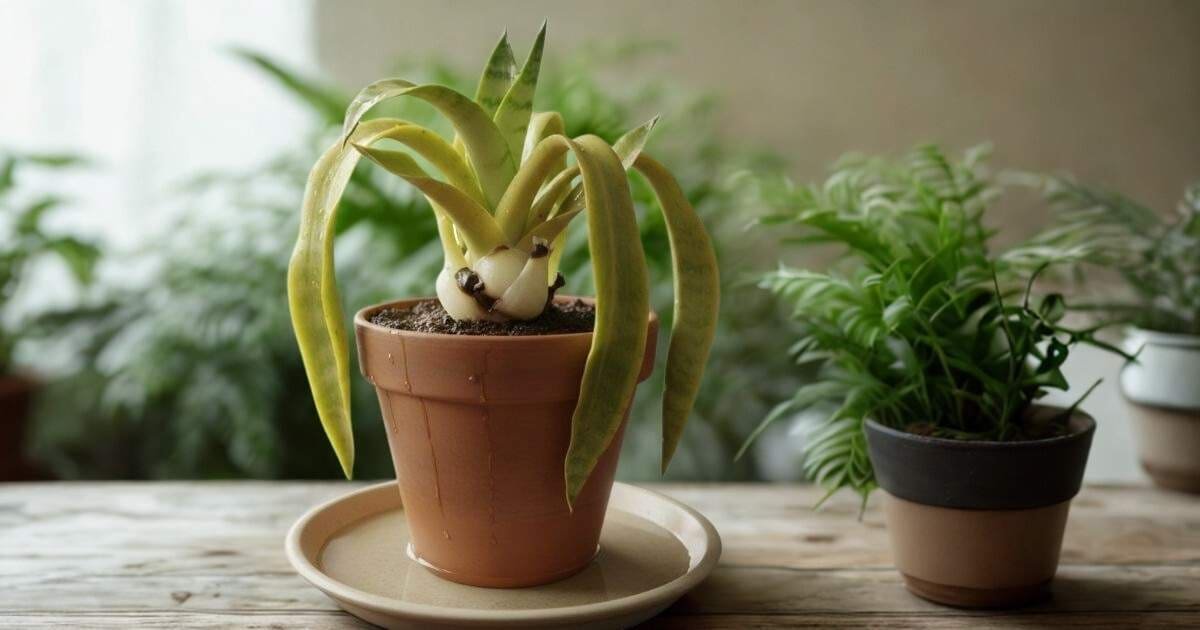
Overwatering is one of the most common reasons snake plant leaves turn yellow. When soil stays wet for too long, roots lose access to oxygen and begin to suffocate, which often happens when the snake plant watering routine isn’t adjusted properly. This stress prevents the plant from properly absorbing nutrients, leading to yellowing leaves and, in severe cases, root rot.
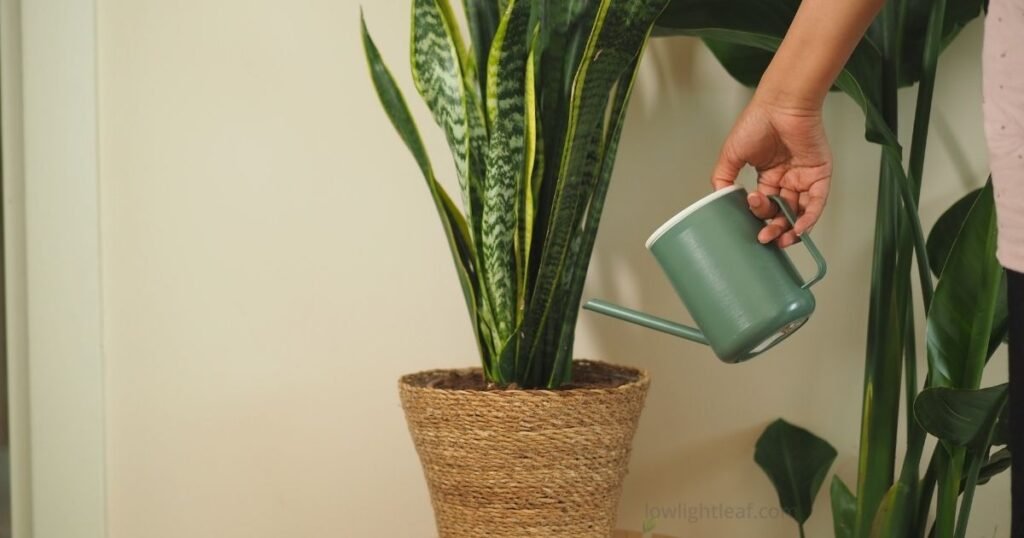
Snake plants prefer soil to dry between waterings. Poor drainage or pots without holes cause excess moisture. Over time, this damages the roots and can kill the plant unless watering is adjusted.
Underwatering and Prolonged Dry Soil
Stress response and dehydration
If the soil remains dry for long periods, snake plants do not receive adequate water, leading to dehydration. To help the plant recover, water it thoroughly until water drains from the bottom of the pot. Resume regular watering, allowing the soil to partially dry between waterings.
Too Much Direct Sunlight
Sunburn vs yellowing
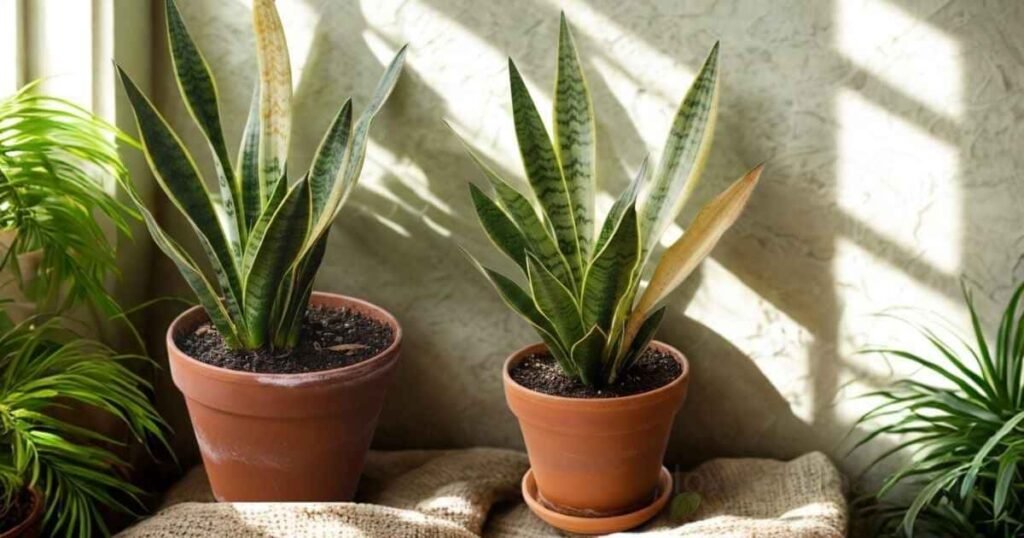
Excessive direct sunlight can bleach snake plant leaves, turning them from green to yellow. This often occurs when the plant is exposed to harsh midday sun, such as near a window. You may see yellow or pale patches on the side facing the light, along with leaves that feel dry or wrinkled.
Snake plants thrive in bright, indirect light, and meeting their light requirements plays a big role in preventing yellow leaves. If sunburn is present, move the plant out of direct sunlight. To aid recovery, provide filtered light and keep soil consistently moist, while preventing further sun exposure.
Too Little Light
Long-term impact
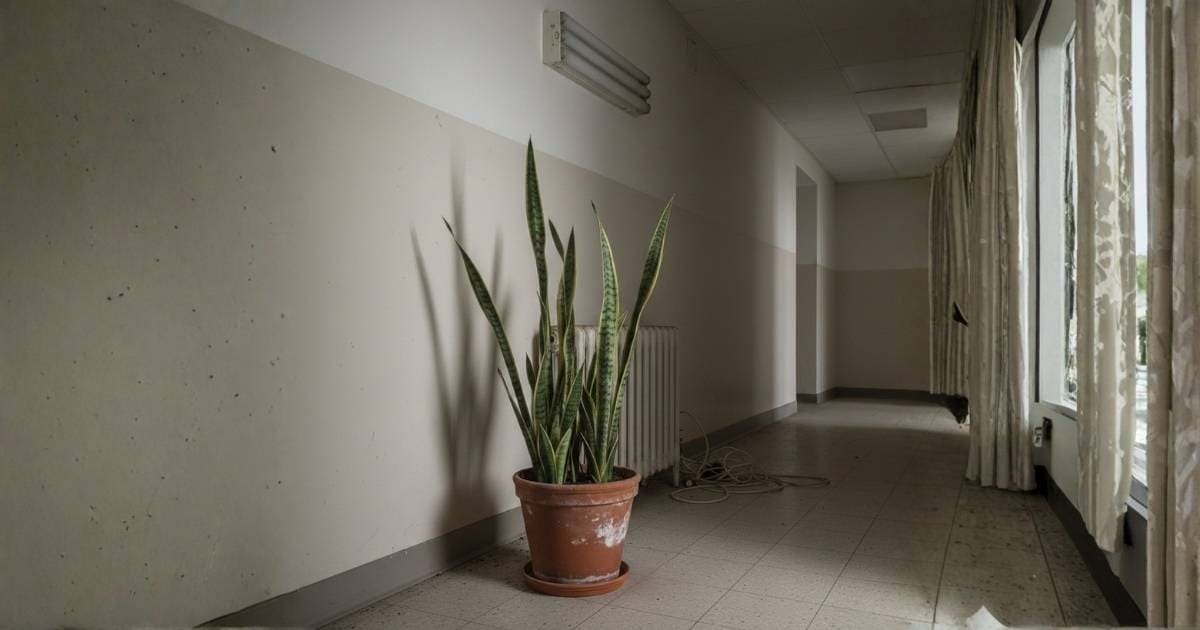
When snake plants stay in low light for a long time, growth slows down, and leaf color starts to fade, similar to many plants that tolerate low light indoors. Without enough light, snake plant yellow leaves are common, especially on older or variegated leaves.
Moving the plant to brighter, indirect light often helps. Do this gradually over a few days and watch for stress signs, such as drooping or softer leaves.
Temperature Stress and Cold Drafts
AC, heaters, winter shock
Snake plants don’t handle sudden temperature shifts well. Cold air from windows, AC units, or winter drafts can shock the plant, while hot air from heaters can stress it just as much. When this happens, yellowing leaves are often one of the first signs. Keeping the plant in a stable spot, away from strong air flow, helps avoid this kind of stress.
Poor Soil Drainage and Compacted Roots
Soil structure issues
When soil doesn’t drain properly, excess moisture builds up around the roots, stressing the plant. Over time, this can cause snake plant leaves to yellow and weak growth. Heavy or compacted soil also limits airflow, so switching to a loose, well-draining mix and a pot with drainage holes makes a big difference.
Nutrient Problems (Over fertilizing or Deficiency)
Winter fertilizing mistakes
When feeding goes wrong, whether from too little nutrition or over fertilizing, a yellow snake plant is often the result. Inadequate nutrition weakens the plant, while excess fertilizer, especially during winter, can damage roots and cause leaves to turn yellow. Light, seasonal feeding helps avoid this stress. Moving beyond nutrient issues, another potential cause of yellowing leaves is pest or insect damage.
Pests and Insect Damage
Spider mites, mealybugs
Although pests aren’t a common problem for snake plants, it can feel discouraging when they do appear, just like with other easy-care plants such as pothos. Tiny visitors like spider mites and mealybugs feed on leaf sap, causing yellow spots and a lackluster look. But with prompt care, you can help your plant bounce back and reclaim its healthy glow! Considering both nutrition and pests helps ensure plant health.
Natural Aging of Old Leaves
Old vs. new leaf difference
As snake plants grow, older leaves naturally fade and turn yellow before drying out. This type of yellowing is normal and usually affects the lowest foliage first. In contrast, new leaves may also appear lighter at first; however, they deepen in color as they mature, which is not a cause for concern.
Variegated Snake Plant Sensitivity
Why do variegated types yellow faster?
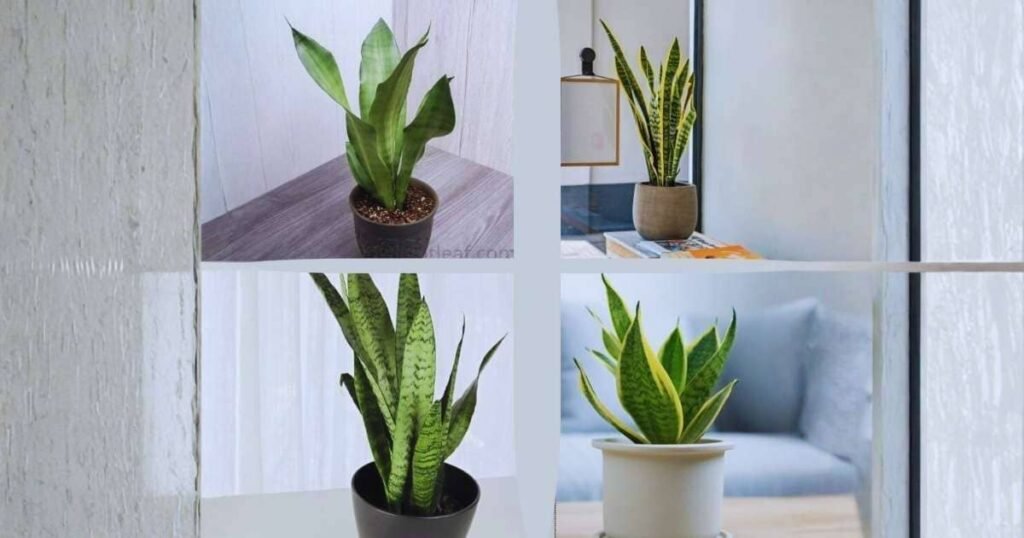
Variegated snake plants are more sensitive than solid green types because they contain less chlorophyll. Many snake plant varieties show yellowing faster when light, watering, or care is slightly off. As a result, color changes, such as yellow snake plant patches or fading edges, appear sooner when light, water, or care is slightly off. Some color shift can be normal, so don’t worry, even healthy variegated plants often show subtle changes. However, sudden or uneven yellowing usually means the plant is under stress.
How to Diagnose the Exact Cause of Snake Plant Yellow Leaves
Before trying to fix snake plant yellow leaves, it’s important to slow down and properly diagnose the problem. Guesswork often leads to overcorrecting, which can make things worse. A few simple checks can usually reveal why your snake plant is turning yellow—without stressing the plant further.
Check the Soil First (Wet, Dry, or Smelly?)
I usually start with the soil, because it tells you a lot. If it feels wet or has a stale smell, the roots are probably under stress from too much moisture. Completely dry soil points the other way, toward dehydration. Ideally, the top layer should feel dry but loose, not heavy or smelly. Just this quick check can narrow down many snake plant issues.
Observe Which Leaves Are Turning Yellow
Take a moment to look at which leaves are changing color. When an older, lower leaf fades slowly, it’s often just part of the aging process. But if newer leaves or several leaves start yellowing together, that’s usually a stress response. Uneven colour, soft spots, or patchy fading often point to care or environmental issues rather than to normal growth.
Inspect Roots Without Panic
If soil and leaf patterns don’t give a clear answer, gently checking the roots can help. Healthy roots should feel firm and light in colour. Dark, mushy, or sour-smelling roots point to deeper trouble. There’s no need to panic, many cases of snake plant yellowing can still be corrected once root health is understood.
Review Recent Care or Location Changes
Try to think about what’s changed recently. Maybe watering habits shifted, the light is different, or the plant was moved to a new spot. Snake plants react slowly, so yellow leaves often show up days or even weeks later. Tracing back those small changes can stop a sick snake plant from getting worse.
How to Fix Snake Plant Yellow Leaves
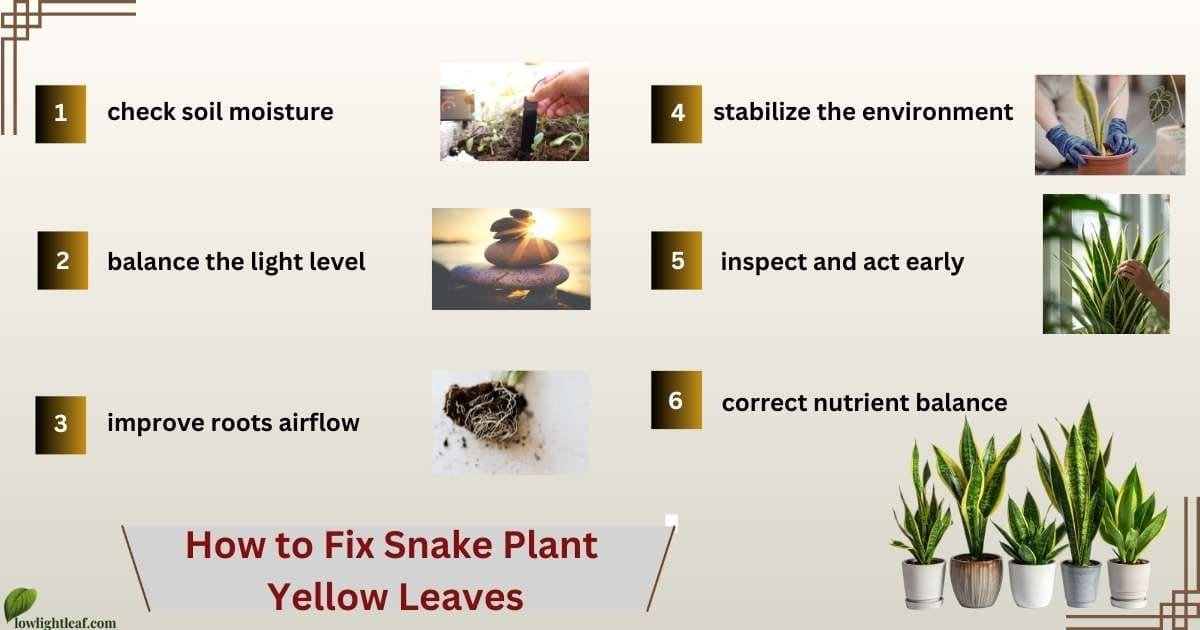
Once the cause of the snake plant’s yellow leaves is clear, fixing the issue becomes much easier. Yellow leaves won’t recover their colour, so trimming them helps the plant redirect energy to healthy growth. Use the targeted fixes below based on what your plant needs.
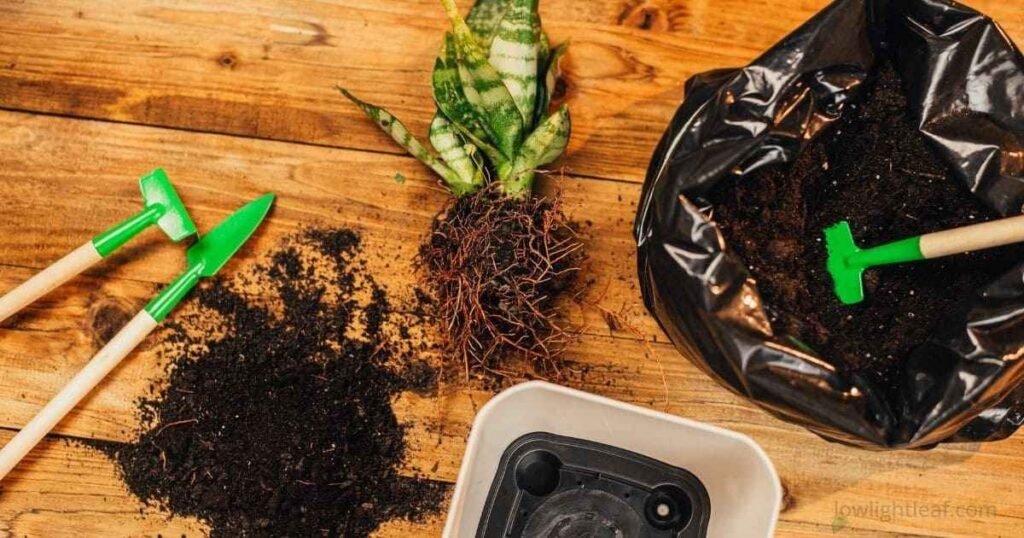
First, check soil moisture: Let soggy soil dry fully before watering again, and reduce frequency to avoid ongoing stress. If roots were affected, repotting may be necessary.
Next, balance the light level: Move sunburned plants away from harsh direct light, or gradually increase light if growth looks pale and weak.
After, improve root airflow: Switch to a loose, well-draining mix, and always use pots with drainage holes to prevent a yellow snake plant from being caused by trapped moisture.
Then, stabilize the environment: Keep the plant away from cold drafts, AC vents, heaters, and sudden temperature changes, as these can trigger leaves to turn yellow.
Also, inspect and act early Remove visible pests gently, then follow up with neem oil or insecticidal soap to prevent a sick snake plant from declining further.
Finally, correct nutrient balance: Refresh the soil if nutrients are lacking, or flush the pot if overfertilizing is suspected. Feed lightly during active growth only.
Can yellow snake plant leaves turn green again?
Once a snake plant leaf turns fully yellow, it usually won’t return to green. However, if you act quickly to fix the underlying issue, you can prevent further yellowing and help your plant grow healthy new leaves. Don’t be discouraged, your care makes a difference!
Snake Plant Yellow Leaves After Repotting, is it normal?
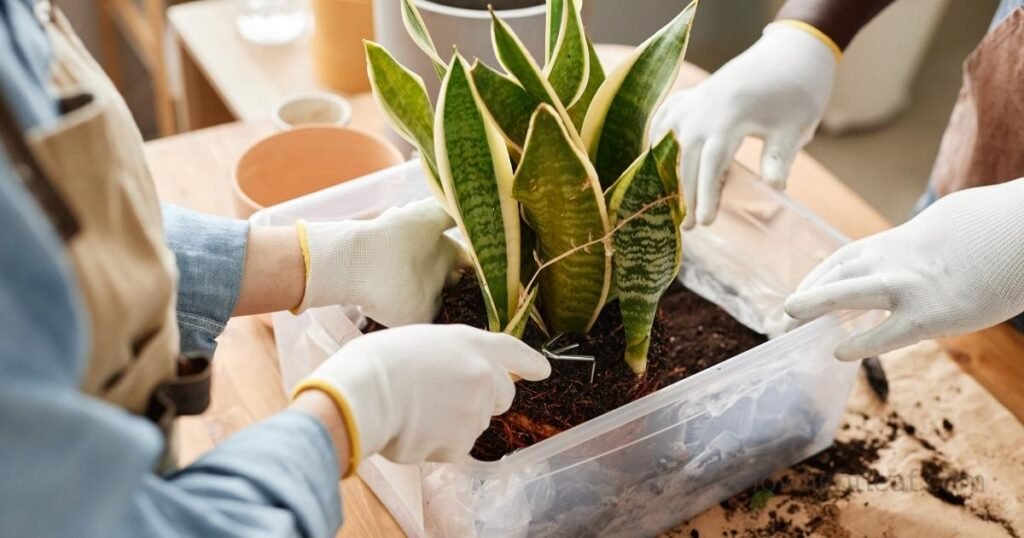
Yes, it is normal for a snake plant to develop a few yellow leaves after Snake plant repotting. It usually happens because of transplant shock, when the roots are disturbed, the plant gets stressed and may yellow older leaves to save energy for root recovery and new growth. In most cases, this is temporary and nothing to worry about.
Transplant Shock vs Root Damage
A little transplant shock is standard and usually not a big deal. Moving or disturbing the roots can temporarily stress the plant as it adjusts to new soil and light. Root damage is different; it tends to cause continuous yellowing, soft roots, or drooping leaves and is often linked to overwatering or compacted soil.
How Long Does Yellowing Last after Repotting
From what I’ve seen, mild yellowing usually lasts 2–4 weeks. If the plant stays firm and starts pushing new growth, it’s adjusting just fine. Yellowing that spreads or doesn’t improve after a month is a sign that something else is wrong.
Snake Plant Yellow Leaves: Do’s & Don’t
Do’s:
- Be patient and water lightly
- Keep the plant in bright, indirect light
- Remove yellow leaves only after they dry out
Don’t:
- Don’t fertilize right away
- Don’t overwater “to help it recover”
- Don’t keep changing its location
Handled well, most snake plants bounce back quickly after repotting.
Snake Plant Yellow Leaves with Soft or Mushy Texture
If your snake plant’s yellow leaves feel soft, mushy, or weak, that’s usually a warning sign, not a harmless issue. From what I’ve seen, this type of yellowing almost always points to too much moisture around the roots, not a lack of water.
What Soft Yellow Leaves Indicate
When yellow leaves feel soft, it’s often a sign that the roots are unhappy. Constant moisture weakens them, and that stress shows up as drooping, yellow leaves. By then, the problem is underground, not in the foliage.
When Root Rot Is Likely
Root rot is more likely when yellowing spreads fast, and the plant starts to feel loose or unstable. The only way to confirm it is by checking the roots; rotted ones look dark, feel mushy, and often have an unpleasant smell. The good news is that early root rot can be fixed by trimming damaged roots, letting the plant dry out, or propagating the snake plant from healthy sections, and repotting it in well-draining soil.
Should you propagate yellow leaves?
Avoid propagating yellow or mushy leaves. Leaves that are already yellow, soft, or weak rarely root successfully because the tissue is no longer healthy. For best results, always select firm, green leaf sections, as these contain enough stored energy to develop strong snake plant roots.
Should You Remove Snake Plant Yellow Leaves?
Yes, it makes sense to remove yellow leaves when they’re soft or completely faded, but if there’s still some green and firmness, leaving the leaf allows the plant to use up its nutrients first.
When Trimming Helps
Trimming yellow snake plant leaves helps when they’re entirely yellow, soft, or damaged, as removing them redirects energy toward healthy growth and improves the plant’s overall appearance.
When to Leave the Leaf
If a leaf is only partly yellow but still firm, it’s better to leave it alone, since the plant can naturally reabsorb nutrients before the leaf fully declines
FAQ’s about Snake Plant Yellow Leaves
Why are only the bottom leaves turning yellow?
Bottom leaves often turn yellow first because they are older and naturally lose nutrients as the plant redirects energy to newer growth. This is more noticeable when light or watering conditions are not ideal.
Do snake plants turn yellow in winter?
Yes, snake plants often develop yellow leaves in winter because their growth slows down. With reduced light and cooler temperatures, they need far less water, and yellowing appears if care is not adjusted for the season.
Is yellowing a sign of root rot?
Yellow leaves can sometimes indicate root rot, especially if they feel soft or mushy. However, colour alone is not enough to confirm it. Watering habits, soil drainage, and root condition matter much more.
How do you save a yellowing snake plant?
Start by adjusting watering and letting the soil dry out properly. Then place the plant in bright, indirect light. In most cases, correcting moisture and light is enough for the plant to recover.
Explore more:

Muddsir Munir
Houseplant enthusiast researching and writing about indoor plants, helping beginners grow spider plants, snake plants, and more with confidence.