Last updated on January 18, 2026
This peace lily care guide explains how to grow and maintain a healthy peace lily indoors. Peace lily (Spathiphyllum) is a popular indoor houseplant, and proper peace lily care focuses on balanced light, watering, soil, and humidity conditions. These beautiful indoor houseplants with glossy leaves and elegant white blooms thrive when you provide the right light exposure, watering routine, and soil conditions.
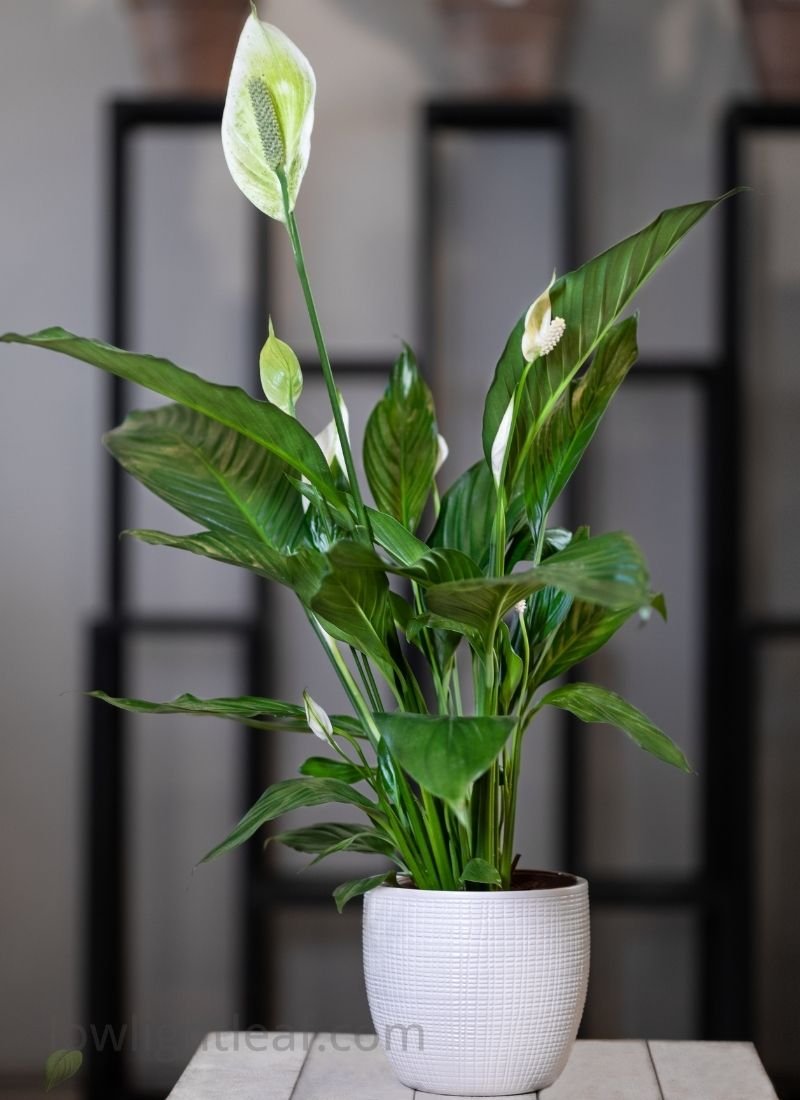
Peace lilies have shiny green leaves and bright white spathes. Many people mistakenly consider these spathes to be flowers. If you’ve ever wondered why some peace lilies flourish while others struggle, this guide is for you.
Discover the practical care tips for watering, soil, and care that keep your plant healthy, blooming, and impossible to ignore. Even if your peace lily is drooping, not flowering, or looking sick, we’ll show you how to bring it back to life and keep it healthy long-term indoors.
What is Peace Lily Plant?
The Peace Lily (Spathiphyllum) is a tropical evergreen from the Araceae family. It comes from the rainforests of Central and South America. Despite its name, the peace lily plant is not a true lily. Instead, it belongs to a group of shade-loving plants often referred to as spath lilies.
In nature, peace lilies grow under tall forest canopies. They grow best in warm, humid conditions with soft, filtered light. Their ability to tolerate low light and minimal care makes them ideal for beginners.
Is Peace Lily a True Lily?
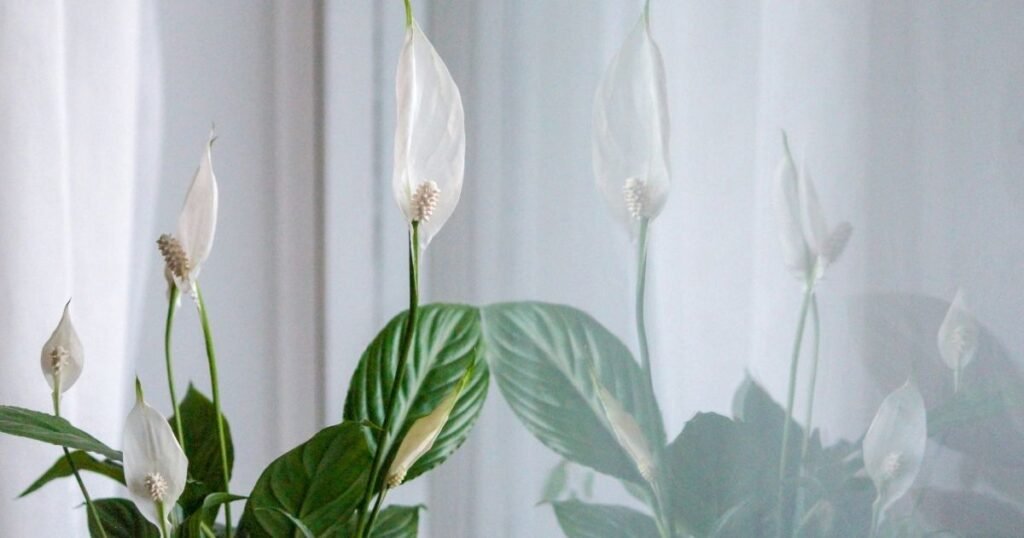
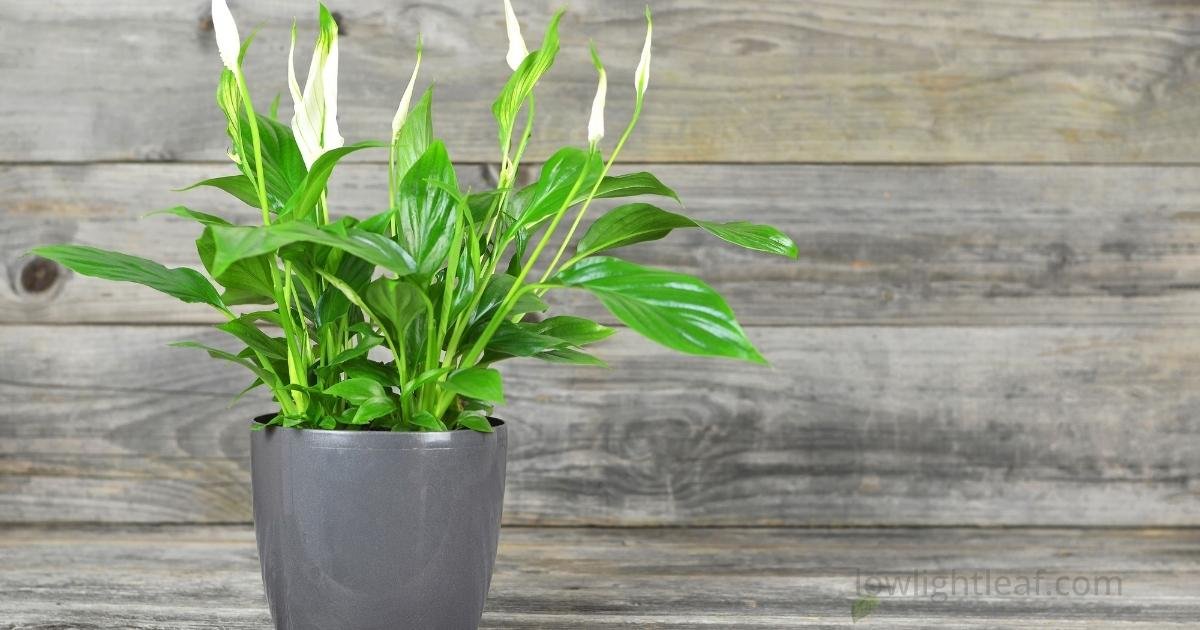
Despite its common name, the peace lily is not a true lily and does not belong to the Lilium family. It belongs to the Araceae family, while true lilies belong to the Liliaceae family. The white or cream spathiphyllum flower is actually a spathe, not a true bloom. It rises above the glossy green peace lily leaves, giving the plant a refined, elegant look. With the proper care, peace lilies can bloom several times each year and may live for decades.
Did you know?
The peace lily plant isn’t admired for its beauty. It also holds special meaning. It symbolizes hope, healing, purity, and, of course, peace. Because of this, many people gift a Spathiphyllum flower to comfort someone who has lost a loved one.
Basics of the Peace Lily Plant
The peace lily is a graceful, evergreen plant loved for its timeless charm and ease of care. It thrives in low-light corners, making it a perfect addition to homes and offices.
Common Names and Botanical Identity
- Common names: Peace lily, spath lily
- Botanical name: Spathiphyllum spp.
- Plant family: Araceae
- Plant type: Evergreen perennial
Natural Habitat and Growing Environment
Peace lilies grow beneath tropical forest canopies, thriving in warm, humid shade, a trait that makes them suitable for indoor spaces.
- Native habitat: Tropical regions of Central America and Southeast Asia
- Preferred environment: Warm, humid, and low-light conditions
Peace Lily Size and Indoor Growth
When grown indoors, peace lilies remain compact and manageable, making them suitable for both small and large spaces.
- Mature size indoors: 1–4 feet tall and wide
- Outdoor growth: Can reach up to 6 feet in warm climates
- Growth habit: Upright, clump-forming plant
Light Requirements for Healthy Growth
Peace lilies thrive in indirect light and can tolerate lower-light indoor areas.
- Light needs: Partial to low, indirect sunlight
- Best placement: Bright rooms away from harsh sun
Soil Type and pH Preference
Healthy root growth depends on soil that drains well while retaining light moisture.
- Soil preference: Moist, well-draining soil
- Ideal soil pH: Slightly acidic
Blooming Season and Flower Color
Peace lilies are valued for their elegant white blooms, which can appear more than once a year when conditions are right.
- Bloom season: Mainly spring
- Indoor flowering: Possible year-round with proper care
- Flower color: White or pale yellow spathes
Hardiness and Climate Suitability
Peace lilies are tropical plants and cannot tolerate frost, which is why they are commonly grown as indoor houseplants.
- Hardiness zones: USDA Zones 11–12
- Cold tolerance: Not frost-hardy
Is Peace Lily Toxic to Pets and Humans?
Peace lilies contain calcium oxalate crystals, which can harm if ingested.
- Toxic to: Cats, dogs, and humans
- Symptoms: Mouth irritation, drooling, stomach discomfort
- Safety tip: Keep out of reach of pets and children
Benefits of Peace Lily
Have you wondered why peace lilies are found in so many homes and offices? It’s not just their elegant white blooms or glossy green leaves; these plants quietly transform your indoor space. Beyond beauty, they bring freshness, calm, and a touch of nature’s magic right into your living room. Some Benefits are;
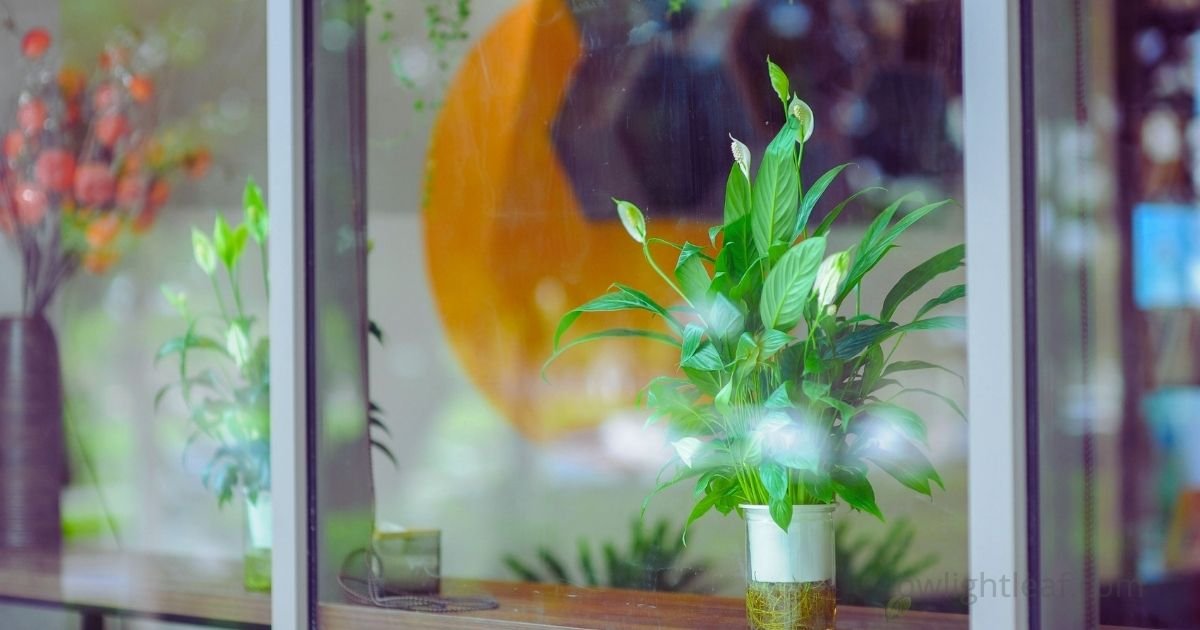
Air-Purifying Benefits of Peace Lily
Peace lilies are popular not just for their beauty; according to Iowa State University Extension, they may help improve indoor air by reducing common toxins such as benzene and formaldehyde
Low-Maintenance Indoor Plant
Peace lilies are ideal for beginners. They tolerate low light conditions and often recover well even after occasional missed watering.
Improves Indoor Humidity Levels
Their natural transpiration adds moisture to dry indoor air. This helps improve humidity in dry indoor environments, especially in air-conditioned rooms.
Stress Reduction
Studies suggest that indoor greenery can help reduce stress and improve focus. With their soft foliage and elegant form, peace lilies contribute to a soothing indoor atmosphere.
Aesthetic Appeal
With glossy green leaves and graceful white blooms, peace lilies add timeless elegance to home interiors, offices, and workspaces.
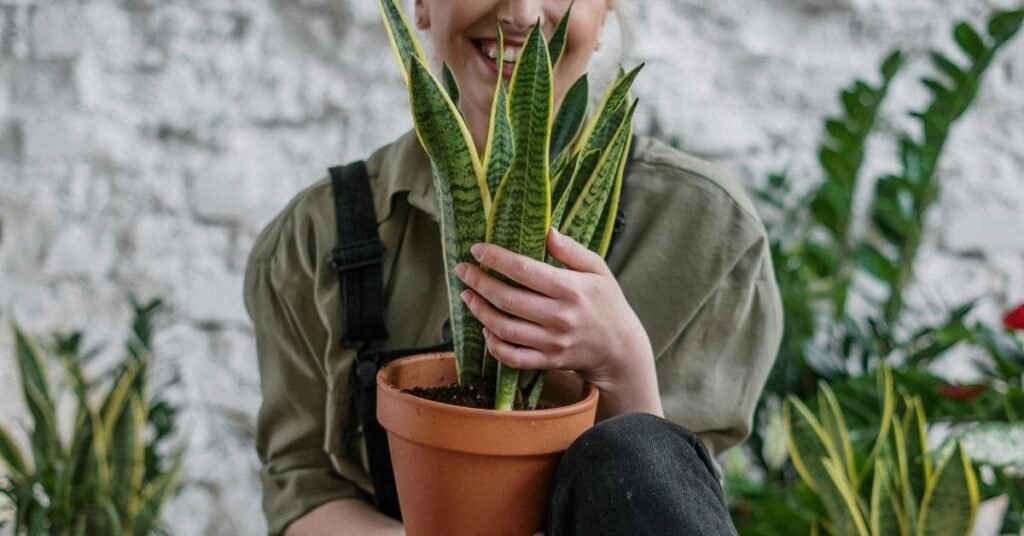
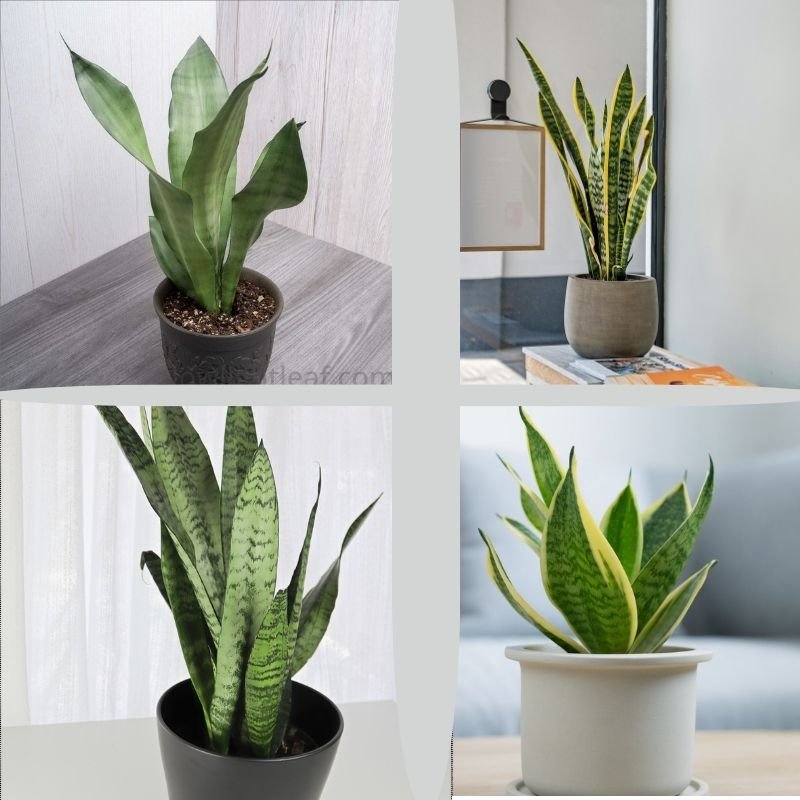
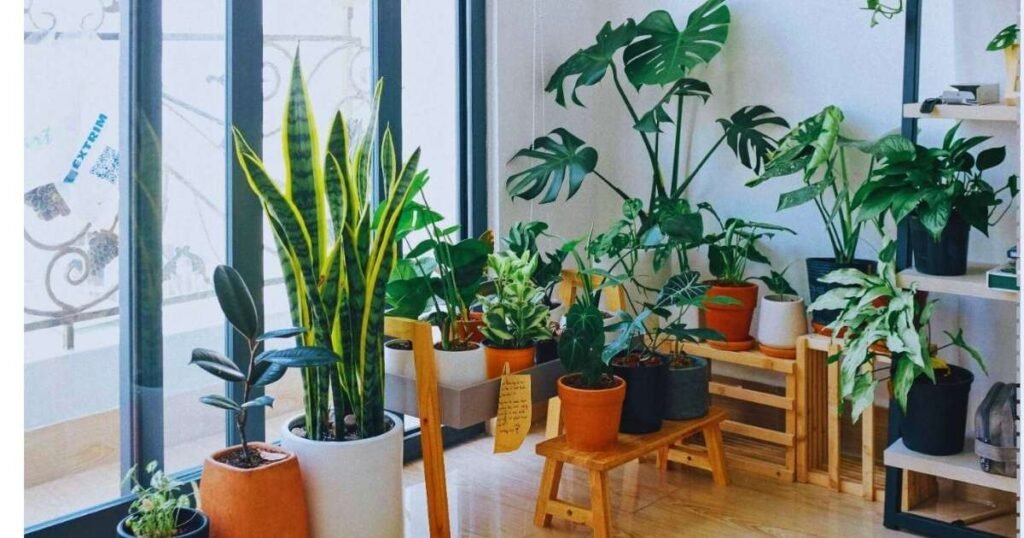
Peace lilies are popular among beginners, and if you’re exploring more easy-care options, don’t miss our Care tips for snake plant.
How to take care of a peace lily indoors? (Short Recap)
The peace lily thrives indoors when its tropical conditions are the same. Always care for your Peace lily, keeping these points in mind,
- Position the peace lily in bright, indirect light.
- Try to choose a soil mix that drains well but stays a little moist.
- Keep indoor temperatures steady between 65 and 80°F and avoid cold drafts.
- Keep the air around the peace lily humid by misting its glossy leaves or placing it in a naturally moist room.
- Water your Spathiphyllum with a balanced amount.
- it’s best to feed small doses of fertilizer during the summer.
With care and consistency, it can bloom several times a year, enhancing your home.
How to Plant a Peace Lily
Planting or repotting a peace lily (Spathiphyllum) is simple once you know the right time and setup. Spring is the perfect season to give your plant fresh soil and room to grow. Whether indoors or in a warm outdoor spot, peace lilies adjust easily when planted with care.
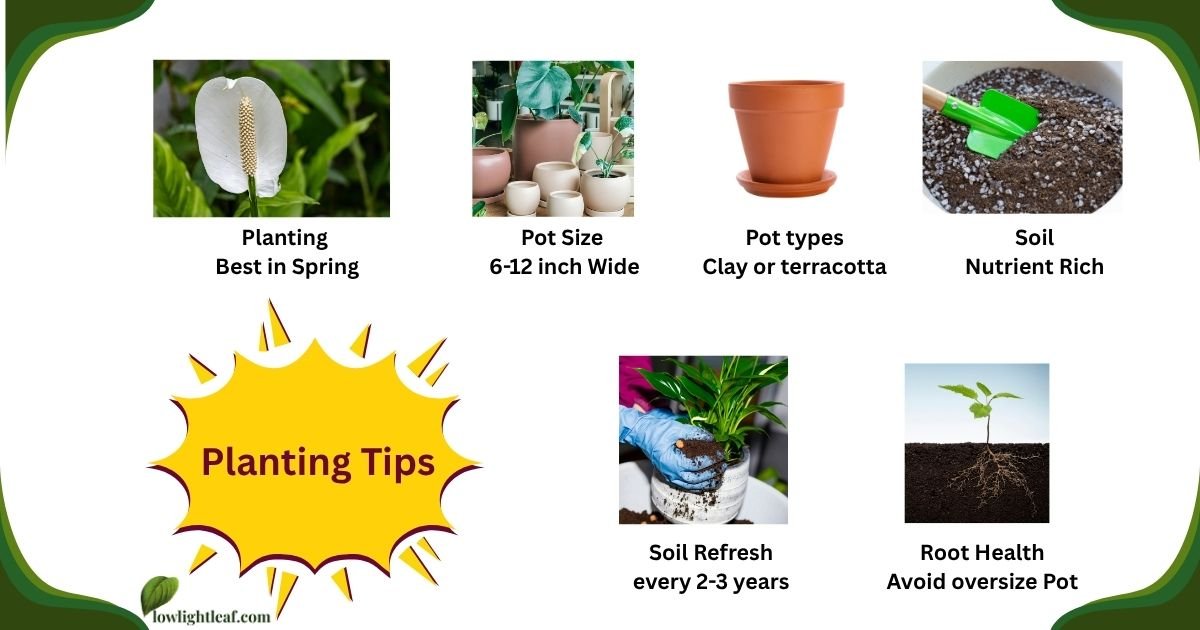
Peace Lily Planting Tips:
Best time
Repot or plant during spring, when growth is most active.
Pot size
Choose a container one size larger (about 6–12 inches wide) if roots are visible on the surface or through drainage holes.
Pot type
Clay or terracotta pots work best, as they let air circulate and prevent soggy roots.
Soil mix
Use a nutrient-rich, well-draining mix that stays slightly moist.
Root health:
Peace lilies thrive when they’re slightly root-bound, so avoid oversized pots.
Soil refresh:
Replace or refresh the soil every 2–3 years to maintain healthy growth and consistent blooms.
Peace Lily Care Guide
To care for a peace lily (Spathiphyllum), you need to balance light, water, soil, and the environment. It helps the tropical plant thrive indoors. The plant needs little care. It thrives in conditions like those of its rainforest home.
Light, water, and nutrients are the basics every peace lily needs. The right temperature and humidity make a big difference, too. When these conditions are balanced, the plant stays healthy, blooms longer, and maintains whole, vibrant leaves.
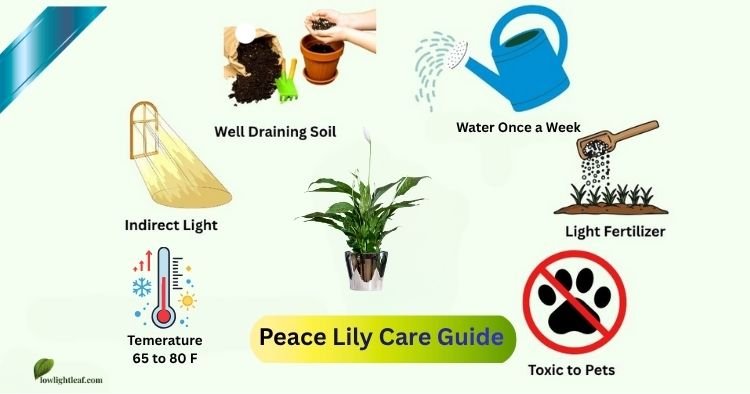
Below are the essential peace lily care requirements explained step by step for healthy indoor growth.
Light Requirements for Peace Lily
Place your peace lily in a spot where it gets bright, indirect sunlight for 6–8 hours daily. They grow in their rainforest home under thick tree canopies. It helps them be naturally shade-tolerant.
Indoors, they need a bit more filtered light. It helps promote healthy leaves and regular blooms. An east-facing window is usually the best spot. It gives soft morning light but avoids the harsh afternoon sun that can burn the leaves.
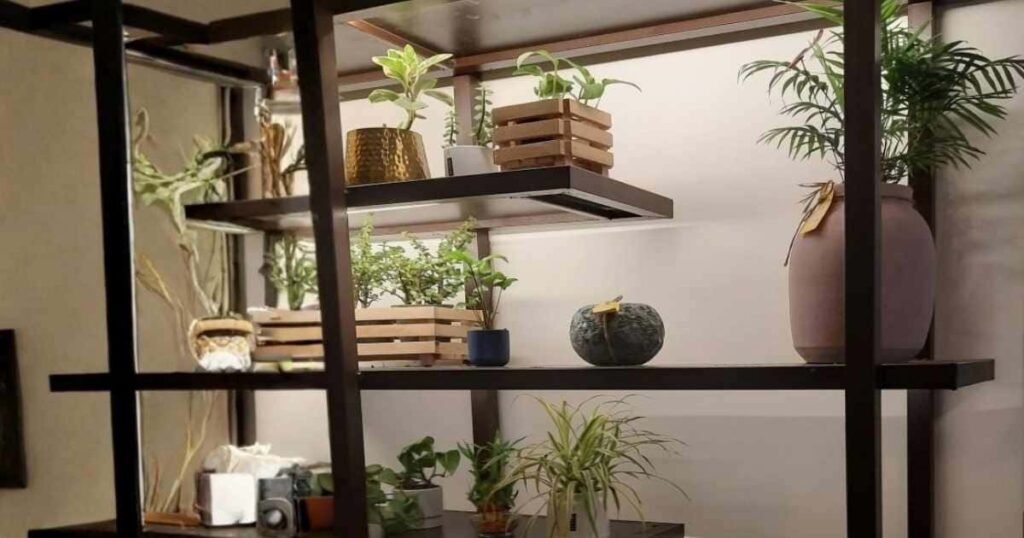
If your home has dim corners, you’ll find plenty of helpful placement and care insights in my Indoor Plants Guide, where I’ve also discussed five easy-to-grow plants.
Watering Peace Lily Indoors
Watering your peace lily the right way keeps it healthy and blooming beautifully.
- Always keep the soil a bit moist, not soggy or bone-dry.
- Always water when the top of the soil feels dry to the touch.
- On average, watering once a week works well, but it may vary depending on pot size, drainage, and room temperature.
- Reduce watering during cooler months, but never let the soil completely dry out.
- Try bottom watering to avoid water spots on leaves and prevent blackened tips.
Common Cause of Brown Leaf Tips
Peace lilies are delicate plants that can react to chemicals like fluoride and chlorine in tap water. Over time, these substances can damage the foliage, leading to dry, brown tips. To prevent this, always water your plant with filtered, distilled, or room-temperature rainwater.
Interesting to Know
Peace lilies are expressive houseplants. They communicate their needs clearly. When the foliage begins to droop, it often indicates a need for water. Test the soil moisture by pressing your finger about an inch deep. If it feels dry, provide a thorough watering.
Soil Requirements for Ongoing Peace Lily Care
- Peace lilies prefer soil that stays slightly moist but drains well.
- Use a loose, nutrient-rich mix to support healthy growth.
- Avoid compact garden soil, as it can block airflow to the roots.
- A mix with organic matter, such as coco coir, leaf mold, or fine bark, helps roots grow strong and steady.
Peace Lily Soil pH Level
Peace lilies grow best in slightly acidic soil, with an ideal pH range between 6.0 and 6.5. When the soil pH stays balanced, the roots absorb nutrients properly, supporting healthy leaves and regular blooms.
If the soil becomes too alkaline, peace lilies may show yellowing leaves or slow growth. Using a well-draining potting mix and avoiding hard tap water helps maintain a stable pH level over time.
Temperature Requirements For Peace Lily
Peace lilies prefer a consistently warm indoor spot. Always keep temperatures around 65°F to 80°F. Avoid placing them near cold drafts, open windows, or vents, as sudden changes can damage the leaves.
Humidity Requirements for Peace Lily
To recreate their rainforest habitat, keep humidity moderate to high. Spray your peace lily’s leaves once a week with distilled or softened water, especially during the summer. It helps keep the foliage healthy and can encourage the plant to bloom regularly.
Fertilizer Requirements For Peace Lily
Feeding your peace lily regularly helps it stay strong and bloom more. According to the University of Connecticut Home & Garden Education Center, In between the active growing months of spring and summer, feed a balanced, water-soluble fertilizer at half strength every few weeks.
If you prefer, a slow-release formula at the start of the season also works well. Don’t over-fertilize your peace lily, since too much fertilizer can harm the roots. During winter, skip feeding to give the plant a rest before its next growth phase.
Peace Lily Care With Salt
Many people search for peace lily care with salt, believing it can boost growth or revive a weak plant. However, adding salt to peace lily soil is not recommended.
Salt can quickly build up around the roots, blocking water absorption and damaging root tissue. This often leads to brown leaf tips, wilting, and slowed growth rather than improvement.
Peace lilies are sensitive plants and perform best with clean water and balanced care. Instead of salt, maintaining proper watering, indirect light, and suitable soil conditions is the safest way to keep the plant healthy indoors.
Should I clean my peace lily’s leaves?
Absolutely. Dust can block sunlight and slow growth. Gently wiping the leaves with a damp cloth keeps them clean and healthy.
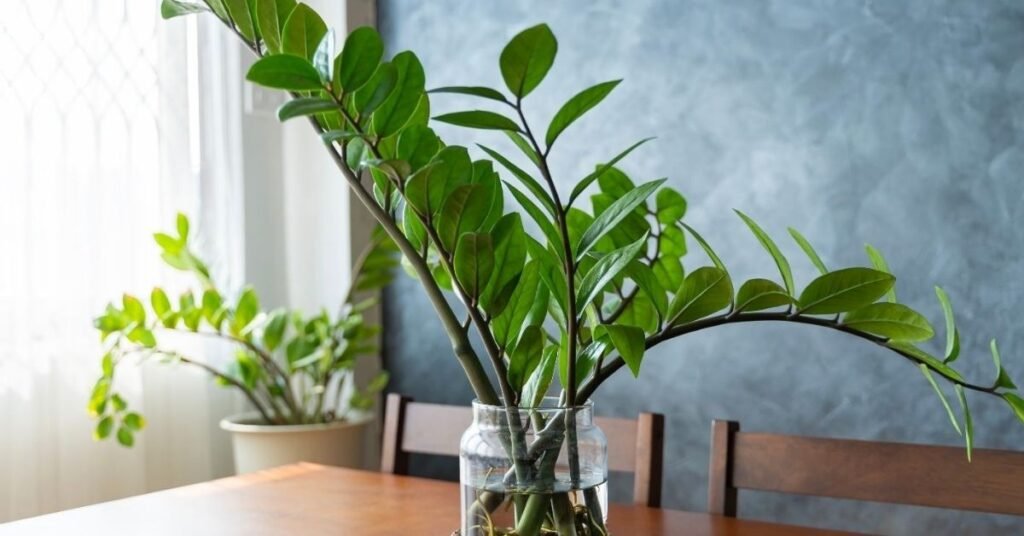
To expand your collection of low-light plants, see our tips for caring for ZZ plants.
Varieties of Peace Lilies
The peace lily (Spathiphyllum) has many varieties, each with its unique character. Some plants stay small to brighten a desktop. Others grow tall for a dramatic floor display. Their leaves range from deep emerald green to golden shades. Their spathes come in various sizes and shapes.
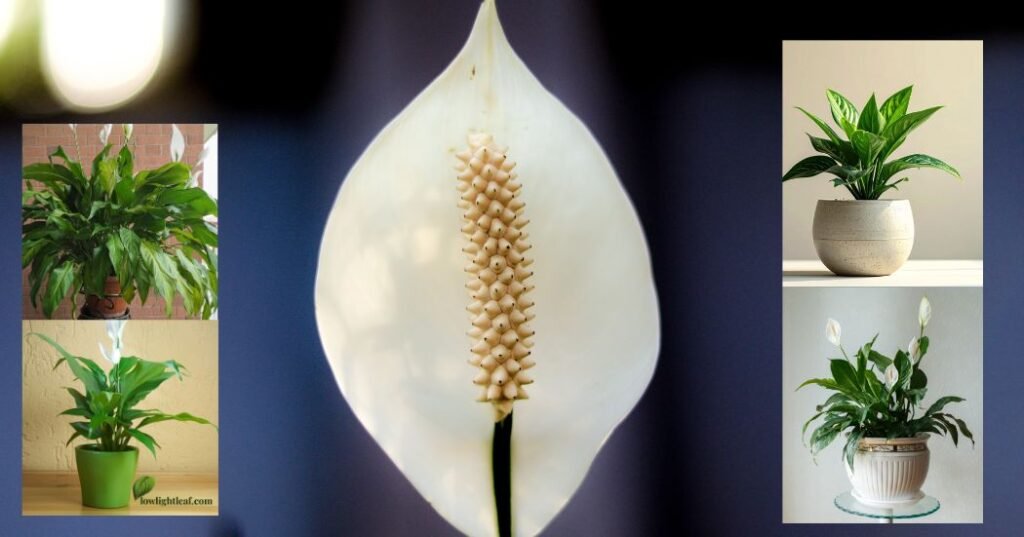
Here are some of the most recognized peace lily varieties you will come across:
Spathiphyllum ‘Wallisii’
It is a compact peace lily named after Gustav Wallis. It usually stays under 12 inches tall. Its slender, glossy leaves have deep veins, giving a delicate look. The crisp white spathes add timeless elegance to tabletops or small spaces.
Spathiphyllum ‘Kochii’
Spathiphyllum ‘Kochii’ usually reaches a height of 1–2 feet. Its dark green leaves and white flowers make it a classy option for indoors.
Spathiphyllum ‘Cochlearispathum’
This peace lily comes from tropical Latin America. It often blooms outside winter, especially in warm, humid conditions, usually grows 1 to 4 feet tall indoors. This Plant forms lush clusters of dark green leaves. The striking white spathes rise above the leaves.
Spathiphyllum ‘Power Petite’
Spathiphyllum ‘Power Petite’ is a small peace lily. It grows 12–15 inches tall, making it ideal for desks and tight spots. Its glossy leaves and crisp white blooms deliver tropical elegance in miniature form.
Spathiphyllum ‘Sensation’
This is the most significant peace lily type. It can grow up to 6 feet tall. Its glossy leaves can reach almost 20 inches long. Its bold size and lush foliage make it a striking statement plant for spacious interiors.
Spathiphyllum ‘Golden Delicious’
This special plant is loved for its golden-green new leaves. Over time, these leaves turn into a rich, deep green. Its bright leaves bring warmth and color, making it an excellent choice for indoor décor.
Spathiphyllum ‘Starlight’
It is unique. It has slender, wavy leaves. This variety can bloom multiple times at once, often producing over 20 flowers per plant. Its elegant growth pattern makes it both graceful and abundant.
Spathiphyllum silvicola’
This type comes from tropical areas. It has dense, dark green leaves and bright white spathes. It adds a natural, rainforest feel to homes. People love its rich texture and decorative beauty.
Why Isn’t My Peace Lily Blooming Indoors?
Peace lilies are loved for their white spathes, but many fail to flower indoors. No doubt they are low-light plants. But they need bright, indirect light to bloom. Place your plant near an east- or north-facing window for the best chance of blooms.
Nutrition also plays a key role. Excess nitrogen promotes leaf growth but prevents flowering. Switch to a phosphorus-rich fertilizer during the growing season to support healthy blooms.
With the right light and nutrients, your peace lily will bloom. Its beautiful white flowers can thrive even in low-light homes.
How to Propagate Peace Lilies?
One of the easiest ways to multiply a peace lily is by separating its root clusters during repotting. This method works all year and allows you to create new, thriving plants from a single parent.
Step-by-Step Peace Lily Propagation by Division
Follow these steps to divide and grow new peace lily plants:
1_ Check for offshoots: Look for small crowns or baby plants next to the central clump. These indicate that they are ready for division.
2_ Remove from Pot: Gently remove the peace lily from its container, loosening the root ball.
Divide the roots: Separate the clumps by hand or use a sterile knife for larger, tougher sections.
3_ Prepare New Containers: Fill 6-inch pots with a new, well-draining mix. It should maintain a light moisture level to prevent a soggy texture.
4_ Replant divisions: Put each clump in its own pot. Cover the roots with soil.
5_ Watering: Water each pot thoroughly to help settle the roots.
6_ Provide ideal conditions: Keep in a warm area with bright, indirect light. New roots typically establish within 3 to 4 weeks.
Peace Lily Care Mistakes: How to Fix Common Problems
Peace lilies (Spathiphyllum) are resilient houseplants. But they can show stress when their growing conditions are off. They show clear signs like yellow leaves, brown tips, or curled edges. This way, you can solve problems before they cause lasting harm. Below are the most frequent issues growers face and how to fix them.
1_ Yellowing Leaves
Problem
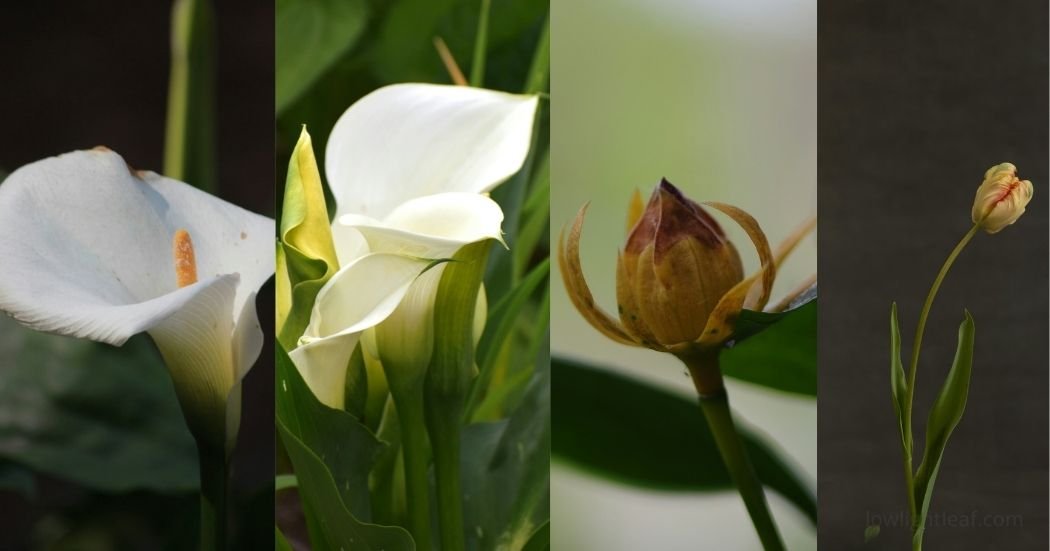
Peace lily leaves may turn yellow when the plant is stressed. It usually happens due to inconsistent watering. Both overwatering and underwatering can cause drooping and leaf discoloration. Chlorine and fluoride in tap water can upset soil balance and damage roots.
Solution
Use distilled, rain, or filtered water. It helps prevent chemical buildup. Also, set a regular watering schedule. Maintain the soil’s moisture at a steady level, avoiding saturation. It will help your peace lily regain its lush green leaves.
2_ Curling or Pale Leaves
Problem
Leaves that curl inward or lose their deep green color usually get too much light. Direct sunlight can scorch the foliage, leaving it dry, faded, or even crispy at the edges.
Solution
Move your peace lily to a place with soft, indirect light. A north- or east-facing window works well. This softer light helps the plant keep its bright green leaves. It also lowers the chance of sun damage.
3_ Browning Leaf Tips
Problem
The tips of peace lily leaves can turn brown when the plant is under stress. It often happens due to:
- Low humidity
- Soil that is too wet or compacted
- Inconsistent watering
- Salt buildup from fertilizer
Solution
- Keep the air around your peace lily slightly humid by misting its leaves or setting the pot on a pebble tray.
- Make sure the soil drains well to prevent it from staying soggy.
- If salt starts to build up, give the plant a good flush by watering until the excess runs out from the bottom.
With steady care, you’ll keep the leaves soft, green, and healthy instead of dry or crispy.
4_ Drooping Foliage
Problem
Peace lily leaves that droop or collapse are usually signaling dehydration. If wilting occurs when the soil is still damp, the roots might be suffocating. It can cause excess water and lead to root rot.
Solution
Water promptly when the top layer of soil begins to dry, but avoid keeping the mix soggy. Keep your peace lily in a pot that drains well to prevent water from sitting at the bottom. This balance prevents stress and encourages steady, upright growth.
5_ Lack of Flowers
Problem
If your peace lily has healthy leaves but isn’t blooming, it may not be getting enough light or the right nutrients. Too little light can prevent flowers, and too much nitrogen encourages leaf growth instead of the white spathes.
Solution
Place the plant in a bright spot with indirect sunlight, such as near an east- or north-facing window. Feed it with a bloom-friendly fertilizer that’s higher in phosphorus during the growing season.
How to Spot and Treat Peace Lily Pests
Spider Mites:
Problem
Tiny but harmful, spider mites love dry indoor spots. They make fine webs on the undersides of leaves. Infested plants may show speckled, pale foliage.
Solution
Raise the humidity near the plant to create less favorable conditions. Also, wipe the leaves with a damp cloth. Repeating again and again applications of insecticidal soap or neem oil helps eliminate mites.
Mealybugs
Problem
These pests appear as white, cottony clusters along stems and leaf joints. They drain sap, leading to stunted growth and leaf yellowing.
Solution
Remove mealybugs with a cotton cloth dipped in rubbing alcohol. For big infestations, wash the leaves with mild dish soap and water. You can also apply neem oil each week until the pests are gone.
Fascinating Facts & Symbolism of Peace Lilies
The peace lily (Spathiphyllum) carries deep symbolism along with its beauty. Its elegant white bracts rise above the dark leaves. They look like a white flag, symbolizing peace, harmony, and renewal.
In many cultures, peace lilies are associated with purity, healing, and spiritual balance. It makes them a popular gift plant for homes and workplaces. Their enduring elegance continues to symbolize calmness in both design and tradition.
Peace Lily Care FAQs
How often should I water my peace lily?
Water your peace lily about once a week. Let the top of the soil dry out before watering, and watch for drooping leaves. Water more often in bright or warm conditions, and less during cooler seasons.
Is the Peace Lily Toxic to Cats and Dogs?
Yes, Peace lilies are unsafe for pets, including cats and dogs. Calcium oxalate can irritate the mouth and throat, causing drooling and upset stomach. Keep peace lilies away from pets and children.
How big does a peace lily grow?
Most peace lilies grow 1 to 3 feet tall indoors. Dwarf varieties stay closer to 12 inches, while larger cultivars, like ‘Sensation’, can reach 4–6 feet tall with proper care.
Why add sugar to a peace lily?
Adding sugar is not recommended. It can harm roots and promote bacterial or mold growth. Use balanced houseplant fertilizer for healthier blooms.
How to care for a peace lily that is dying?
Check soil moisture, avoid overwatering, use a pot with drainage holes, place in bright indirect light, keep temperature 65–80°F, and trim dead leaves. Proper care helps it recover in 1–2 weeks.