Last updated on June 12, 2026
Peace lilies are best known for their glossy green leaves and graceful white flowers, but when it comes to watering, they can quickly turn from elegant to dramatic. One missed watering can cause sudden drooping, while excess water leads to yellowing leaves and root stress. That’s why understanding how often to water a peace lily is one of the most important parts of keeping this tropical houseplant healthy.
Peace lilies may be easy-care plants, but their watering needs are often misunderstood, especially if you’re still learning how to care for a peace lily indoors. They like evenly moist soil, not soggy roots, and factors like light, pot size, soil, and season all affect how often they need water.
How Often & How Much to Water a Peace Lily
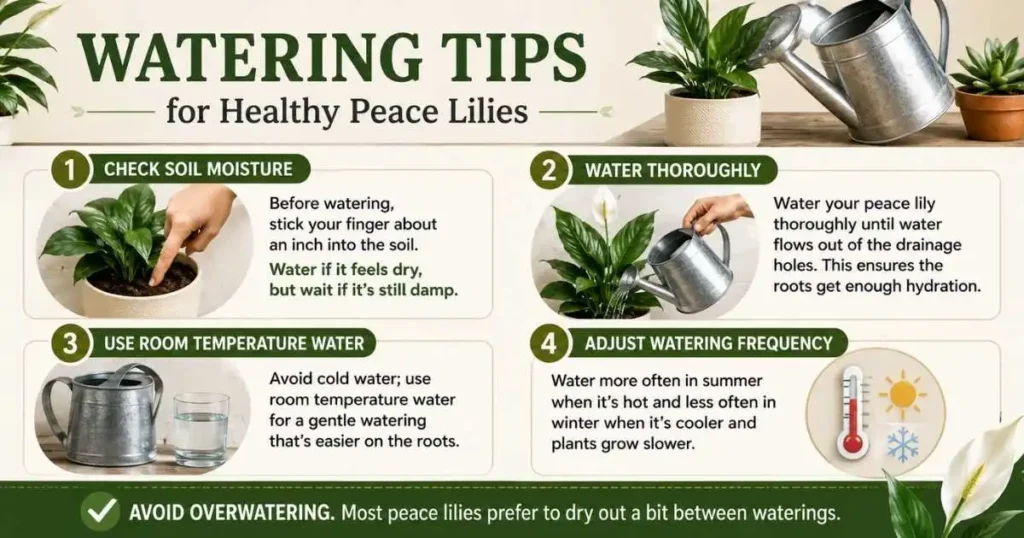
Always water your peace lily plant based on soil moisture, not the calendar, a concept many people struggle with when learning basic indoor plant care. The most reliable indicator is the soil itself; when the top inch feels dry, the plant is ready for water.
Under typical indoor setup, this usually translates to more frequent watering in brighter light and less frequent watering in low-light spaces, as moisture evaporates at different rates.
Each time you water, apply enough to fully saturate the root zone, allowing too much water to drain from the bottom of the pot. Good drainage pulls in fresh air and keeps roots healthy.
Just don’t let water sit in the saucer, because soggy soil quickly leads to drooping leaves. Since light, pot size, soil, and season all affect how fast soil dries, soil moisture should always be adjusted to the plant’s environment, not a fixed routine.
Peace Lily Watering Basics (What Actually Matters)
Peace lilies (Spathiphyllum) are tropical understory plants that grow beneath forest canopies, similar to many indoor plant varieties grown for low-light spaces, where soil stays consistently moist but well-aerated. Indoors, successful watering means copying those conditions rather than following a strict schedule.
What truly controls hydration is light intensity, pot and soil type, and indoor environment, principles that apply to many houseplants when you explore indoor plant care guides. Intense light and warmer air dry soil faster; on the other hand, larger pots and moisture-retaining soil slow water loss. When these factors are balanced, roots stay oxygenated, moisture remains steady, and the plant grows without stress.
When to Water a Peace Lily
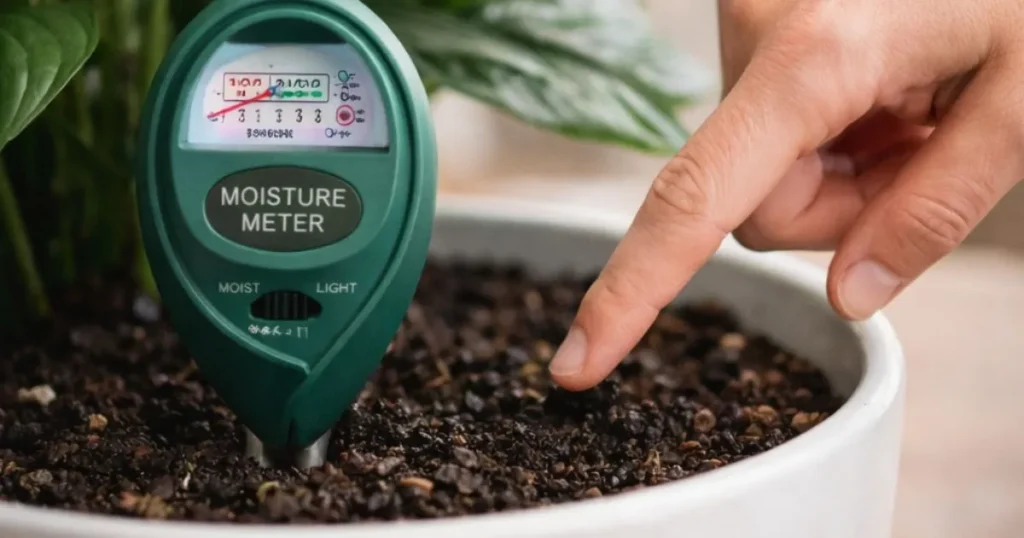
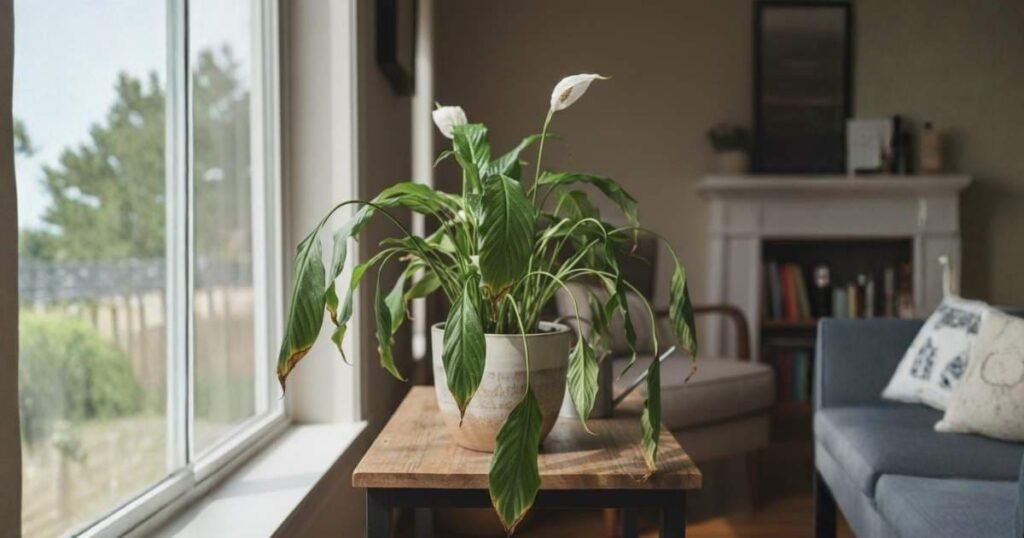
Water a peace lily when the top inch of soil feels dry. Avoid strict watering routines. The easiest way to tell is to press your finger into the soil. If it feels dry, it’s time to water; if it’s still moist, wait a bit longer, otherwise you may start noticing peace lily leaves drooping from improper watering. You may also notice that the pot feels lighter, or that the soil surface looks slightly lighter in color.
If you prefer tools, a moisture meter can help, but it should be used as a guide, not a rule. Peace lilies tend to use water faster during the warmer months, when longer days and active growth increase moisture demand. In winter, soil dries more slowly, so watering is less frequent.
How Light and Season Affect Watering Frequency
Most people asking how often to water a peace lily are surprised to learn that light levels affect watering frequency more than the calendar itself.
Light and season directly control how fast a peace lily’s soil dries. Brighter light and warm temperatures increase water use, while low light and cooler conditions slow drying and reduce watering needs, a common pattern seen in low light indoor plants for the home.
Indoor peace lilies usually need water less often due to lower light, whereas plants kept outdoors in summer, especially in containers, dry out much faster. Seasonal growth also matters; water more frequently in spring and summer, when growth is active, and scale back in winter, when the plant slows down, just like with other low-maintenance plants such as spider plants and cast iron plants.
How Much Water Does a Peace Lily Need?
An Easy Watering Rule You’ll Actually Use
A peace lily doesn’t need a fixed amount of water; it needs enough to fully hydrate the roots. A reliable approach is to add water gradually and watch for it to appear at the drainage holes. Once it does, stop watering and pour off any collected water so the roots aren’t left sitting in moisture.
The exact volume depends on pot size, soil mix, season, and indoor conditions, which becomes much easier to manage after learning how to repot indoor plants properly.
Smaller pots need less water, while larger pots need more, but the goal stays the same: evenly moist potting mix with free drainage. This runoff-based approach prevents both underwatering and waterlogged roots, making it the most reliable way to water a peace lily correctly.
How to Water a Peace Lily Properly
Watering a peace lily correctly isn’t about how often you water, but how you apply the water. Using the right method helps the roots absorb moisture evenly while preventing common problems like soggy soil and root rot, which can eventually lead to peace lily leaves turning yellow from overwatering.
Top Watering Method (Over the Soil)
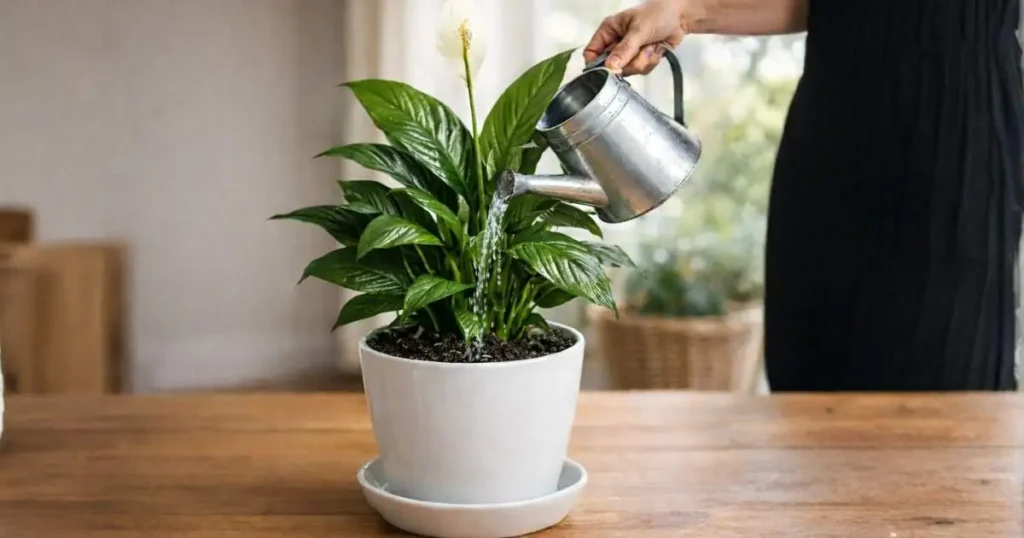
Top watering is the easiest and most commonly used method for peace lilies. Pour water slowly across the soil so it absorbs evenly, rather than rushing through one spot. Once water starts dripping from the drainage holes, stop watering and discard any collected water in the saucer to keep the roots from sitting in moisture.
Bottom Watering Method (From the Tray)
Bottom watering is helpful when the soil dries unevenly or repels water. Place the pot in a tray with 1–2 inches of water and let it sit for 15–30 minutes until moisture reaches the top layer. Remove the pot and drain excess water to prevent waterlogged soil.
Water Quality Matters for Peace Lilies
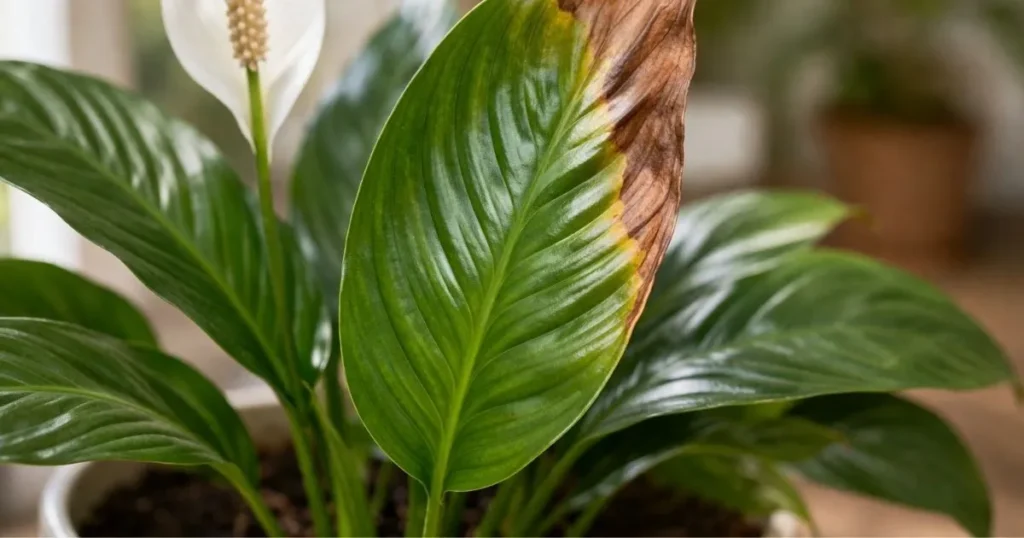
The quality of water you use matters just as much as how often you water. Peace lilies are sensitive plants, and poor water quality is a common hidden cause of brown leaf tips, edge burn, and long-term stress.
Warm vs Cold Water
Peace lilies prefer lukewarm, room-temperature water. Cold water can shock the roots, slowing water uptake and triggering brown or damaged leaf edges. As a rule, water should feel neutral to the touch, never cold straight from the tap.
Rainwater vs Tap Water
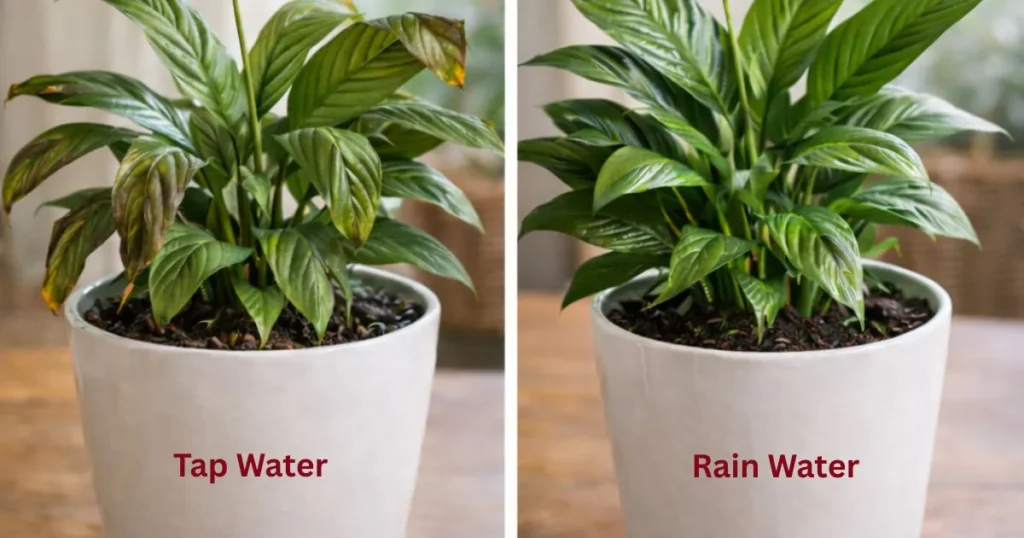
Peace lilies usually respond better to rainwater since it’s free of heavy minerals and feels closer to what the plant gets in nature. Tap water won’t harm the plant right away, but in hard-water areas, minerals slowly build up in the soil and often appear as browning along the leaf edges.
Letting tap water sit overnight can reduce chlorine levels, but it won’t address mineral buildup, which is why many growers switch to a different water source when brown tips keep appearing.
Fluoride and Brown Leaf Tips
Fluoride and excess salts are common causes of brown leaf tips caused by poor water quality. These minerals accumulate in the soil and stress the roots, even when watering habits are correct. Using rainwater or distilled water, or occasionally flushing the soil, helps prevent buildup and keeps leaf edges clean and healthy.
Common Peace Lily Watering Problems
Most peace lily issues are linked directly to watering mistakes rather than disease. Learning to spot the difference between overwatering, underwatering, and root stress makes it much easier to fix problems before the plant declines.
Can You Overwater a Peace Lily?
Yes, peace lilies can be overwatered easily. Constantly wet soil limits oxygen around the roots, leading to yellow leaves, drooping, brown tips, weak flowers, and slow growth. If the soil stays wet for days after watering, the roots may already be stressed. Letting the soil dry slightly and improving drainage usually helps.
Underwatered Peace Lily: Key Warning Signs
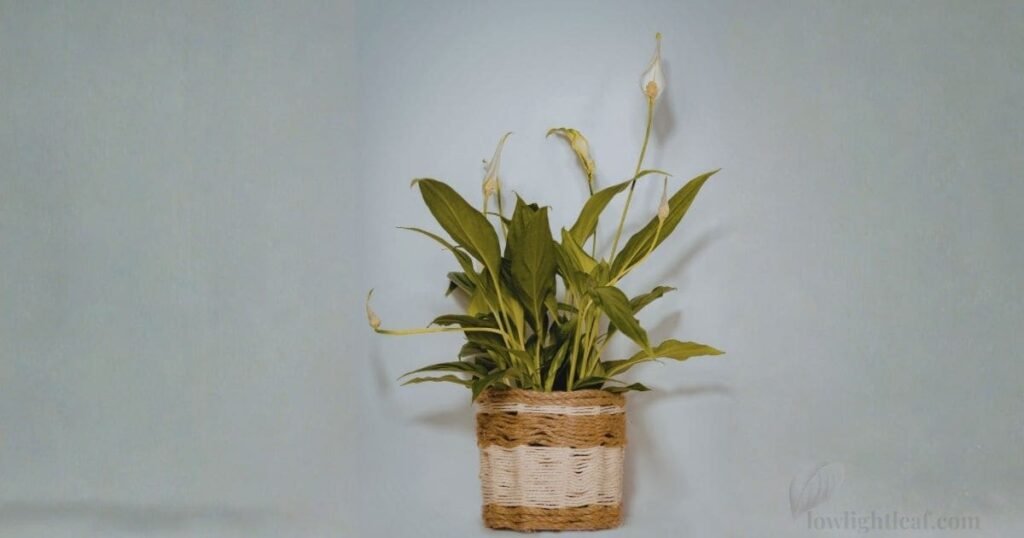
An underwatered peace lily often shows wilting or drooping leaves, followed by yellowing with dry brown edges. Leaves may curl, growth slows, and flowering stops. In some cases, the soil becomes so dry that water runs straight through without soaking in, leaving roots dehydrated.
Why Is My Peace Lily Drooping Even After Watering?
If a peace lily droops even after watering, the problem is usually root stress rather than lack of water. Overwatering, compacted soil, sudden temperature changes, or too much light can all interfere with water uptake, leaving the plant limp despite moist soil.
Peace Lily Watering Schedule (All-Year Care Rhythm)
Although peace lilies don’t follow a strict weekly watering routine, most indoor plants fall within a predictable range based on light, temperature, and seasonal growth. Understanding these general watering intervals can help you avoid both overwatering and underwatering while still adjusting to your plant’s actual soil moisture needs.
Peace Lily Watering Frequency
| Growing Conditions | Typical Watering Frequency |
|---|---|
| Bright indirect light | Every 4–7 days |
| Medium light | Every 5–9 days |
| Low light | Every 7–12 days |
| Winter conditions | Every 10–14 days |
Important: These watering intervals are general guidelines. Always check the top inch of soil before watering, as temperature, humidity, pot size, and soil type can affect how quickly a peace lily dries out.
Peace Lily Seasonal Watering Guide
This year-round approach helps you adjust watering before problems like drooping, yellowing, or root stress appear.
Winter (Jan–Feb, Nov–Dec): Growth slows, and soil dries slowly. Water less often, but don’t let the root ball dry out completely. Protect plants from cold drafts.
Early Spring (Mar–Apr): Growth restarts. Expect faster drying and gradually increase watering as days get longer.
Late Spring–Summer (May–Aug): Peak growth period. Keep soil evenly moist, watch for faster drying from heat or AC, and increase humidity if needed.
Fall (Sep–Oct): Light levels drop, and growth slows. Begin spacing waterings slightly farther apart.
Peace Lily Watering Troubleshooting
Following this natural yearly rhythm helps peace lilies stay healthy, hydrated, and stress-free.
| Situation / Signal | What It Means | What To Do Immediately |
|---|---|---|
| Top inch of soil is dry | The plant is ready for watering | Water slowly until runoff appears, then empty the saucer |
| Soil is wet but leaves are drooping | Overwatering or poor drainage | Pause watering and allow soil to dry slightly |
| Yellow leaves with soggy soil | Roots stressed from excess moisture | Increase airflow and space out waterings |
| Brown tips and white crust on soil | Mineral or salt buildup | Use rain or distilled water and flush soil occasionally |
| Wilting shortly after watering | Rootbound plant or heat stress | Check roots and move to bright indirect light |
| Summer with bright indirect light | Faster soil drying | Check soil moisture more often |
| Winter with low light | Slow soil drying | Reduce watering frequency |
Common Watering Mistakes (and Easy Fixes)
Most peace lily problems come from small watering habits that seem harmless but add up over time. These mistakes are easy to fix once you know what to look for.
- Watering on a fixed schedule: Peace lilies don’t drink by the calendar.
Fix: Always check the top inch of soil first and water only when it feels dry. - Letting the pot sit in water: Standing water suffocates roots, leading to drooping or yellow leaves.
Fix: Empty the saucer after watering and make sure drainage holes stay clear. - Watering lightly and too often: Shallow watering leaves the root ball dry while the surface stays wet.
Fix: Water deeply until excess drains out, then wait before watering again. - Using cold or salty water: Cold tap water and mineral buildup often cause brown leaf tips.
Fix: Use room-temperature water and switch to rainwater or distilled water if tips keep browning. - Ignoring seasonal changes: Watering the same way year-round leads to overwatering in winter.
Fix: Reduce frequency during cooler, low-light months and increase it during active growth.
Avoiding these common mistakes keeps watering simple and helps peace lilies stay upright, glossy, and stress-free.
Conclusion
A thriving peace lily isn’t about sticking to a strict routine. It’s about understanding how moisture behaves in your plant’s environment. The goal is to keep the soil consistently damp but never waterlogged, allowing roots to breathe while still getting the hydration they need. Small shifts in light, temperature, and pot size will naturally change how quickly that moisture disappears.
Over time, caring for a peace lily becomes less about rules and more about observation. Subtle cues like the weight of the pot, the feel of the soil, and the look of the leaves guide your decisions. When you adjust watering based on these signals, you avoid common problems like yellowing, drooping, and root stress, helping your plant stay lush, balanced, and healthy throughout the year.
FAQs About Watering Peace Lilies
How often do you have to water a peace lily?
Always check soil moisture before watering your peace lily, don’t rely on weekly schedules. In most homes, this means watering about every 4–7 days in bright indirect light, 5–9 days in medium light, and 7–12 days in low light. Pot size, soil type, and indoor temperature can affect this timing, so soil moisture is always the best guide.
Do peace lilies need sunlight?
Peace lilies tolerate low light but grow and bloom best in bright, indirect light. A few hours of gentle or filtered light is ideal. Direct sunlight should be avoided as it can scorch leaves and dry the soil too quickly.
What is the best way to water a peace lily indoors?
The best method is slow, deep watering over the soil until excess water drains from the bottom of the pot. This ensures even hydration. Always empty the saucer afterward to prevent standing water. Bottom watering can also help if soil dries unevenly.
How do I know if my peace lily is overwatered?
An overwatered peace lily often shows yellowing leaves, persistent drooping, and soggy or musty-smelling soil. Underwatered plants usually recover quickly after watering, while overwatered plants remain stressed.
Do you need to mist a peace lily?
Misting is not required but can help in dry indoor environments. Peace lilies prefer higher humidity, but misting only provides temporary moisture. Maintaining proper watering and indoor humidity levels is more effective.
Explore more:

Muddsir Munir
Houseplant enthusiast researching and writing about indoor plants, helping beginners grow spider plants, snake plants, and more with confidence.